Guterres Warns Moscow’s Kyiv Threat Raises
Guterres expresses alarm over Russia's threats to Kyiv.
Model Diplomat3 min readEurope
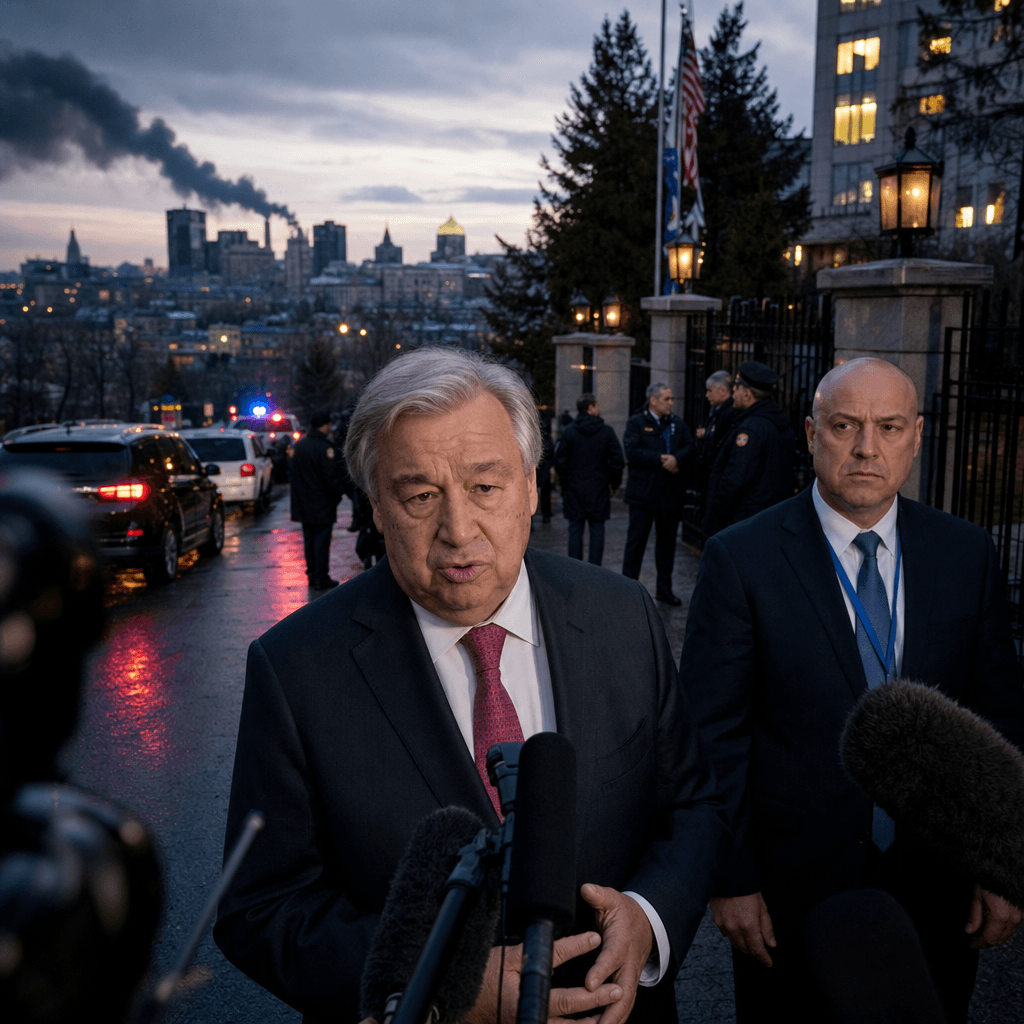
Guterres Warns Moscow’s Kyiv Threat Raises Escalation Risk
Russia’s warning of new Kyiv strikes is meant to unsettle diplomats and force attention. Guterres is signaling alarm, but Moscow still holds the initiative.
Russia’s threat to launch “systematic strikes” on Kyiv’s defense-industrial sites and “decision-making centres” is a coercive move, not a routine battlefield update. U.N. Secretary-General António Guterres told the Security Council he was “deeply concerned” by the announcement, made after what Reuters described as one of the heaviest bombardments of Kyiv since the war began. The signal is clear: Moscow wants to widen the psychological cost of the war, raise the perceived risk to foreign missions, and force Kyiv’s backers to spend time on protection rather than pressure.
Moscow is using warning as leverage
The message is aimed at more than Ukraine’s military. Russia told foreign citizens, including diplomats and international organization staff, to leave Kyiv “as soon as possible,” according to Al Jazeera, and
BBC News said many interpret the warning as a form of psychological pressure. That matters because embassies are not just symbolic presences; they are operational nodes for aid, intelligence sharing, and political signaling. If Moscow can force even a partial thinning of foreign presence in Kyiv, it gains a propaganda win and complicates coordination with Ukraine.
There is also a battlefield logic. By naming “decision-making centres” and drone manufacturing facilities, Russia is trying to justify future strikes as precision attacks on military infrastructure. In practice, Kyiv’s dense mix of government, industrial, and civilian sites gives Moscow room to blur that distinction. That is why the threat is useful even before any missile is launched: it primes the information environment and puts the burden on Ukraine and its partners to prove resilience. For a broader read on how conflict messaging shapes policy, see Conflict.
Europe’s response shows the warning hit a nerve
The immediate Western reaction suggests Moscow touched a sensitive point. Germany, the Netherlands, Norway, and the European Union summoned Russian envoys after the warning, with EU spokesperson Anitta Hipper calling it an “unacceptable escalation,” Al Jazeera reported. That is the diplomatic version of a hard stop: no one is buying the claim that this is simply a narrow military response.
For Ukraine, the problem is that condemnation does not change the air-defense math. A second, larger round of strikes would test already strained interceptors and the political patience of Western capitals. It would also keep pressure on the U.S. and Europe to treat Kyiv not just as a war zone, but as a high-value diplomatic operating environment. Washington’s response matters here too; the United States remains central to any air-defense replenishment or escalation management.
What to watch next
The next decision point is whether Moscow follows the warning with a sustained strike campaign or uses it mainly to extract fear and attention. Watch for three things over the next 48 hours: any reduction in foreign diplomatic staffing in Kyiv, whether Russia repeats the warning through the UN or bilateral channels, and whether Western governments move extra air-defense assets or issue travel/evacuation guidance. If the strikes come and hit near government sites or foreign missions, the diplomatic response will harden fast.
Discover more

Global Politics
US Seizes Iranian Ship, Tensions Surge
The US seizure of the Iranian ship Touska highlights a shift in control over the Strait of Hormuz, favoring Iran's strategic position.

Conflict & Security
Drone Warfare Killing Aid Workers at Unprec
Over 1,000 humanitarian workers killed in three years as cheap armed drones collapse legal protections. Gaza, Sudan, Ukraine, and DRC see deliberate targeting of aid convoys and hospitals with zero prosecutions.

Global
World Normalises Taliban as Afghan Women Eras
UN data shows Afghan women erased from public life as Russia recognises the Taliban, EU hosts officials in Brussels, and ICC warrants for gender persecution go unenforced.
Conflict & Security
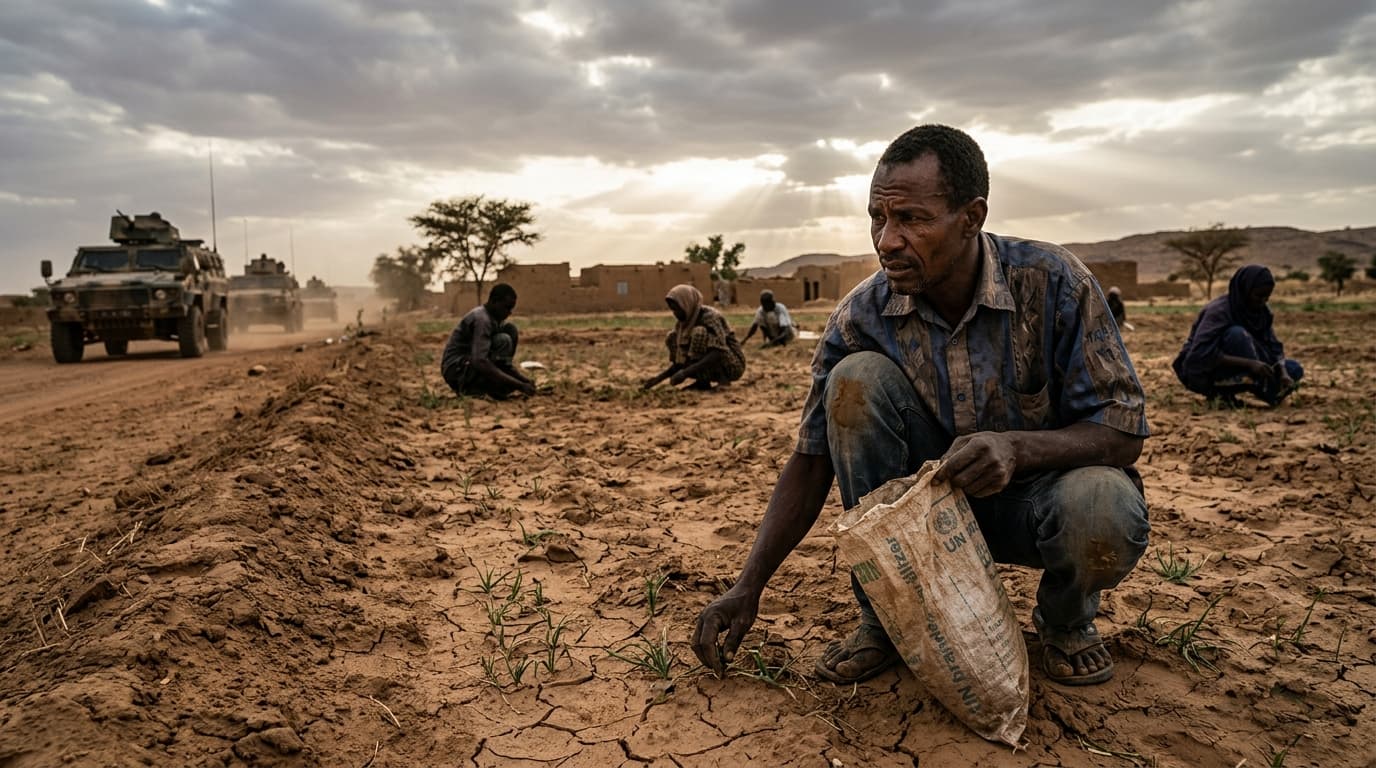
West Africa Food Crisis: Three Shocks in 2026
Conflict, climate extremes, and the Strait of Hormuz closure drive a severe food crisis in West and Central Africa, with fertilizer prices surging 80% and millions displaced.