Ghalibaf Rejects Farm-Goods Claim Amid Tense
Iran's Ghalibaf disputes U.S. claims on asset use.
Model Diplomat3 min readMiddle East
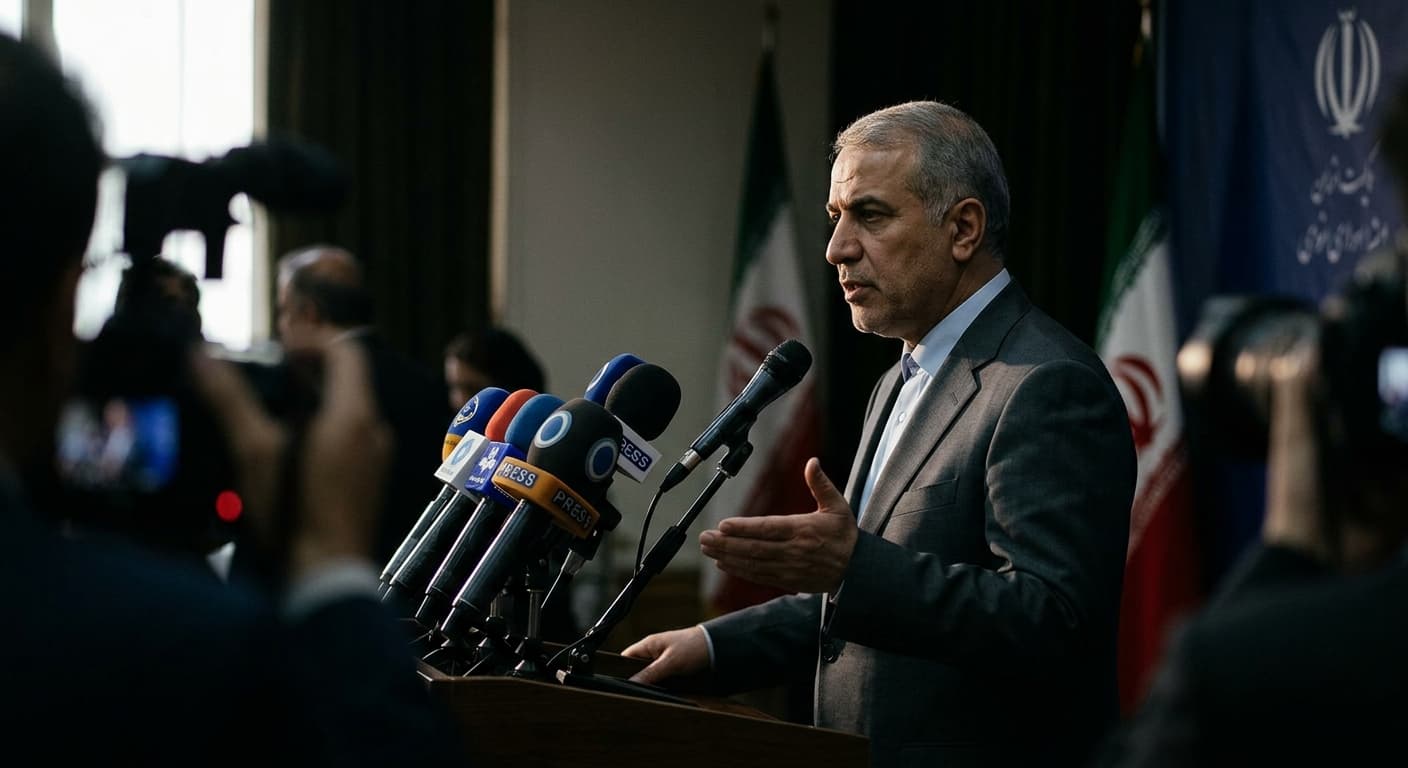
Iran's Ghalibaf Calls Trump's Farm Deal a Lie
Parliament speaker and lead negotiator rejects US claim that unfrozen assets will buy American crops, escalating dispute over truce terms
Al Jazeera reported Thursday that Mohammad Bagher Ghalibaf, Iran's parliament speaker and head of its negotiating team, dismissed President Trump's assertion that Tehran's newly unfrozen assets would be channeled into American agricultural purchases. The rejection exposes a fundamental disagreement over what the Pakistan-mediated Memorandum of Understanding actually requires—a gap that could unravel the six-week-old ceasefire if not resolved in the coming 60-day negotiation window.
Trump and Vice President JD Vance have framed the deal as a win for US farmers, claiming the Treasury Department will release Iranian assets "into escrow, controlled by the U.S.A., and will be used for the purchase of food and medical supplies, exclusively from the United States, including Corn, Wheat, and Soybeans," according to reporting from the Arkansas Democrat-Gazette. Vance went further, stating that unfrozen funds "are going to go to make American farmers richer and feed the Iranian people."
Ghalibaf's counter is sharp and rhetorical. "America falsely claims our unfrozen assets will buy their agriculture," he posted on X, then twisted the knife: "The only crop we're harvesting is what you [the US] planted: decades of mistrust. It's organic, abundant, and homegrown." He added that Washington "only exports GMO soybeans, broken promises and trash talk." More significantly, Ghalibaf asserted that the MOU text contains no legal clauses mandating such purchases—a claim no US official has directly refuted.
Where the leverage lies
Iran's position is simple: the money is Iran's, and no binding mechanism in the signed document restricts how it is spent. Iran's Foreign Ministry spokesman Esmail Baghaei told the Democrat-Gazette that any agricultural purchases would be based on "prices and quality," not Washington diktat. Ambassador Ali Bahreini in Geneva was explicit: "Iran is the only country who decides what to do with those assets."
The US does have technical leverage to enforce restrictions. Richard Nephew, former Obama-era sanctions architect now at Columbia University, explained that Washington can instruct foreign banks to move funds only into US accounts for specific purchases and threaten secondary sanctions if they refuse. But he acknowledged this is rare. "We don't usually like to give the impression that we treat national security issues as a cash grab," he told reporting outlets.
The stakes are concrete. The MOU reopens the Strait of Hormuz—through which a fifth of global oil and gas once flowed—and allows Iran to sell oil freely for 60 days. Brent crude fell below $75 a barrel for the first time since the conflict began, according to Gulf Insider, signaling relief for global energy prices. But that relief depends on the ceasefire lasting.
What to watch
The next 60 days are a negotiation, not a done deal. Trump administration hawks demanded nuclear and missile concessions; Iran gave none. Ghalibaf is now framing the MOU as a US defeat to lock in that narrative at home. Trump, under pressure from GOP hardliners, is claiming victory by promising American farmers a payout. Both sides are in a rhetorical war, and the unfrozen assets are the easiest flashpoint to exploit.
If banks balk at US restrictions, or if Iran spends the money visibly on non-US goods, Trump will have grounds to blame Tehran for bad faith and restart military pressure. If Washington attempts to use escrow accounts as a de facto foreign-aid cutoff valve, Iran will claim the deal was a deception. The actual text of any final agreement, due by late August, will determine whether the ceasefire holds.
Discover more

Global Politics
US Seizes Iranian Ship, Tensions Surge
The U.S. seized the Iranian ship Touska near the Strait of Hormuz, sharply escalating tensions and raising the risk of wider conflict in a vital oil corridor.
Global Politics
Trump's Conflicting Messages on Iran War
Trump's contradictory statements on the Iran war are fueling strategic uncertainty, complicating US policy and reshaping volatile Middle East dynamics.

International Relations
Pakistan's Key Role in US-Israel-Iran Meddle
Pakistan is seeking to mediate the US-Israel-Iran conflict, balancing high-stakes diplomacy against severe economic pressures and steep regional challenges.
Global
Will Kurti's 4th victory reshape Kosovo's foreign relations?
- Episode focus: A Balkans Debrief conversation with Yll Sadiku about Albin Kurti’s fourth consecutive electoral victory in Kosovo and what it could mean for Kosovo’s foreign relations. - Key questions addressed: - How Vetëvendosje’s victory ended months of political

