French UN Peacekeeper Killed in Lebanon
Ambush highlights France's diminishing influence in Lebanon.
Model Diplomat7 min readSouthern Lebanon
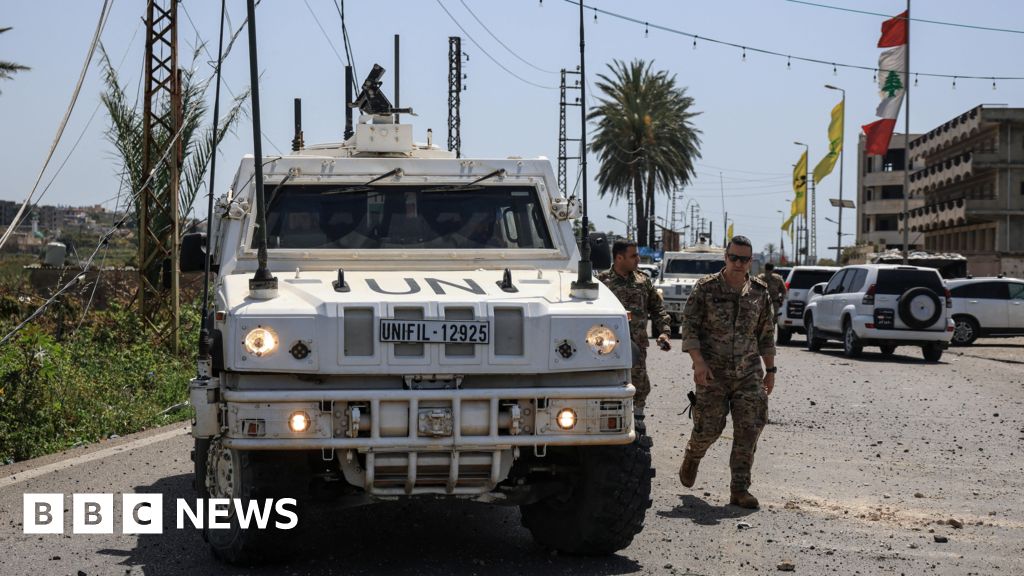
French UN Peacekeeper Killed in Lebanon: Paris's Last Card
Staff Sergeant Florian Montorio's April 18, 2026 ambush at Ghandouriyeh cost France a second soldier and its last leverage over Lebanon's post-UNIFIL order.
Staff Sergeant Florian Montorio of the 17th Parachute Engineer Regiment was shot dead on April 18, 2026, when his UN patrol was ambushed at close range near the southern Lebanese village of Ghandouriyeh; a second French soldier, Chief Corporal Anicet Girardin, died of his wounds four days later. President Emmanuel Macron blamed Hezbollah; the group denied it. The killing matters beyond the two coffins: it fell in the eight-month window before UNIFIL's court-ordered wind-down, and it exposed the fact that France no longer sets the terms of its own soldiers' deployment in Lebanon — Washington does. That is the story of this ambush.
What happened at Ghandouriyeh
According to UNIFIL's initial assessment, cited by the BBC, a UN patrol came under small-arms fire on the morning of Saturday, April 18, near Ghandouriyeh in Bint Jbeil district. One peacekeeper was killed, three were wounded — two seriously. The mission, according to French Armed Forces Minister Catherine Vautrin, was to reopen the route to a UNIFIL position that had been cut off by renewed fighting. The patrol was "ambushed by an armed group at very close range," she told reporters, and Montorio "was hit immediately by a direct shot from a small arms weapon."
Macron's response was unusually direct for a serving French president speaking about a non-state actor. "Everything suggests that responsibility for this attack lies with Hezbollah," he wrote on X, according to CNA, and demanded that "the Lebanese authorities immediately arrest the perpetrators." Hezbollah's statement, quoted by
Al Jazeera, denied "any connection" to the incident and urged "caution in issuing judgements."
The UN Secretary-General's spokesperson confirmed, in the official statement on the second death, that another peacekeeper had "died following the attack on 18 April 2026." UNIFIL's own assessment, reported by
UN News, pointed to fire from "non-state actors" — the mission's diplomatic euphemism for Hezbollah when Beirut is listening.
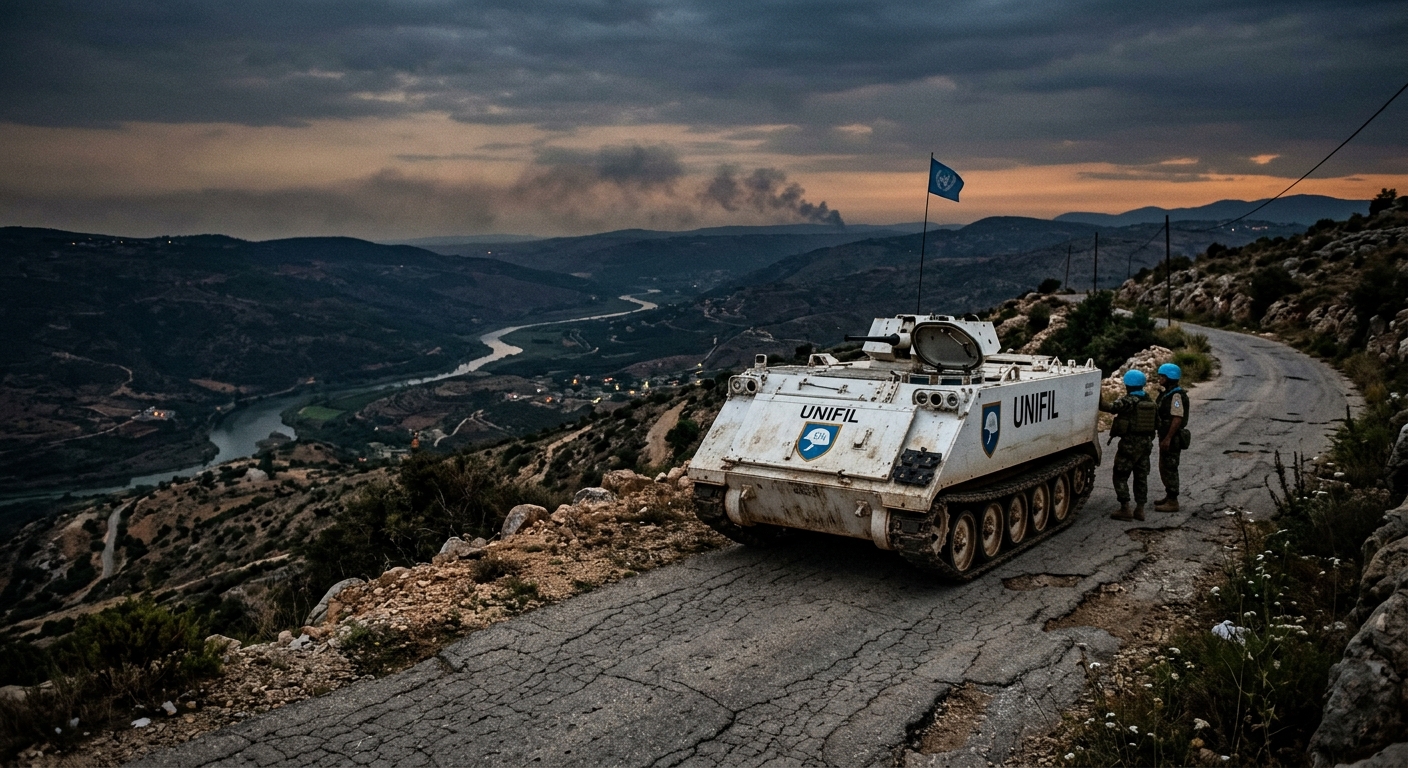
The Ghandouriyeh ambush was not an isolated event. It sat in the middle of the worst spring UNIFIL has had in a generation. On March 29, the Indonesian battalion lost Chief Private Farizal Rhomadhon to a projectile strike; the next day, Captain Zulmi Aditya Iskandar and First Sergeant Muhammad Nur Ichwan were killed near Bani Hayyan by what UN peacekeeping chief Jean-Pierre Lacroix, in an initial report cited by the BBC, called "a roadside explosion." On June 5, Serbian Staff Sergeant Milovan Jovanović was killed by mortar fire on his position near Marjayoun,
UN News reported. Six blue helmets dead in ten weeks.
The number that matters: 700
France keeps roughly 700 troops in Lebanon under Operation Daman, the national label for its UNIFIL contribution. Théa Delval of the International Centre for Defence and Security notes in a July 1 assessment that the French contingent "primarily provides the Force Commander's Reserve" — the rapid-response element that can move across any sector. That is not a symbolic presence. It is the muscle of UNIFIL.
The French deployment has always done two jobs. Officially, it enforces UN Security Council Resolution 1701 alongside the Lebanese army. In practice, it has given Paris a hard-power seat at every negotiation over southern Lebanon since 1978. Take away the boots and France becomes what a Beirut analyst told Al Jazeera it already is: "closer to that of a partner than that of a leader" — the phrase used by analyst Sami Nader — a former patron reduced to a channel of communication.
That decline is why the Ghandouriyeh deaths are politically explosive in Paris. Under Resolution 2790 (2025), adopted unanimously on August 28, 2025, the Security Council extended UNIFIL's mandate "for a final time" until December 31, 2026, followed by a one-year drawdown. Acting US Ambassador Dorothy Shea told the chamber, in remarks summarised by
Al Jazeera: "This will be the last time the United States will support an extension of UNIFIL." France was the pen-holder. It lost.
Who benefits from the ambush
Follow the leverage. Since November 2024, when Washington brokered the first Israel–Lebanon ceasefire, France has been progressively squeezed out of the diplomatic core. A 10-day US-brokered ceasefire took effect on April 16, 2026 — two days before Ghandouriyeh — and by June 25 the US, Israel and Lebanon had signed a trilateral framework agreement without a French chair at the table, according to the ICDS analysis. Delval's blunt read: Paris "is not present at the negotiating table in Washington DC."
For Hezbollah, killing French soldiers — if the group did — is a costly signal, because Paris is Beirut's most sympathetic Western capital. But for the Israeli and American position that UNIFIL should go, the deaths are convenient. Every peacekeeper coffin flown home strengthens the argument that the mission is neither deterring Hezbollah nor protecting its own. That is the argument Israel has pressed for a decade, and one the Trump administration adopted wholesale on entering office.
Macron's public accusation against Hezbollah — before any Lebanese army investigation had concluded — is best read in that light. He is trying to reserve the political initiative in a file where he no longer controls the diplomatic one. By naming a perpetrator on X within hours, the Élysée forced Lebanese President Joseph Aoun and Prime Minister Nawaf Salam onto a defensive footing, promising arrests and investigations. It also complicated Hezbollah's post-ceasefire posture: the group needs quiet if it is to preserve what remains of its arsenal, and being blamed for European deaths burns credit in exactly the European capitals it will need should Washington ratchet up sanctions.
The quiet winner in the ambush's aftermath is the Lebanese Armed Forces. Every conversation about a post-UNIFIL architecture — the France-Italy proposal for a multinational coalition to support the LAF, the
Atlantic Council's blueprint for a small LAF-support mission — funnels external resources into the same institution. Paul Salem's argument, echoed by Atlantic Council analysts, is that a replacement force with UNIFIL's mandate will fail the same way; a smaller mission dedicated to training and enabling the LAF might not. That reframing suits Aoun's government and, ironically, gives France a possible second act — as trainer rather than peacekeeper.
The primary document that reframes the mission
The text of Resolution 2790 is the primary document to anchor any reading of the Ghandouriyeh deaths. Operative paragraph 5 requests UNIFIL "to cease its operations on 31 December 2026 and to start from this date and within one year its orderly and safe drawdown and withdrawal … with the aim of making Lebanon Government the sole provider of security in southern Lebanon."
That single sentence is the reason Montorio was on the road. UNIFIL is in the phase Delval calls "reducing its personnel due to budgetary restrictions." According to Al Jazeera, force levels have fallen from a peak near 15,000 to just over 7,000, with roughly 3,000 rotating out without replacement in the last six months. Fewer troops mean longer patrols on more exposed routes to keep isolated positions supplied. The mission Vautrin described — reopening access to a cut-off UNIFIL post — is the operational signature of a force being asked to hold a line it no longer has the mass to hold.
The UK's explanation of vote captured the discomfort. Ambassador James Kariuki, in a statement on GOV.UK, warned:
The United Kingdom believes that a premature withdrawal of UNIFIL would risk fostering a security environment that Hizballah can exploit. That would harm communities on both sides of the Blue Line, and set back efforts for a long-term political agreement.
London voted yes anyway. So did Paris, as pen-holder. The Council knew what it was buying, and bought it.
Key Takeaways
- Two French soldiers — Staff Sergeant Florian Montorio and Chief Corporal Anicet Girardin — died from the April 18, 2026 ambush at Ghandouriyeh. Macron publicly blamed Hezbollah; the group denies involvement; the Lebanese army's investigation is open.
- The killings were the second and third French UNIFIL fatalities in a spring that also cost three Indonesian and one Serbian peacekeeper their lives — a rate not seen since the 2006 war.
- UN Security Council Resolution 2790 (2025) terminates UNIFIL's mandate on December 31, 2026, with a one-year drawdown. Force strength has already fallen from roughly 15,000 at peak to just over 7,000.
- France, the mission's pen-holder and one of its largest troop contributors with ~700 soldiers under Operation Daman, is losing its principal instrument of leverage in Lebanon just as Washington finalises a trilateral framework with Israel and Beirut without it.
- Paris and Rome have proposed a successor coalition to support the Lebanese Armed Forces; no formal mandate exists, and Hezbollah's stance on any Western follow-on force remains hostile.
What to watch
- September 2026 Security Council session: the Secretary-General is required under OP5 of Resolution 2790 to present options for the future implementation of Resolution 1701 by June 1, 2026, and Council debate on those options is expected in the autumn.
- Lebanese army investigation into Ghandouriyeh: Prime Minister Nawaf Salam ordered an inquiry on April 18; no public findings have been issued. A report attributing the attack to Hezbollah, or exonerating it, will reset both Franco-Lebanese and Franco-Israeli relations.
- December 31, 2026: UNIFIL ceases operations. The drawdown begins the next day, and the shape of any successor arrangement — EU mission, ad hoc coalition, expanded UNTSO-OGL, or nothing — must be settled before then.
- Franco-Italian coalition proposal: watch for a formal EU Foreign Affairs Council discussion in the autumn on whether Brussels backs a follow-on mission, and on what rules of engagement.
The Bottom Line
The bottom line: Staff Sergeant Montorio was killed clearing a road for a mission the United Nations has already decided to end. France's response — Macron naming Hezbollah before Beirut's investigators did — is the reflex of a power that knows its last piece of leverage in Lebanon expires on December 31, 2026, and has nothing certain to replace it. Every peacekeeper coffin from Ghandouriyeh onward is now, unavoidably, an argument in the debate over what — if anything — follows UNIFIL.
Discover more

Conflict & Security
China's Diplomatic Challenge to UNIFIL Exit
China is challenging a US and Israeli plan to withdraw UNIFIL peacekeepers, warning the move risks escalation in Lebanon and fresh instability in the region.

Conflict & Security
China Urges Delay of UNIFIL Exit in Lebanon
China pushes to slow UNIFIL's withdrawal from Lebanon, citing ongoing border instability and signaling Beijing's growing stake in Middle East peacekeeping.
Conflict & Security
French Peacekeeper Killed in Lebanon
The deaths of two French peacekeepers in Lebanon signal France's waning influence as UNIFIL faces shutdown amid US-Israeli negotiations.

Conflict & Security
French UNIFIL Soldier Killed in Lebanon
The ambush in Ghandouriyeh that killed two French soldiers raises questions about the future of UNIFIL and France's military involvement in Lebanon.