Frank Garcia Takes Over Africa Desk
Senate confirms Frank Garcia for Africa policy role
Model Diplomat3 min readAfrica
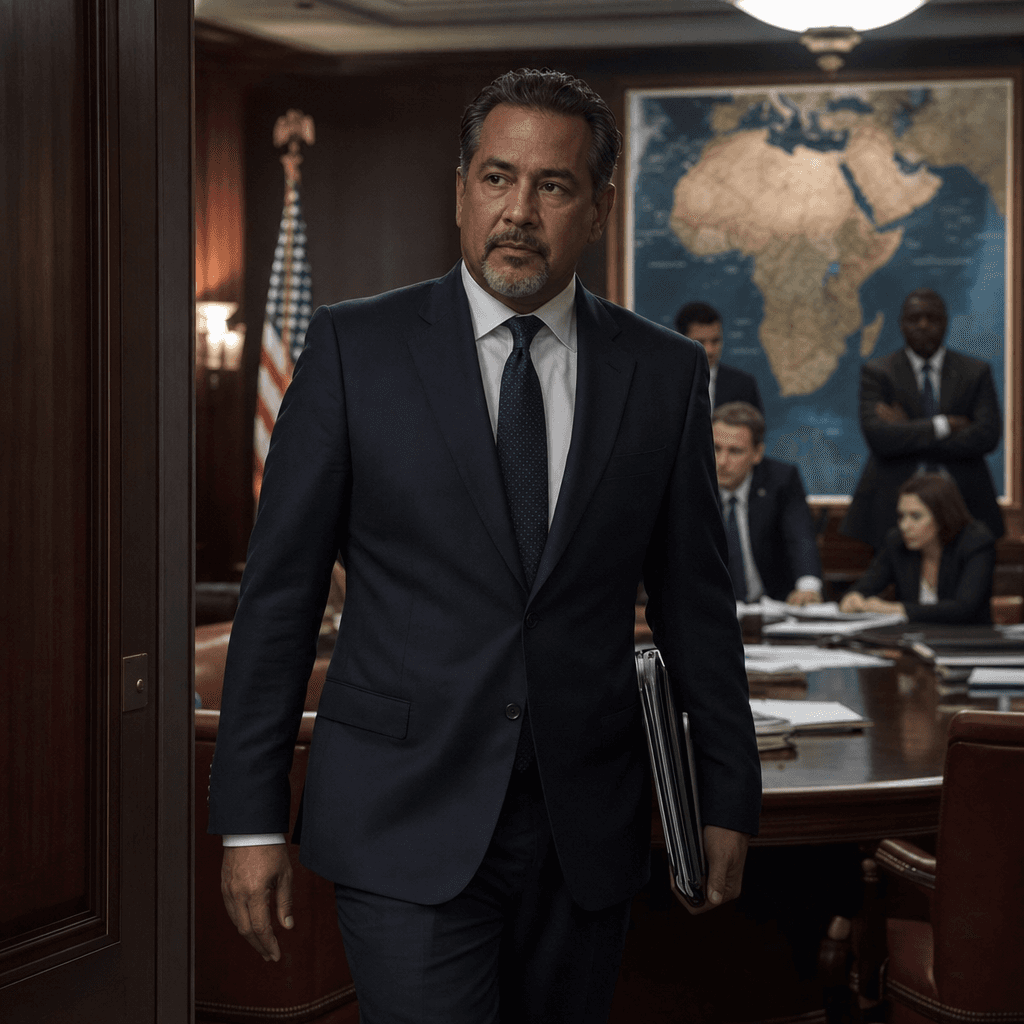
Frank Garcia Takes Over Africa Desk as US Chases Critical Minerals
The Senate filled a year-long vacancy by installing a Navy veteran who is expected to steer Africa policy toward trade, security, and minerals.
The Senate has confirmed Frank Garcia as assistant secretary of state for African affairs in a bloc vote on 49 Trump nominees, ending a vacancy that had left Washington’s top Africa post empty for more than a year, Al Jazeera reported. Garcia, a 28-year Navy veteran and former House Intelligence Committee staffer, is being brought in to translate the Trump administration’s “America First” approach into Africa policy, with trade and investment replacing aid as the stated organizing principle,
Al Jazeera and
Semafor reported.
A vacancy that handed leverage to others
The significance is not procedural. The assistant secretary oversees policy across all 54 African states, and when the seat sat empty, acting officials kept the bureau running but could not give the bureau the same political weight inside State, Al Jazeera said. That matters because influence in Africa is won through repetition, staffing, and the ability to follow through on deals — all of which suffer when the top job is temporary.
The wider staffing picture is weaker still. The Whistler Newspaper says 34 of the 54 U.S. ambassadorial posts in Africa still lack Senate-confirmed ambassadors, and it quoted Senator Jeanne Shaheen warning that “in every country where we have a U.S. vacancy, China has an ambassador.” That is the core power imbalance: Beijing keeps a steady diplomatic presence while Washington has been running lean. For
United States policymakers, the issue is not symbolism; it is whether a thin diplomatic footprint can still compete.
Garcia’s background also tells you what Washington wants from him. He is not arriving as a regional specialist with a long academic record on Africa. The Whistler Newspaper describes him as relatively unknown in Africa policy circles but valued for his Hill experience and intelligence background. That makes him more of a coordinator and enforcer than a traditional diplomat — useful in a White House that wants Africa policy tied to hard interests.
Trade, security, and minerals are the point
Garcia made the pivot explicit at his March confirmation hearing. He said U.S. policy in Africa had for too long prioritized “aid and dependency” and promised a reset toward “trade and investment for mutual benefit,” with spending judged by whether it serves national security and economic interests, Al Jazeera reported.
Africa Confidential had already framed his nomination as part of a broader Trump shift toward resources and security, with Garcia expected to coordinate policy across the continent under Secretary of State Marco Rubio.
That is why the Lobito Corridor keeps showing up in these conversations. The rail and transport route linking Angola, the Democratic Republic of Congo, and Zambia is not just an infrastructure project; it is a supply-chain play for copper, cobalt, and other critical minerals, Al Jazeera said. The U.S. and European allies want that corridor to shorten routes for minerals needed in electric vehicles and clean-energy technologies, while China remains deeply embedded in the same mineral belt. In other words, Washington is trying to buy leverage through logistics.
For Global Politics, this is a useful test case: can the U.S. reclaim ground in Africa with fewer diplomats, fewer aid tools, and more explicit commercial bargaining?
What to watch next
The next test is staffing, not rhetoric. Watch whether Garcia is followed by a faster round of ambassador nominations for African capitals and whether the State Department uses the new Africa chief to turn the Lobito Corridor and critical-minerals diplomacy into concrete deals. If that does not happen, this appointment will mostly mark a political reset in Washington while China and Russia keep filling the vacuum on the ground, The Whistler Newspaper and
Al Jazeera reported.
Discover more

Global Politics
US Seizes Iranian Ship, Tensions Surge
The US seizure of the Iranian ship Touska highlights a shift in control over the Strait of Hormuz, favoring Iran's strategic position.
US Politics
House Ethics Committee Pushes Sexual Miscond.
The House Ethics Committee has shifted responsibility for sexual harassment settlement records to the Office of Congressional Workplace Rights, complicating disclosure efforts.

Conflict & Security
Drone Warfare Killing Aid Workers at Unprec
Over 1,000 humanitarian workers killed in three years as cheap armed drones collapse legal protections. Gaza, Sudan, Ukraine, and DRC see deliberate targeting of aid convoys and hospitals with zero prosecutions.

Global
World Normalises Taliban as Afghan Women Eras
UN data shows Afghan women erased from public life as Russia recognises the Taliban, EU hosts officials in Brussels, and ICC warrants for gender persecution go unenforced.