EU Restores Trade with Syria, Keeps Sanctions
Brussels eases trade ties with Syria, keeping sanctions as leverage.
Model Diplomat3 min readEurope
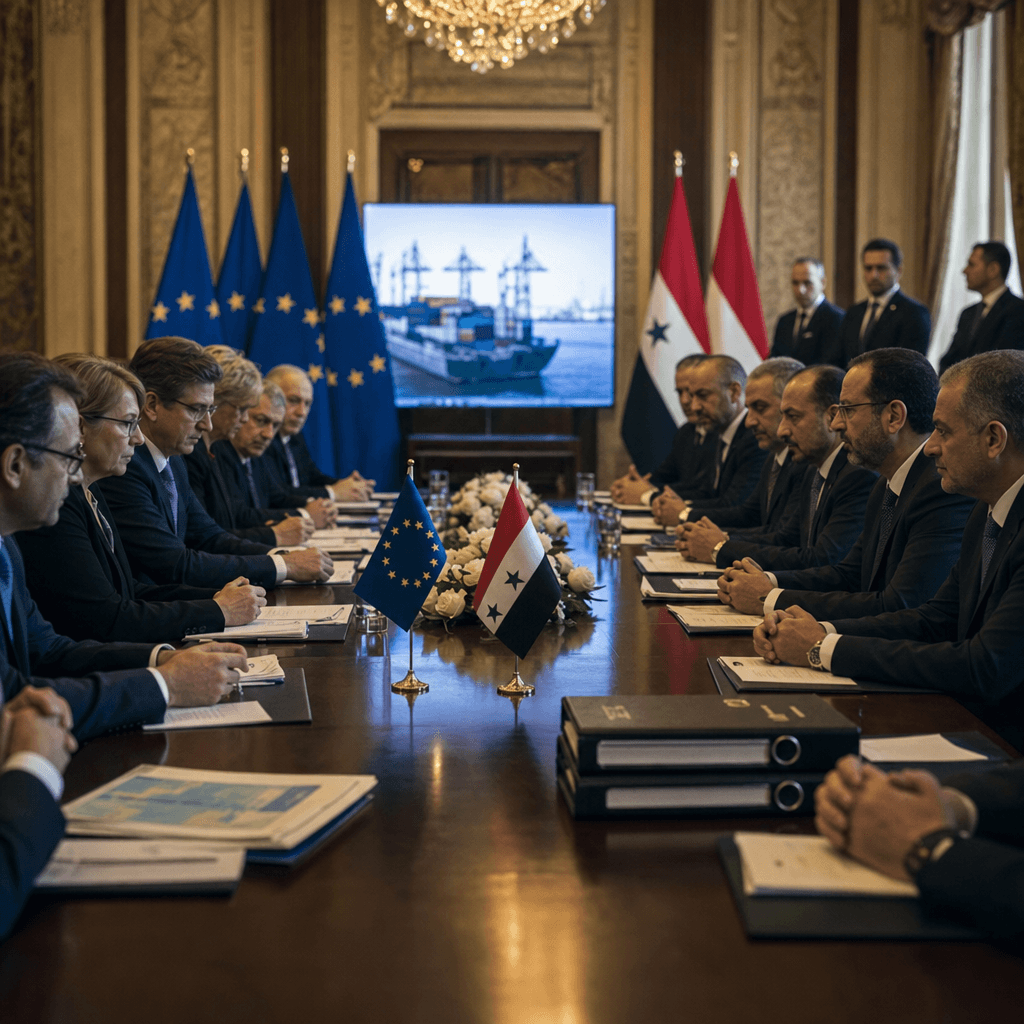
EU Reopens Syria Trade, But Keeps the Leverage
[Brussels is easing Syria back into commerce, yet it is keeping sanctions as a standing threat if Damascus backslides on minorities and political opening.]
The European Union has decided to restore broader trade ties with Syria, reviving a cooperation agreement suspended in 2011 and lifting restrictions on imports of Syrian oil, petroleum products, gold, precious metals and diamonds, Reuters reported from Brussels. That is the power move here: the EU is not simply rewarding Syria’s new rulers under Ahmed al-Sharaa, it is using market access to pull them deeper into a Western framework after 14 years of isolation.
Brussels wants influence, not a blank check
The immediate beneficiary is Damascus, which needs cash flow, trade routes and banking access far more than it needs symbolism. Al Jazeera reported that EU foreign policy chief Kaja Kallas framed the step as help for “a new, inclusive and peaceful Syria,” while diplomats said the bloc is still prepared to reimpose measures if Syria’s new leaders fail on minority rights or a democratic transition. The same report noted that sanctions cutting Syrian banks off from the global system and freezing central bank assets were part of the easing package.
That means Brussels is trying to split the difference: give Syria enough relief to stabilize the economy, but not enough to let the new authorities consolidate power without conditions. That is the real leverage. The EU wants to be inside Syria’s economic reset, not outside it issuing statements from afar.
The sanctions architecture is still the story
The pattern is not new. Gulf News carried AFP’s reporting that EU ambassadors had already struck a preliminary deal to lift economic sanctions, while leaving room for targeted penalties and formal ministerial sign-off.
Al Arabiya English reported the bloc’s earlier logic clearly: sanctions on banking, energy and transport could be eased, but new individual sanctions would remain available against those stirring ethnic tensions after attacks on Alawites.
That matters because it shows who loses from this opening. Assad-era networks, hardliners and any faction that benefits from Syria’s continued financial isolation now face more pressure. By contrast, Syrian banks, importers and public institutions gain the prospect of re-entry into the international system. Brussels also gains a seat at the table in a post-Assad transition that otherwise could be shaped more heavily by regional patrons.
The money side is also getting sharper. Al Arabiya reported that the EU is committing 50 million euros to support Syrian institutions alongside the reset. That is small money in macro terms, but politically it is important: Brussels is pairing conditional market access with operational support for the state apparatus it wants to shape.
What to watch next
The next decision point is implementation: whether the legal text is published cleanly, whether banking channels reopen fast enough to matter, and whether any new individual sanctions are attached to violence against minorities or democratic backsliding. Watch for the first enforcement test if ethnic tensions flare again, because that is where the EU’s leverage will either look credible or cosmetic.
The broader lesson is the same one visible in Reuters reporting on the Ukraine sanctions file: when the prize is strategic, Brussels can still coordinate around internal differences and use sanctions as bargaining power rather than as an end state.
Discover more
Global Politics
EU Engages Taliban on Deportations
The EU's direct engagement with the Taliban over deportations marks a notable shift in diplomatic strategy, linking migration policy to Afghanistan's rulers.
International Relations
Saar Cuts EU Ties Over Kallas' Remarks
Israel's Gideon Saar severs ties with EU foreign policy chief Kaja Kallas over apartheid remarks, exposing widening fractures in Europe's stance toward Israel.
Conflict & Security
EU Sanctions Target West Bank Financials
The EU rolls out sanctions targeting the financial networks behind Israeli West Bank settlements, aiming to disrupt the money flows that sustain expansion.

International Relations
Kyrgyzstan's Sanctions Crackdown Explained
Kyrgyzstan's crackdown on some 50 companies signals a bid to avoid EU sanctions while preserving its delicate trade balance between Russia and Europe.