EU Sanctions on Israeli Settlers and Hamas
Brussels takes symbolic action amid internal divisions.
Model Diplomat3 min readEurope
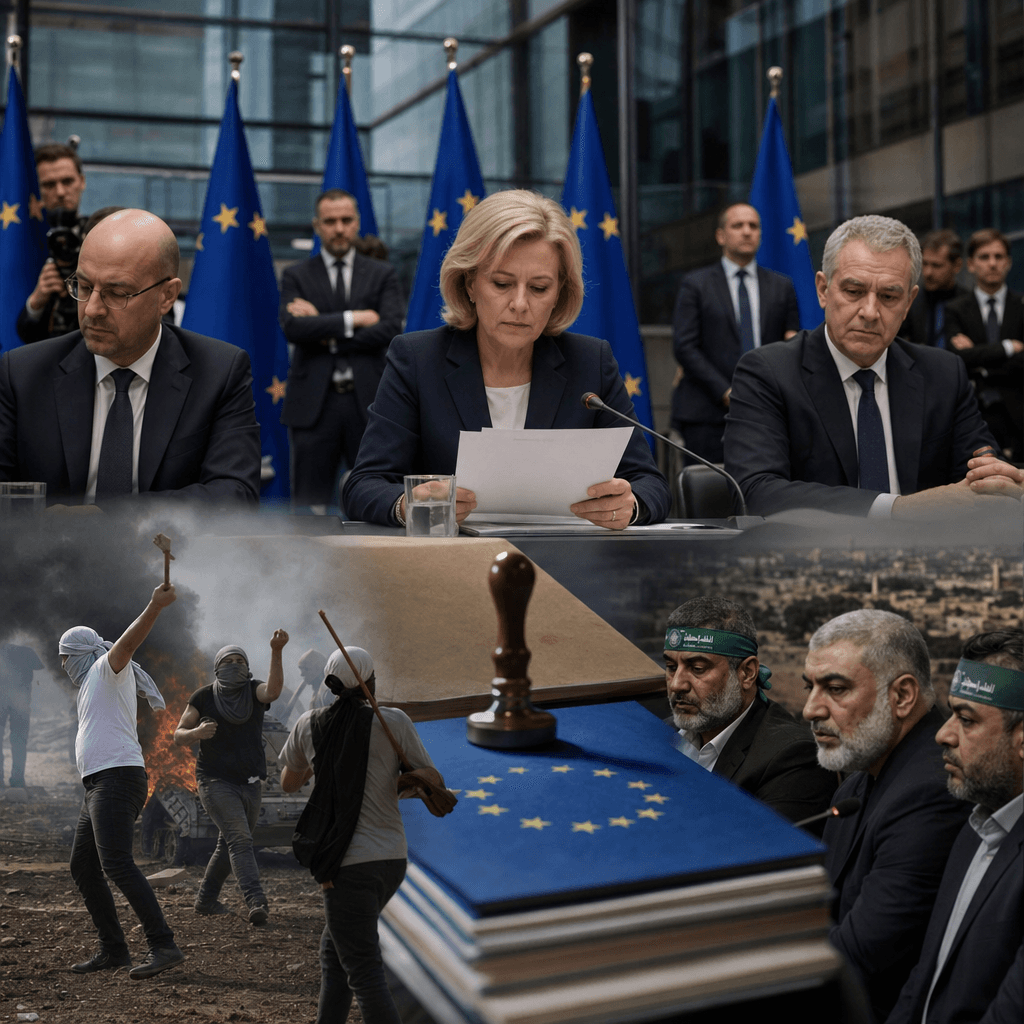
EU Breaks Deadlock With Sanctions on Settlers, Hamas Leaders
Brussels finally moved on symbolic sanctions, but internal splits still block the harder step: trade pressure on Israel.
The EU has agreed to impose sanctions on Israeli West Bank settlers and leading Hamas figures, ending months of paralysis inside the bloc, according to Al Jazeera and
The Washington Post (AP). The leverage shift is simple: once Hungary’s veto fell away, the EU could finally act on measures that had been bottled up for months, and Kaja Kallas framed the decision as moving “from deadlock to delivery,” with “extremisms and violence” now carrying consequences,
Al Jazeera.
Why Brussels moved now
This is less a wholesale policy shift than a controlled release of pressure. The bloc is sanctioning a narrow set of targets: three Israeli settlers and four settler organizations, plus Hamas leaders, according to Al Jazeera. French Foreign Minister Jean-Noël Barrot cast the move as punishment for “the extremist and violent colonisation of the West Bank,” while Israel rejected the decision as arbitrary and political,
Al Jazeera.
The timing matters. The EU has faced growing political pressure over settler violence in the West Bank and Hamas’s role in the October 7 attack, but the bloc’s real constraint has been internal: some capitals want targeted sanctions; others will not touch trade. That divide is laid out clearly in The Washington Post (AP), which reports that the sanctions were unanimous but stronger economic measures were shelved. For readers tracking
Global Politics, this is the EU’s recurring pattern on Middle East policy: moral language first, coercive economics later, if ever.
Why this still falls short
The sanctions are politically useful because they let Brussels say it has acted without forcing a rupture with Israel. But the bloc still has not agreed on the measures that would actually bite: restricting trade with settlement goods or suspending parts of the EU-Israel association framework, Al Jazeera and
The Washington Post (AP). That means the immediate winners are the governments that wanted a visible response — France, Spain, Ireland and others pushing harder on settlements — while the losers are those betting that the EU would stay frozen.
Israel also loses something more strategic than the immediate asset freezes: the assumption that Europe would not cross the line from rhetorical condemnation to targeted penalties. Even so, the move is still calibrated. It does not touch core trade flows, and it does not force member states into the harder debate over the association agreement, which Al Jazeera reported only Germany and Italy were helping block in late April.
What to watch next
The next test is whether the sanctions become a one-off gesture or the opening move in a broader campaign. Watch the European Commission’s handling of proposals to target products from Israeli settlements and the next Foreign Affairs Council later in May, when trade will be back on the agenda, Al Jazeera and
The Washington Post (AP). If Germany or Italy shifts, the EU’s next step could move from symbolism to economic pressure. If they do not, Brussels has probably hit its ceiling.
Discover more
India
UN Expert Albanese: India Violates Law
UN Rapporteur Francesca Albanese accuses India of breaching international law, spotlighting human rights concerns in Kashmir and prompting diplomatic pushback.

Global Politics
US Seizes Iranian Ship, Tensions Surge
The US seizure of the Iranian ship Touska highlights a shift in control over the Strait of Hormuz, favoring Iran's strategic position.

Conflict & Security
Drone Warfare Killing Aid Workers at Unprec
Over 1,000 humanitarian workers killed in three years as cheap armed drones collapse legal protections. Gaza, Sudan, Ukraine, and DRC see deliberate targeting of aid convoys and hospitals with zero prosecutions.

Global
World Normalises Taliban as Afghan Women Eras
UN data shows Afghan women erased from public life as Russia recognises the Taliban, EU hosts officials in Brussels, and ICC warrants for gender persecution go unenforced.