Trump-Xi Summit: Trade and Taiwan Tensions
Leaders aim for stability amid trade tensions and Taiwan issues.
Model Diplomat3 min readAsia
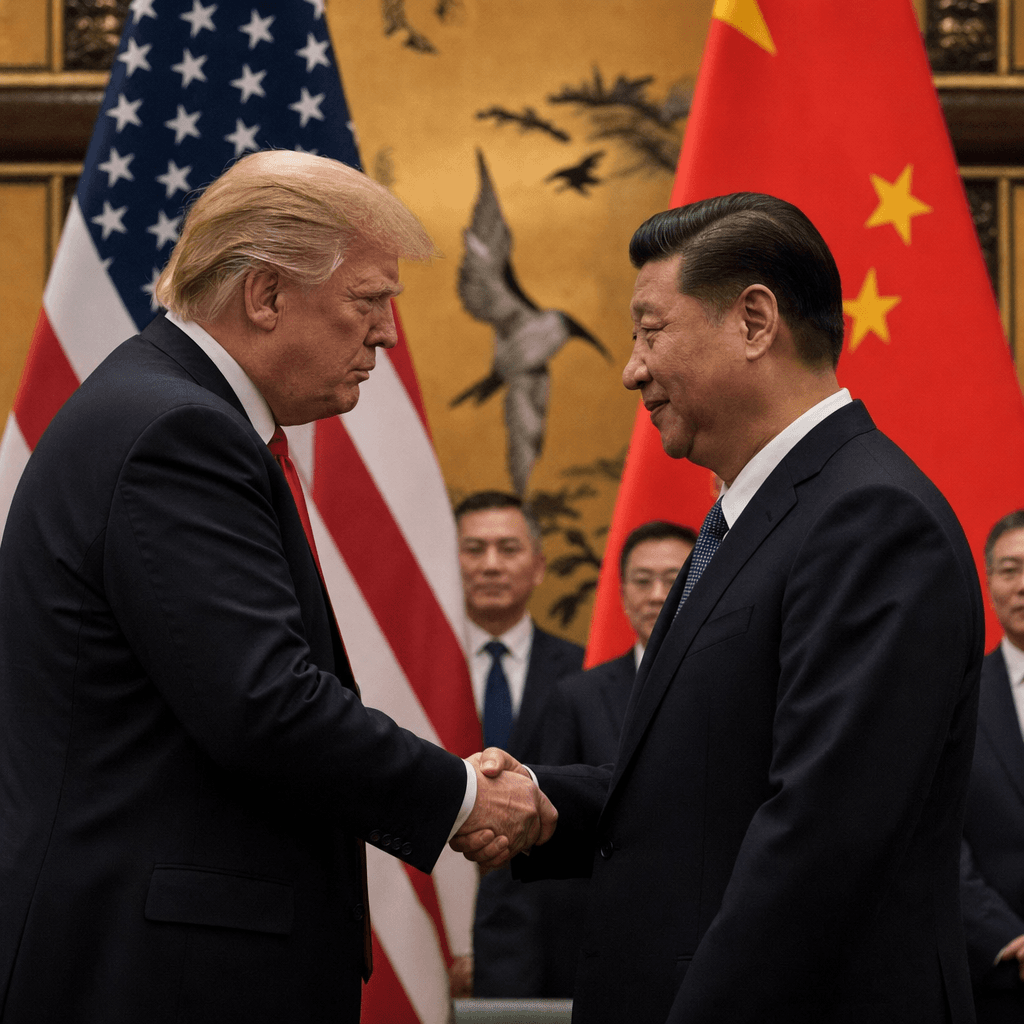
Trump-Xi Summit Seeks Calm as Trade and Taiwan Loom
Beijing wants a truce, Washington wants leverage, and both leaders appear set for optics over outcomes at the May 14-15 summit.
President Donald Trump is heading to Beijing for his first China visit since 2017, and the agenda is already narrower than the rhetoric: stability, not a reset, is the likely output, according to The Washington Post and
The National. Since Trump’s last Beijing trip, U.S.-China merchandise trade has fallen by more than one-third, and the partial commercial deal he signed in his first term never delivered the promised strategic turn, the Post reports. That is the core power dynamic: Xi Jinping can offer de-escalation without conceding structural change, while Trump needs something he can brand as a win.
Why this summit is small-ball by design
The most telling detail is what both sides are not trying to do. The Post says Washington has effectively stopped trying to force Beijing to remake its state-led economic model, and instead has copied some of China’s tools. That leaves the summit focused on managing friction rather than resolving it, which fits Xi’s current position: China is more confident, more economically capable, and better prepared for a long contest than it was in 2017, according to the Post’s reporting and analysis.
That matters because the leverage is asymmetrical. Trump can threaten tariffs, sanctions, and export controls; Xi can absorb pressure, slow-walk concessions, and offer just enough cooperation to keep the channel open. For readers tracking the broader map of Global Politics, this is less a trade summit than a test of whether the two biggest economies can keep rivalry from spilling into crisis.
Taiwan and Iran are the real pressure points
The risks sit outside the official talking points. AP reporting carried by the Post says Trump has shown greater ambivalence on Taiwan, raising questions about whether he would dial back U.S. support for the island. That is the one issue Beijing is most likely to probe because it goes straight to American credibility in Asia. If Trump signals flexibility, Taiwan loses leverage fast; if he doubles down, Xi still gets the optics of having forced the question into the room.
Iran is the other complication. The National reports the White House wants to press China on Iranian oil purchases, dual-use goods, and support for Tehran and Moscow. But the same reporting says analysts expect only symbolic movement: a trade truce, not a breakthrough; a carefully staged summit, not a geopolitical realignment. China has also spent years diversifying energy imports, which reduces the pressure Washington can apply through oil politics.
What to watch next
The next decision point is whether the summit produces a joint statement that freezes the current tariff-and-controls fight, or whether Trump leaves with only vague promises on aerospace, agriculture, energy, and a future reciprocal visit to Washington, as The National reports. Watch the language on Taiwan, Chinese purchases of Iranian oil, and any commitment to a broader trade board. If those are all soft, the meeting will have done its real job: preventing deterioration. If one turns hard, that will be the signal to watch.
Discover more
Conflict & Security
De la Espriella's Razor Win Resets US-Colomb
De la Espriella's razor-thin election win signals a reset in US-Colombia relations, reshaping security ties and the agenda under a Trump-aligned approach.
International Relations
Colombia's Razor-Thin Rightward Pivot
Colombia swings right as Abelardo de la Espriella narrowly wins the presidential runoff by under one percent, exposing a deeply divided and polarized nation.
Global Politics
Iran Demands US Enforce Ceasefire
Iran insists the United States must enforce a ceasefire in Lebanon to uphold the memorandum of understanding, raising pressure on Washington and Netanyahu.

Conflict & Security
Trump's Iran Deal Faces Bipartisan Backlash
Trump's Iran deal draws fierce criticism from both Republicans and Democrats, exposing deep political divides over the ceasefire and the terms of the agreement.