EU Sanctions Violent Israeli Settlers
EU foreign ministers agree on targeted sanctions against settlers.
Model Diplomat2 min readEurope
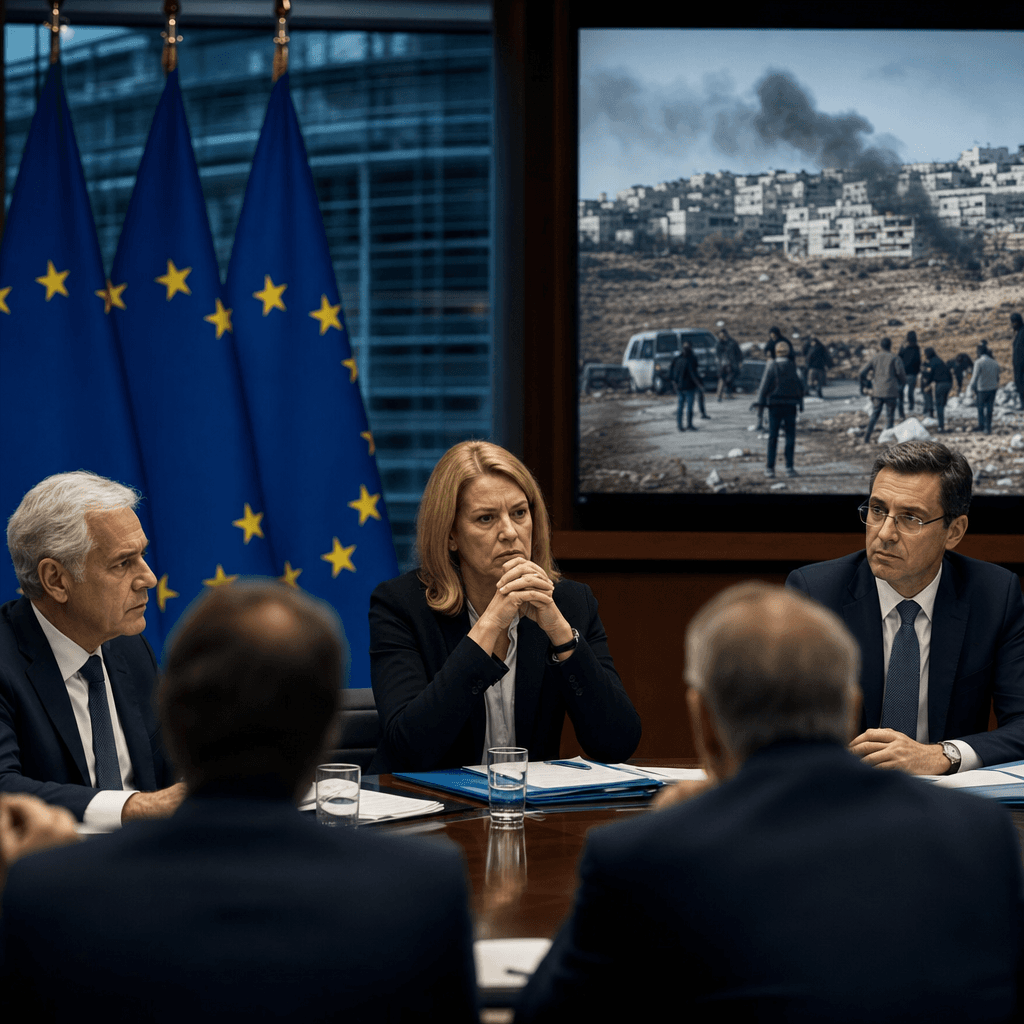
EU Breaks Its Israel Deadlock With Settler Sanctions
Hungary’s veto fell away, letting the EU sanction violent settlers while leaving trade pressure on Israel for another fight.
EU foreign ministers agreed on Monday to freeze assets and impose entry bans on violent Israeli settlers and settler organisations, ending a long-running impasse after Hungary’s veto disappeared, according to Al Jazeera and
The Irish Times. The move gives Brussels a way to show it is responding to West Bank violence without taking the larger step of punishing Israel as a state. That distinction matters: the EU has finally acted, but only at the narrowest end of its leverage.
Hungary was the blocker
For months, the EU could not unify around sanctions because Budapest would not move. That changed once Hungary’s new government dropped the objection, allowing unanimity and unlocking a package that had been stuck since before the current Gaza war widened Europe’s political split, as reported by The Washington Post / AP and
Al Jazeera. The leverage here is procedural, not coercive: the EU can black-list individuals and entities, but only if every member state stops protecting the holdout.
That exposes the real line inside Europe. Spain and France have been pressing for a tougher posture, while Italy and Germany have been more reluctant to cross from symbolic sanctions into economic pressure, The Irish Times reported. For Brussels, the compromise is politically useful: it answers domestic criticism over West Bank violence without forcing a confrontation over trade ties with Israel.
Narrow sanctions, limited pain
The package is aimed at specific settlers and organisations accused of violence, not at settlement activity as a whole, The Washington Post / AP and
The Irish Times said. That limits the practical impact. Targeted asset freezes and travel bans can isolate figures on the margins of the settlement movement, but they do not alter the state-backed architecture that sustains settlement expansion.
Israel will read the move as political pressure, not strategic escalation. That is why Jerusalem has already condemned the decision in public, while EU officials have insisted the parallel sanctions on Hamas leaders are not meant as a moral equivalence, The Washington Post / AP reported. The immediate loser is the settler leadership; the bigger loser, if this hardens, is Israel’s ability to treat Europe as a low-cost diplomatic arena.
What to watch next
The next decision point is later in May, when EU foreign ministers are expected to turn to trade, according to The Washington Post / AP. That is where the real fight begins: whether France, Spain and Sweden can widen this from individual sanctions to market measures on settlement goods. For the broader balance of power, see
Conflict and
International.
Discover more
India
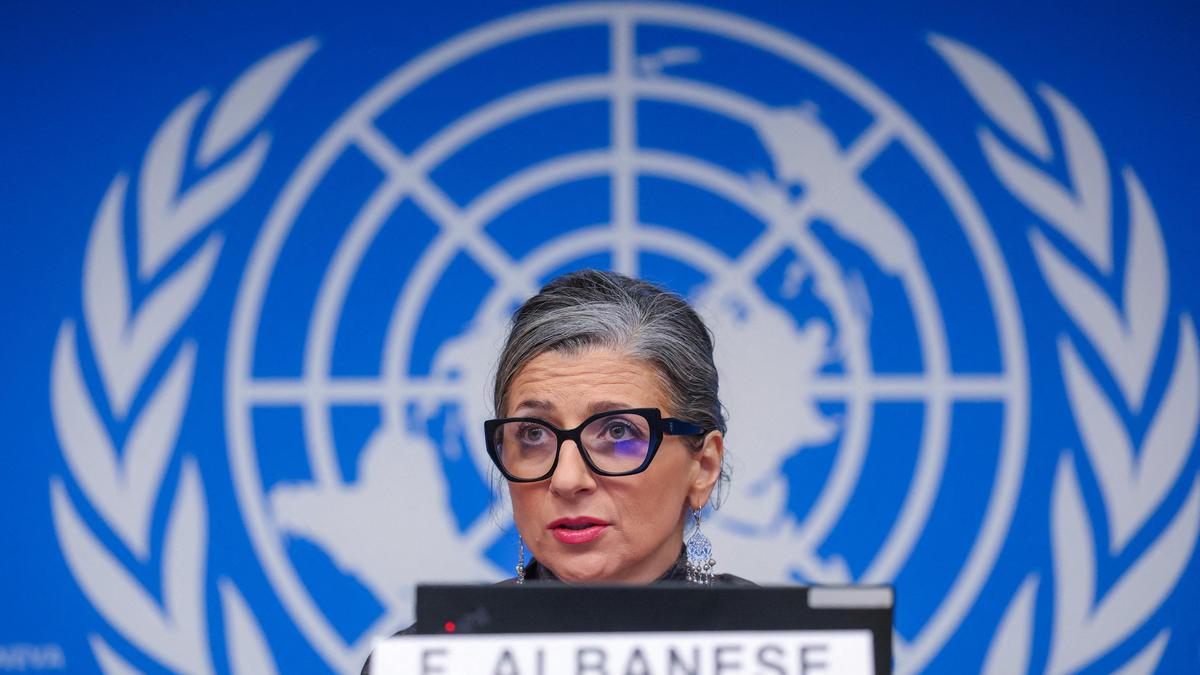
UN Expert Albanese: India Violates Law
UN Rapporteur Francesca Albanese accuses India of breaching international law, spotlighting human rights concerns in Kashmir and prompting diplomatic pushback.

Global Politics
US Seizes Iranian Ship, Tensions Surge
The US seizure of the Iranian ship Touska highlights a shift in control over the Strait of Hormuz, favoring Iran's strategic position.

Conflict & Security
Drone Warfare Killing Aid Workers at Unprec
Over 1,000 humanitarian workers killed in three years as cheap armed drones collapse legal protections. Gaza, Sudan, Ukraine, and DRC see deliberate targeting of aid convoys and hospitals with zero prosecutions.

Global
World Normalises Taliban as Afghan Women Eras
UN data shows Afghan women erased from public life as Russia recognises the Taliban, EU hosts officials in Brussels, and ICC warrants for gender persecution go unenforced.