EU Engages Taliban on Deportations
First diplomatic talks amid migration pressures
Model Diplomat3 min readEurope
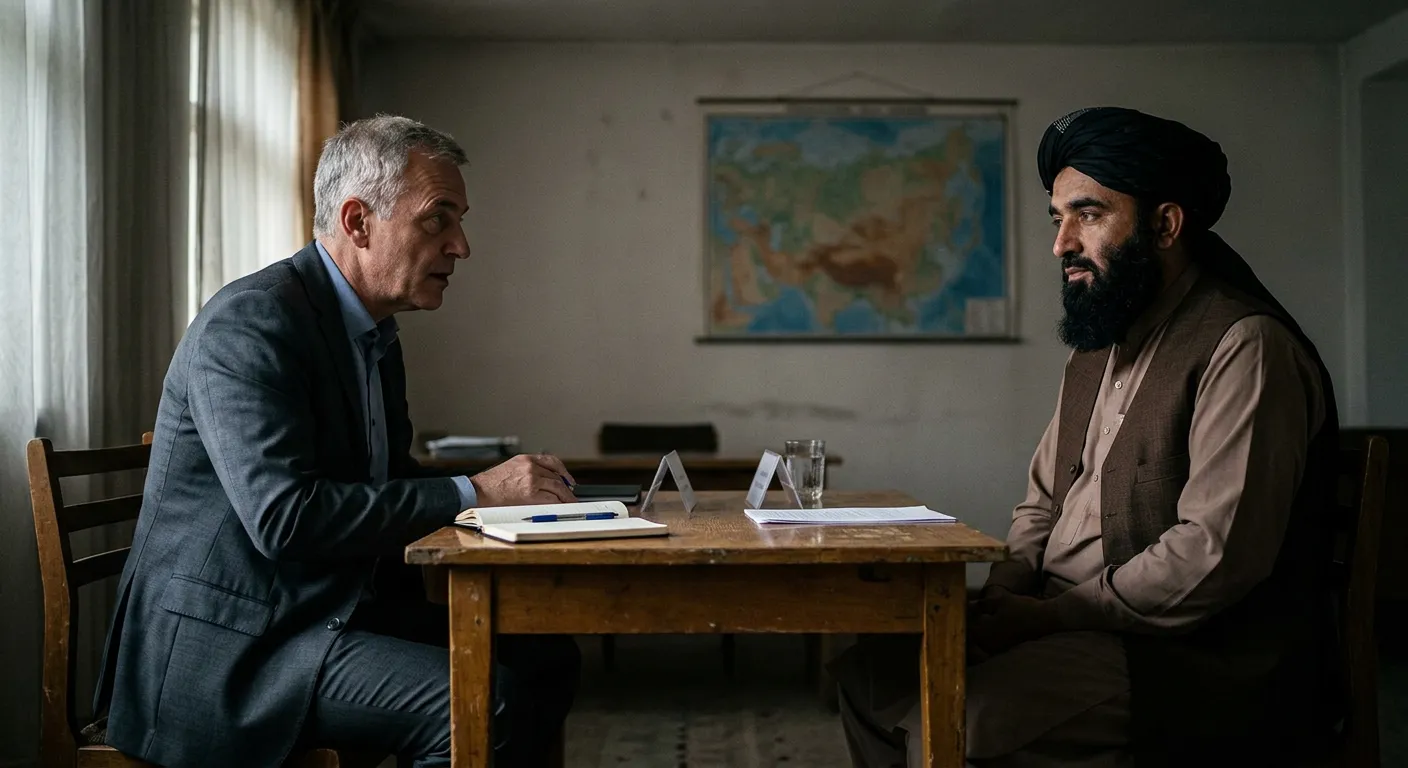
EU Breaks Isolation to Negotiate Taliban on Deportations
Brussels hosts first delegation from unrecognized regime seeking diplomatic foothold. Migration pressure from member states overrides human rights objections.
On Tuesday, June 23, 2026, a Taliban delegation walked into a Brussels meeting room and achieved what five years of international sanctions and isolation had not: formal engagement with the European Union. The talks, held at an undisclosed location and attended by 15 EU member states alongside the European Commission, focused narrowly on deportations—but the symbolism cracked the Taliban's near-total diplomatic quarantine.
The pressure came from EU capitals, not Brussels. Twenty of the EU's 27 member states signed a letter last October demanding the Commission coordinate technical talks with Afghanistan's de facto authorities for returning Afghan nationals rejected for asylum or convicted of crimes. EU migration chief Magnus Brunner in June defended the meeting as necessary, saying Brussels had no option but to talk to the Taliban about returns. The bloc faced a concrete problem: of 22,870 Afghans ordered deported across the EU, only 2% actually complied—lack of diplomatic relations made enforcement impossible. With far-right parties gaining ground on hardline migration platforms across Europe, member states backed by domestic political pressure forced the Commission's hand.
The Taliban delegation, led by Abdul Qahar Balkhi, the foreign ministry spokesperson, framed the meeting as a major diplomatic opening for Kabul. While Brussels publicly stuck to technical-level returns, the Taliban agenda reached wider: consular presence in the EU, resumption of broader consular services for Afghan nationals, and what they called "trust-building measures"—the diplomatic equivalent of saying: recognize us.
The previous meeting occurred in Kabul in January; Europe is maintaining staff on the ground despite formal non-recognition.
The calculus is sharpening. Afghanistan faces food insecurity affecting over 17 million people and economic collapse under international sanctions. The Taliban need diplomatic and financial runway. The EU faces electoral pressure on migration, with no path to enforce removals without engaging the regime it refuses to recognize. Neither Belgium nor any EU member state formally recognizes the Taliban, yet none are willing to absorb the domestic political cost of continued broken deportation mechanics.
Rights groups read the meeting as capitulation. Fereshta Abbasi, a researcher at Human Rights Watch, said EU countries were "undermining their credibility by condemning Taliban abuses on one hand while cooperating with the Taliban to forcibly return Afghans on the other." Nobel Peace Prize laureate Malala Yousafzai called the engagement "deeply shaken" earlier in June, warning that Europe risked legitimizing a regime imposing severe restrictions on women's education and employment. But
a Chatham House analyst in August 2025 flagged what was coming: absent Western diplomatic recognition, migration management talks offer the Taliban its only lever to build rapport with the West.
What to Watch
Two milestones matter next: whether the EU moves toward formal deportation protocols with the Taliban (signaling operational normalization), and whether other countries follow—particularly the UK or Germany, both major hosts of Afghan asylum populations. The Taliban's long game is clear: use deportations as a wedge for broader recognition. The EU's move from "never speak to them" to "technical talks" in five years suggests that goal is not beyond reach.
Discover more

International Relations
Pakistan's Key Role in US-Israel-Iran Meddle
Pakistan is seeking to mediate the US-Israel-Iran conflict, balancing high-stakes diplomacy against severe economic pressures and steep regional challenges.
India
Romanian Coalition Party Demands PM Resign
Romania's Social Democrats withdrew from coalition, joining far-right AUR to topple PM Bolojan, risking €10 billion in EU funds by August 2026.
India
UN Expert Albanese: India Violates Law
UN Rapporteur Francesca Albanese accuses India of breaching international law, spotlighting human rights concerns in Kashmir and prompting diplomatic pushback.

Conflict & Security
Drone Warfare Killing Aid Workers at Unprec
Over 1,000 humanitarian workers killed in three years as cheap armed drones collapse legal protections. Gaza, Sudan, Ukraine, and DRC see deliberate targeting of aid convoys and hospitals with zero prosecutions.