Egypt's Maritime Deal with Eritrea Explained
Cairo's strategy to isolate Ethiopia through Red Sea alliances
Model Diplomat3 min readafrica
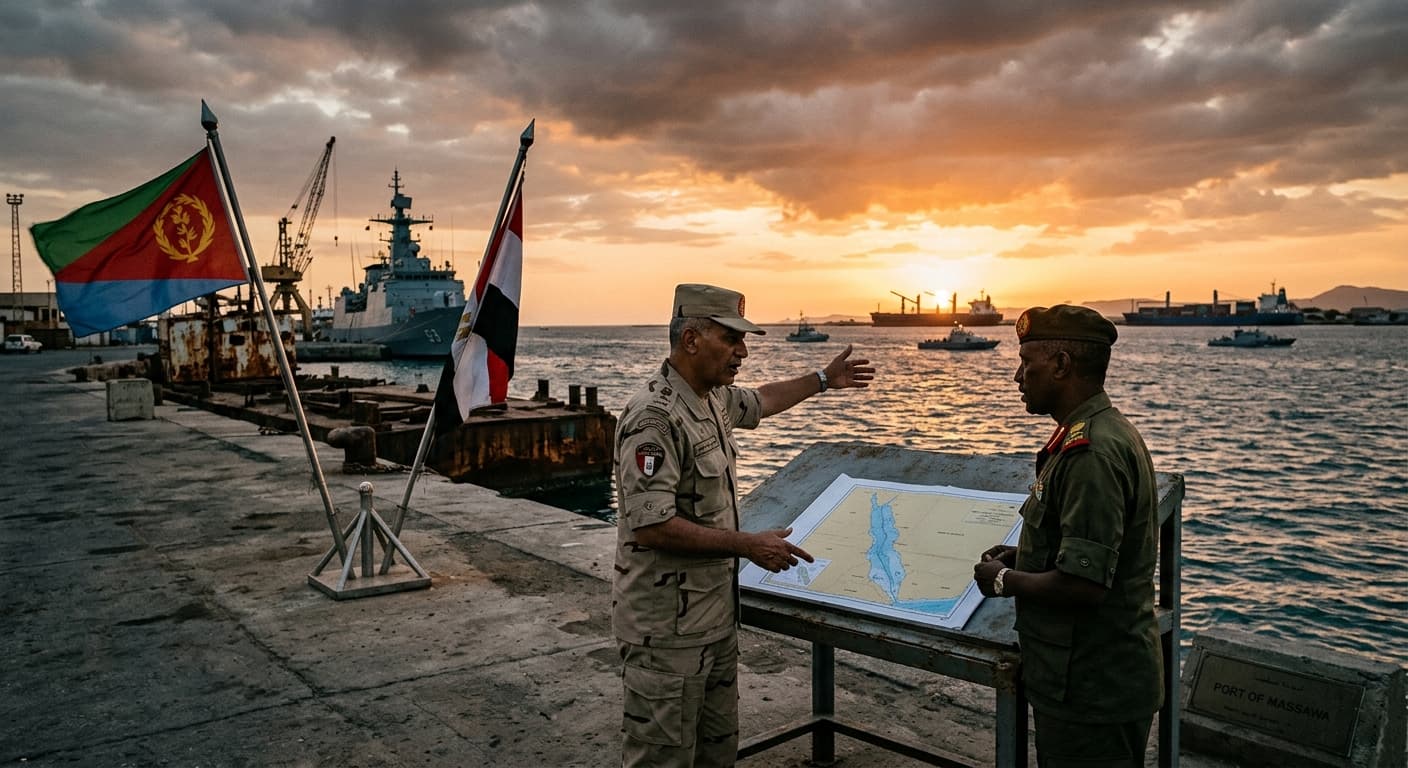
Egypt Builds an Anti-Ethiopia Containment Arc — and Eritrea Is the Keystone
A May 2026 maritime deal caps Cairo's campaign to encircle landlocked Ethiopia through Red Sea port allies — shifting the Nile dam standoff from diplomacy to geography.
On May 16, Egypt dispatched its foreign and transport ministers along with a delegation of corporate executives to Asmara, where they signed a maritime transport cooperation agreement with Eritrea and launched a direct shipping line between the two countries' Red Sea ports. The National reports that Egyptian Foreign Minister Badr Abdelatty told President Isaias Afwerki the "governance and security" of the Red Sea must remain the "exclusive responsibility" of littoral states — a doctrine that, by design, freezes Ethiopia out of the waterway entirely.
The practical stakes go well beyond shipping. The National confirms that Egypt has already negotiated operational control over Eritrea's Assab port and Djibouti's Doraleh port — the latter being the commercial lifeline on which landlocked Ethiopia depends for the bulk of its imports. Egypt has also deployed as many as 15,000 troops to Somalia as part of an AU peacekeeping mission and training deployment, and secured naval access in Djibouti and Eritrea. The geography is stark: Eritrea, Djibouti, and Somalia collectively block every inch of Ethiopia's former coastline. Cairo now has footholds in all three.
The Nile dam dispute is the engine under this strategy. Ethiopia completed the Grand Ethiopian Renaissance Dam, a 6,000-megawatt hydropower project it views as a development imperative but that Egypt describes as an existential threat to its water supply — 85% of Nile waters originate in Ethiopia's highlands. The BBC reported in late 2024 that the Asmara summit between Sisi, Afwerki, and Somalia's Hassan Sheikh Mohamud constituted an "axis against Addis Ababa," quoting Horn International Institute director Hassan Khannenje. That axis is now acquiring infrastructure — ports, shipping routes, and military staging points — rather than merely issuing communiqués.
The May 2026 visit added an economic layer. The Middle East Observer reports that the delegation included executives from Arab Contractors and Elsewedy Electric, signaling long-term investment rather than transactional diplomacy. Egypt's Transport Minister Kamel El Wazir offered railway and port-building expertise; the discussions covered mining, pharmaceuticals, fisheries, and agricultural investment.
Mesob Journal noted that Abdelatty described Eritrea as "a pillar of security and stability in the Horn of Africa" and confirmed Afwerki had accepted an invitation to visit Cairo — locking in a reciprocal high-level channel.
Ethiopia's self-inflicted isolation accelerated this. Prime Minister Abiy Ahmed's 2024 port deal with Somaliland — leasing coastline in exchange for potential recognition — galvanized both Somalia and Egypt into alignment. Abiy's subsequent statements, including army chief Field Marshal Birhanu Jula's declaration that Ethiopia would "secure a sea outlet" through force if necessary, gave Cairo's diplomacy its urgency. The BBC documented Ethiopian state television broadcasting soldiers with placards reading "Assab is ours," a direct claim on Eritrean territory.
Egypt has also struck military cooperation agreements with Kenya and Uganda, The National notes, extending the encirclement into the Nile Basin's upstream states. The message to Addis Ababa is unambiguous: Cairo will contest Ethiopia's ambitions on every flank simultaneously.
What to Watch
The Afwerki visit to Cairo. No date is set, but when Eritrea's president travels to Egypt, expect a formal defense pact or basing arrangement to be announced — moving the relationship from economic partnership to hard security guarantees. That would be the point at which Ethiopia's military planners must treat the containment arc as an operational reality rather than a diplomatic nuisance.
Second, watch the Council of Arab and African States Bordering the Red Sea and Gulf of Aden, which Abdelatty referenced in Asmara. If Egypt, Saudi Arabia, Eritrea, Somalia, Yemen, and Jordan activate that framework with a formal Red Sea security doctrine excluding non-littoral states, Ethiopia loses any multilateral path to sea access — and Abiy's domestic credibility on the port issue collapses with it.
Discover more

US Politics
House Ethics Committee Pushes Sexual Miscond.
The House Ethics Committee has shifted responsibility for sexual harassment settlement records to the Office of Congressional Workplace Rights, complicating disclosure efforts.

India
700 Activists Accuse PM Modi of MCC Breach
Over 700 activists allege PM Modi breached election code with a televised address attacking opposition parties just before state elections.

International Relations
Economist Impact Sustainability Week 2026
Economist Impact Sustainability Week 2026 spotlights the energy transition, AI in clean technology, and supply chain resilience as themes for global leaders.

Conflict & Security
Drone Warfare Killing Aid Workers at Unprec
Over 1,000 humanitarian workers killed in three years as cheap armed drones collapse legal protections. Gaza, Sudan, Ukraine, and DRC see deliberate targeting of aid convoys and hospitals with zero prosecutions.