DRC Government, M23 Rebels Humanitarian Deal
Examining the implications of the Montreux protocol
Model Diplomat9 min readDemocratic Republic of Congo
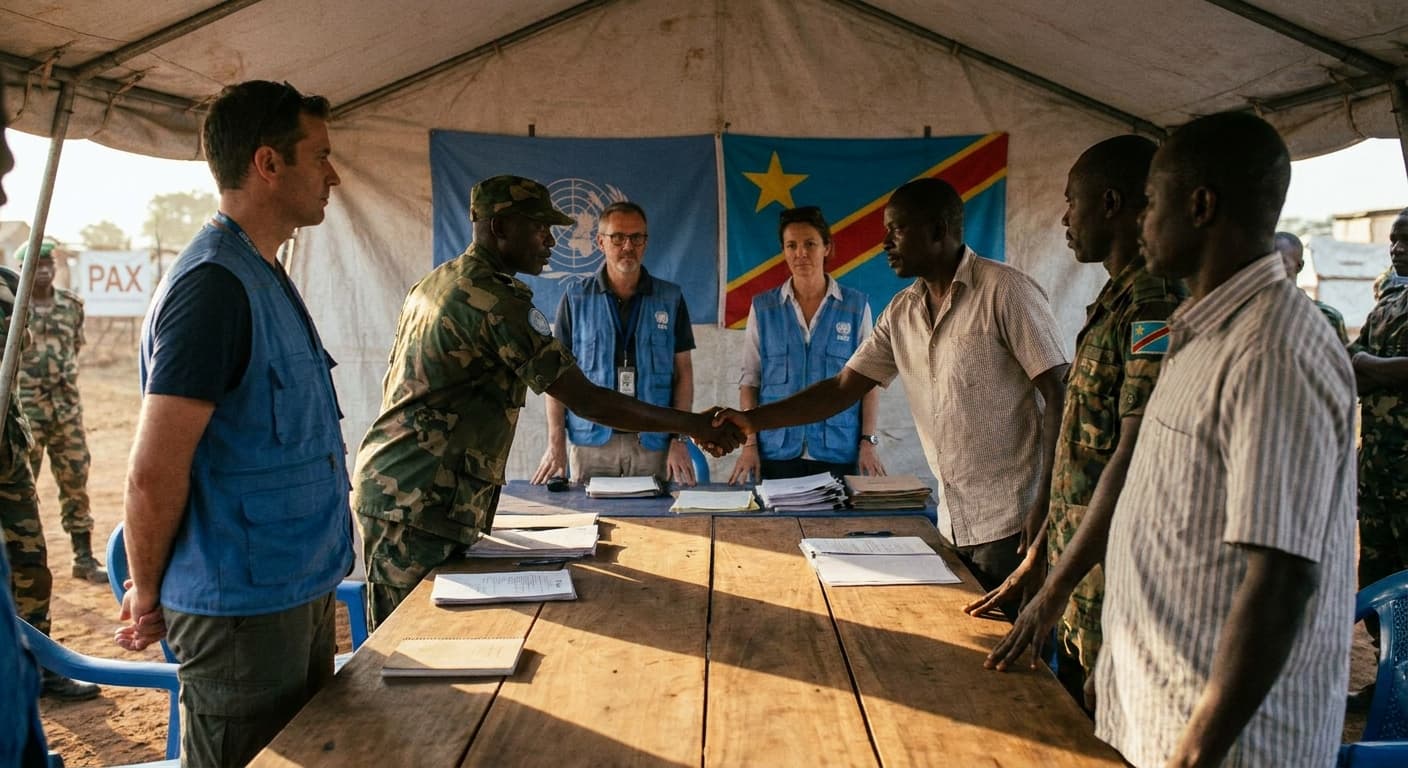
DRC–M23 Humanitarian Deal: What Montreux Really Bought
The April 19, 2026 humanitarian protocol between Kinshasa and the M23 has freed no prisoners, unblocked no airports, and quietly legitimised rebel rule in eastern Congo.
On April 19, 2026, representatives of the Congolese government and the Alliance Fleuve Congo/March 23 Movement (AFC/M23) issued a joint statement pledging to protect humanitarian convoys, release prisoners within 10 days, and stand up a ceasefire monitoring body. Eleven weeks later, the prisoner exchange has not happened, aid workers are still being turned back at checkpoints, and an Ebola outbreak has been layered onto a displacement crisis that OCHA now calls the world's largest. The deal's most consequential effect is the one no signatory has advertised: by binding the AFC/M23 to international humanitarian law obligations in the areas it holds, Montreux implicitly ratifies the rebels' administration of Goma, Bukavu and Uvira — converting a battlefield occupation into something closer to a governed territory the outside world will have to negotiate with.
What was actually signed
The primary text is not the wire copy — it is the eight-paragraph joint statement issued through the U.S. State Department and reposted by ReliefWeb. Concluded after five days of talks in Montreux from April 13 to April 17, it implements the humanitarian-access protocol of the Doha Framework for a Comprehensive Peace Agreement signed on November 15, 2025.
The document commits the parties to "refrain from any attack, destruction, removal, or rendering useless" of foodstuffs, hospitals, schools, water and energy infrastructure, and to allow "rapid, unimpeded, safe, and sustained humanitarian access." A separate memorandum of understanding, signed with the International Conference on the Great Lakes Region (ICGLR), operationalises the Expanded Joint Verification Mechanism Plus (EJVM+) as the field arm of the new Ceasefire Oversight and Verification Mechanism (COVM), with logistical support from MONUSCO. The mediators' bench is as revealing as the text: Qatar and the United States as principal facilitators, Togo as the African Union's mediator, the AU Commission and Switzerland as observers, per
Al Jazeera.
Note the phrasing. The AFC/M23 — a group under UN sanctions and, until April 2025, one Kinshasa refused even to name at the table — has now co-signed a text that identifies it as a duty-bearer under international humanitarian law. Those are the legal obligations of a party to an armed conflict, not a criminal enterprise. The May 20–21, 2026 statement of the International Contact Group for the Great Lakes, issued after a Stockholm meeting of ten Western states and the EU, "commends" both parties symmetrically. That symmetry is itself the concession.
From paper to ground: the compliance gap
The compliance record is thin and, in the categories the protocol was written to address, deteriorating.
OCHA's monthly bulletins recorded 29 incidents against humanitarian workers in eastern DRC in April 2026 alone, following 33 in March; since January 2025, 663 incidents have been reported across North Kivu, South Kivu, Ituri, Tanganyika and Maniema. Roughly a third of April's incidents were "interference and restrictions" and another 28 percent "intimidation, threats or physical aggression" — precisely the checkpoint-level obstruction the Montreux text was written to end, according to
UN OCHA.
Access has not been restored where it matters most. Goma and Kavumu (Bukavu) airports remain closed to sustained commercial and humanitarian flights more than a year after the M23 seized them, choking the aid pipeline into a region where 5.7 million people are internally displaced and 5.9 million face food insecurity, per OCHA's March 2026 dashboard. The 2026 Humanitarian Needs and Response Plan is 30.2 percent funded against a $1.4 billion appeal.
The funding gap is not incidental to the diplomacy. The DRC's UN Humanitarian Coordinator warned in Geneva on 25 March 2025 that the 2025 plan was funded at 8.3 percent after Washington — which had provided 70 percent of the previous year's $1.3 billion response — cut back. The Trump administration is simultaneously the mediator of first resort and the donor withdrawing its contribution. That doubles Kinshasa's dependence on U.S. political process while shrinking the humanitarian buffer that would give the process time to work.
The prisoner file is the cleanest read of the parties' faith in the deal. The July 19, 2025 Doha declaration of principles already committed both sides to a prisoner exchange, a step Al Jazeera flagged at the time as central to M23's demands. By the
August 18, 2025 signing deadline, no exchange had occurred, and the M23 briefly refused to send a delegation to Doha. The AEI Critical Threats Project
documented that Kinshasa rejected M23's demand for the immediate release of more than 780 prisoners and insisted on case-by-case amnesty inside a final peace deal. Montreux re-committed both sides to a 10-day timetable that closed on April 29, 2026. There is no public record of a completed exchange.
The unadvertised concession — and the historical parallel
Read against Foreign Affairs' July 2, 2026 assessment that Trump's Congo deal is falling apart, the Montreux protocol looks less like a humanitarian breakthrough than a face-saving stopgap. Washington and Doha needed something to show between the June 27, 2025
Washington Accords and the still-unsigned final Doha peace agreement. What they produced is technically a humanitarian instrument, but functionally a governance one.
The joint statement obliges both parties to "respect and protect humanitarian actors" and to "facilitate the continuous provision of essential services to the civilian population" — food, water, healthcare, housing, education — inside the territories each controls. Those are the duties of an administering authority. The International Crisis Group's March 2026 report, The M23 Offensive: Elusive Peace in the Great Lakes, notes that the Doha framework leaves the "restoration of state authority" question deferred to a later stage that has not yet begun. In the interim, the M23 governs.
The historical parallel is uncomfortable and instructive. The M23 itself emerged from the collapse of a March 23, 2009 peace deal between Kinshasa and the CNDP rebellion — a deal that promised integration of rebel units into the national army but never delivered demobilisation, as the BBC noted at the Doha signing. Egmont Institute analyst Erik Kennes has
traced how the language of the current Doha protocols mirrors the general phrasing of the 2009 CNDP agreement and the December 2013 M23 declaration — both of which produced a rebellion, not a peace. The Council on Foreign Relations put the risk plainly on July 21, 2025, warning that the Doha process operates in a "world in which the conflict in eastern Congo is fundamentally between two opposing sides," a fiction that ignores the
dozens of armed groups, Ugandan and Burundian entanglements, and the local mining and land economies that drive the fighting.
Who wins, who loses
The winners are visible if you name them. Rwanda gets a rebel proxy laundered into a treaty-bound interlocutor without publicly acknowledging that its Rwanda Defence Force fights alongside M23 — an allegation the U.S. Treasury made explicit in November 2025 sanctions against four Rwandan generals for "training, equipping and fighting alongside" the rebels, and extended on
July 6, 2026 with designations against Rwandan mineral firms. Qatar cements its position as the indispensable Great Lakes mediator, its leverage flowing in part from the investments — including in Kigali's new international airport — that the International Crisis Group
described as giving Doha unusual reach over both parties.
The Trump administration secures optics. Massad Boulos, the senior Africa adviser and father-in-law of Tiffany Trump, needs a live process to justify the parallel minerals-for-security bargain — tantalum, cobalt, copper, lithium — that the United States Institute of Peace framed as central to the June 2025 accord. AEI's analysis notes that several flagship ventures inside the U.S.-backed regional framework, including the Rubaya coltan mine in North Kivu and the Ruzizi hydropower project near Bukavu, sit inside M23-and-Rwanda-controlled territory; without a functional deal with the M23, the mineral pipeline the White House is selling to U.S. investors does not exist.
Félix Tshisekedi is the ambiguous case. He has bought time — the M23's advance on Uvira in December 2025 was reversed within a week under U.S. pressure, as documented by Al Jazeera's reporting from the Kavimvira border — but at the cost of legitimising a rebellion that now co-signs protocols with his government. His response has been to open a legal front. On June 26, 2026, the DRC
filed a case against Rwanda at the International Court of Justice for "decades of abuses." That is not the move of a government that trusts the Doha–Montreux track to deliver.
The clear losers are on the ground. Human Rights Watch documented executions, abductions and sexual violence during the fall of Uvira in December 2025, and drone strikes by both sides killed at least 16 civilians between February and April 2026, per ISS Africa. MONUSCO's mandate was renewed in December 2025 under UN Security Council Resolution 2808 but the peacekeeping mission withdrew from South Kivu in 2024 — leaving, in the words of the ISS, an "acute gap in civilian protection" that the EJVM+ does not fill, since the new ceasefire mechanism contains no dedicated civilian component.

Why Ebola raises the stakes
The Ebola outbreak that the WHO declared a Public Health Emergency of International Concern on May 17, 2026 — and Africa CDC declared a Public Health Emergency of Continental Security a day later — has changed the risk calculus for every party to the deal. The Institute for Security Studies argued in June 2026 that the outbreak intersects with the conflict zones where humanitarian access is already contested — the same corridors the Montreux protocol was meant to open.
The epidemiological angle also hands Washington and Doha a fresh lever. Vaccination campaigns and contact-tracing require the "safe humanitarian corridors" the ICG called for in Stockholm and that neither party has yet delivered. A cholera or Ebola cluster inside an M23-controlled town is a political liability the group cannot easily absorb; the mediators can now credibly demand airport openings and convoy guarantees against a metric the WHO is publicly tracking.
What to watch
- Ceasefire Oversight and Verification Mechanism first public report. The EJVM+ deployed an exploratory team to Uvira in late February 2026 and was formally operationalised at Montreux. Its first published compliance findings — routed through MONUSCO and the ICGLR — will be the earliest objective read on whether either side is honouring the humanitarian protocol.
- Presidential summit in Washington. Trump has floated a Tshisekedi–Kagame heads-of-state summit to seal the regional economic framework and the DRC–M23 final peace deal. A scheduled date — or its absence into the northern autumn — will signal whether the Doha track is alive.
- Prisoner exchange or amnesty law. Either the DRC tables the case-by-case amnesty legislation it has hinted at, or the M23 keeps the file as a blocking condition. A symbolic first batch before the next round of Doha talks is the minimum required to keep the confidence-building mechanism credible.
- U.S. sanctions escalation. The July 6, 2026 Treasury designations against Rwandan mineral firms suggest Washington retains unused escalatory rungs. Additional designations against M23 commanders — or their reversal as a carrot — will disclose the direction of pressure.
The Bottom Line
The Montreux humanitarian deal has not opened aid corridors, not freed prisoners, and not stopped the fighting — but it has done something more consequential and less noticed: it has made the M23 a co-signatory of an international humanitarian law instrument, legally normalising a Rwanda-backed rebellion inside a country whose government still calls it a terrorist group. Kinshasa's simultaneous move to the ICJ against Rwanda is the tell — Tshisekedi is negotiating in Doha and Montreux because he has to, and litigating in The Hague because he does not trust the outcome. The precedent that matters is 2009: the last time a Congolese government signed a general-language protocol with a rebellion in the Great Lakes, the M23 was the sequel.
Discover more
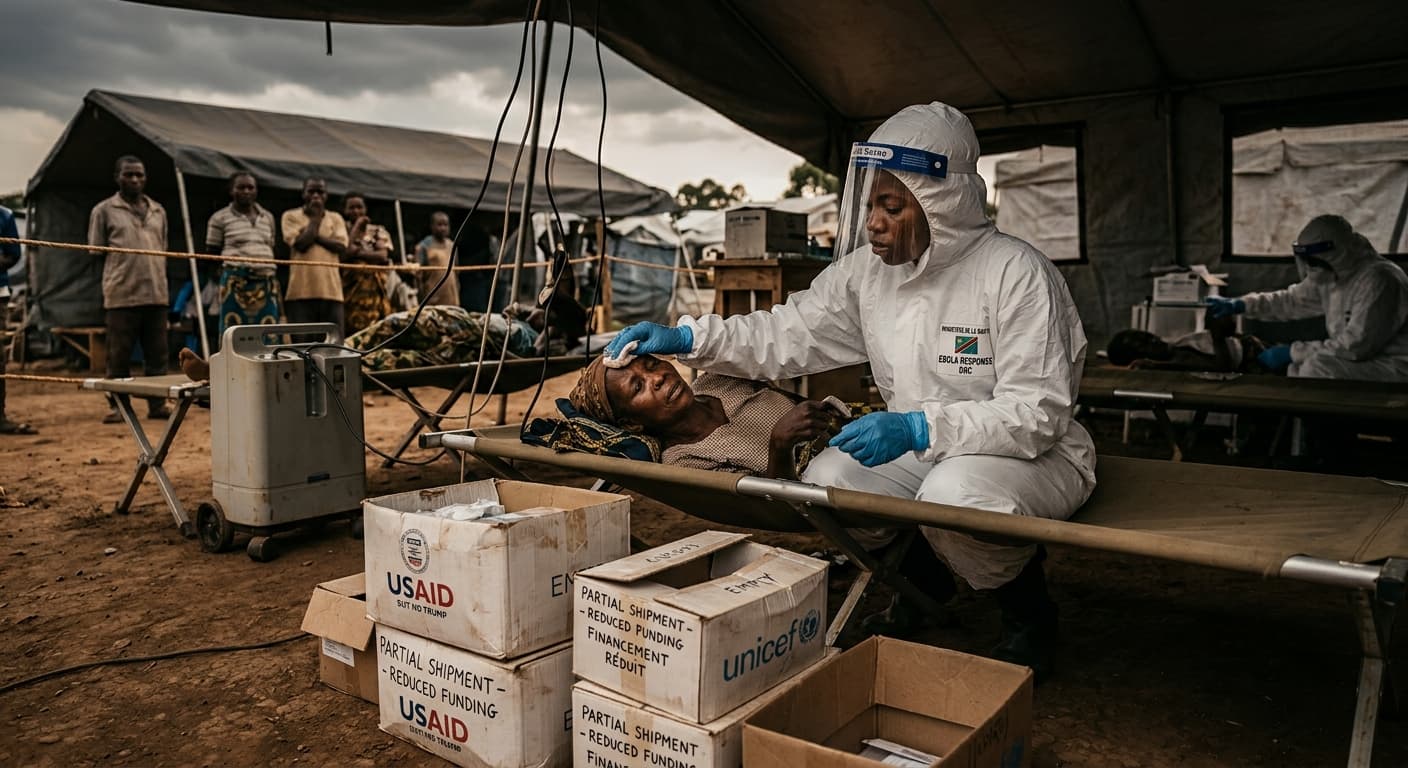
US Politics
Trump's Aid Cuts Fuel Ebola Crisis in DRC
Trump's foreign-aid cuts gutted the DRC's fragile health infrastructure, worsening an Ebola outbreak and crippling the public-health response on the ground.
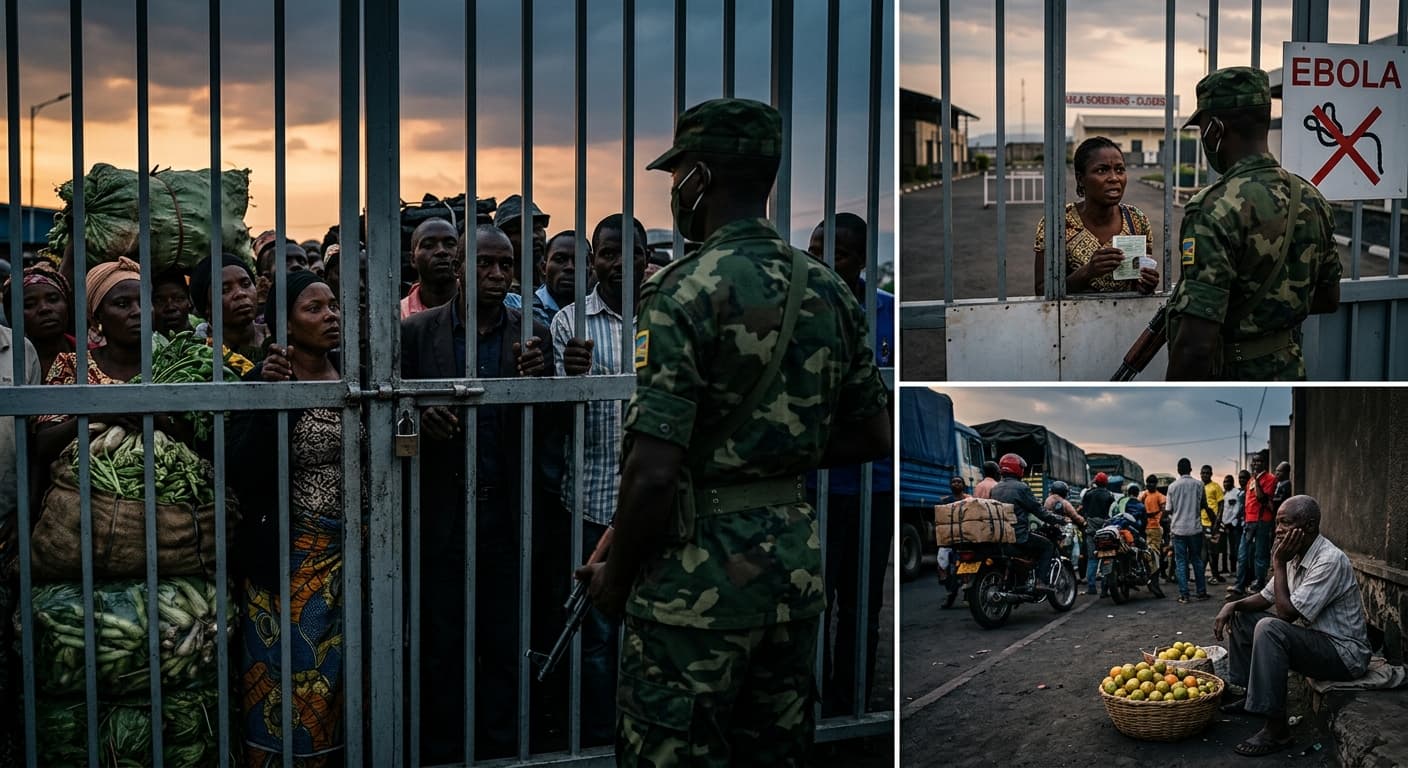
International Relations
Rwanda's Ebola Border Closure Strangles Goma
Rwanda's Ebola-driven border closure with the DRC is choking cross-border trade and threatening livelihoods in Goma, deepening an economic and health crisis.
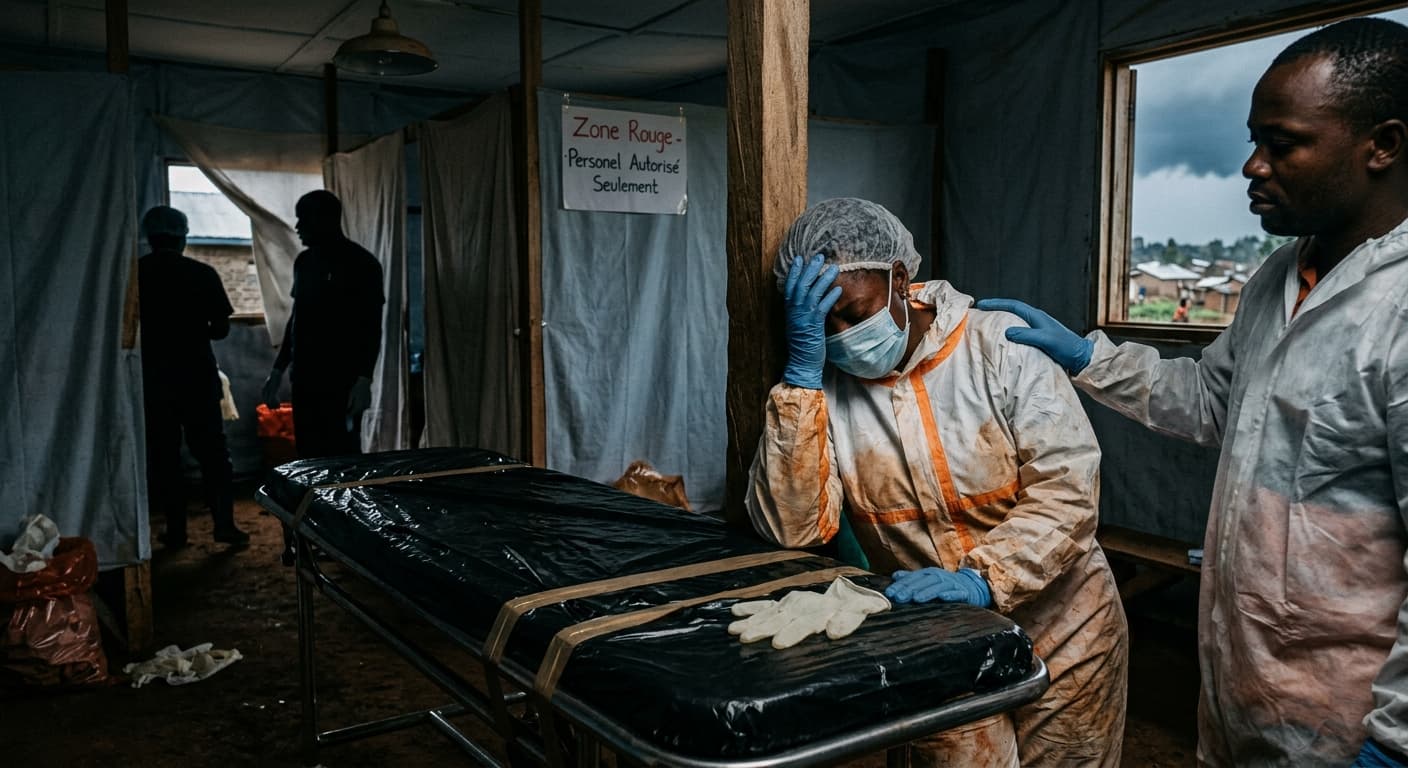
Global Politics
DRC Ebola Crisis: Workforce Decimated
The DRC's Ebola outbreak has spiraled into a wider healthcare crisis as a decimated medical workforce threatens containment and strains an overstretched system.

Conflict & Security
Ebola Outbreak in DRC Outpaces Response
An Ebola outbreak in the Democratic Republic of Congo is accelerating faster than the global health response, straining the WHO and exposing public health gaps.