Ebola Outbreak in DRC Outpaces Response
WHO Chief warns of escalating Ebola crisis in DRC
Model Diplomat3 min readAfrica

Ebola Outbreak in DRC Outpaces Global Health Response
As the Bundibugyo Ebola strain spreads in the DRC, WHO Chief Tedros warns that regional conflict is rapidly outpacing the global health response.
On May 30, 2026, World Health Organization (WHO) Director-General Tedros Adhanom Ghebreyesus arrived in Bunia, the capital of the northeastern Ituri province of the Democratic Republic of the Congo (DRC), to coordinate the emergency response to a rapidly accelerating Ebola outbreak, as reported by France 24. The epidemic, driven by the rare Bundibugyo strain of the virus, has triggered a severe healthcare crisis in a region already destabilized by decade-long insurgencies. According to
Al Jazeera, confirmed cases nearly doubled in 48 hours to reach 225, with more than 1,028 suspected cases and over 220 suspected deaths reported since the outbreak was declared on May 15. The rapid transmission has raised international alarm, prompting neighboring Uganda to temporarily close its borders with the DRC.
A Rare Strain Without a Shield
Unlike the more common Zaire strain, which was successfully contained in recent years using newly developed vaccines, the Bundibugyo virus has no approved vaccine or therapeutic treatment. The lack of biological countermeasures places the burden of containment entirely on traditional public health interventions, such as early isolation, rigorous contact tracing, and safe burials—all of which require a highly stable security environment. The medical charity Médecins Sans Frontières (MSF) warned that this 17th outbreak in the country is spreading at an unprecedented velocity, according to Swiss financial news platform Zonebourse. "Never before has an Ebola outbreak recorded so many cases so soon after its declaration," stated MSF Deputy Director Dr. Alan Gonzalez, noting that local testing capabilities are struggling to process hundreds of backlogged samples. This makes the outbreak a significant test for
international health organizations designed to prevent regional spillovers.
The Catastrophic Convergence of War and Disease
The primary obstacle to halting transmission is the severe insecurity plaguing eastern DRC, where a complex matrix of armed groups, including the Allied Democratic Forces (ADF) and the Rwanda-backed M23 rebel group, operate with relative impunity. Dr. Tedros described the situation as a "catastrophic collision of disease and conflict," emphasizing that health teams cannot establish community trust or isolate patients while active fighting continues, as reported by the BBC. In several instances, community suspicion has boiled over into violence; armed residents recently attacked an MSF treatment center in Mongbwalu, causing several highly infectious suspected patients to flee into surrounding communities. This volatile security landscape severely limits the mobility of humanitarian workers, turning epidemiological surveillance into a dangerous military-escorted endeavor. Consequently, the ongoing
conflict in the region has directly paralyzed critical containment corridors, allowing the virus to seep into neighboring North and South Kivu provinces.
Next Moves: Resource Mobilization and Border Pressures
The immediate focus moves to the mobilization of financial and medical resources. The Africa Centres for Disease Control and Prevention (Africa CDC) recently agreed on a $319 million response budget to prevent regional contagion, according to the BBC. Policymakers should watch whether donor states bridge the current funding gap, as Dr. Tedros highlighted that the WHO has received only one-third of the requested resources required for basic operations. Additionally, tension over travel restrictions will test regional diplomacy; while Uganda has enacted border closures, the WHO continues to advise against them, arguing they drive the illicit movement of people across unmonitored crossings and disincentivize transparent health reporting. The true test of containment will depend on whether local communities in Ituri can be successfully engaged to lead contact-tracing efforts despite the surrounding violence.
Discover more

Global Politics
US Seizes Iranian Ship, Tensions Surge
The US seizure of the Iranian ship Touska highlights a shift in control over the Strait of Hormuz, favoring Iran's strategic position.

Conflict & Security
Drone Warfare Killing Aid Workers at Unprec
Over 1,000 humanitarian workers killed in three years as cheap armed drones collapse legal protections. Gaza, Sudan, Ukraine, and DRC see deliberate targeting of aid convoys and hospitals with zero prosecutions.

Global
World Normalises Taliban as Afghan Women Eras
UN data shows Afghan women erased from public life as Russia recognises the Taliban, EU hosts officials in Brussels, and ICC warrants for gender persecution go unenforced.
Conflict & Security
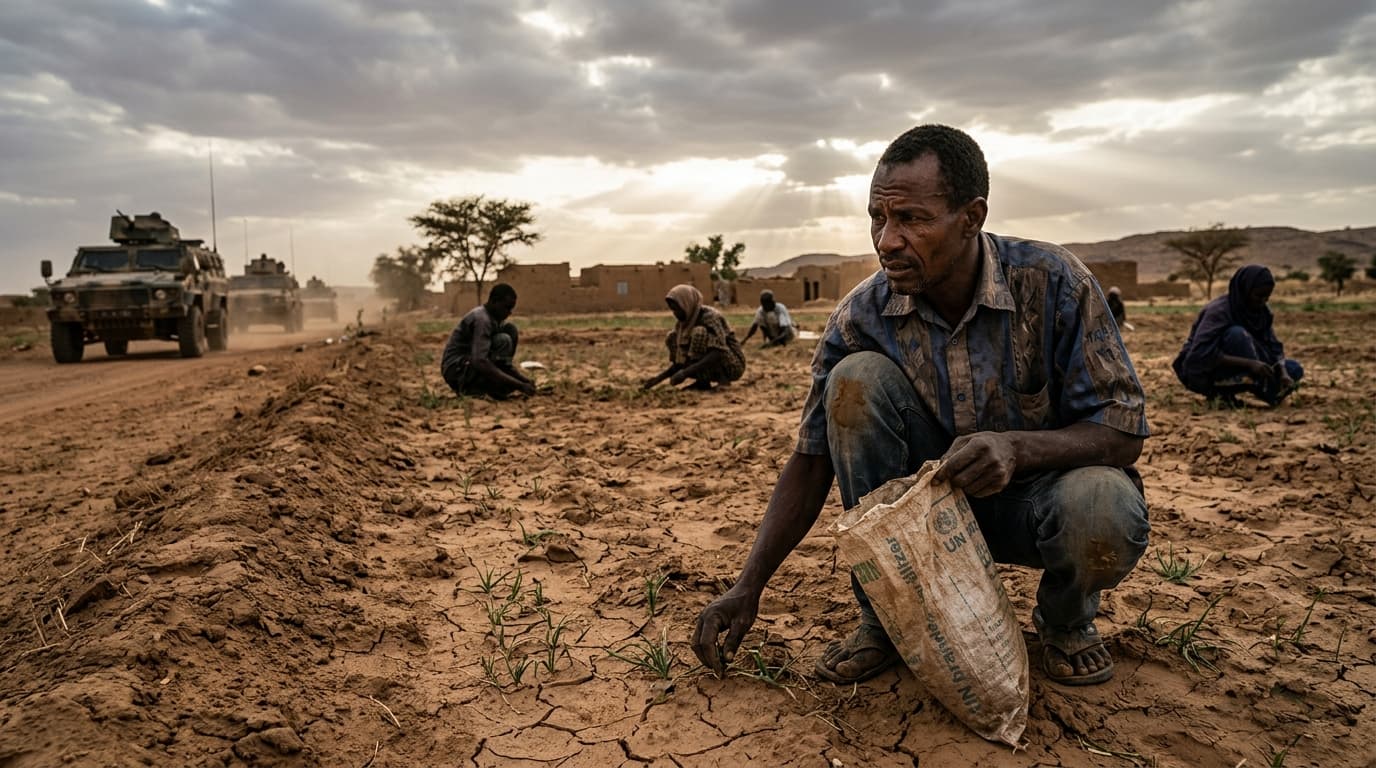
West Africa Food Crisis: Three Shocks in 2026
Conflict, climate extremes, and the Strait of Hormuz closure drive a severe food crisis in West and Central Africa, with fertilizer prices surging 80% and millions displaced.