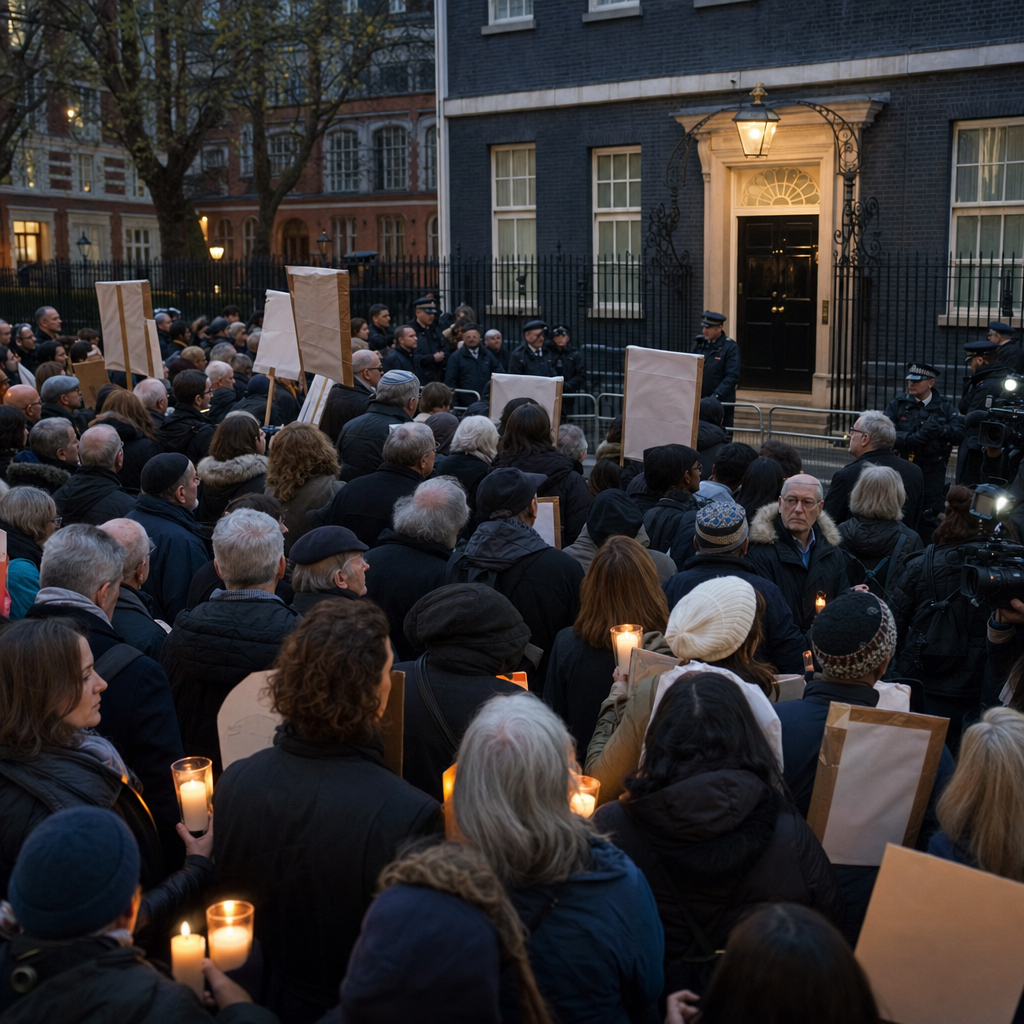
Downing Street rally tests Britain’s anti-hate coalition
Jewish groups are trying to turn a security crisis into a national test: can Labour and the opposition unite without letting party politics fracture the message?
A rally outside Downing Street on Sunday is trying to do what government statements cannot: convert concern about antisemitism into visible political pressure. Organisers backed by more than 30 Jewish groups are urging Britain’s “silent majority” to join a “million mensch march,” while inviting senior party figures to stand with them, according to  The Guardian. The timing is deliberate. It comes after the stabbing of two Jewish men in Golders Green and a run of arson and synagogue attacks that the government itself now frames as a national crisis, with Keir Starmer telling a Downing Street summit that “every part of society” must respond,
  BBC News.
This is a coalition-building exercise, not just a protest
The power play is straightforward: Jewish leaders are widening the issue beyond communal self-defense. By inviting non-Jews to show up, they are trying to deny extremists the ability to isolate British Jews as a minority problem. The open letter backed by faith leaders from Christian, Muslim, Hindu, Sikh and Zoroastrian communities makes that strategy explicit, calling antisemitism “a problem for all of us to fix,” BBC News. That matters because the government has already moved into policy mode: Starmer has announced extra money for police patrols and community protection, and officials are now discussing stronger action against malign state actors,  Politico.
But the rally is also a test of whether that broad front can hold. If turnout is large and visibly cross-faith, organisers gain leverage over ministers who are already promising action. If it is read as a narrowly Jewish mobilisation, the government can stick to policing and security measures without paying a wider political cost. For broader context on the political stakes, see  Global Politics.
The invite list is the story behind the story
The most politically revealing detail is not the march itself but who is being asked to stand where. The event has support from Conservative leader Kemi Badenoch and Liberal Democrat leader Ed Davey, but Green Party leader Zack Polanski was not invited, while Reform UK’s Nigel Farage is among those whose invitation has drawn sharp criticism, The Guardian. More than 2,000 people have signed an open letter asking organisers to withdraw Farage’s invitation, arguing the fight against antisemitism should not be narrowed into a platform for anti-immigration politics, The Guardian.
That split tells you who benefits and who loses. The Board of Deputies, Jewish Leadership Council and allied faith groups gain visibility and pressure. Starmer gains a chance to show control without looking reactive. Farage benefits if he can be seen at a Jewish solidarity event despite the backlash. The Green Party loses by being shut out, but the larger risk is to the rally itself: if the event becomes a proxy battle over immigration and party legitimacy, the anti-antisemitism message gets blurred.
What to watch next
The next decision point is whether the prime minister appears, sends a minister, or stays away. The second is whether Farage actually turns up and how large the crowd is outside Downing Street. The third is whether this pressure produces new security or legal measures beyond the £25 million already announced. In Britain, the politics of antisemitism is now about who can credibly claim the moral center—and Sunday will show which leaders can still occupy it.