Congress Critiques Modi on Women's Quota Bill
Congress accuses Modi of using women's reservation as cover.
Model Diplomat9 min readIndia
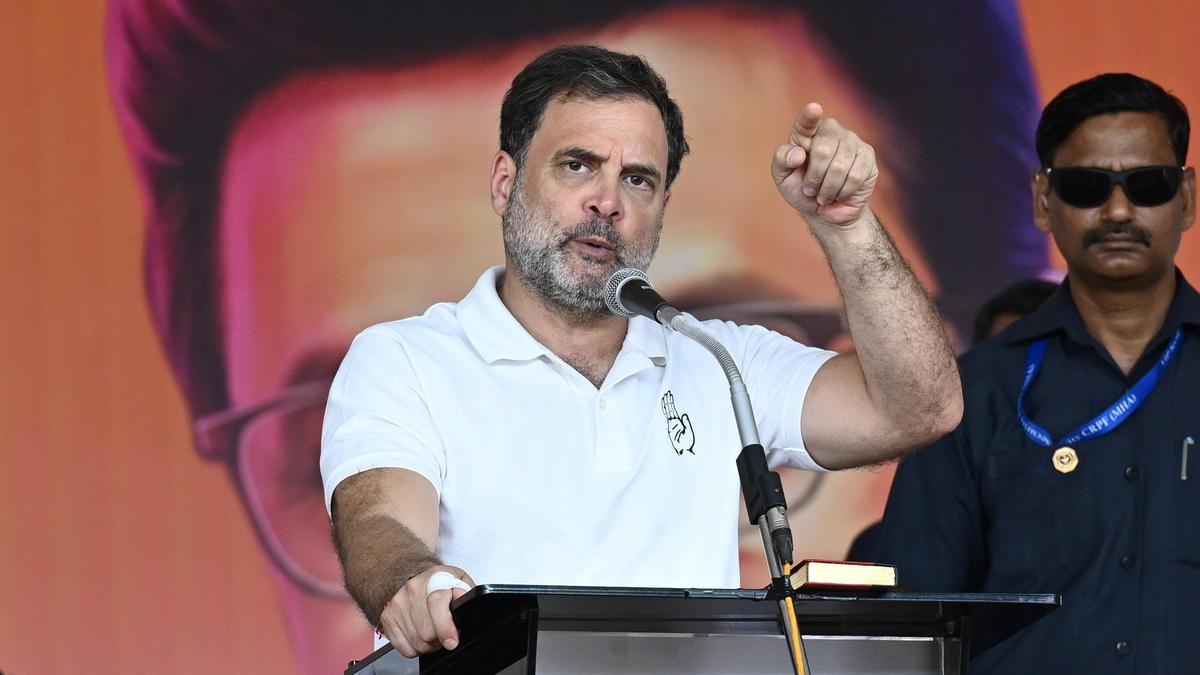
Congress Critiques Modi on Women's Quota Bill: Inside the Delimitation Trap
Congress accuses Modi of using the 33% women's reservation as cover to redraw India's electoral map. Here's why the Lok Sabha defeat still stings — and who benefits.
On April 17, 2026, PM Narendra Modi lost a constitutional amendment on the floor of the Lok Sabha for the first time in his eleven years in office — the Constitution (131st Amendment) Bill on women's reservation and delimitation fell 298 to 230, short of the two-thirds majority needed, according to the NUS Institute of South Asian Studies. Congress's critique — the one being repeated by
Mallikarjun Kharge and Jairam Ramesh through the summer of 2026 — is not really about the 33% quota. It is that Modi weaponised women's representation as the political cover for a much bigger prize: a population-based redrawing of parliamentary constituencies that would move roughly 200 seats toward the Hindi-belt north. The women's bill is now the political vocabulary of India's federal fight — and Congress has, for once, found language that stuck.
The bill Congress killed — and what it was really doing
The Nari Shakti Vandan Adhiniyam, formally the Constitution (106th Amendment) Act, was passed in September 2023 by 454 votes to 2 in the Lok Sabha and unanimously in the Rajya Sabha, according to a contemporaneous ISAS brief. The law inserted Articles 330A and 332A into the Constitution to reserve one-third of Lok Sabha, state assembly and Delhi assembly seats for women for 15 years — but with a fatal clause: implementation "shall come into effect after an exercise of delimitation is undertaken … after the relevant figures for the first census taken after the commencement" of the Act. In plain language: the quota exists on paper, but cannot operate until a fresh census and a fresh delimitation are completed.
That is what the April 2026 special session tried to unlock. Between April 16 and 18, the Modi government tabled three linked bills — the Constitution (131st Amendment) Bill, the Delimitation Bill, and the Union Territories Laws (Amendment) Bill — that would have expanded the Lok Sabha from 543 to as many as 850 seats, based on the 2011 census, per the Carnegie Endowment for International Peace. Home Minister Amit Shah, defending the package on the floor, told the House that under a 50% expansion the total would settle at 816 seats, and that southern India's tally would rise from 129 to 195 — a share of "around 24 percent" of the House, as
recorded by the Press Information Bureau.
That framing collapsed on contact with the opposition. Rahul Gandhi, leader of the opposition, told the Lok Sabha: "This has nothing to do with empowering women. It is an attempt to change the country's electoral map, using and hiding behind India's women," per the ISAS post-mortem. Congress MP Gaurav Gogoi, quoted by
Al Jazeera, accused the government of trying to slip delimitation "through the backdoor." The DMK's M.K. Stalin — then still chief minister of Tamil Nadu — burned a copy of the bill and hoisted a black flag. When the vote came, the National Democratic Alliance's 293 Lok Sabha seats, and its inability to attract a further 67, fell well below the 360 needed. Modi's constitutional streak ended.
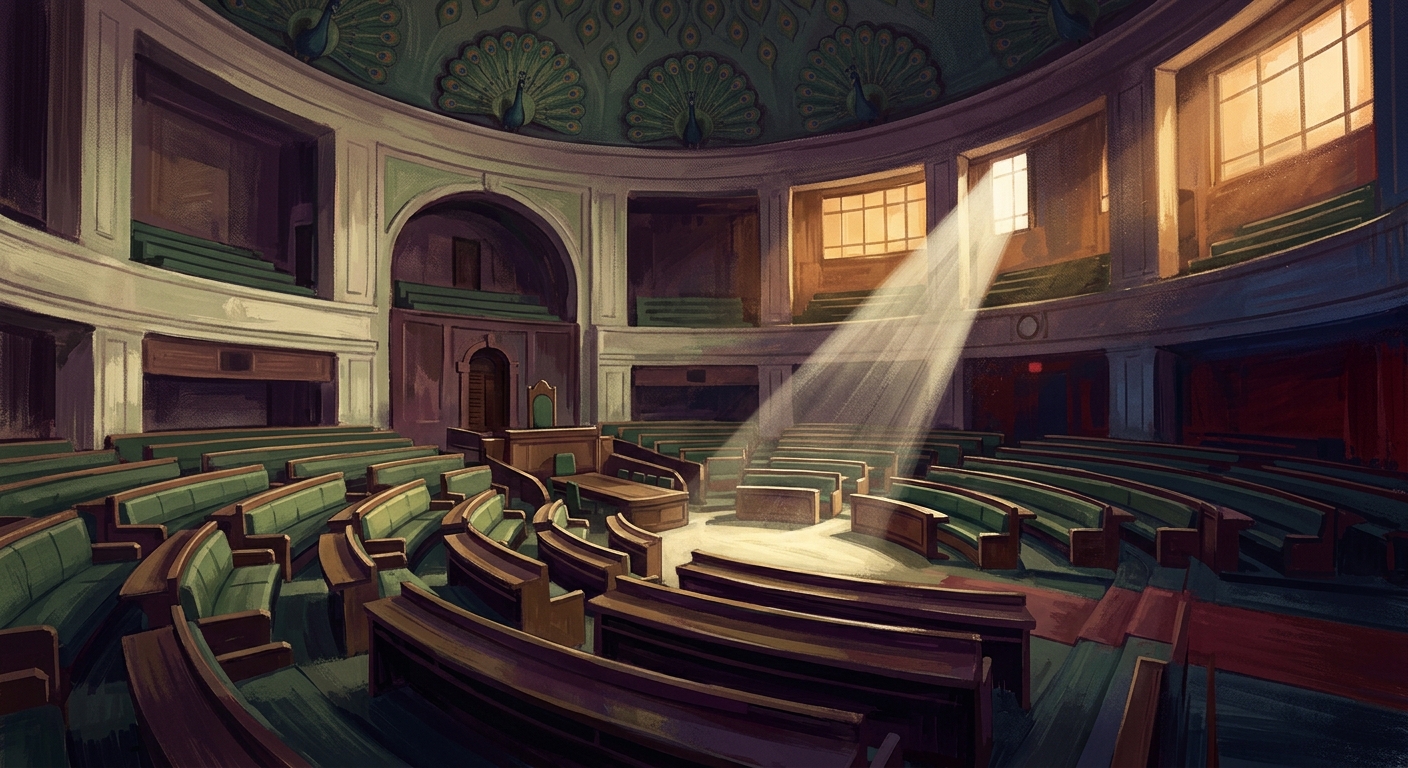
The Congress line: "delimitation, not women's bill, defeated"
Congress's post-defeat message is disciplined and unusually pointed. In an address after the defeat, Kharge dared the Prime Minister to notify one-third reservation for women immediately, using the existing 543 Lok Sabha seats, under the 2023 law itself. Party spokesperson Supriya Shrinate, quoted by
The Telegraph, called Modi's televised apology to the women of India "crocodile tears" and said what was defeated on the floor was "delimitation, not the women's bill." Jairam Ramesh, resurfacing 2017 letters from Sonia Gandhi and Rahul Gandhi urging immediate implementation, argued that the government had "slept" on the demand for years and then rushed it in an election week; the sequence is documented by
The Week.
The most cutting summary came in a Congress phrase that has since travelled: the issue, as the The Hindu reported, was "not women's reservation but Modi preservation." Priyanka Gandhi Vadra, in the Lok Sabha debate covered by the
Times of India, called the linked delimitation an "attack on democracy" that "smells of politics." That is the load-bearing critique: not that women should wait, but that Modi bundled a popular reform with a redistricting exercise that could not have survived on its own. Congress has since consolidated the demand into a single ask — apply 33% to the existing 543 seats now, and take delimitation to a separate vote after the census.
Why the numbers matter more than the slogans
The reason the Congress line lands is arithmetic. Carnegie's May 2026 analysis sets out what the defeated bill would have done state by state: Uttar Pradesh would have jumped from 80 to 120 seats, Bihar from 40 to 60, Maharashtra from 48 to 72, West Bengal from 42 to 63. Tamil Nadu would have risen from 39 to 59, Karnataka from 28 to 42. Shah's own reassurance — 129 southern seats becoming 195 — was true in absolute terms, but the share is what determines federal power, and on that measure the south's roughly 24% would have been frozen while the Hindi belt's dominance grew.
Arghya Sengupta of the Vidhi Centre for Legal Policy told the BBC that although the bill raised the cap on the lower house to 850 seats, the "basis for this number is unclear and does not appear to be proportionate to population growth recorded in the 1971 and 2011 census." Worse, Sengupta noted, there was no parallel expansion for state assemblies — "creating a mismatch: fast-growing states could gain more MPs without a corresponding rise in MLAs." Sanjay Kumar of CSDS pointed out that no criterion in the bill actually specifies which constituencies would be reserved for women, or how SC/ST women's seats would be identified within an expanded map. The Constitution (106th Amendment) Act reserved one-third but never said which third; the 2026 package did not fix that.
The BJP's counter — that waiting for the ongoing 2026 census would push women's reservation "well beyond 2029" — is also true. Milan Vaishnav of Carnegie noted in the Grand Tamasha podcast that "even though the government has formally notified the enactment of women's reservation … nothing can really happen until this current census is completed and then a delimitation is carried out." The house-listing phase began on April 1, 2026; individual enumeration follows; publication of results and constitution of a delimitation commission will each take further time. The 2029 general election, in practical terms, will almost certainly be fought on 543 seats without a women's quota. Modi's rushed 131st Amendment was, in that sense, the only route to putting the quota into force before 2034. Congress killed it.
The electoral test the government thought it had
The gamble Modi took — that voters would punish the opposition for blocking women's reservation — has already been tested and, on the evidence available, failed. In his April 18, 2026 television address, Modi apologised to India's women, said the opposition had committed a "sin" and would be "surely punished" for it. Within weeks, the four state elections in April 2026 delivered a verdict that does not obviously vindicate that prediction.
According to a post-poll ISAS analysis, the BJP won West Bengal in a landslide, taking 207 of 294 seats and finally breaching one of India's most resistant regional strongholds. In Tamil Nadu, actor C. Joseph Vijay's Tamilaga Vettri Kazhagam won 108 of 234 seats and 35% of the vote, relegating the ruling DMK to 59 seats and reducing the BJP-AIADMK alliance to a single BJP seat, per the
BBC. In Kerala, the Congress-led UDF ousted the LDF, ending Left rule for the first time in any Indian state.
The BJP will read West Bengal as a mandate for its expanded ambition. But two facts complicate the "anger of women" narrative. First, in West Bengal the BBC attributes the shift to Hindu consolidation and welfare-transfer competition — the BJP promised larger cash transfers than the TMC — not to a women's-quota backlash against the opposition. Second, in Tamil Nadu, the parties that voted against Modi's bill — DMK, Congress, and by extension the anti-BJP coalition — were not swept out by women voters. Younger voters and women swung to Vijay, whose party ran explicitly against the BJP. Modi's forecast that the opposition would be "punished" by women, in the two states where he campaigned hardest on the reservation defeat, is not supported by the results.
That is the second-order effect Congress is now leaning on. The women's-reservation defeat did not become the political liability Modi predicted — and that emboldens the opposition to keep hammering the "Modi preservation" line into the monsoon session and beyond.
Winners, losers, and what has actually been deferred
The clearest winner is the southern federalist bloc. Stalin's DMK, Kerala's UDF, Andhra's YSRCP-turned-opposition and Telangana's BRS all wanted the pre-2026 status quo — no population-weighted delimitation — preserved. They got it. Even after the DMK's rout in Tamil Nadu, the underlying policy outcome favours the south: as Carnegie notes, until the 2027 census results are published, "India's political map will remain frozen." The 25-year extension of the delimitation freeze demanded by Tamil Nadu, Kerala, Karnataka and Telangana, per the BBC, was not granted in law but has been granted in fact.
The clearest loser is not the BJP but Indian women. The Constitution (106th Amendment) Act remains formally in force, but its 33% quota cannot operate. India ranks 141 of 185 countries on women's political representation, according to the Carnegie Endowment. Women hold about 14% of Lok Sabha seats. Neither national party has cured this by internal quota: the BJP fielded 16% women candidates and the Congress 13% in 2024, well below the Biju Janata Dal's 33% and Trinamool's 35%, per the
ISAS post-mortem. Congress's dare — "implement 33% tomorrow under the existing 543 seats" — is legally impossible under the 2023 Act as written, and neither party has moved to amend the delimitation trigger. Both sides prefer the argument to the outcome.
The historical parallel Amit Shah reached for is telling. In the PIB briefing after the defeat, Shah accused Congress of the same 1976 sin — Indira Gandhi's Emergency-era freezing of delimitation "to retain power." The parallel cuts both ways. The 1976 freeze protected states that had done family planning from losing seats to states that had not; it entrenched federal balance at the cost of one-person-one-vote. Modi's 2026 bill would have reversed that trade — restoring vote equality at the cost of federal balance. Both governments framed a redistricting choice as a moral necessity. Both hid the political calculus behind a bigger cause.
Diplomat View
The story that will be written about April 17, 2026 in five years' time is not that Congress finally hurt Modi — it is that the Women's Reservation Bill has become the durable political idiom of India's north-south fight, and Congress has taken ownership of that idiom. The party's summer 2026 messaging is not designed to force implementation; it is designed to keep the BJP defending delimitation whenever it mentions women. That is a rare tactical win for a party that has spent a decade being outmanoeuvred on symbolic legislation. It also has a hard shelf life: the moment the 2027 census publishes, the Modi government will re-table a modified 131st Amendment, and Congress will have to either back a linked bill or block women's reservation for the second time. If it blocks a second time — especially after another Rajya Sabha cycle in which BJP numbers rise — the "Modi preservation" line loses its edge. The forecast to revise: if the census publishes on schedule and the BJP tables a delinked women's bill first, with delimitation on a separate track, the political advantage flips back to Modi within a sitting.
Watch these dates:
- Monsoon session 2026 (July–August): whether Congress moves a private member's bill or an amendment to strike the delimitation trigger in Article 334A. If it does not, its dare to Modi is rhetorical only.
- First half of 2027: publication of the individual enumeration phase of the census. This is the legal switch that reopens the entire debate.
- Rajya Sabha arithmetic through 2027: additional BJP seats may lift the NDA closer to a two-thirds threshold, changing what a re-tabled bill can pass.
The Bottom Line
Congress's critique of Modi on the Women's Reservation Bill is not a defence of women's representation — it is a defence of the federal map. By reframing the 131st Amendment as "Modi preservation," the opposition has, for the first time in Modi's tenure, put a defeated constitutional amendment on his ledger. But the 33% quota remains unimplementable under the 2023 law both sides passed, and neither party has moved to fix that. The women who were promised a third of Parliament in September 2023 are, in July 2026, exactly where they were: waiting for a census.
Discover more
India
Congress Accuses Modi of Stalling Women's Law
Congress accuses Modi of stalling women's reservation law by linking it to delimitation, revealing a deeper electoral strategy.
India
Congress Advocates 33% Women’s Quota
Congress calls for a 33% women's reservation in the existing 543 Lok Sabha seats, countering Modi's plan to expand the house to 850 seats.

Conflict & Security
Drone Warfare Killing Aid Workers at Unprec
Over 1,000 humanitarian workers killed in three years as cheap armed drones collapse legal protections. Gaza, Sudan, Ukraine, and DRC see deliberate targeting of aid convoys and hospitals with zero prosecutions.

Global
World Normalises Taliban as Afghan Women Eras
UN data shows Afghan women erased from public life as Russia recognises the Taliban, EU hosts officials in Brussels, and ICC warrants for gender persecution go unenforced.