Beijing Summit's Real Winner Revealed
Examining the outcomes of the Trump-Xi summit
Model Diplomat4 min readasia
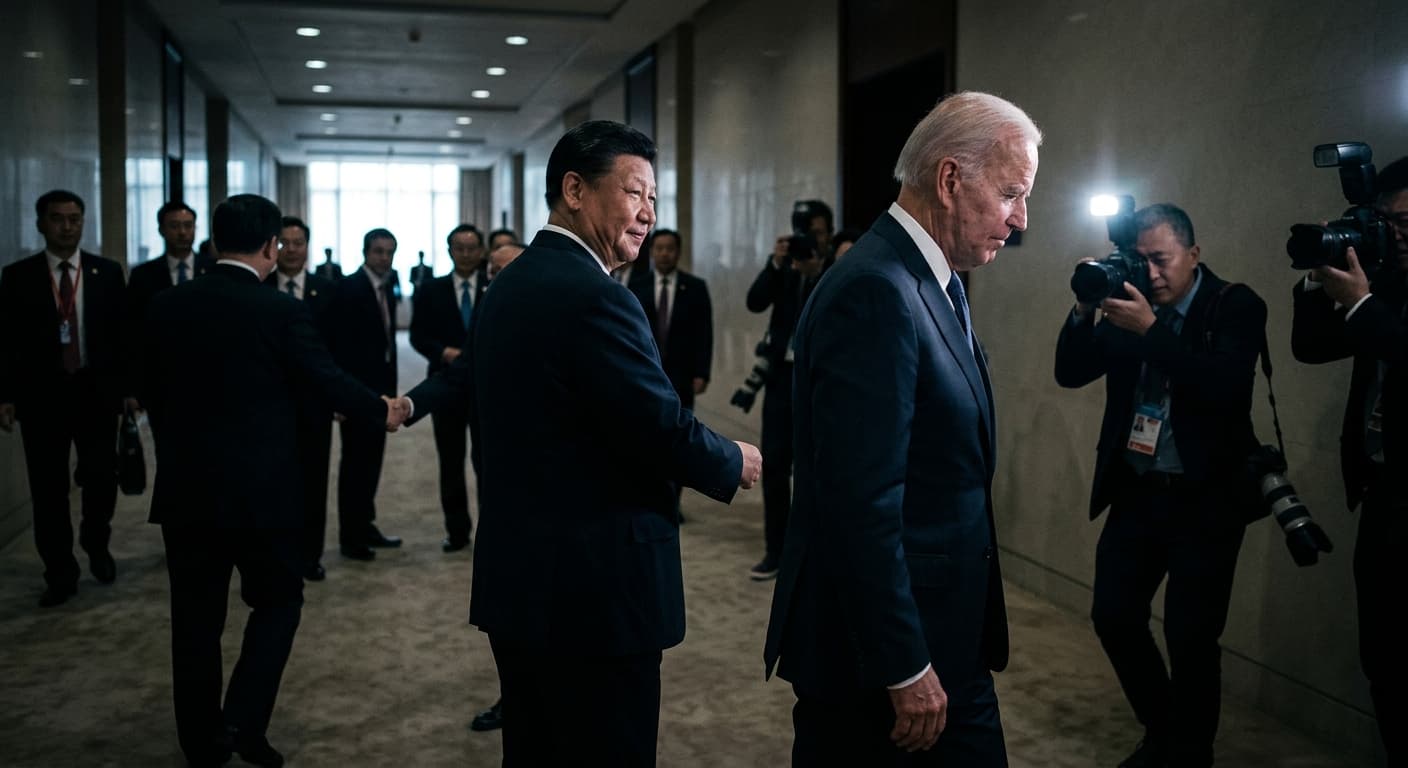
The Beijing Summit's Real Winner Depends on Which Readout You Read
Both sides claimed stability. Washington advertised trade deals; Beijing marketed a doctrine. The gap between the two reveals who holds the leverage — and who's buying time.
The three-day state visit that ended Friday — the first by a U.S. president to China in nine years — produced a phrase both sides can live with and neither side defines the same way: "constructive strategic stability." The summit between Donald Trump and Xi Jinping was by all accounts cordial, CEO-laden, and conspicuously light on binding deliverables. But that's precisely the point. Both leaders got what they came for, and the mismatch between the American and Chinese readouts tells the real story.
The White House readout read like a commercial prospectus: China will purchase at least $17 billion in U.S. agricultural products annually through 2028, approved an initial order of 200 Boeing aircraft, and committed to a new U.S.-China Board of Trade and Board of Investment — the institutional "cornerstone" of the agreement, per Washington. [CFR] Trump declared the talks "very successful" and flew home with numbers his campaign can use ahead of midterms.
Beijing's readout barely mentioned the shopping list. Instead, Foreign Minister Wang Yi elaborated a comprehensive doctrinal framing: stability means managing competition within "proper limits," respecting China's "core interests," recognizing each side's development path, and grounding the relationship in the three U.S.-China joint communiqués. [CFR] Xi explicitly tied the framework to a three-year horizon — a window that conveniently runs through the end of Trump's term. [
Caixin Global]
The divergence on trade specifics is telling. China's Commerce Ministry provided no timelines, values, or volumes for the purchasing commitments, and a foreign ministry spokesperson described key outcomes as still pending finalization. The BBC noted that neither side announced "trade breakthroughs or significant business deals." [BBC] Beijing is buying time, not changing its industrial model.
Who Got What
Trump got a truce extension and commercial optics. The summit extends the October 2025 Busan trade pause that suspended steep tariff hikes. For a president facing midterms and an Iran crisis, the ability to claim China is "being very helpful" on the Strait of Hormuz — where oil transit has been severely disrupted — is a concrete short-term win. The White House fact sheet claimed mutual understanding that Iran "can never have a nuclear weapon" and that the strait "must remain open." [CFR]
Xi got something more durable: the U.S. president's apparent acceptance of a framework that subordinates competition to stability. Chinese scholars at the National Institute for Global Strategy framed this explicitly as a counter to the "strategic competition" paradigm — describing U.S. agreement on the new term as a concession. [Caixin Global] As Brookings scholar Patricia Kim noted, the phrase "constructive strategic stability" was chosen precisely because it carries no negative baggage in Washington's lexicon — but Beijing will now use it to frame any future U.S. actions on excess capacity or technology export controls as violations of the new consensus. [
Brookings] Rush Doshi, the CFR's China specialist, warned that Beijing will claim any U.S. move to "reckon with excess capacity or deter conflict" breaches the framework. [
CFR]
The tech rivalry is untouched. Da Wei of Tsinghua University expects no change in technology competition, though he flagged possible U.S. easing of export controls. [Caixin Global] On AI chips and rare earth minerals, the closed-door sessions remained confrontational.
Taiwan Is the Tripwire
Xi made the terms unmistakable: "The Taiwan question is the most important issue in China-U.S. relations. If it is handled properly, the bilateral relationship will enjoy overall stability. Otherwise, the two countries will have clashes and even conflicts." [Al Jazeera] The English translation's use of "conflicts" was a deliberate escalation in vocabulary from prior readouts. Graham Allison, who discussed the Thucydides Trap concept with Xi, confirmed the leaders privately agreed they had no desire for war over the Strait — but Xi's formulation was sequenced as a condition: stability first, then Taiwan handled with "extra caution," or the entire framework collapses. [
Caixin Global]
The test arrives soon. Trump told reporters aboard Air Force One that he "made no commitment either way" on the pending $14 billion arms package to Taiwan. [CFR] Whether he approves it, stalls it, or barters it away will validate either Beijing's framing — that the U.S. accepted limits — or Washington's, that nothing fundamental changed.
What to Watch
Four Trump-Xi meetings are now on the 2026 calendar: the Beijing summit just concluded, a White House visit on September 24 coinciding with UNGA, APEC in Shenzhen this November, and the G20 in Miami in December. [CSIS] The frequency signals both sides are prioritizing the channel — but also that the "constructive strategic stability" framework remains a work in progress that requires constant reaffirmation.
Meanwhile, Russia's Putin arrives in Beijing next week. The Kremlin confirmed the timing while Trump was still on the ground. Whether Beijing coordinates its messaging with Moscow — and whether the U.S. reads that coordination as a breach of "stability" — will test the framework's tensile strength almost immediately. The real summit outcome is not what was signed, but what holds when the afterglow fades.
Discover more

US Politics
SNAP Food Assistance Faces Legal Challenges
In 2026, SNAP faces stricter eligibility rules and mounting legal challenges, threatening food assistance for the millions of Americans who rely on the program.
India
Romanian Coalition Party Demands PM Resign
Romania's Social Democrats withdrew from coalition, joining far-right AUR to topple PM Bolojan, risking €10 billion in EU funds by August 2026.
Global Politics
Trump's Conflicting Messages on Iran War
Trump's mixed messages on Iran reflect a strategy of audience management, benefiting Tehran amid a complex geopolitical landscape.

Conflict & Security
Drone Warfare Killing Aid Workers at Unprec
Over 1,000 humanitarian workers killed in three years as cheap armed drones collapse legal protections. Gaza, Sudan, Ukraine, and DRC see deliberate targeting of aid convoys and hospitals with zero prosecutions.