China's SLBM Test: A Message to Australia
China's missile test signals deterrence strategy in the Pacific.
Model Diplomat7 min readAsia-Pacific
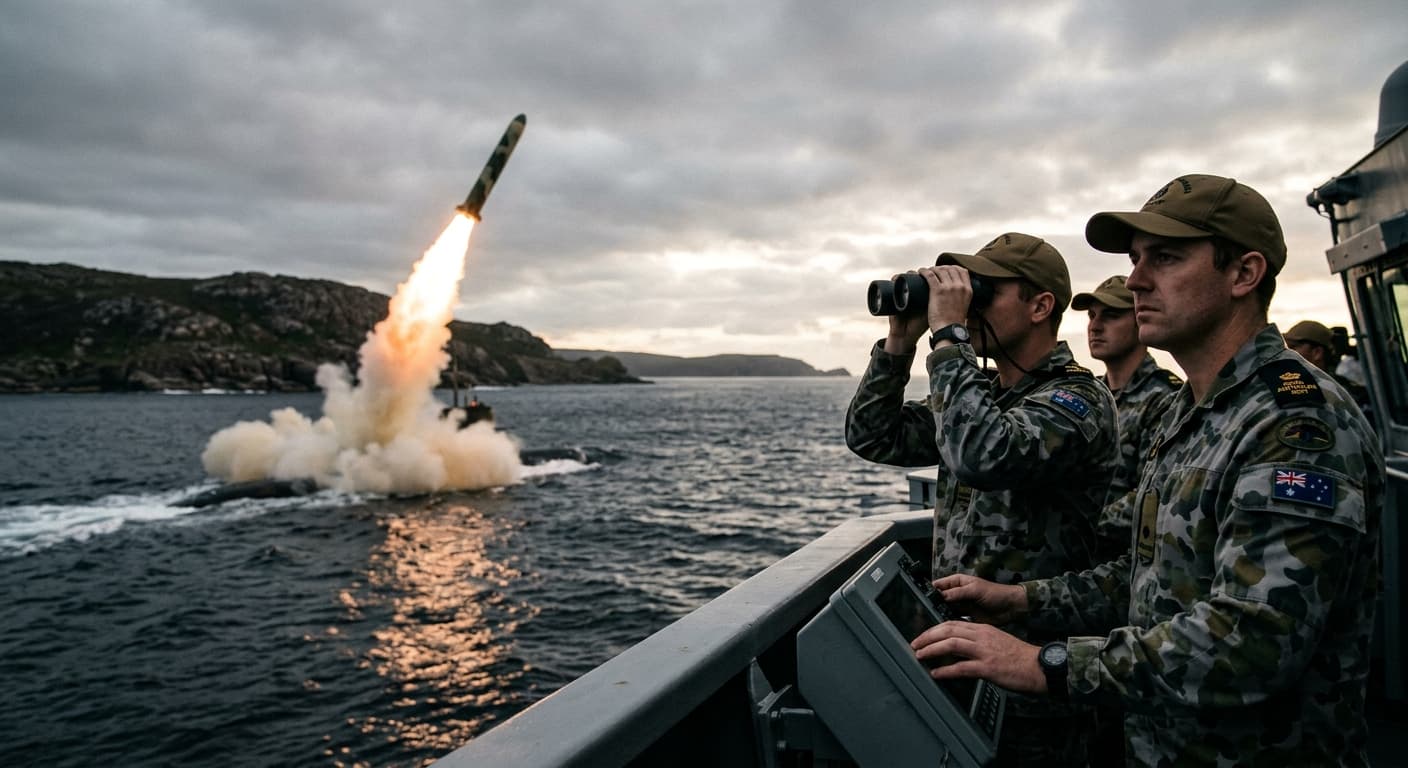
China's Pacific SLBM Test Was a Deterrence Message to Canberra
China's July 6 submarine-launched missile test into the Pacific — timed to the hour with the Australia-Fiji Vuvale Union signing — signals a maturing sea-based nuclear deterrent aimed at U.S. allies in the Indo-Pacific.
At 12:01 p.m. Beijing time on July 6, 2026, a People's Liberation Army Navy ballistic missile submarine fired a strategic missile carrying a dummy warhead into the Pacific — the same day Australia's Anthony Albanese and Fiji's Sitiveni Rabuka were in Suva formally signing the Vuvale Union treaty. The launch was Beijing's second intercontinental-class demonstration in the Pacific in 22 months, and it was directed less at the United States than at the arc of small and middle powers now openly aligning with Canberra and Washington to lock China out of the South Pacific. The test signaled a strategic threshold: China's undersea deterrent is now mature enough to be shown, and Beijing is prepared to use it as coercive diplomacy against Pacific realignment.
What actually happened, and what Beijing chose to disclose
According to a statement issued via state media and analyzed by Jane's, a PLAN nuclear-powered submarine fired the missile "toward a designated impact area" in the Pacific, with Beijing describing it as routine annual training and asserting it complied with international law. Imagery released by Chinese military accounts included depictions of both the JL-2 and the newer JL-3, and Jane's assesses weather conditions in the released footage are consistent with a launch from the South China Sea rather than open ocean. That detail matters: a launch from the South China Sea would be the clearest public demonstration yet of the "bastion" concept the Pentagon has anticipated for years.
Foreign Ministry spokesperson Mao Ning gave the boilerplate at her regular press conference, telling reporters the test was "a routine arrangement in China's annual military training program … not directed at any specific country or target," according to the ministry's own transcript. Asked in the same briefing about the Australia-Fiji treaty, Mao urged Canberra to "avoid targeting any third party" — the closest Beijing came to publicly linking the two events.
The advance-notice practice reveals more than the propaganda line. As The Diplomat's own reporting recounts, Japan's Coast Guard was told a day early only that a hazard area — including part of Japan's EEZ south of Cape Shionomisaki — was reserved for "falling space debris." China's Ministry of National Defense waited another 24 hours to clarify that a ballistic missile test was underway. The clarification came roughly 90 minutes before launch. Chief Cabinet Secretary Kihara Minoru said Tokyo had "strongly urged" Beijing to reconsider — without citing a source URL for that direct quote. Notifications to New Zealand, Australia and Papua New Guinea arrived on similarly compressed timelines, per
BBC reporting and
Al Jazeera. That is a change from the September 2024 DF-31AG launch, when Japan received no advance notice — but compressed, ambiguous notifications are not the "consistent with international law and customary international practice" behavior Mao described.
The capability is real, and now Beijing wants it seen
The strategic content of the launch outstrips its symbolism. The Pentagon's 2024 annual report on Chinese military power — a primary U.S. government assessment — puts China's operational nuclear stockpile above 600 warheads as of mid-2024, projecting more than 1,000 by 2030. In March 2026 testimony to the House Armed Services Committee, Assistant Secretary of Defense Robert Kadlec
told the Strategic Forces Subcommittee that the number "today exceeds 600, and is on track to surpass 1,000 by 2030." Kadlec framed China's buildup as creating "a strategic shield behind which the People's Liberation Army can conduct regional aggression, particularly against Taiwan."
The JL-3 is the missile that makes that shield credible at sea. The 2025 Department of Defense report, as summarized by CSIS, describes the JL-3 as an extended-range JL-2 variant with a range in excess of 5,400 nautical miles — enough to reach the continental United States from Chinese littoral waters.
Jane's assesses the missile is MIRV-capable and designed for both the Type 094A and the forthcoming Type 096, which is under construction at the Bohai Shipyard. That combination — quieter boat, longer-range MIRVed missile, ability to launch from defended bastions in the South China Sea or Bohai Gulf — is what The War Zone's Joseph Trevithick has
described as letting China hold the U.S. homeland at risk "without traveling into the Pacific" — a capability the July 6 launch was designed to make visible, not prove.
That makes the choice to launch into the Pacific a deliberate act of communication. Chinese SSBNs do not need to shoot at the ocean to prove they can strike Los Angeles. They need to do it to prove that Beijing is willing to demonstrate the capability publicly — and to a specific audience.
The audience is in Suva, Port Moresby and Honiara
The audience became clear within hours. As BBC News reported, Albanese and Rabuka signed the Vuvale Union in Suva on the same day, formalizing Fiji's first-ever alliance treaty. The
CSIS State of Play analysis called it "the successful culmination" of months of Australian diplomacy across Melanesia — following the
Pukpuk Treaty with Papua New Guinea in October 2025, the Nauru treaty in 2024, and the Falepili Union with Tuvalu in 2023. Each of these agreements includes what Australian officials describe as "consultation" provisions that in effect give Canberra a veto over third-country security arrangements — the third country being China.
Albanese was in Honiara the following day standing alongside Solomon Islands Prime Minister Jeremiah Manele, per Australia's ABC. Foreign Minister Penny Wong, still in Suva, told reporters the launch was "destabilizing to the region" and cited the "insufficient transparency" of China's buildup. Beyond the choreography lies a harder point: at least four of the governments Beijing notified in advance — Australia, New Zealand, PNG and Japan — are the same governments constructing the Pacific security lattice China is trying to fracture. New Zealand Foreign Minister Winston Peters called the test "unwelcome and concerning," warning against letting such launches "become routine."
The Lowy Institute's Mihai Sora, writing on The Interpreter, called the timing "an own goal" — a launch designed to unsettle Pacific capitals that instead validated Canberra's argument for tighter security integration. That read is the analyst consensus. It is quietly wrong. Beijing's calculation is not that a single test will scare Rabuka into abandoning the Vuvale Union. It is that the cumulative demonstration — DF-31AG in 2024, the September 2025 triad parade, the SLBM in July 2026 — establishes a new baseline in which Pacific hedging becomes rational again, particularly for governments like Vanuatu, where, as CSIS notes, Beijing remains the largest external creditor and where a similar Australian security deal has already stalled.
What Taipei sees, and why it matters
The nut is Taiwan. Kadlec's testimony was blunt about the linkage: China's nuclear expansion is meant to deter U.S. intervention in a Taiwan crisis and coerce a "fait accompli." A credible, survivable Chinese second-strike changes the risk calculus for every U.S. president facing a Taiwan Strait contingency — and every ally being asked to help.
The tempo around Taiwan is already elevated. Taiwan's Ministry of National Defense, whose data ChinaPower tracked, recorded 3,764 PLA aircraft incursions into Taiwan's air defense identification zone in 2025, a record. In late December 2025, the PLA launched "Justice Mission 2025," a large-scale blockade rehearsal Al Jazeera
reported included live rocket fire and simulated port strikes on Keelung. The Eastern Theater Command explicitly framed the drills as "all-dimensional deterrence outside the island chain." The July 6 SLBM launch extends that logic into the strategic register: it makes the nuclear backstop to a Taiwan operation visible, and it does so at the precise moment Australia — the most militarily capable U.S. ally in the Southern Hemisphere and the anchor of AUKUS — is locking in Pacific basing access.
That is why the launch matters more than a routine drill and less than a crisis. It is Beijing declaring the price of Pacific realignment and the price of intervention over Taiwan in the same shot.
Diplomat View
The prevailing read — that Beijing scored an own goal — underestimates what China's leadership is buying. The July 6 launch is not intended to reverse the Vuvale Union or the Pukpuk Treaty. It is intended to raise the perceived cost of the next one — the stalled Vanuatu deal, the Tonga statement of intent, and any Solomon Islands re-alignment away from the 2022 China security pact. Read against Kadlec's 600-to-1,000-warhead trajectory and the JL-3's operational fielding, this test is the opening move in a new phase where Beijing accepts diplomatic blowback in the Pacific in exchange for making its sea-based deterrent legible. The forecast would revise if China conducts a third such demonstration within 12 months (indicating a sustained coercive tempo rather than episodic signaling), if Vanuatu signs the Australian security agreement despite Beijing's pressure (indicating the signaling failed), or if the PLA Navy conducts a publicly acknowledged SSBN deterrence patrol into the deep Pacific rather than a bastion-launch exercise.
What to watch
- September 2026: Whether Beijing marks the second anniversary of the DF-31AG launch with another Pacific test — the pattern that would confirm an annualized cadence.
- Vanuatu security agreement: The next test of Pacific alignment. If Port Vila signs with Canberra despite Chinese pressure, Beijing's signaling has failed on its own terms.
- Type 096 launch: Commercial satellite imagery of the Bohai Shipyard is the leading indicator for the next generation of Chinese SSBNs; the Pentagon expects up to eight Chinese SSBNs operating concurrently by 2030.
- Kadlec/STRATCOM posture hearings, FY2028 cycle: Watch for whether the Pentagon requests accelerated SLCM-N and theater nuclear deployments to the Indo-Pacific in response.
The Bottom Line
China's July 6 SLBM launch is not a message to Washington — it is a message to Suva, Port Vila and Honiara. Beijing is trading Pacific diplomatic capital for a credible, visible undersea deterrent that raises the cost of both U.S. intervention over Taiwan and Australian-led regional realignment. If the Vuvale Union holds and Vanuatu still signs with Canberra, this test will be remembered as the moment China's coercive signaling met the limits of Pacific patience — but that is a bet on Australian diplomacy, not a critique of Chinese strategy.
Discover more
Global
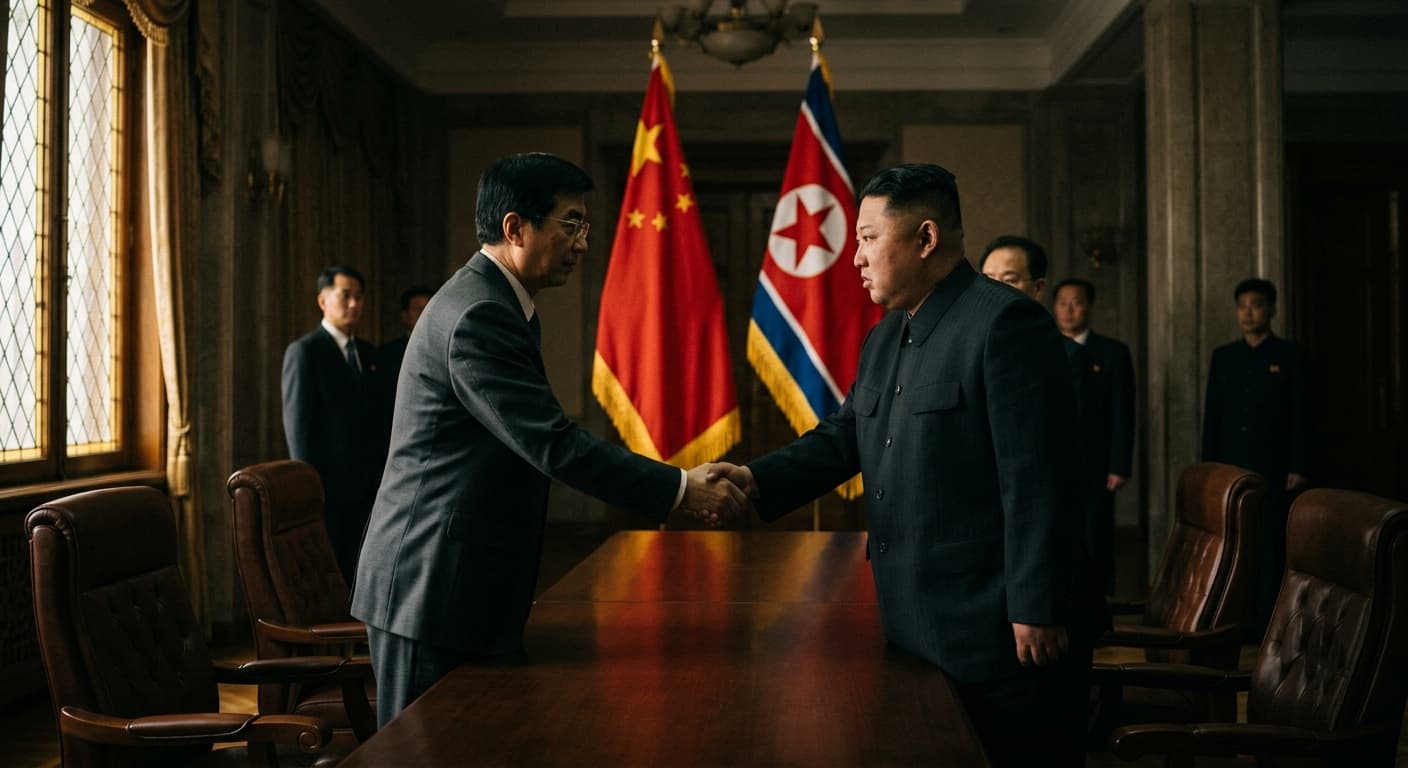
Wang Huning's Pyongyang Visit Locks China's N
China's top ideologue Wang Huning visits Pyongyang to lock down North Korea as a military ally, signaling Beijing is securing its northern flank before any Taiwan move under a disengaged Trump.

Conflict & Security
UN Calls for Ukraine Ceasefire Amid Civilian
The UN urges an immediate ceasefire in Ukraine as civilian casualties rise 40%, coinciding with Russia's shift to mass strikes amid military setbacks.
Global
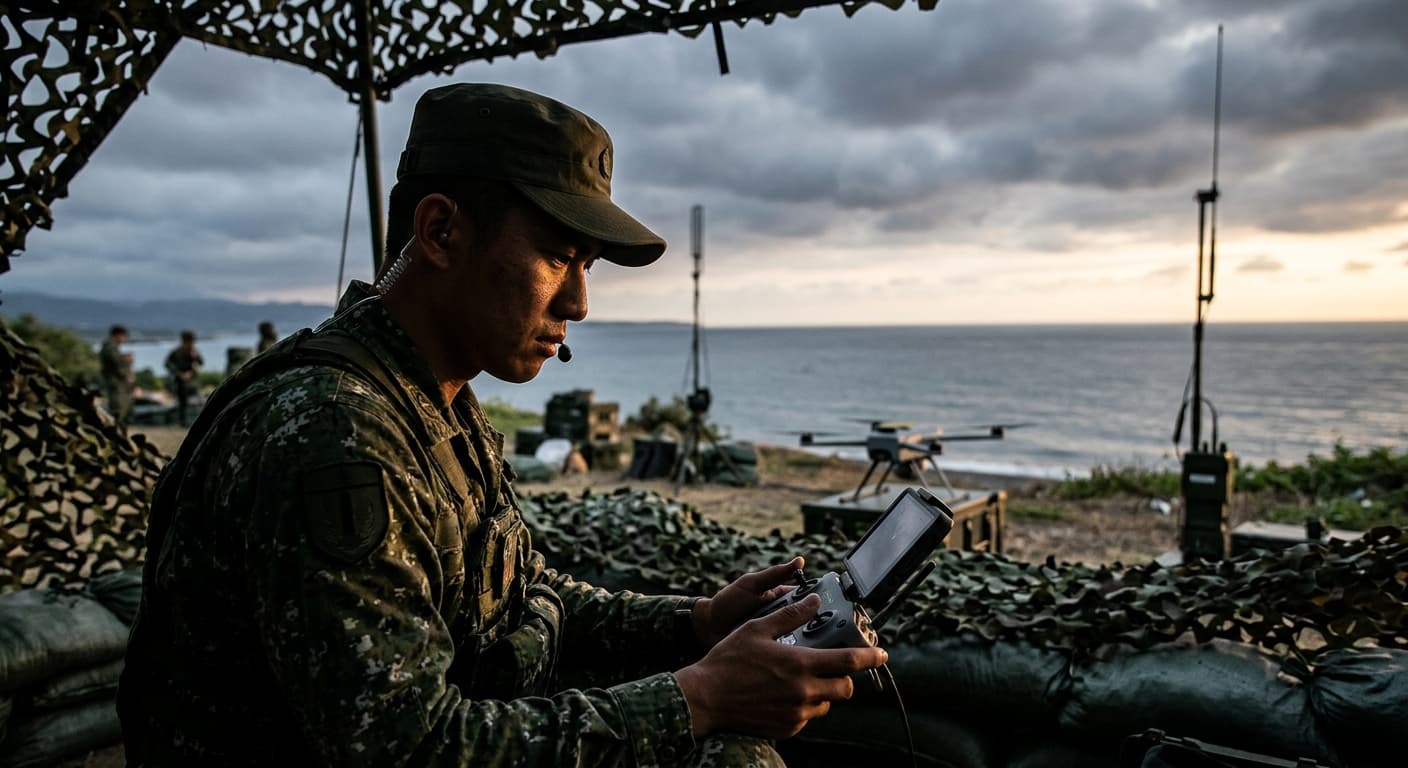
Taiwan's Drone Gap: The 435-Ship Problem
Taiwan's coast guard struggles against China's growing navy, as drone funding cuts threaten its defense strategy amid rising tensions.
Conflict & Security
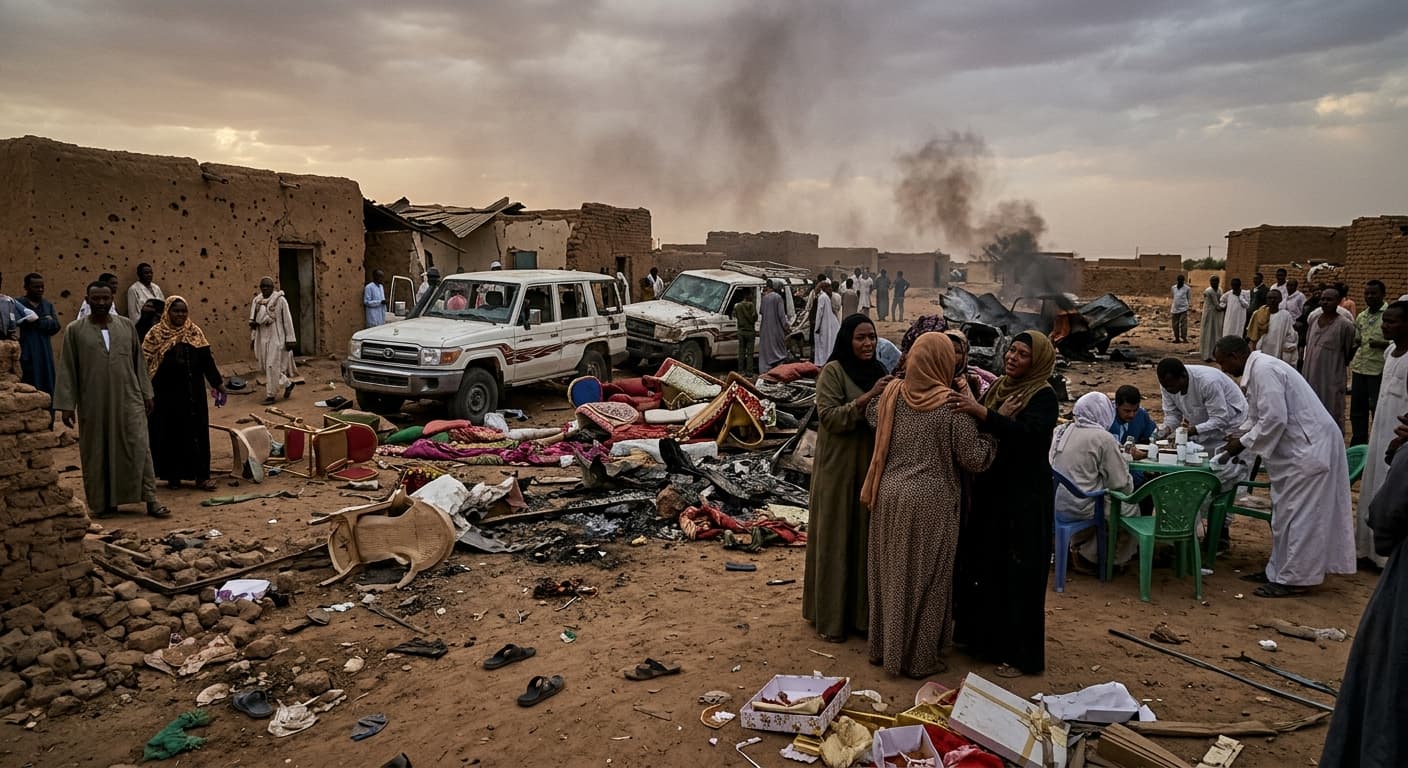
RSF Drone Strikes Target Wedding Convoys
RSF drone strikes in Sudan have killed at least 25 civilians, targeting wedding convoys and worsening the humanitarian crisis in El-Obeid.