Brownfield Mining Wins the Critical Minerals
Why expanding existing mines is the fastest route to supply security
Model Diplomat4 min readGlobal
Brownfield Mining Is Winning the Critical Minerals Race — And Reshaping US-China-Europe Competition
Why expanding existing mines, not building new ones, has become the most geopolitically viable near-term strategy for critical mineral supply security — and what it means for the balance of power between Washington, Beijing, and Brussels.
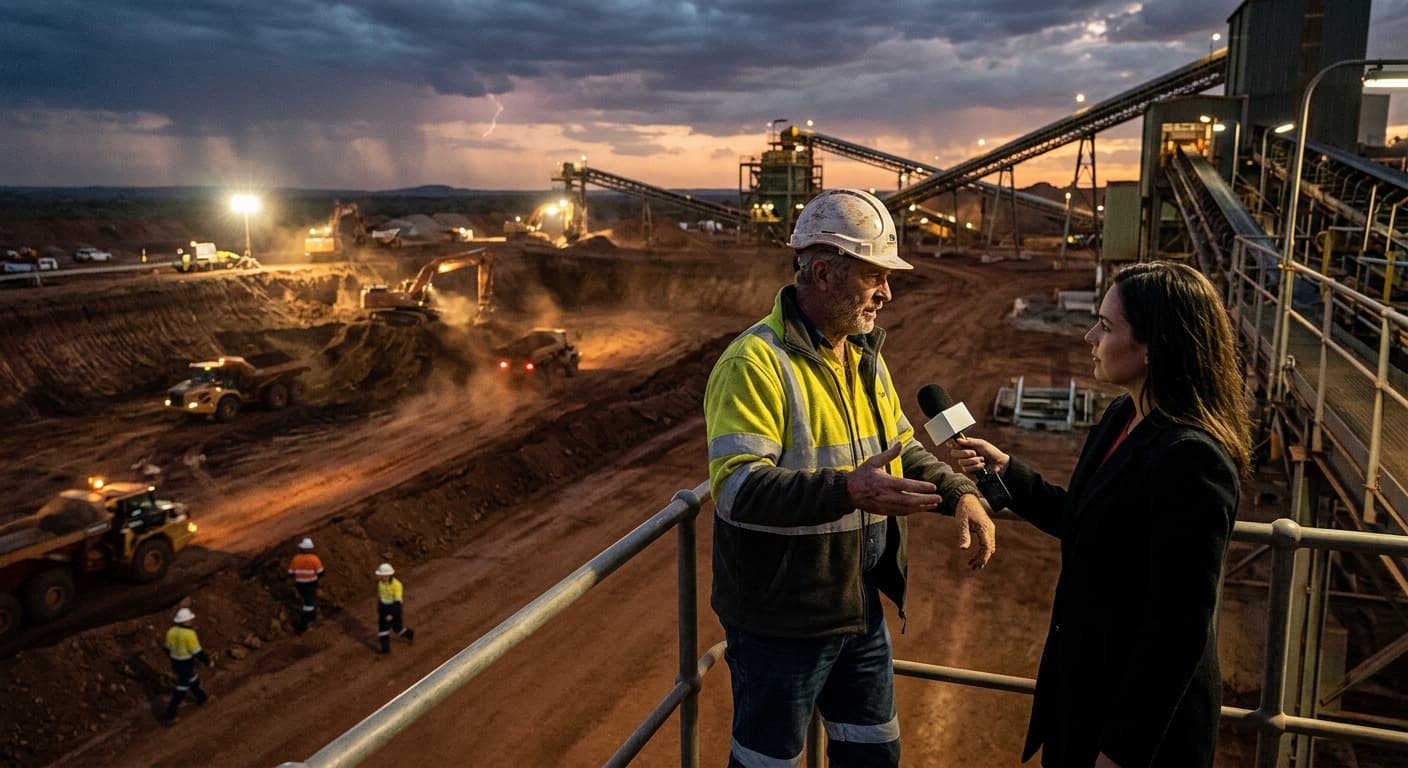
The fastest way to close the critical minerals gap is not to discover a new mine — it is to make the mines we already have go further. On July 15, 2026, Metal Tech News argued that brownfield optimization — expanding existing operations, reprocessing tailings, and rethinking haulage — is the most effective near-term route to boosting supply of copper, nickel, cobalt, lithium, and rare earths. The thesis is not merely technical. Brownfield is winning because it is the only strategy that outruns the geopolitical clock: China's October 2025 expansion of rare-earth export controls, the US House's February 2026 passage of the Critical Mineral Dominance Act, and the EU's struggle to meet its own Critical Raw Materials Act targets all point to the same conclusion — the supply-security race will be decided by whoever can move fastest within existing assets and existing jurisdictions, not whoever can permit a new mine in a decade.
The Demand Shock Outruns the Permitting Pipeline
The International Energy Agency projects that demand for critical energy transition minerals will nearly triple by 2030 and quadruple by 2040, according to the UN Secretary-General's Panel on Critical Energy Transition Minerals. Copper alone could grow by up to 48 percent by 2040, as
EngineeringCivil.org notes, citing IEA data. The World Bank's own modelling, in its
Minerals for Climate Action report, found that the projected growth in demand "far exceeds the rate at which new primary and secondary sources are currently being developed" because of long lead times for mine development.
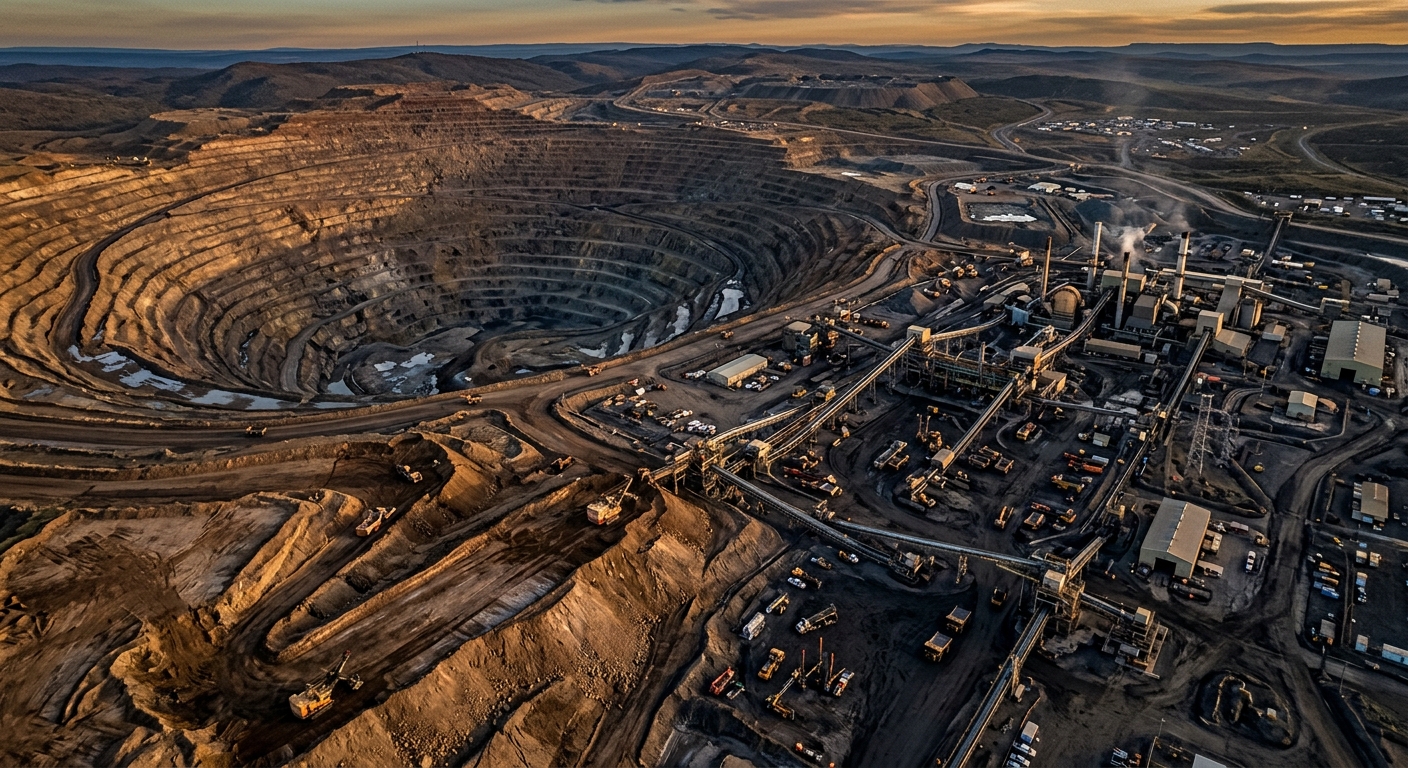
Those lead times are the crux. A University of Queensland study published in One Earth analysed 366 brownfield sites across 58 countries and found that bringing a new copper project from discovery to a preliminary economic assessment takes around 14 years, plus four or more years for construction. Greenfield projects in the Arctic can take 30 years or more to launch, according to S&P Global data cited by Eurasia Mining, while a brownfield restart can reach production in one to two years. The
Sustainable Minerals Institute at the University of Queensland confirms that brownfield expansion "maintains production, offers a stronger return on investment, with fewer financial and regulatory risks than establishing new 'greenfield' mines."
This is the supply-security arithmetic that policymakers cannot escape. The US is 100 percent import-reliant on at least 15 critical minerals, per the White House fact sheet on Executive Order 14241. China controls roughly 60 percent of global critical mineral production, 90 percent of processing, and 75 percent of manufacturing, according to the
House Natural Resources Committee. Meanwhile, the EU's 60 designated strategic CRM projects are "unlikely to meet EU self-sufficiency targets," as a
Bruegel policy brief concluded. Greenfield cannot close these gaps on the timeline the transition demands. Brownfield can.
Why Brownfield Bends the Geopolitical Curve
The geopolitical logic of brownfield rests on three pillars: jurisdictional control, infrastructure leverage, and processing integration.
First, jurisdictional control. Brownfield expansions keep supply inside known, allied, or domestic jurisdictions — the core premise of "friend-shoring." The Critical Mineral Dominance Act (H.R. 4090), passed by the House on February 4, 2026, by a 224–195 vote, explicitly directs the Interior Department to "identify active, inactive, or proposed mining projects on federal land that have the potential to increase production of hardrock minerals or their byproducts" or "produce hardrock minerals from mine tailings or coal byproducts," per Congress.gov. The bill is a brownfield mandate dressed as a dominance statute.
Second, infrastructure leverage. Brownfield projects ride on existing shafts, declines, processing facilities, power infrastructure, and — critically — permitting frameworks. The Metal Tech News piece zeroes in on haulage as the hidden variable: conventional truck fleets scale costs linearly with production, but autonomous rail-based haulage systems "rely on fixed infrastructure designed for long-term operation" and can "move large volumes of material with significantly lower ongoing costs." Fully electric haulage further reduces ventilation and energy costs, transforming the economics of deeper or marginal ores. For brownfield operations considering life extensions, these savings "can materially change project economics while supporting broader sustainability objectives." The same logic, applied to a brownfield expansion near an existing smelter or concentrator, compounds: the
Mining South East Europe analysis of Boliden's Nautanen satellite project near Aitik, Sweden, shows how treating a strategic deposit as infrastructure — integrated into existing mill throughput under EU CRMA Strategic Project status — compresses both permitting and capex.
Third, processing integration. The competition is no longer about who owns the ore but who controls what happens after extraction, as LSE's Business Review observes. China's structural advantage is not mining — it is refining. It processes roughly 70–75 percent of global lithium and cobalt and over 90 percent of rare earth refining capacity, per an
ELIAMEP policy brief. Brownfield optimization does not, by itself, solve the processing bottleneck. But it buys time — and it concentrates incremental supply in jurisdictions where allied processing capacity can be built adjacent to existing industrial ecosystems. The
CSIS analysis makes the stakes plain: Chinese firms completed 10 mining transactions worth more than $100 million in 2024, the most since 2013, systematically securing future supply "long before a mine enters production." Brownfield assets in allied jurisdictions are, by definition, harder for Beijing to acquire.
Discover more
US Politics
House Ethics Committee Pushes Sexual Miscond.
The House Ethics Committee has shifted responsibility for sexual harassment settlement records to the Office of Congressional Workplace Rights, complicating disclosure efforts.

India
Modi's Women’s Convention in Varanasi
Modi's Varanasi rally frames women's reservation as a national mission, targeting the 2027 Uttar Pradesh elections with a strategic narrative.

India
BJP's Misunderstanding of Women's Quota Needs
The BJP's linking of the Women Reservation Bill to delimitation risks delaying women's empowerment in India, misreading the aspirations of female voters.

Economics
Fed's Amex AML order puts correspondent banking on notice
Federal Reserve's Amex AML order requires board-level controls and a 90-day plan; OCC fined the bank $350 million over enterprise-wide deficiencies.