Bolivia's Cabinet Shake-Up
Paz's reshuffle amid protests shows vulnerability, not control.
Model Diplomat3 min readSouth America
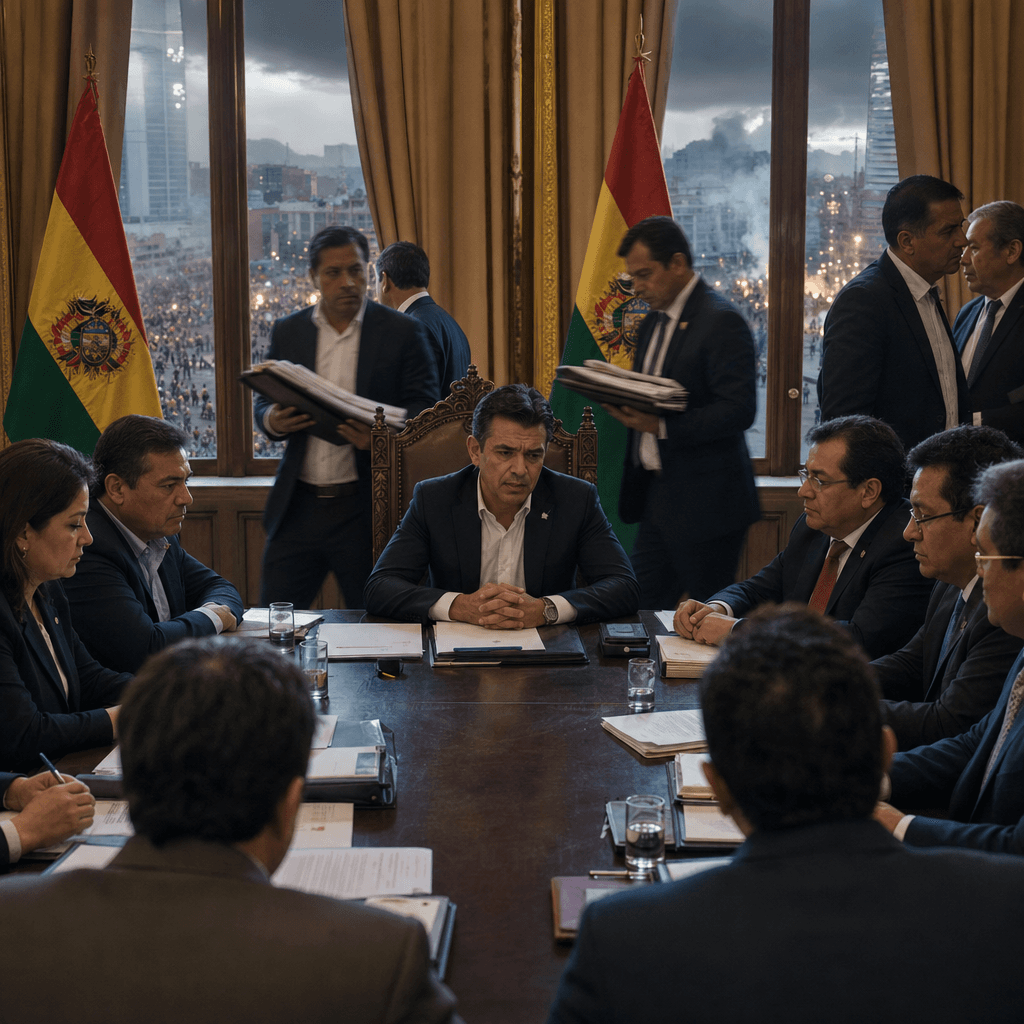
Rodrigo Paz’s cabinet shake-up won’t end Bolivia’s crisis
Bolivia’s president is trading ministers for time, but protests, shortages and a fragmented legislature still give the street more leverage than the palace.
Rodrigo Paz is reshuffling his cabinet because he has lost the initiative. On Wednesday, Bolivia’s president said his government needed to “reorganise a cabinet that must be able to listen” as weeks of anti-government protests and roadblocks intensified, according to Al Jazeera. The move is a defensive concession: Paz is trying to contain a backlash to fuel-subsidy cuts and wider free-market reforms that have fed inflation, shortages and calls for his resignation, while his foreign minister and security forces warn that the protests are an effort to “disrupt the democratic order” (
Al Jazeera).
The street has the stronger hand
The cabinet change is not a sign of control; it is an admission of vulnerability. Paz took office only in November, but he is already confronting one of Bolivia’s worst economic crises in decades, and the protests now cut across miners, farmers, labourers and teachers (Al Jazeera). In practice, that coalition has leverage because it can stop the country moving.
El País reported that roadblocks had spread to 60 points on the national network, disrupting fuel, food, medicine and even oxygen deliveries. That is the real pressure point: not slogans, but supply chains.
Paz’s economic agenda is what triggered this. He has already cut fuel subsidies, and LA NACION reported that he is preparing broader reforms to loosen fuel-price controls and attract investment. That may please creditors and investors, but it is politically toxic in the short term because it pushes more of the adjustment onto households already dealing with high prices and shortages. This is why cabinet reshuffles usually fail in moments like this: the problem is not personnel, it is the cost of the policy mix.
Morales, Washington and the battle over legitimacy
The second power struggle is over who gets to define the unrest. Paz and his ministers are framing the protests as an anti-democratic destabilisation campaign; Foreign Minister Fernando Aramayo took that line in public remarks and at the OAS, while the government accused former president Evo Morales of fomenting unrest (Al Jazeera,
El País). Morales, who still has reach in Bolivia’s rural and labour networks, has backed the demonstrations, which makes him both a domestic spoiler and a useful enemy for Paz. That dynamic helps the president rally his own base, but it also hardens the opposition into a wider anti-austerity front.
Paz is getting help from abroad. Washington has publicly backed his government, and El País reported that Secretary of State Marco Rubio warned the United States would not stand by if violence escalates. Colombia, by contrast, has become a diplomatic irritant after Bogotá described the protests as a “popular insurrection,” prompting La Paz to ask for the Colombian ambassador’s departure (
Al Jazeera). External backing may stiffen Paz’s hand, but it does not solve Bolivia’s core problem: his governing coalition is thin, and the Assembly remains hostile or divided (
LA NACION).
What to watch next
The next decision point is whether Paz follows the reshuffle with a broader political bargain: a new cabinet, a social dialogue mechanism, and any softening on the anti-blockade bill or fuel policy, as reported by El País. If he only swaps ministers, the protests are likely to resume. If he offers targeted relief on fuel and a formal channel for Indigenous, labour and transport groups, he may buy weeks. The date to watch is the coming weekend, when Paz said the new consultative body should begin taking shape.
Discover more
India
Romanian Coalition Party Demands PM Resign
Romania's Social Democrats withdrew from coalition, joining far-right AUR to topple PM Bolojan, risking €10 billion in EU funds by August 2026.
India
BJP Congress Clash Over MP Bill Defeat
The BJP's defeat of the women's quota amendment sparks a political narrative war with Congress, impacting future elections.

International Relations
Pakistan's Key Role in US-Israel-Iran Meddle
Pakistan is seeking to mediate the US-Israel-Iran conflict, balancing high-stakes diplomacy against severe economic pressures and steep regional challenges.
Conflict & Security
Guatemala: El Niño 2026–27 becomes regional security test
UNICEF: 25.8M children face El Niño risks in Latin America; Guatemala maps 188 municipalities for drought and food insecurity amid regional security test.