Ben-Gvir's Video
How a taunt video backfired on Israel's global image
Model Diplomat3 min readMiddle East
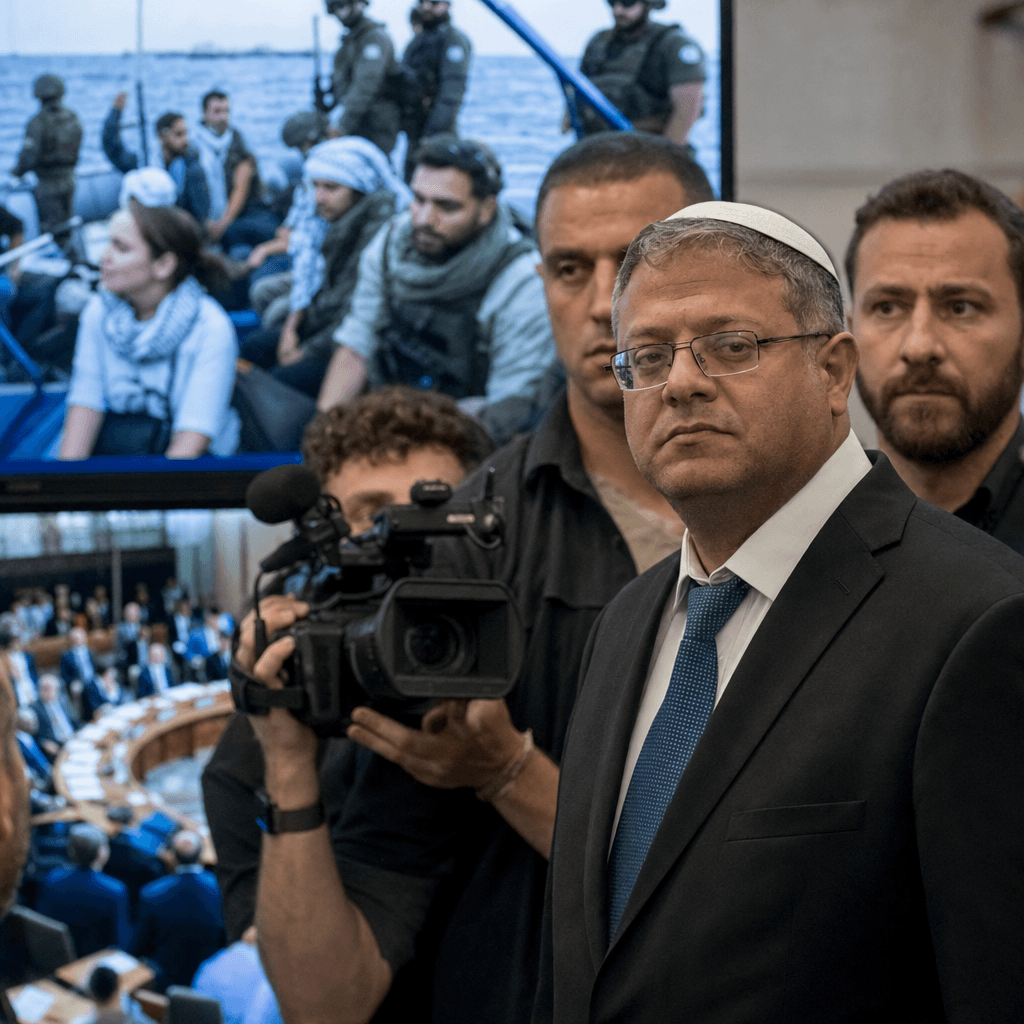
Ben-Gvir turned a PR asset into a diplomatic liability
Itamar Ben-Gvir’s taunt video handed Israel’s critics a visual proof point, forcing allies into public protests while exposing the limits of its paid messaging machine.
Itamar Ben-Gvir’s video of detained Gaza flotilla activists — kneeling, blindfolded and bound at Ashdod — did more damage than the flotilla itself, because it supplied the image Israel’s opponents have spent years trying to prove, not just claim, according to Al Jazeera. The immediate cost was diplomatic: Italy, France, the Netherlands and Canada summoned Israeli ambassadors over the footage, while US Ambassador Mike Huckabee criticized Ben-Gvir for having “betrayed the dignity of his nation,” as reported by
Al Jazeera and
AFP via Gulf News.
The leverage is domestic, not international
Ben-Gvir’s leverage is internal. He is not trying to persuade Brussels or Washington; he is signaling to Israel’s hard-right base that detention, humiliation and defiance are politically rewarded. That is why the video matters more than the interdiction itself. As Al Jazeera reported, the footage undercut Israel’s “Hasbara” strategy — the state-backed public relations effort meant to explain away coercive policy as security necessity — at the very moment the government is spending heavily to keep its narrative intact. The article cites a projected jump in the hasbara budget from roughly $15 million in 2023 to $700 million by 2026.
That is the power dynamic: Ben-Gvir benefits from the viral spectacle; Netanyahu absorbs the external cost. Haaretz reported that Netanyahu and senior Israeli officials moved quickly to distance themselves from Ben-Gvir, a rare public rebuke that signals concern less about the treatment of detainees than about the broadcast of it, according to Haaretz.
Washington is still choosing enforcement asymmetrically
The larger signal is not that Israel lost a messaging round; it is that its allies are still drawing a sharp line between criticism and punishment. The Trump administration’s response was the clearest example. On the same day that Huckabee condemned Ben-Gvir’s conduct, the US Treasury sanctioned four flotilla organizers, calling the humanitarian mission “pro-terror,” Al Jazeera reported. That asymmetry matters. It tells Israeli ministers they can pay reputational costs without facing material ones, while Palestinian solidarity networks and humanitarian activists face legal and financial pressure.
For readers tracking the wider Global Politics angle, the lesson is simple: image warfare only works until one side hands the world footage that defeats the script. For the
United States, the problem is credibility — condemning humiliation while simultaneously sanctioning the people trying to deliver aid.
What to watch next
Watch two things over the next few days: whether Netanyahu tightens discipline on Ben-Gvir or lets him keep freelancing for the coalition base, and whether European capitals follow the ambassador summons with anything sharper than protest. Also watch the fate of the 430 detained flotilla participants and the 87 reported hunger strikers; if deportations proceed quietly, Israel limits the diplomatic bleed. If abuse allegations expand, the video will become only the first exhibit in a larger case.
Discover more
India
UN Expert Albanese: India Violates Law
UN Rapporteur Francesca Albanese accuses India of breaching international law, spotlighting human rights concerns in Kashmir and prompting diplomatic pushback.

International Relations
Pakistan's Key Role in US-Israel-Iran Meddle
Pakistan is seeking to mediate the US-Israel-Iran conflict, balancing high-stakes diplomacy against severe economic pressures and steep regional challenges.
Global Politics
Trump's Conflicting Messages on Iran War
Trump's mixed messages on Iran reflect a strategy of audience management, benefiting Tehran amid a complex geopolitical landscape.

Conflict & Security
Drone Warfare Killing Aid Workers at Unprec
Over 1,000 humanitarian workers killed in three years as cheap armed drones collapse legal protections. Gaza, Sudan, Ukraine, and DRC see deliberate targeting of aid convoys and hospitals with zero prosecutions.