US Sanctions Gaza Flotilla Organisers
Exploring the implications of US sanctions on Gaza activism.
Model Diplomat3 min readMiddle East
US Sanctions Gaza Flotilla Organisers — Why It Matters
Washington is using financial sanctions to widen the cost of Gaza solidarity work, shifting the fight from the sea to banks, insurers and donors.
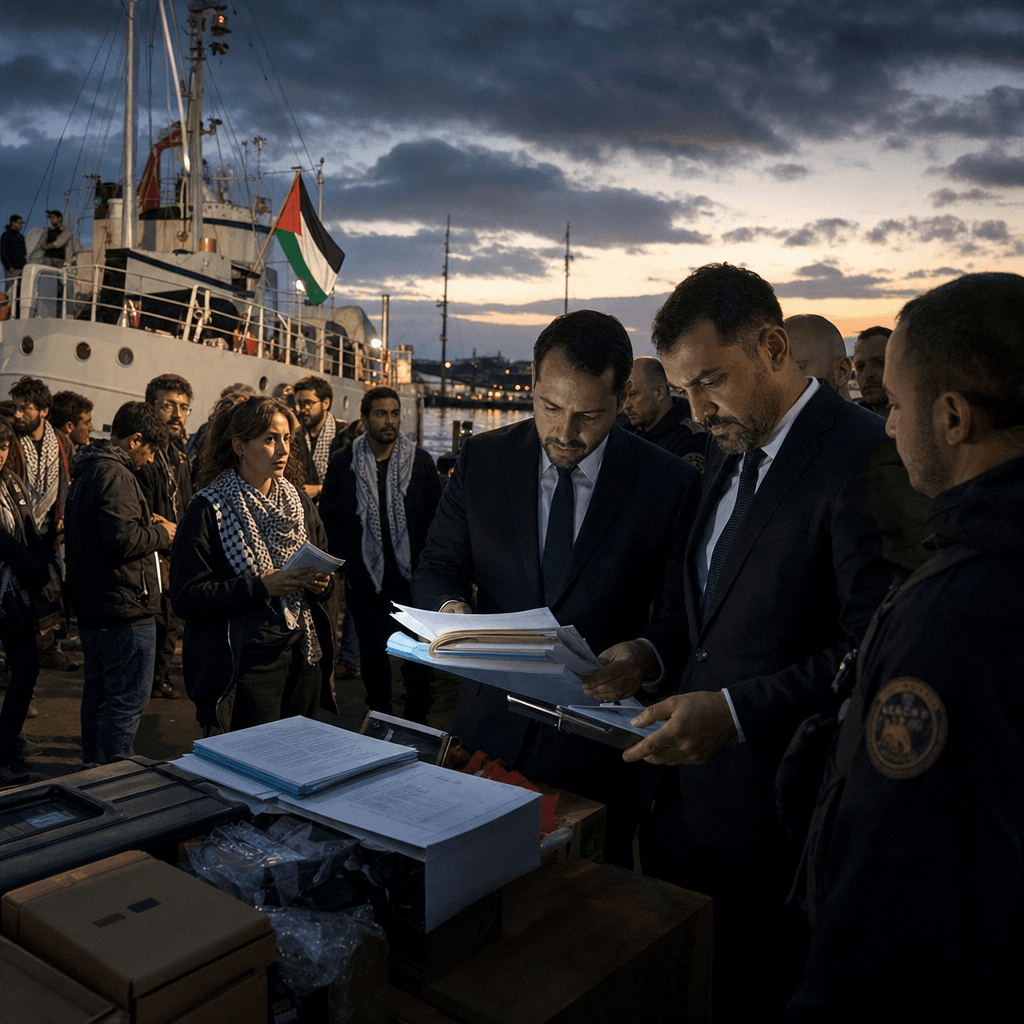
The Trump administration on Tuesday sanctioned four activists linked to Gaza flotilla campaigns, saying they were part of a “pro-terror flotilla” that sought to reach Gaza “in support of Hamas” (Al Jazeera). Treasury Secretary Scott Bessent said the move was meant to sever Hamas’s “global financial support networks,” but the department did not publicly present evidence for the allegation (
Al Jazeera). The practical effect is broader than the names on the list: any US-based assets can be frozen, Americans are barred from doing business with the targets, and foreign banks now face a compliance risk if they keep accounts open (
Al Jazeera).
Washington is trying to deter the support network, not just the boats
The leverage point is not maritime interception — Israel already controls that. It is the financial and legal ecosystem around the flotilla movement. By sanctioning activists linked to the Popular Conference for Palestinians Abroad and Samidoun, Washington is signalling to banks, payment processors, insurers and logistics providers that even indirect contact can carry penalties (Al Jazeera). That is the real punch of this decision: it raises the cost of organizing future convoys even when the boats never leave port.
This is why the move matters beyond the specific activists named by Treasury — Saif Abu Keshek, Hisham Abu Mahfouz, Mohammed Khatib and Jaldia Abubakra (Al Jazeera). It turns a political and humanitarian campaign into a financial compliance problem. For the activists, the risk is not only asset freezes in the United States but de-risking by banks elsewhere that want to avoid secondary exposure to US sanctions (
Al Jazeera).
The sanctions track Israel’s broader crackdown
The timing is not accidental. Israel has intercepted the latest Gaza-bound flotilla in international waters and detained hundreds of activists, triggering condemnation from multiple governments over the treatment of civilians aboard the vessels (BBC;
Al Jazeera). BBC reporting noted the flotilla carried more than 50 boats and that Israel said it would not allow any breach of the blockade, while the activists described their mission as humanitarian and non-violent (
BBC). That split is the core political battleground: Israel and the US frame the flotilla as a Hamas-facing provocation; organisers frame it as an aid effort blocked by siege (
BBC;
Al Jazeera).
The beneficiary here is clear: Israel gains diplomatic backing for its blockade enforcement, while Washington reinforces a line that aid activism can be treated as security-related support for Hamas (Al Jazeera). The losers are the flotilla networks, Palestinian civil-society groups tied to them, and foreign activists who now face a sharper risk of travel disruption, account closures and reputational blacklisting.
What to watch next
The next decision point is whether banks and European intermediaries start pre-emptively cutting ties with flotilla-linked groups. If they do, the US move will have achieved its main purpose without a single additional boarding at sea. Also watch for any legal challenge to the sanctions, and for the next convoy launch date: the flotilla movement has repeatedly tried to regroup after interceptions, and organisers have already said they will seek new routes, including overland alternatives (Al Jazeera). For broader context on the regional fallout, see
Conflict and
Global Politics.
Discover more

Global Politics
US Seizes Iranian Ship, Tensions Surge
The US seizure of the Iranian ship Touska highlights a shift in control over the Strait of Hormuz, favoring Iran's strategic position.

Conflict & Security
Drone Warfare Killing Aid Workers at Unprec
Over 1,000 humanitarian workers killed in three years as cheap armed drones collapse legal protections. Gaza, Sudan, Ukraine, and DRC see deliberate targeting of aid convoys and hospitals with zero prosecutions.
Global
World Normalises Taliban as Afghan Women Eras
UN data shows Afghan women erased from public life as Russia recognises the Taliban, EU hosts officials in Brussels, and ICC warrants for gender persecution go unenforced.
Conflict & Security
West Africa Food Crisis: Three Shocks in 2026
Conflict, climate extremes, and the Strait of Hormuz closure drive a severe food crisis in West and Central Africa, with fertilizer prices surging 80% and millions displaced.