Argentina Ends 2002 Gas Tariff Exception
New decree aims to boost Vaca Muerta gas exports.
Model Diplomat7 min readSouth America
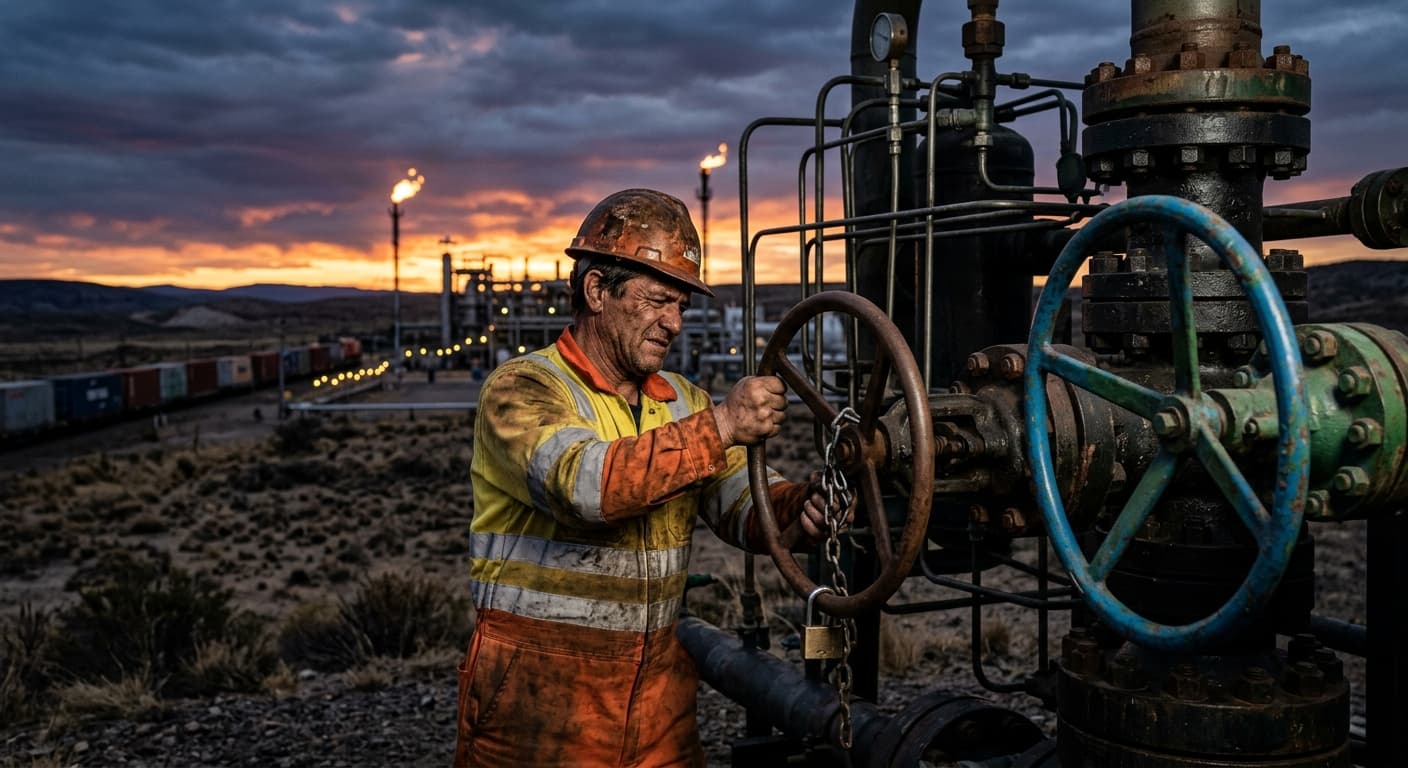
Argentina scraps 2002 gas-tariff carve-out to unlock Vaca Muerta exports
Decree 580/2026 unifies Perito Moreno pipeline tariffs across all shippers, ending a dollar-linked exception and repricing Southern Cone gas exports.
Argentina's government repealed a 2002 dollar-linked tariff regime for the Perito Moreno gas pipeline on July 8, 2026, forcing every shipper — domestic distributor or cross-border exporter — onto a single blended price set by the new gas-and-power regulator. Buried in a technical decree, the move is the load-bearing regulatory step behind Buenos Aires's bet to convert Vaca Muerta into the Southern Cone's dominant gas supplier: without a uniform tariff, the Brazil-bound and LNG-bound contracts now under negotiation could not be priced coherently against domestic offtake. That is the geopolitical story hiding inside a paragraph about transport fees.
What the decree actually does
Decree of Necessity and Urgency 580/2026, published in the Boletín Oficial on July 8, repeals Decree 689/2002 issued by then-President Eduardo Duhalde during the post-convertibility emergency, according to BAE Negocios. That 2002 rule shielded gas-transport tariffs and contracts originally priced in foreign currency from the asymmetric pesification imposed on the rest of the economy — a carve-out designed to keep export-linked shippers whole while household tariffs were frozen.
Under the new rule, the Ente Nacional Regulador del Gas y la Electricidad (ENREGE) will set the base tariff for the Gasoducto Perito Francisco Pascasio Moreno using the awarded price of the ongoing expansion tender, and may apply a staged "escalonamiento" to avoid abrupt increases, Comercio y Justicia reported. The tariff will be, in the government's own words in the decree's considerandos, "el promedio entre el precio existente para la capacidad actualmente contratada y el nuevo precio de la capacidad incremental, ponderado por los volúmenes correspondientes en cada caso."
The 2002 carve-out, the executive argued, "carece de justificación en el marco regulatorio vigente y genera distorsiones en los precios y tarifas a pagar por parte de los cargadores del sistema de transporte." That language borrows from the energy-emergency architecture laid down by DNU 55/2023 and extended by Decree 1060/2024, which had already declared a TGS-led private-initiative expansion of "public national interest" and mandated a unified price for shippers on the ampliated system, per the official text on Argentina.gob.ar.
Why the plumbing matters more than the tariff
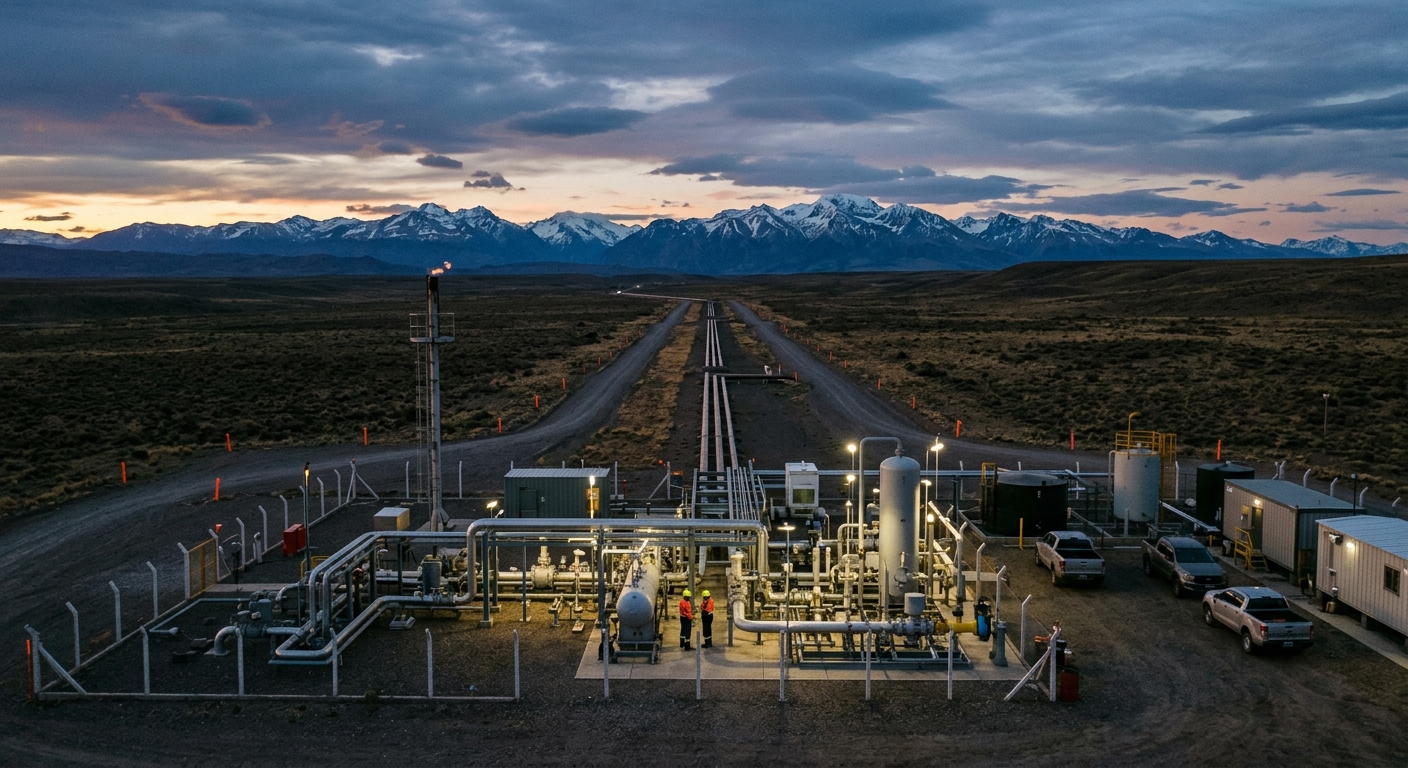
The Perito Moreno — the former Néstor Kirchner pipeline, renamed by Milei's Energy Secretariat under Resolution 326/2024 — is the spine of Vaca Muerta's evacuation infrastructure. It currently moves up to 26 million cubic metres per day from Tratayén, Neuquén, into Buenos Aires. The Tramo I expansion, financed and built under a 15-year capacity-reservation contract with Energía Argentina S.A., will lift that to 40 MMm³/d, according to the tender documents published by the
Argentine consulate in Belo Horizonte.
That extra 14 MMm³/d is the swing capacity that Argentine planners intend to sell abroad. Bolivian gas exports to Argentina, which once covered half the country's gas imports, collapsed by September 2024, as the Italian institute ISPI notes in its Vaca Muerta analysis. That collapse simultaneously freed the Gasbol pipeline to run in reverse and stripped Brazil of its traditional Andean supplier — a vacuum Buenos Aires signed a memorandum of understanding to fill during the November 2024 G20 summit, for up to 30 MMm³/d.
Chile, meanwhile, is already the largest firm buyer: ENARGAS data reported by Clarín show Argentina exported an average of 9.64 MMm³/d in February 2026, of which 8.8 went to Chile — before a brief April 2026 suspension of two YPF contracts on gas-quality grounds. The dispute underscored how thin the operational margins remain, and how much political oxygen a unified tariff schedule buys the regulator when a cross-border shipper demands recourse.
The primary document nobody quoted
The clearest window into what unification means in practice is not the DNU itself but a resolution issued weeks earlier by the outgoing gas regulator. In Resolution 409/2026, ENARGAS spelled out that, pending Decree 1060/2024's remuneration criteria "with effect from the enabling of the expansion works", the base capacity of the Perito Moreno would provisionally be priced using ENARGAS Resolution 877/2025 — with adjustments folded into the "Mix de Transporte" that feeds distribution tariffs.
"…se deberá considerar, en relación con la remuneración del servicio de transporte correspondiente a la Capacidad Base del GPM, las tarifas provisorias aprobadas por la Resolución N° 877 de fecha 14 de noviembre de 2025 del ENARGAS, con las actualizaciones pertinentes, sin perjuicio de las medidas que se dispongan en relación con las pautas remuneratorias previstas en el Decreto N° 1.060/2024, con vigencia a partir de la habilitación de las obras de ampliación allí previstas."
In plain English: until 580/2026, base capacity was priced one way, and the incremental capacity from the expansion would be priced another. Distributors, generators and exporters were staring at a two-tier tariff. The July 8 decree collapses those tiers into one weighted average — the precondition for TGS and the winning consortium led by Pampa Energía to bid firm contracts that cross the border.
Who wins, who pays
The clearest winners are the export consortia. Southern Energy S.A. — Pan American Energy (30%), YPF (25%), Pampa Energía (20%), Harbour Energy (15%) and Golar LNG (10%) — reached final investment decision earlier this year on two floating LNG vessels off Río Negro, with the Hilli Episeyo due to start up around year-end 2027 and the MK II at end-2028, according to Harbour's FID disclosure via London's regulatory news service. Golar's own
announcement says the project holds the first-ever 30-year unrestricted LNG export authorisation issued by Argentina. Those FLNGs will initially rely on spare capacity in the existing pipeline network — meaning Perito Moreno tariff certainty flows directly into their delivered cost stack.
The second winner is Brazil's downstream industry. Petrobras CEO Magda Chambriard told CERAWeek that Petrobras wants Argentine gas cheaper than the US$6–6.50 per million BTU it fetches at the Bolivian border, Clarín reported. Every avoided distortion in Argentine transport tariffs improves that arithmetic. YPF CEO Horacio Marín has publicly estimated that regional pipeline exports to Chile and Brazil could reach 40 MMm³/d, worth roughly a third of the LNG opportunity.
The losers are the shippers who priced their books off the 2002 exception. These are principally the legacy holders of export contracts denominated in dollars — mostly producer-exporters to Chile — whose transport costs were insulated from Argentina's peso volatility. The regulator's staged transition is a concession to them. The daily press, notably El Destape, argued that the change will push transport costs — and therefore end-user gas bills — higher over the medium term. That is the political risk Milei's government carries into the October legislative campaign.
The macro bet
Argentina's Article IV consultation with the IMF, published in 2026, records that the trade surplus narrowed in 2025 even as energy and agriculture drove robust export growth. The 2024 energy trade surplus reached nearly US$6 billion, per the Fund's
staff report, reversing years of energy deficits. Vaca Muerta's Neuquén basin now accounts for 72.2% of Argentine gas production, up from 56.3% a decade earlier, according to research by Brazil's
IPEA, which projects Argentine gas exports of up to 51 MMm³/d by 2030.
That is the number the Milei government needs to hit. Without it, the IMF programme's projected shift from a modest current-account deficit in 2025 back toward balance by decade's end does not close. And it will not be hit if pipeline shippers face a two-tier tariff structure that makes long-dated export offtake impossible to price.
Diplomat View
The unified tariff is the sort of technical fix that gets ignored on the day it is published and reshapes a region within a decade. Our read: DNU 580/2026 is not a domestic tariff-cleanup — it is the last regulatory switch Buenos Aires needed to throw before the Southern Energy FLNG vessels arrive and before firm gas contracts to Brazil become financeable. Expect a Tratayén–La Carlota pipeline FID by Transportadora de Gas del Norte within twelve months, and expect Petrobras to sign firm offtake, not spot cargoes, once ENREGE publishes its first unified reference tariff.
The forecast changes if two things happen. First, if Milei's coalition underperforms in the October 2026 legislative midterms and a resurgent opposition tries to reinstate a differential regime for dollar-priced contracts by law, the unification will be litigated to a standstill. Second, if the Peronist bloc succeeds in getting Congress to reject the DNU under Article 99(3) of the Constitution — always the vulnerability of a "necessity and urgency" instrument — Argentina's counterparties in Chile and Brazil will price in political risk again, and the LNG consortia will do the same. Watch the Bicameral Commission's report on 580/2026, ENREGE's first published tariff schedule, and the TGN Tratayén–La Carlota financing round.
What to watch next
- October 26, 2026 — Argentine legislative midterms; the composition of the incoming Congress determines whether DNU 580/2026 survives ratification.
- ENREGE's first tariff schedule (expected Q4 2026) — the number that will define the delivered cost of Vaca Muerta gas to every domestic and cross-border shipper.
- TGN's Tratayén–La Carlota FID (targeted late 2026) — the pipeline that would carry Argentine gas north to Córdoba and, via reversed infrastructure, on to Brazil.
- Southern Energy Hilli Episeyo commissioning (end-2027) — the first cargo out of the Golfo San Matías will price against the tariff regime now being unified.
The Bottom Line
The bottom line: Argentina did not just tidy up a twenty-four-year-old gas-tariff exception — it removed the last regulatory obstacle to converting Argentina 's shale wealth into firm cross-border contracts with Chile, Brazil and the seaborne LNG market. If ENREGE publishes a credible unified tariff before Southern Energy's Hilli Episeyo starts up in late 2027, Buenos Aires will have quietly rewritten Southern Cone energy geopolitics from the fine print of a mid-year decree.
Discover more

US Politics
Senate Repeals Minnesota Mining Ban for Twin
The Senate's repeal of a 20-year mining moratorium in Minnesota allows Twin Metals to proceed, raising concerns over environmental impacts and foreign ownership.

US Politics
House Ethics Committee Pushes Sexual Miscond.
The House Ethics Committee has shifted responsibility for sexual harassment settlement records to the Office of Congressional Workplace Rights, complicating disclosure efforts.
US Politics
U.S. House Passes Alert Act for Aviation
The House passed the ALERT Act 396–10, replacing the ROTOR Act after Pentagon intervention, impacting aviation safety regulations.

Conflict & Security
Drone Warfare Killing Aid Workers at Unprec
Over 1,000 humanitarian workers killed in three years as cheap armed drones collapse legal protections. Gaza, Sudan, Ukraine, and DRC see deliberate targeting of aid convoys and hospitals with zero prosecutions.