Senate Repeals Minnesota Mining Ban for Twin
Congress clears way for Twin Metals mining project
Model Diplomat7 min readMinnesota

Senate Repeals Minnesota Mining Ban for Twin Metals
The Senate's 50–49 vote and Trump's April 27 signature killed the Boundary Waters mining moratorium — clearing the way for Chile's Antofagasta and rewriting how Congress can undo any public land protection since 1996.
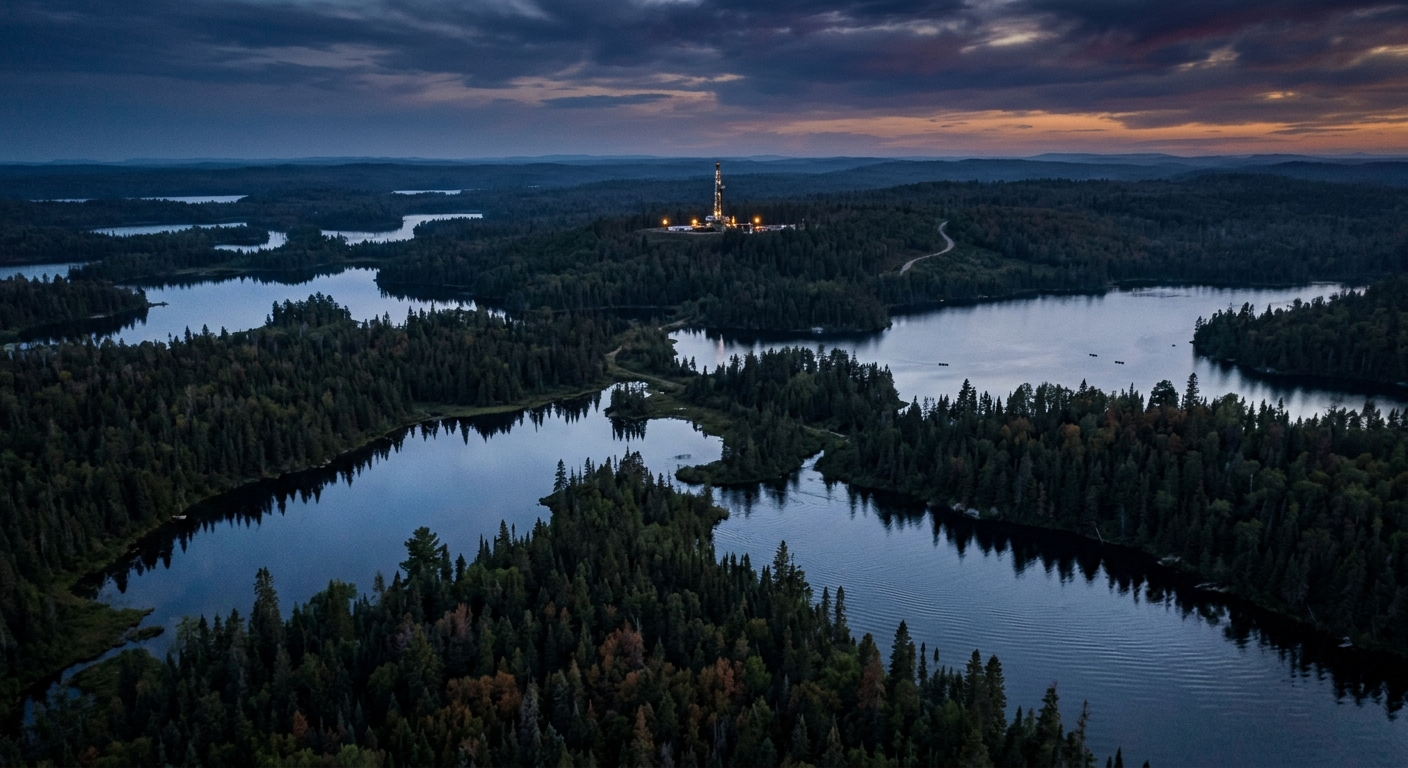
The Senate voted 50–49 on April 16, 2026 to erase a 20-year mining moratorium covering 225,504 acres of Minnesota's Superior National Forest, and President Donald Trump signed the resolution into law on April 27 as Public Law 119-85. The direct beneficiary is a Chilean company — Twin Metals Minnesota, a wholly owned subsidiary of London-listed Antofagasta PLC, controlled by the Luksic family. The larger prize is procedural: this was the first time Congress used the Congressional Review Act to void a Public Land Order, and it hands any future majority a fast-track tool to unwind three decades of wilderness, tribal and conservation withdrawals with a simple partisan vote.
What the law actually does
Public Law 119-85 is one sentence long. It states that Congress disapproves the Bureau of Land Management rule "relating to Public Land Order No. 7917 for Withdrawal of Federal Lands; Cook, Lake, and Saint Louis Counties, MN (88 Fed. Reg. 6308 (January 31, 2023)), and such rule shall have no force or effect," per the enrolled text at Congress.gov. PLO 7917 had withdrawn 225,504 acres of Rainy River watershed lands — the drainage that feeds directly into the Boundary Waters Canoe Area Wilderness — from mineral and geothermal leasing until 2043, per the
Congressional Research Service bill summary.
The White House confirmed the signing in a terse notice dated April 27, 2026, listing H.J.Res. 140 as disapproving the 2023 BLM order that "withdrew approximately 225,504 acres of National Forest System lands," according to the White House briefing statement. The
Federal Register notice for PLO 7917 had cited protection of the Boundary Waters, the 1854 Ceded Territory of the Lake Superior Chippewa, and the wild rice, walleye and canoe-outfitter economies downstream as the legal rationale. All of that is now, by statute, "of no force or effect."
The immediate operational effect is narrower than the headlines suggest. Twin Metals must still resubmit a Mine Plan of Operations to the U.S. Forest Service and the Minnesota Department of Natural Resources, then survive a multi-year National Environmental Policy Act review and state permitting under the same water-quality standards that have tripped up sister project NorthMet. Twin Metals spokeswoman Kathy Graul told NPR that "any proposed project in this region, including Twin Metals, must undergo a yearslong multi-agency regulatory review before earning permits to begin construction of a mine," per an NPR interview transcript. First metal, if it comes, is likely late-decade at the earliest.
The Chilean angle — and the China angle
The commercial winner is not a US company. Twin Metals is 100% owned by Antofagasta PLC, the FTSE 100 copper miner controlled by billionaire Andrónico Luksic. The Duluth Complex it sits on contains, by the mining industry's own estimate, more than four billion tonnes of copper, nickel and platinum-group metals, per Al Jazeera's reporting. Antofagasta told the Financial Times several years ago it was "confident of approval" for what it described as a $1 billion Minnesota project, according to
FT coverage of the company.
The awkward part for the "America First" framing is downstream. On the Senate floor on April 15, Sen. Tina Smith (D-MN) alleged that "Antofagasta secured record-breaking, zero-cost processing agreements with the Chinese copper smelters, all of which are state-owned in whole or in part," per the Congressional Record. Rep. Betty McCollum inserted an analysis into the House record making the same claim, warning the mine "will not directly supply critical minerals domestically, as the minerals will be funneled to a strategic adversary of the United States," per the
January 21 House debate transcript. Twin Metals disputes that its concentrate is destined for China; Graul told NPR the company is "committed to keeping their minerals in the North American supply chain."
Copper's status matters here. On November 7, 2025, USGS formally added copper to the 2025 Critical Minerals List, for the first time — one of six new additions under a revised methodology. That designation is the legal hook the majority used to argue national-security urgency, even though the U.S. Geological Survey had assessed copper as non-critical under the 2022 methodology. Whether the concentrate is smelted in Guangdong or Arizona will determine whether the "domestic supply" argument holds. There is no US smelter capable of processing Duluth Complex sulfide concentrate at commercial scale today.
The precedent nobody is talking about
The vote count was tight; the mechanism was radical. Congress had never before treated a Public Land Order as a "rule" reviewable under the Congressional Review Act — the 1996 Contract-with-America statute that lets Congress void agency actions on a majority vote, with no filibuster. To make the CRA fit, the Interior Department first had to submit PLO 7917 to Congress as a rule, which BLM did on January 6, 2026, per House Communication EC2569. The Senate then tabled a point of order challenging that maneuver by 51–48 on April 15, per the
official actions log.
That procedural ruling is the real news. Sen. Martin Heinrich (D-NM), whose state contains dozens of protective land withdrawals, warned on the floor that "with a simple partisan majority, Congress can claw back a public land order that has been in place potentially for years or decades … it would be chaos." Every Public Land Order issued since the CRA took effect in 1996 — including Chaco Canyon buffers in New Mexico, the Grand Canyon uranium withdrawal, and hundreds of tribal and defense-training reservations — is now theoretically eligible for the same treatment. That is not a hypothetical. The Colorado School of Mines analysis cited in the House record concluded that 90% by-product recovery at existing US mines could meet nearly all domestic critical-mineral needs — meaning the ideological fight over new withdrawals will keep coming even where the raw-materials case is weak.
Who benefits, who loses, who is watching
The Luksic family benefits first. Antofagasta had spent nearly $1 million lobbying the first Trump administration between 2016 and 2019 to restore the Twin Metals leases, per the Center for American Progress, which also documented that Ivanka Trump and Jared Kushner had rented a Washington mansion from Luksic during the first term — a relationship ethics scholars flagged repeatedly. The lifted moratorium restores an option value on billions of tonnes of ore that had been effectively stranded.
The losers are visible and organized. Ely-area canoe outfitters, resort operators and the Grand Portage Band of Lake Superior Chippewa opposed the repeal; the tribe holds treaty-protected hunting, fishing and wild rice rights in the 1854 Ceded Territory that PLO 7917 explicitly named. Sen. Susan Collins (R-ME) was the only Republican to vote no, according to the GovTrack roll call; Sen. Thom Tillis (R-NC) did not vote, and the outcome would have flipped had he opposed it and Vice President J.D. Vance not been available to break a tie.
Litigation is the next battlefield. Northeastern Minnesotans for Wilderness and the Save the Boundary Waters coalition — which sued and lost previously on lease-cancellation grounds — are expected to challenge both the CRA-as-applied-to-PLOs theory and any subsequent lease reissuance. Minnesota's state permitting regime, meanwhile, is not preempted by federal law: Gov. Tim Walz's DNR retains veto power over discharge permits under the Clean Water Act's Section 401 authority, and Minnesota's "nondegradation" water standards are among the strictest in the country. Twin Metals has to clear all of that before a shovel moves.
The market has already priced in something. Antofagasta shares in London have tracked copper prices upward through 2026 on demand from AI data centers and electrification, per running Financial Times coverage of the company. Analysts at
The Northern Miner described the vote as unlocking "one of the country's largest untapped copper-nickel deposits" — but crucially, unlocking optionality, not production.
What to watch next
- Q3 2026: BLM expected to reissue Twin Metals' cancelled mineral leases per the operative language in the companion bill
H.R. 978, which directs reissuance on identical prior terms with a bar on judicial review of the lease itself.
- Late 2026: Twin Metals expected to file a new Mine Plan of Operations with the U.S. Forest Service, starting the NEPA clock (18-month statutory review target under H.R. 978's language).
- 2027: First test cases likely on whether the CRA-over-PLO precedent can be extended to Chaco Canyon, Grand Canyon uranium, or Thacker Pass withdrawals — watch House Natural Resources Committee markups.
- State-level: Minnesota "Prove It First" legislation — modeled on Wisconsin's now-repealed sulfide mining moratorium — remains pending in St. Paul and could re-emerge as the operative choke point.
Diplomat View
The bottom line: repealing PLO 7917 is not really about copper in the ground; it is about who gets to decide what "public land" means, and by what majority. By persuading the Interior Department to submit a 2023 Public Land Order to Congress as a "rule" three years after the fact, the Trump administration and Rep. Pete Stauber have engineered a template that lets a 51-vote Senate majority erase any wilderness, tribal or defense withdrawal issued since 1996 — a category that runs into the hundreds. The immediate winner is a Chilean billionaire whose critical-mineral concentrate is contractually tied to Chinese smelters; the immediate loser is the principle that mineral withdrawals, once finalized after multi-year environmental review, sit outside partisan reach. Our forecast: Twin Metals will not produce copper before 2031, and the mine may never open on economics or state permits alone. But the CRA precedent will produce a second, third and fourth land-order repeal within 24 months. That would change only if a federal court rules — most likely on APA and FLPMA grounds — that a Public Land Order is not a "rule" under 5 U.S.C. § 801, forcing Congress back into ordinary legislation to unwind withdrawals. Watch the D.C. Circuit docket before the Minnesota permitting docket. That is where this fight is actually decided.
Discover more
Global Politics
Judge Blocks Above-Ground White House Project
A federal judge halted the above-ground White House ballroom expansion while allowing underground security work, spotlighting a clash over preservation.

US Politics
Democrats Aim to Curb Trump's Iran War Powers
US Democrats introduce measures to curb Trump's war powers on Iran, demanding congressional approval for military action in a critical test of oversight.
US Politics
Rising Utility Bills in DC
Rising utility bills in Washington DC expose the political stakes of coal-power reliance, squeezing households and fueling sharp energy policy debates.
Economics
Fed's Amex AML order puts correspondent banking on notice
Federal Reserve's Amex AML order requires board-level controls and a 90-day plan; OCC fined the bank $350 million over enterprise-wide deficiencies.