Trump's $400M White House Ballroom Approved
Court ruling allows construction amid ongoing legal disputes.
Model Diplomat3 min readUnited States
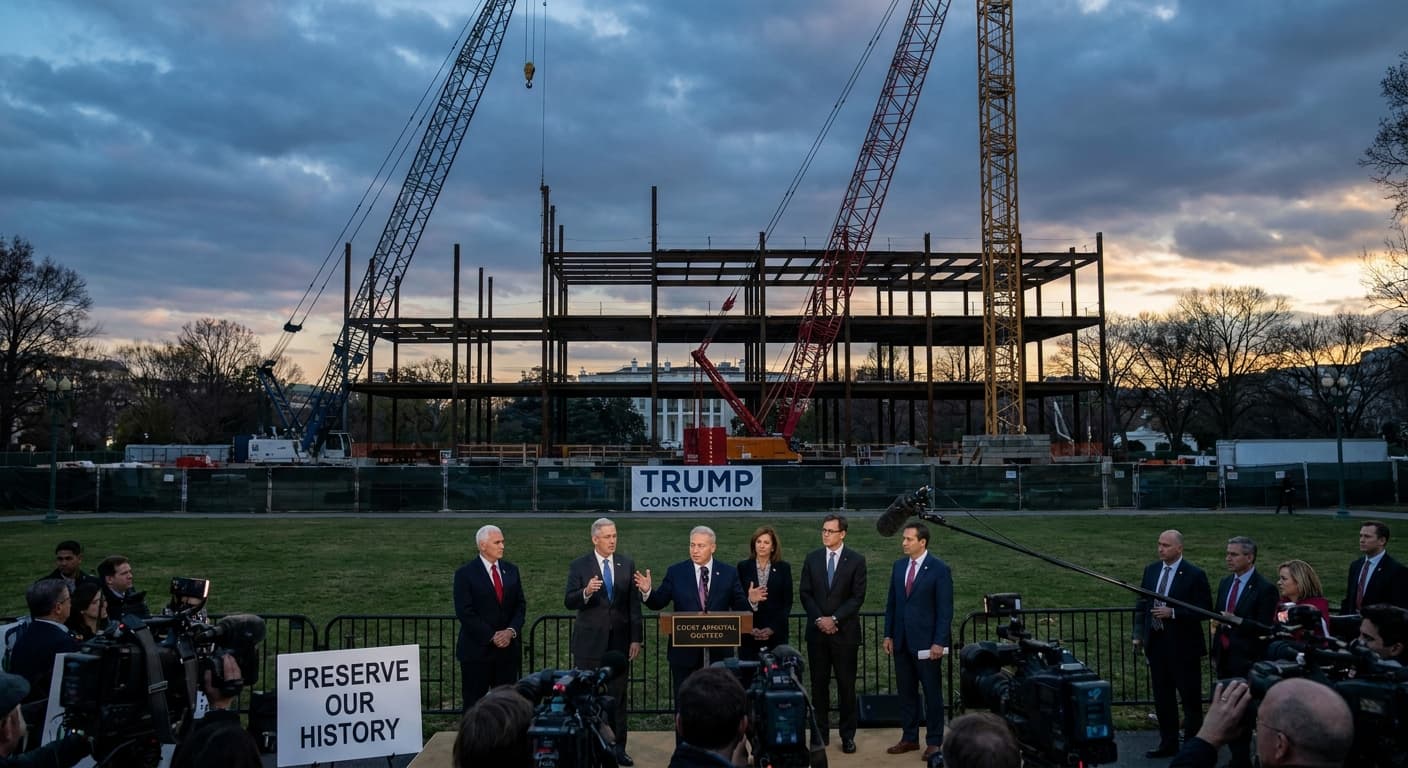
Appeals Court Allows Construction on Trump’s White House Ballroom to Proceed
Federal appeals court lifts injunction on Donald Trump’s $400 million White House ballroom, enabling ongoing construction amid legal battles.
A federal appeals court ruled on April 18, 2026, that construction on Donald Trump’s controversial $400 million ballroom at the White House can continue for the time being. This decision reverses a lower court’s injunction that had blocked above-ground work at the former East Wing site, temporarily permitting the sprawling project to proceed while further legal reviews unfold.
A Legal Battle at the Heart of a Presidential Legacy
The ballroom construction is not just another renovation—it’s emblematic of ongoing clashes over Trump’s efforts to reshape the White House both physically and symbolically. The $400 million price tag, funded largely by private contributions linked to Trump’s network, has raised eyebrows over transparency and appropriateness, drawing sharp scrutiny from preservationists, legal watchdogs, and political opponents.
The lower court’s initial injunction hinged on concerns that the project violated historic preservation laws and exceeded regulatory approvals. Critics feared the scale of the build would drastically alter the East Wing’s character and infringe on protected federal property protocols. The appeals court’s ruling to allow construction to continue for now reflects the complex legal and political balancing act: a recognition of Trump’s right to upgrade the presidential residence versus preservationist calls to maintain historical integrity.
This dispute also echoes prior contentious moments when presidential refurbishments clashed with regulatory frameworks—most notably Richard Nixon’s expansion projects that met fierce public and legal resistance in the 1970s. Trump's ballroom fight signals how the presidency remains a battleground for defining legacy through architecture, raising questions about who truly controls the nation's historical landmarks.
What’s at Stake Beyond the Ballroom
At face value, it’s a construction dispute. But the stakes go further. This ballroom is slated to host events, potentially strengthening Trump’s political brand and social influence post-presidency. It’s a physical centerpiece for his continued role on the national stage.
The ongoing legal tussle and the court’s temporary greenlight also highlight the limits of judicial interventions in politically charged infrastructure projects. The appeals court’s relief doesn’t settle the matter—it just buys time. Higher courts are poised to deliver a definitive ruling, which could either affirm Trump’s vision or impose significant constraints, setting a legal precedent for future presidential renovations.
This development also serves as a political litmus test. Should the construction continue unabated, it may energize Trump’s base who see the project as rejuvenation. Conversely, if courts ultimately halt the endeavor, it may be framed as a legal check on excessive self-aggrandizement.
What to Watch Next
All eyes turn to the higher courts as they prepare to weigh the broader legality and implications of the ballroom. Their ruling will clarify the extent of presidential autonomy over the White House grounds versus public and legal oversight mechanisms.
Meanwhile, scrutiny of the project’s funding and transparency will persist. Investigations into donor influence and compliance with federal regulations could resurface, influencing congressional and public opinion.
For readers tracking US politics, this case underscores how Trump’s enduring influence manifests in unexpected ways—from legal battles over architecture to the shaping of presidential legacy through control of physical space. For deeper context on Trump’s political footprint, see our United States profile and
US Politics.
Source: The Washington Post*
Discover more

Conflict & Security
De la Espriella's Razor Win Resets US-Colomb
De la Espriella's razor-thin election win signals a reset in US-Colombia relations, reshaping security ties and the agenda under a Trump-aligned approach.

International Relations
Colombia's Razor-Thin Rightward Pivot
Colombia swings right as Abelardo de la Espriella narrowly wins the presidential runoff by under one percent, exposing a deeply divided and polarized nation.

Global Politics
Iran Demands US Enforce Ceasefire
Iran insists the United States must enforce a ceasefire in Lebanon to uphold the memorandum of understanding, raising pressure on Washington and Netanyahu.

Conflict & Security
Trump's Iran Deal Faces Bipartisan Backlash
Trump's Iran deal draws fierce criticism from both Republicans and Democrats, exposing deep political divides over the ceasefire and the terms of the agreement.