Amit Shah Questions One Person, One Vote in 1
Amit Shah critiques unequal MP representation in India’s democracy
Model Diplomat3 min readIndia
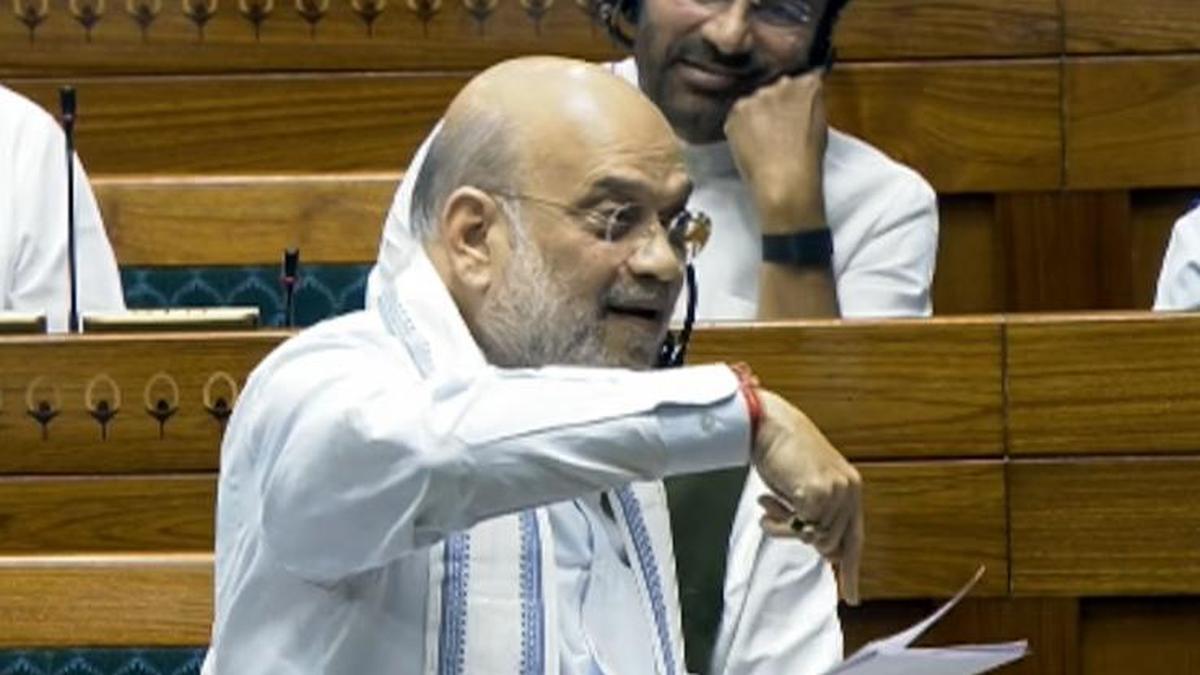
Amit Shah Critiques India’s “One Person, One Vote” Principle Over Unequal MP Representation
Union Home Minister Amit Shah argues in Parliament that India’s electoral map violates “one person, one vote, one value” due to vast disparities in population per MP.
On April 17, 2026, India’s Union Home Minister Amit Shah took a rare public stance against the current distribution of parliamentary constituencies, alleging that the foundational democratic principle of “one person, one vote, one value” is being violated. Addressing the Lok Sabha, Shah pointed out a stark disparity: some Members of Parliament (MPs) represent nearly 48 lakh (4.8 million) people, while others champion as few as 6 lakh (600,000). The Hindu reports Shah framed this as an urgent issue that undermines equal representation in the world’s largest democracy.
Why Unequal Representation Matters More Than Ever
India’s population has ballooned unevenly across states and regions, but parliamentary boundaries have not kept pace. Constituency delimitation—the redrawing of electoral districts—was frozen in 2002 until 2026 to incentivize population control but is now due for review. Shah’s criticism underscores a brewing political reckoning: states with slower population growth currently enjoy disproportionate representation compared to fast-growing states.
This imbalance dilutes electoral equity and questions the legitimacy of the “one person, one vote” standard. A vote from a smaller-population constituency effectively carries more weight than one from an overcrowded urban or population-dense rural district. This distortion can skew resource allocation, legislative priorities, and political power dynamics.
Historically, India’s freeze on delimitation was a politically sensitive compromise designed to prevent populous states like Uttar Pradesh, Bihar, and Maharashtra from gaining an outsized voice against smaller, slower-growing states in the North-East and South. However, with the freeze ending, the resurfacing of this issue invites intense political jockeying, especially as Shah represents Gujarat, a state with significant population growth and a stake in a fairer count.
Stakes for India’s Political Parties and Democracy
Shah’s comments mark a clear signal that the ruling Bharatiya Janata Party (BJP) intends to aggressively pursue fresh delimitation to rebalance parliamentary seats based on updated census data. This could lead to substantial shifts in both state and national politics and disturb long-standing regional balances of power.
For opposition parties rooted in smaller states disproportionately favored by the current system, this threatens political marginalization. Conversely, governments in larger states poised to gain representation will push back, fearing dilution of influence outside Parliament, especially in the Rajya Sabha (upper house) where seats are indirectly linked to state assemblies.
Beyond party politics, the fundamental question is whether India can deliver on electoral equality while managing deep regional sensitivities about identity and resource claims. The issue could fuel social and political tensions if perceived as undermining smaller states or minority groups.
What to Watch Next
- The forthcoming Delimitation Commission’s decisions will be pivotal. Their mandate and approach will determine how constituencies are recalibrated after the decades-long freeze.
- Responses from states like Uttar Pradesh, Bihar, West Bengal, and the Northeastern states will reveal how this issue crystallizes political alliances or fractures.
- Legal challenges could emerge if states or political groups view the redrawing as unconstitutional or biased.
- Parliamentary debates and media discourse will scrutinize the broader implications for democratic principles and regional equity.
In sum, Amit Shah’s invocation of “one person, one vote, one value” violation spotlights a core democratic dilemma India faces as it balances population growth, regional equity, and political representation. This debate will reshape India’s electoral map—and its democracy—over the next critical years.
For further background on India’s political landscape, see India profile at Model Diplomat.
Discover more
India
Amit Shah's Delimitation Boosts Southern MPs
Amit Shah said southern states will gain Lok Sabha seats under delimitation, boosting their representation while advancing women's reservation efforts in India.

India
Amit Shah: No Religion-Based Reservations
Amit Shah reiterated that India's reservations are rooted in caste, not religion, pushing back against opposition claims amid heated debate over the quotas.
India
Delimitation in India
India's delimitation exposes a deepening struggle between federalism and equal voting power under Modi's centralizing politics and shifting seat allocation.

Conflict & Security
Drone Warfare Killing Aid Workers at Unprec
Over 1,000 humanitarian workers killed in three years as cheap armed drones collapse legal protections. Gaza, Sudan, Ukraine, and DRC see deliberate targeting of aid convoys and hospitals with zero prosecutions.