

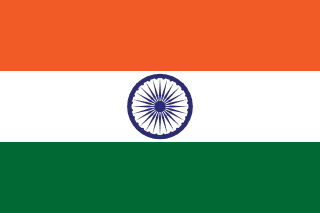
India.
Republic of India
In short
India is a federal parliamentary republic, but its external posture is highly centralized under Prime Minister Narendra Modi and the Bharatiya Janata Party government, which won a third term in 2024 and now governs in coalition through the National Democratic Alliance; President Droupadi Murmu remains head of state and Subrahmanyam Jaishankar continues as external affairs minister [Election Commission of India](https://results. eci.
Capital
New Delhi
Government
Federal parliamentary …
India's government & politics
Leadership, governance, and democratic trajectory.


India's UN voting record
How India votes at the UN General Assembly — ideological trajectory, voting partners, topic patterns, and key recent roll calls.
Top voting partners
Share of UN GA roll calls voted the same way in 2024.


Topic-level voting
Y / A / N share by Voeten topic flag, 2016–2020.
Middle East
Israel/Palestine + regional resolutions
Nuclear
Nuclear weapons, NPT, IAEA
Disarmament
Conventional arms control
Colonialism
Self-determination resolutions
Human rights
Country-specific HR resolutions
Economic
Trade, sanctions, development
Recent meaningful votes
Roll calls where this country's vote diverged from the regional median or bloc consensus.
Source: Erik Voeten, “United Nations General Assembly Voting Data”, Harvard Dataverse (CC0). Aggregated by Model Diplomat. Last refresh tracked in profile freshness.
India's foreign policy
Bilateral posture, key relationships, and live diplomatic statements.
Foreign Policy
India’s foreign policy is defined less by alliance doctrine than by strategic autonomy: New Delhi seeks maximum room to maneuver among major powers while protecting territorial integrity, regime legitimacy through growth, and great-power status [Ministry of External Affairs Annual Report 2023-24](https://www.mea.gov.in/Uploads/PublicationDocs/35318_MEA_AR_2023_24.pdf) [Carnegie Endowment for International Peace](https://carnegieendowment.org/research/2024/01/indias-strategic-autonomy-in-a-changing-world). The decision structure is centralized. Prime Minister Narendra Modi remains the dominant foreign-policy actor, with External Affairs Minister S. Jaishankar as the chief executor and public strategist, while the Prime Minister’s Office, National Security Adviser Ajit Doval, and the security establishment carry unusual weight on China, Pakistan, and defense partnerships [Prime Minister of India](https://www.pmindia.gov.in/en/) [Ministry of External Affairs](https://www.mea.gov.in/) [Observer Research Foundation](https://www.orfonline.org/expert-speak/how-indias-foreign-policy-decision-making-works). President Droupadi Murmu is head of state, but India’s parliamentary system leaves operational control of foreign policy with the cabinet led by Modi [President of India](https://presidentofindia.nic.in/) [Constitution of India, Legislative Department](https://legislative.gov.in/constitution-of-india/). India’s core interests sort clearly into tiers: survival means deterring China along the Line of Actual Control and managing conflict with Pakistan; regime security means sustaining economic growth and domestic stability; economic interest means securing energy, technology, supply chains, and market access; status means being recognized as a leading power and voice of the Global South [Ministry of External Affairs Annual Report 2023-24](https://www.mea.gov.in/Uploads/PublicationDocs/35318_MEA_AR_2023_24.pdf) [Lowy Institute](https://www.lowyinstitute.org/the-interpreter/india-s-foreign-policy-priorities-2024).
China and Pakistan are the hard-security drivers, but India’s diplomacy is built on diversification rather than bloc discipline. Relations with China remain structurally adversarial after the 2020 border crisis; both sides have held multiple rounds of corps commander-level talks, yet the boundary remains unsettled and India has linked broader normalization to peace on the border [Ministry of External Affairs, India-China relations brief](https://www.mea.gov.in/Portal/ForeignRelation/India_China_Fact_Sheet_January_2024.pdf) [Reuters](https://www.reuters.com/world/india/india-says-ties-with-china-cannot-be-normal-until-border-peace-restored-2024-03-07/). Pakistan remains the other principal security rival, with India maintaining that cross-border terrorism blocks normal bilateral engagement [Ministry of External Affairs, Pakistan relations](https://www.mea.gov.in/Portal/ForeignRelation/India-Pakistan-Relations-February-2024.pdf). At the same time, India has deepened defense and technology cooperation with the United States through the Initiative on Critical and Emerging Technology and regular Quad engagement, while still preserving a major legacy defense relationship with Russia and expanding high-end security ties with France and Japan [The White House, India-U.S. Joint Statement 2023](https://www.whitehouse.gov/briefing-room/statements-releases/2023/06/22/joint-statement-from-the-united-states-and-india/) [Ministry of External Affairs, Quad](https://www.mea.gov.in/Portal/ForeignRelation/Quad_September_2024.pdf) [SIPRI Arms Transfers Database](https://www.sipri.org/databases/armstransfers) [Élysée, India-France Horizon 2047 Roadmap](https://www.elysee.fr/en/emmanuel-macron/2023/07/14/india-france-horizon-2047-roadmap) [Ministry of Foreign Affairs of Japan](https://www.mofa.go.jp/region/asia-paci/india/index.html). That mix is the point: India wants U.S. technology, Russian arms sustainment, French strategic partnership, Japanese capital, and Gulf energy without signing up to anyone else’s hierarchy [Brookings](https://www.brookings.edu/articles/indias-multi-alignment-strategy/) [Carnegie Endowment for International Peace](https://carnegieendowment.org/research/2024/01/indias-strategic-autonomy-in-a-changing-world).
Regionally and multilaterally, India uses overlapping forums to widen options and prevent encirclement. It is active in the Quad for maritime security and technology coordination, in BRICS and the Shanghai Cooperation Organisation to engage non-Western power centers, in the G20 to claim agenda-setting authority, and in the Global South format to project leadership beyond South Asia [Ministry of External Affairs Annual Report 2023-24](https://www.mea.gov.in/Uploads/PublicationDocs/35318_MEA_AR_2023_24.pdf) [G20 India](https://www.g20.in/en/) [BRICS Information Centre](http://www.brics.utoronto.ca/) [SCO](https://eng.sectsco.org/). South Asia is still the immediate theater, but SAARC has been blunted by India-Pakistan tensions, so New Delhi has shifted practical regional diplomacy toward BIMSTEC and minilateral or bilateral channels with Bangladesh, Sri Lanka, the Maldives, Nepal, and Bhutan [Ministry of External Affairs, BIMSTEC](https://www.mea.gov.in/Portal/ForeignRelation/BIMSTEC_September_2024.pdf) [Council on Foreign Relations](https://www.cfr.org/article/india-neighborhood-first-policy). Capability supports that reach. India was the world’s fifth-largest military spender in 2023 at $83.6 billion, according to SIPRI, and the IMF estimated India’s nominal GDP at about $3.94 trillion in 2024, giving it unusual diplomatic weight for a state that is still a lower-middle-income country by per-capita terms [SIPRI Military Expenditure Database / 2024 release](https://www.sipri.org/media/press-release/2024/world-military-expenditure-reaches-new-record-high) [IMF World Economic Outlook Database, April 2025](https://www.imf.org/en/Publications/WEO/weo-database/2025/April).
At the UN, India presents itself as a defender of sovereignty, development equity, counterterrorism, and reformed multilateralism, especially permanent membership reform of the Security


India's treaties & memberships
UN multilateral treaty positions and IGO memberships.
International Organizations
Society & economy
Macro-economic snapshot and demographic context.
GDP (nominal)
$3.91T
#5/250GDP per capita
$2,694.738
#157/250Currency
—
HDI
0.64
#130/250GDP (nominal USD)
GDP per capita (USD)
Top trading partners


In the news
Stories surfacing across India’s authoritative outlets, plus headline events and the diplomatic calendar.
Headlines
Asian Currencies Hit Historic Lows
Asian currencies, led by Indonesia's rupiah, fall to historic lows as capital flight and energy costs surge amid geopolitical tensions.
Why the India-US 'Special Relationship' is Officially Over
Summary: The piece argues that the India–US “special relationship” has ended because the US has shifted its priorities. India’s goals—security, balance against China, terrorism cooperation, market access, and skilled workforce migration—have remained stable, but America’s focus has changed toward economic and technological competition (chips, AI, critical minerals) and immigration concerns. The result is a more modest, transactional partnership: India becomes a destination fo
China Exported 68 GW of Solar in March
China's solar exports hit a record 68 GW in March, as countries rush to adopt renewables amid the Hormuz crisis.
Explore India in depth
Frequently asked questions about India
Quick answers to the most common questions about India.
What type of government does India have?
India is governed as a federal parliamentary constitutional republic, with its capital at New Delhi.
Who is the head of state of India?
Droupadi Murmu is the head of state of India, in office since 2022-07-25.
Who leads the government of India?
Narendra Modi serves as the head of government of India, since 2014-05-26.
What is the population of India?
India has a population of approximately 1.45 billion people, making it the 1st most populous country.
What is the economy of India like?
India has a nominal GDP of about $3.91 trillion, or roughly $2,695 per capita.
What languages are spoken in India?
The official languages of India are English, Hindi, and Tamil.
When did India join the United Nations?
India has been a member of the United Nations since 1945.
Who are India's closest allies?
India's key allies include Russia, Japan, France, United States, and Australia.