

Diplomat Briefing
US-Iran MOU Finalized Amid Lebanon Tensions
·5 developments
For the complete documentation index, see llms.txt.Skip to main content
Three wars are being managed simultaneously by one White House — and on all three fronts, the gap between a deal announced and a deal that holds is wider than the headlines suggest.
Day 106 of the US-Iran war and the closest thing yet to an exit ramp: Pakistani PM Shehbaz Sharif — who has served as key mediator — declared a "final, agreed-upon text" of a Memorandum of Understanding exists between Washington and Tehran, with only "next steps" left to finalize. Iran's Foreign Minister Abbas Araghchi called an agreement "never closer," and Trump said it could be signed in Europe over the weekend, likely with VP JD Vance signing for the US side. Phase 1, as described by both US and Iranian officials, would reopen the Strait of Hormuz, lift the US naval blockade, and establish a mechanism to unfreeze Iranian assets — with nuclear file negotiations deferred to a 60-day Phase 2. The catch: Iran insists a Lebanese ceasefire and Israeli withdrawal are embedded in the MOU; Trump says Lebanon is a separate track; and Israel's Defence Minister Katz has flatly said Israel will not withdraw from Lebanon, Syria, or Gaza. While Washington and Tehran talk, Israel is still bombing — issuing forced displacement orders for 20 Lebanese communities in Nabatieh and Jezzine, killing at least one person in Tyre on Friday. Israel is not party to the negotiations and Netanyahu has not committed to any deal. The dealmaking geometry is broken at its core: the US is negotiating a war in which its own ally is the most active belligerent on the front that could blow the whole thing up.
Al Jazeera — Iran War Day 106 |
BBC — Iran deal and Hormuz |
CBC — Deal terms appear to favour Iran
In a striking public concession, Vladimir Putin acknowledged Friday that Ukraine's strikes are "certainly causing us damage" to the Russian economy and society — the clearest admission yet that Kyiv's campaign is landing. Ukraine reclaimed a net ~100 km² of territory in May, the first month of net gains in over a year, driven by a "logistical lockdown" that has reduced traffic on the main M-14 east-west supply route by 71% and triggered fuel rationing to 20 litres per week per vehicle across occupied Crimea. Ukraine struck close to 2,000 behind-the-lines targets in May alone, doubling April's pace.
Al Jazeera — Ukraine reclaims territory in May |
Al Jazeera — Putin admits damage
Beijing formally sanctioned Philippines Defence Secretary Gilberto Teodoro this week, banning him and his family from entering China, Hong Kong, and Macau — a personal pressure campaign designed to chill Manila's rhetoric on territorial disputes. The move backfired publicly: Teodoro's own armed forces called it "a transparent attempt at political intimidation," and Manila's foreign ministry described it as an "unfriendly act." China's sanctions playbook, which has historically worked to isolate officials from Lithuania to Australia, is running into harder pushback in Southeast Asia, as the Philippines simultaneously expands its runway at Pagasa Island and reinforces the BRP Sierra Madre at Second Thomas Shoal.
Al Jazeera — China bans Philippines defence chief
Israel now controls 64% of Gaza — up from the 53% envisaged under the October 2025 ceasefire — and Netanyahu has said he wants to push that to 70%, which satellite analysis suggests is roughly a month away at the current pace. Cairo talks between Hamas and mediators from Egypt, Qatar, and Turkey continue, but the bridgeable gap has narrowed to nothing: Hamas will not disarm before an Israeli withdrawal; Israel and US envoy Nickolay Mladenov have conditioned Phase 2 of the ceasefire on disarmament. The UN estimates Gaza prices are 235% above pre-October 2023 levels.
Al Jazeera — Palestine weekly wrap |
Al Jazeera — Egypt hosts renewed talks
Armenia's pro-Western PM Nikol Pashinyan secured 49.8% of the vote in Sunday's election, a decisive win for his Civil Contract party despite a weeks-long Russian pressure campaign that included bans on Armenian flowers, mineral water, brandy, and produce. Moscow had directly threatened economic consequences of EU alignment. Pashinyan won anyway — handed a mandate to continue EU accession proceedings while technically remaining in the Russian-led Eurasian Economic Union. This is the third consecutive election in the former Soviet periphery (after Hungary and Moldova) where Moscow-backed candidates have lost.
BBC — Armenia's pro-West government wins
~20% — Share of the world's oil and LNG that normally transits the Strait of Hormuz, effectively closed since Iran blocked it after the war began on February 28. The Phase 1 US-Iran MOU would reopen it — making this number the clearest measure of whether any deal is real. BBC
Vietnam Is Quietly Building a South China Sea Military Network — 15 Harbours and Counting
While all eyes are on China's new Antelope Reef megaproject in the Paracels — a 6 sq km island built in six months that may be getting its fourth military-grade runway — Vietnam has constructed 11 new harbours since 2021 and now holds over 11 sq km of reclaimed land across the Spratlys, roughly half of China's total. The latest AMTI satellite analysis shows Vietnam installing military-grade DVOR navigation beacons at Barque Canada Reef — the same infrastructure that enables Chinese aircraft operations at Mischief, Fiery Cross, and Subi. The South China Sea is no longer a China-vs-everyone story; it is an accelerating arms race in concrete and dredge ships, with Vietnam, the Philippines, and China all hardening their positions simultaneously. China's sanction of the Philippine defence chief is the diplomatic surface of a much deeper physical contest over who controls specific coordinates of ocean floor.
BBC — The new reality in the South China Sea |
AMTI/CSIS — Vietnam's Spratly overhaul
Diplomat Briefing — Daily political intelligence.
Read more:
Today's stories
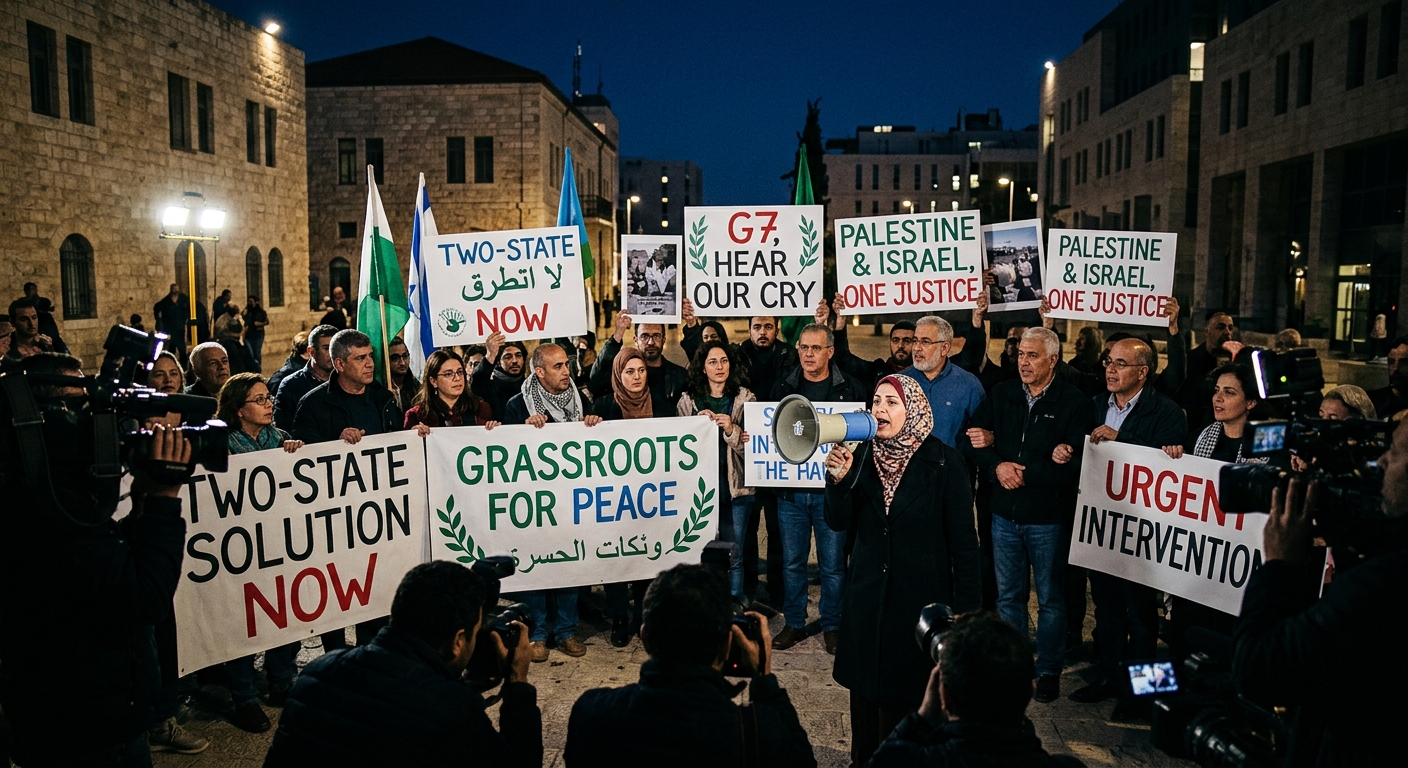
Grassroots groups urge G7 to intervene as two-state solution falters.
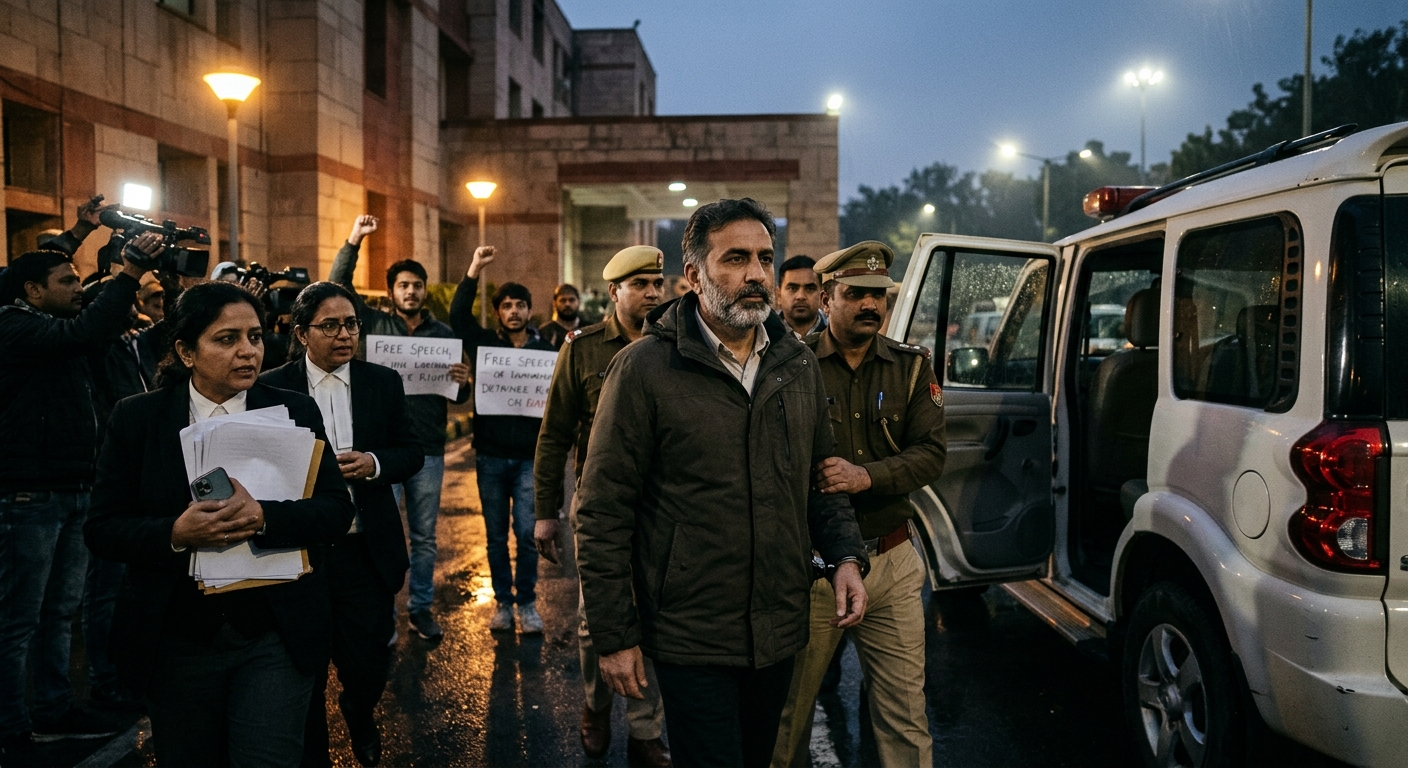
Delhi High Court's bail ruling for Khurram Parvez challenges India's UAPA laws.
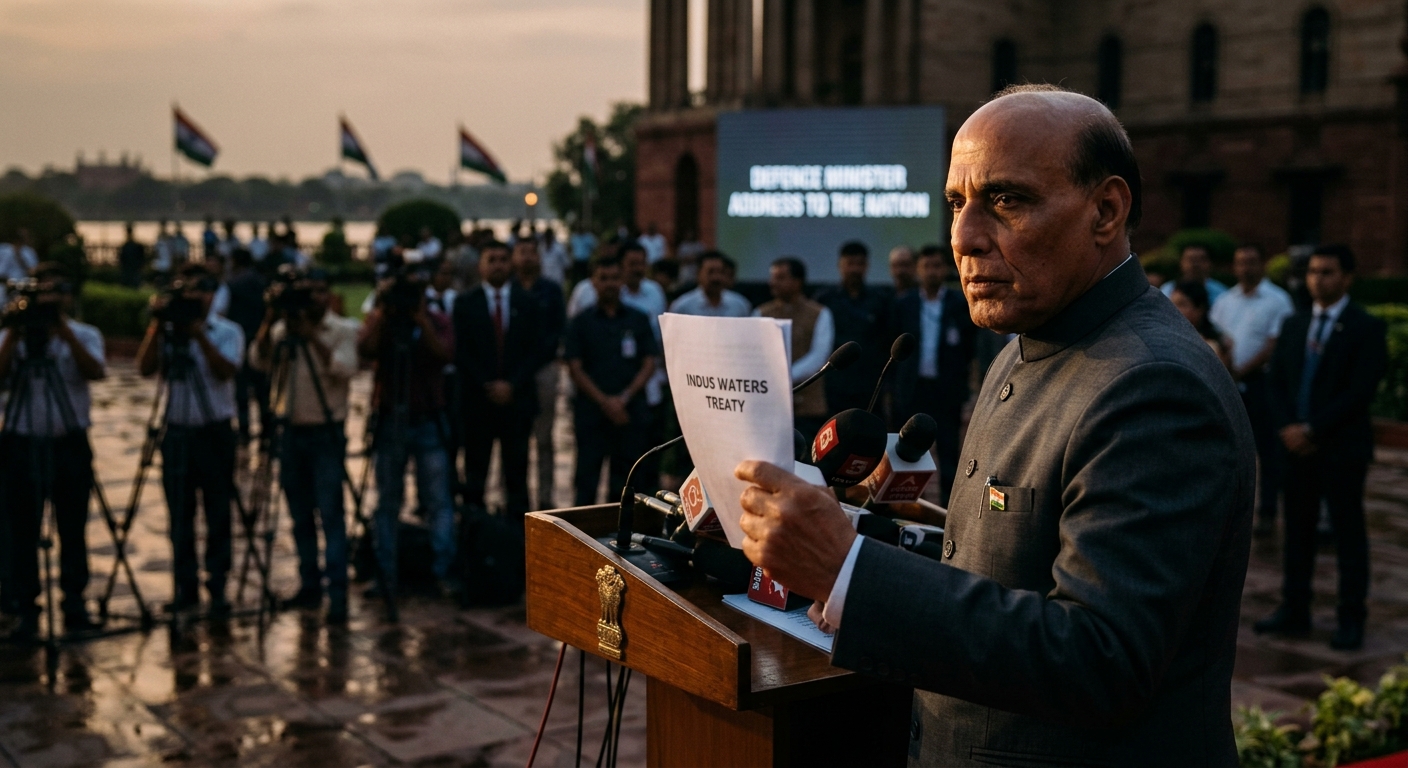
India's Defence Minister declares no water for terror patrons, freezing the Indus Treaty.