West Bets on Grassroots for Mideast Peace
G7 summit sees grassroots push for peace funding
Model Diplomat2 min readMiddle East
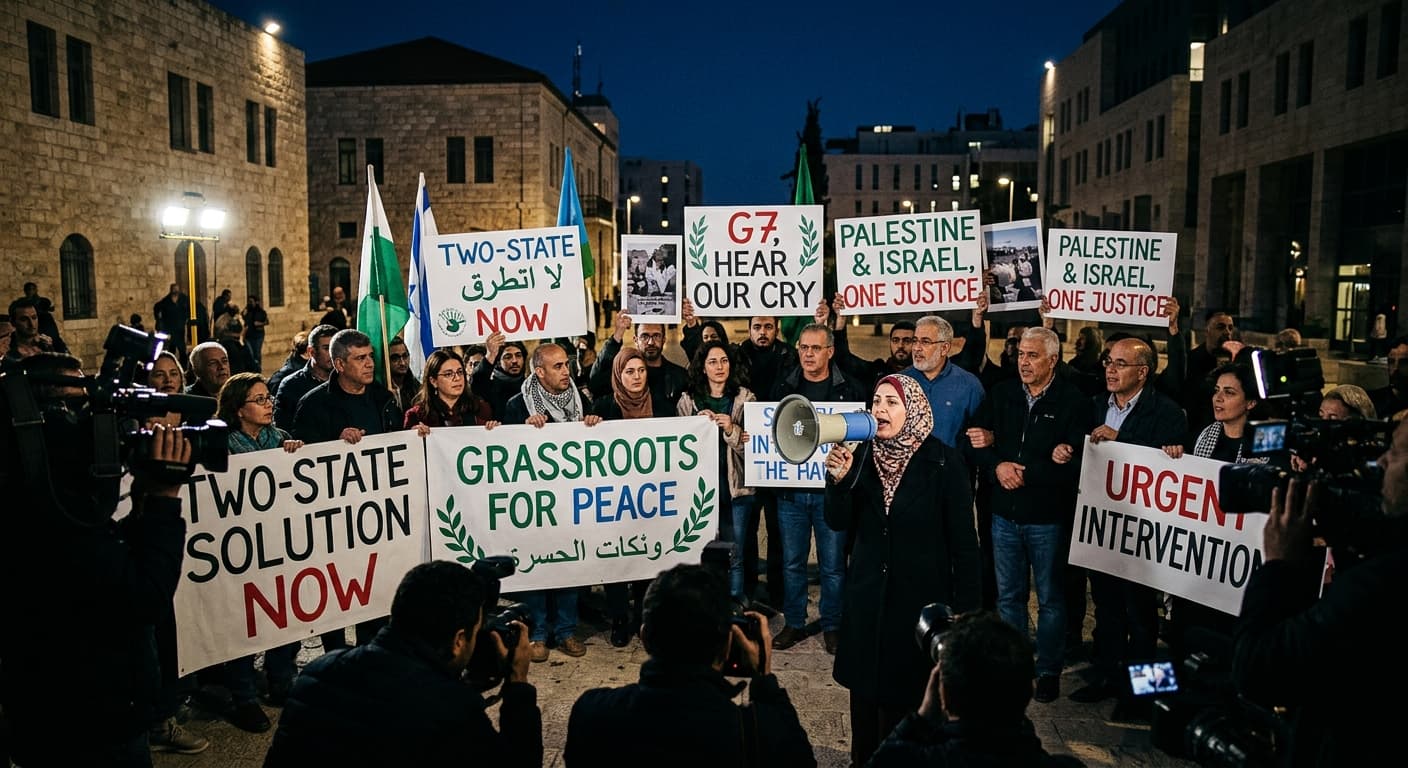
West Bets on Grassroots to Bypass Mideast Peace Deadlock
Israeli and Palestinian peace alliances appeal directly to the G7 in France as Western nations deploy peace funds and targeted sanctions.
Israeli and Palestinian civil society organizations have directly petitioned world leaders at the G7 summit in Evian-les-Bains, France, warning that the viability of a two-state solution is collapsing. According to France 24, these grassroots groups are urging international actors to intervene before local realities on the ground in the occupied West Bank permanently dismantle any path to peace. Faced with a complete freeze in formal state-to-state negotiations, these organizations are repositioning themselves as the only viable conduit for Western engagement in the region.
Bottom-Up Funding Replaces Top-Down Diplomacy
This appeal is designed to exploit a visible tactical shift among Western powers who are frustrated by the diplomatic vetoes of larger powers. Just prior to the Evian appeal, Britain, Australia, and Canada jointly launched a £3 million ($4 million) Middle East peace fund designed to bypass official diplomatic channels, according to Al Jazeera. By channeling capital directly to local organizations, youth groups, and women’s initiatives, these Western states are attempting to build a peace architecture from the bottom up while formal negotiations remain frozen. It is a calculated move to keep the concept of co-existence alive while bypassing the official political leadership on both sides of the
conflict.
Penalizing Disruption on the Ground
This bottom-up approach is being paired with aggressive measures against actors who disrupt the territorial status quo. Concurrently with the G7 summit, a coalition consisting of the UK, Australia, Canada, France, Norway, and New Zealand announced coordinated sanctions targeting extremist networks in the West Bank, as reported by the BBC. Crucially,
France escalated its response by barring far-right Israeli Finance Minister Bezalel Smotrich from entering the country, signaling that Western powers are willing to directly penalize state actors who advocate for unilateral annexation.
The Geopolitical Winners and Losers
The primary beneficiaries of this dual strategy are local peacebuilding alliances, which are gaining both unprecedented funding and a direct seat at high-level diplomatic tables as legitimate interlocutors. Conversely, the strategic losers are Israel's ruling right-wing coalition and Palestinian militant factions. Netanyahu’s government has condemned these moves as direct threats to Israel's domestic policy, while legal changes inside Israel continue to push closer toward de facto annexation of the West Bank. By shifting target parameters toward local actors, Western dynamics are rendering formal, zero-sum political postures less effective in controlling the flow of foreign aid.
The critical point to watch next is how the United States reacts to this coordinated push. While other major European allies move toward formal recognition of a Palestinian state, the U.S. has remained conspicuously absent from meetings designed to override Israeli vetoes or unilaterally state-build. Washington's next decision on whether to support or veto further resolutions at the UN Security Council will determine whether the European bypass strategy can achieve institutional permanence or remains a well-funded, localized holding action.
Discover more

International Relations
Pakistan's Key Role in US-Israel-Iran Meddle
Pakistan is seeking to mediate the US-Israel-Iran conflict, balancing high-stakes diplomacy against severe economic pressures and steep regional challenges.

Conflict & Security
Drone Warfare Killing Aid Workers at Unprec
Over 1,000 humanitarian workers killed in three years as cheap armed drones collapse legal protections. Gaza, Sudan, Ukraine, and DRC see deliberate targeting of aid convoys and hospitals with zero prosecutions.

Global
World Normalises Taliban as Afghan Women Eras
UN data shows Afghan women erased from public life as Russia recognises the Taliban, EU hosts officials in Brussels, and ICC warrants for gender persecution go unenforced.
Conflict & Security
West Africa Food Crisis: Three Shocks in 2026
Conflict, climate extremes, and the Strait of Hormuz closure drive a severe food crisis in West and Central Africa, with fertilizer prices surging 80% and millions displaced.