

Diplomat Briefing
France Probes Israel's Treatment of Flotilla Detainees
·5 developments
For the complete documentation index, see llms.txt.Skip to main content
From Gaza's waters to Tunis's streets, the week's signal is the same: states are treating accountability as a threat to be managed, not a norm to be observed — and the erosion is accelerating across every theatre simultaneously.
France's national counterterrorism prosecutor's office (PNAT) has opened a preliminary war-crimes and torture investigation into Israel's treatment of French nationals seized during the May 18 interception of the Global Sumud Flotilla. The move follows a referral from Foreign Minister Jean-Noël Barrot, who cited consular reports of sexual violence, stress positions, beatings, and cold exposure inflicted on 37 French nationals among the 430 activists detained from roughly 40 countries. At least 15 cases of sexual abuse have been documented across the flotilla, including accounts of rape and forcible penetration — the most severe allegations recorded against Israel in any flotilla incident in over a decade, according to Adalah, the Israeli legal centre for Palestinian rights. Two French nationals remain hospitalised in Türkiye. Israel's prison service has denied the allegations as "entirely without factual basis," and called the operation a Hamas-linked PR stunt. Italy and Germany have opened parallel probes; France additionally banned National Security Minister Itamar Ben-Gvir from its territory.
A Tunis court handed Ennahdha leader Rached Ghannouchi life imprisonment plus 30 years on terrorism charges on June 3, with eleven co-defendants also receiving life sentences; thirteen others got 10–48 years. Hours after the verdict, hundreds marched in Tunis on June 6 demanding press freedom and the release of political prisoners. The Ghannouchi ruling is the capstone of President Kais Saied's campaign of juridical elimination of the opposition — a campaign that has simultaneously jailed journalist critics under Decree 54's "false information" provisions and resulted in Tunisia dropping to 129th of 180 countries on RSF's press freedom index.
A drone strike struck the main market in Abu Zaeima, North Kordofan on June 6, killing at least 11 civilians and wounding dozens more — the second such strike within 24 hours in the region. Rights group Emergency Lawyers reports nearly 70 civilians killed in North and West Kordofan drone attacks in seven days. The UN recorded at least 880 civilian drone deaths nationwide between January and April alone. Neither the Sudanese Armed Forces nor the RSF has claimed the latest attack; both sides have denied targeting civilian infrastructure throughout the conflict, now in its fourth year with 13 million displaced.
OCHA on June 5 doubled its Lebanon humanitarian appeal to $640 million for the next six months, up from a March target of $308 million that was itself only 60% funded. Lebanon's health ministry reports 3,526 people killed and more than 10,733 wounded since Israeli operations began March 2; 62 hospitals have been damaged or forced to close, over 100 paramedics have been killed, and 450 schools now function as displacement shelters, halting education for tens of thousands of children. More than one million people remain displaced.
The UN Committee on the Rights of the Child issued a formal condemnation of Taliban Decree No. 18 (2026), which legitimises child marriage at puberty and allows a girl's silence to be interpreted as consent to marriage. The committee called it a "grave and systematic violation" of the Convention on the Rights of the Child, to which Afghanistan is a signatory, and tied it to the existing ban on girls' secondary and higher education — describing the combined effect as depriving millions of girls of education, economic participation, and bodily autonomy. The Taliban government has not responded.
$455M — Lebanon humanitarian funding gap. OCHA needed $640M; only $185M has arrived. With 62 hospitals closed and 1M+ displaced, every week of underfunding translates directly into preventable deaths among a civilian population that has already lost access to functioning healthcare infrastructure. Al Jazeera
Egypt Jails Ahmed Douma — Again — for Writing About Prison
Three years after a 2023 presidential pardon ended a decade of imprisonment, prominent poet and activist Ahmed Douma was sentenced on June 3 to one year with hard labour for "spreading fake news" — specifically, an article in a London-based Arabic outlet describing conditions in Egyptian prisons he experienced firsthand. The Douma case exposes the structural emptiness of Egypt's presidential pardon mechanism: pardons are revocable instruments of political calibration, not genuine amnesty. Amnesty International and PEN America have condemned the conviction; the Egyptian Initiative for Personal Rights called it constitutionally void. The case signals to every other pardoned Egyptian dissident — including internationally prominent figures — that re-arrest for expression remains permanently on the table under el-Sisi.
Diplomat Briefing — Daily political intelligence.
Read more:
Today's stories
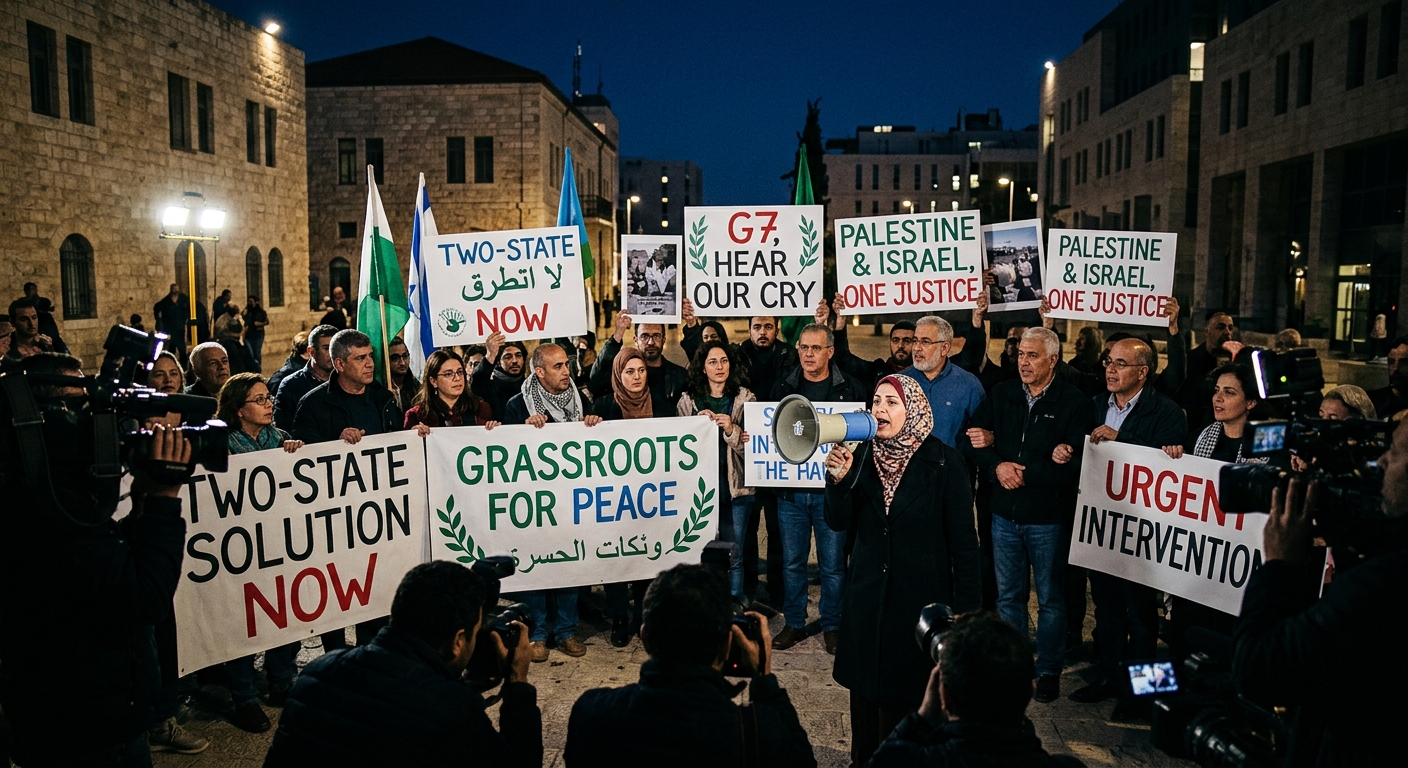
Grassroots groups urge G7 to intervene as two-state solution falters.
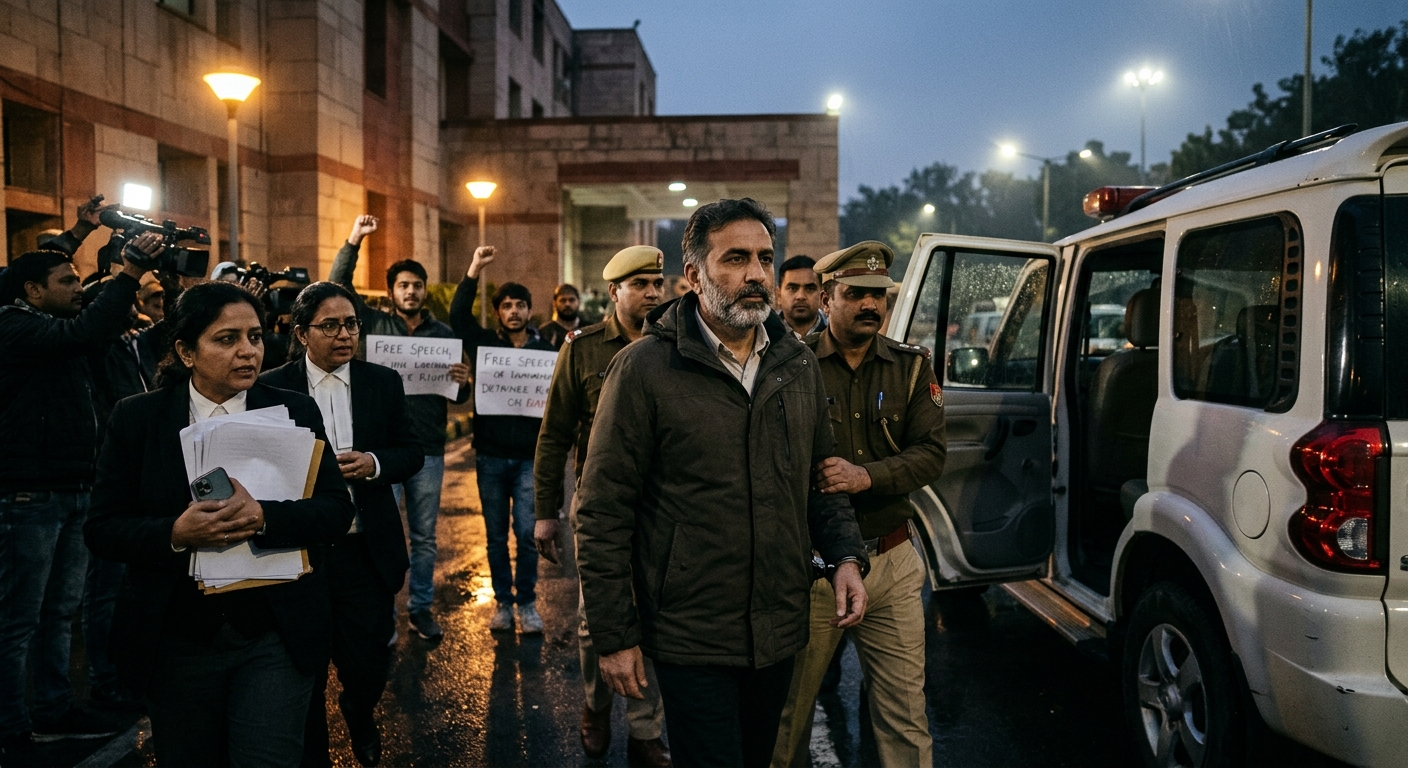
Delhi High Court's bail ruling for Khurram Parvez challenges India's UAPA laws.
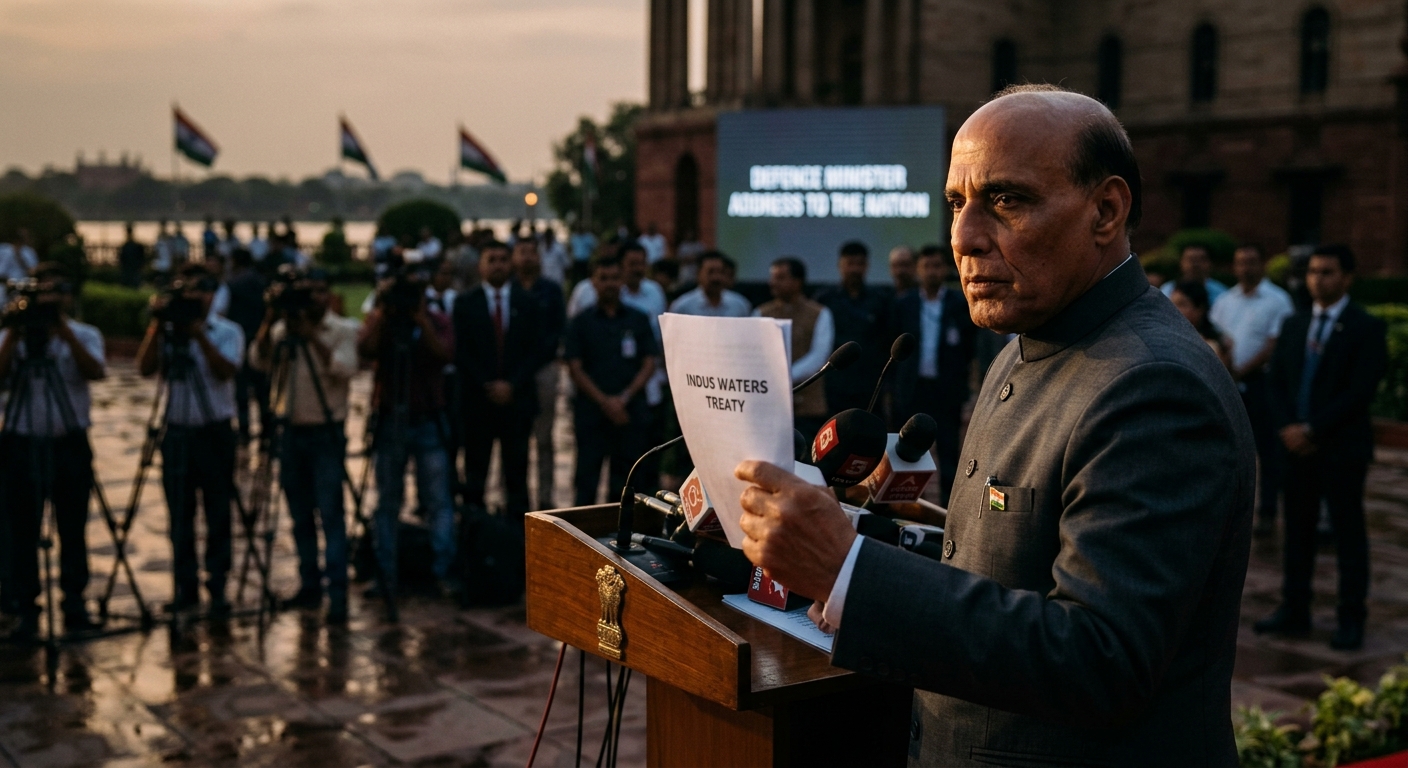
India's Defence Minister declares no water for terror patrons, freezing the Indus Treaty.