Zimbabwe's Constitutional Coup: Mnangagwa's 2
Mnangagwa extends term to 2030, scrapping direct elections.
Model Diplomat7 min readAfrica
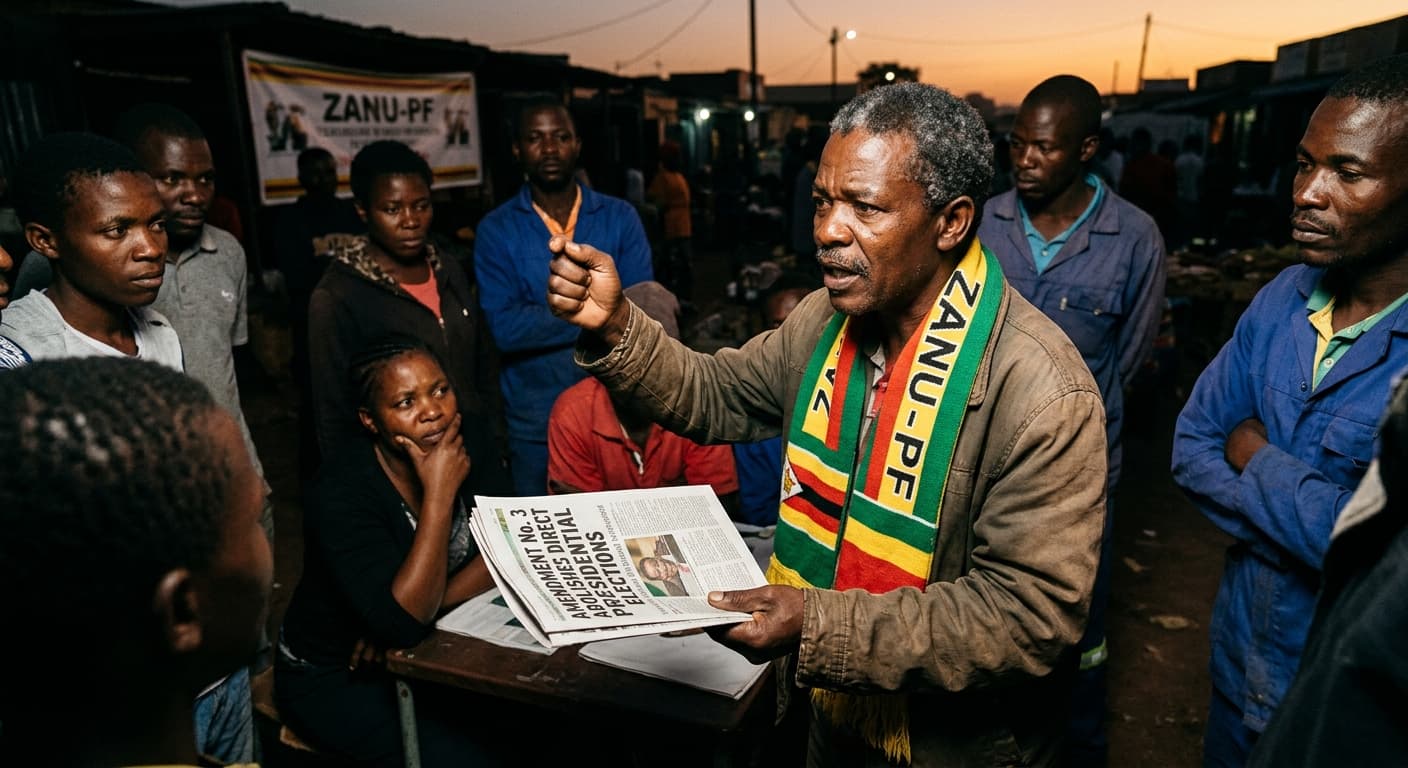
Zimbabwe's Constitutional Coup: Mnangagwa Signs Term Extension to 2030
Mnangagwa signed Amendment No. 3 on July 7, 2026, extending his term to 2030 and scrapping direct presidential elections. Zimbabwe's opposition vows protest — and a legal war.
President Emmerson Mnangagwa's signature on Constitutional Amendment No. 3, entered in the government gazette on July 7, 2026, does more than buy him two extra years in office: it converts the presidency of Zimbabwe from a directly elected post — as it has been since 1990 — into an office chosen by a parliament ZANU-PF already controls with a two-thirds majority. The newly formed People's Coalition, unveiled a week earlier and led by Nelson Chamisa, Tendai Biti and Fadzayi Mahere, has vowed mass protests and a fresh constitutional challenge. According to Human Rights Watch, the law "effectively keeps [Mnangagwa] in office for an additional two years and postpones the 2028 elections until 2030." The thesis worth writing down: this is not a term extension — it is the quiet abolition of direct presidential elections in a country that fought a liberation war to obtain them, and the machinery for a ZANU-PF succession dynasty regardless of how any future vote goes.
What the law actually does
The Constitution of Zimbabwe Amendment (No. 3) Act rewrites four provisions of the 2013 charter in a single bill. Presidential and parliamentary terms rise from five to seven years. The 2028 general election is pushed to 2030. Direct presidential elections — introduced by the 1987 unity accord and first held in 1990 — are scrapped in favour of election by a joint sitting of the National Assembly and Senate. And Mnangagwa, 83, whose second and final term was due to expire in August 2028, remains in State House until 2030.
The National Assembly passed the bill on June 19, 2026 by 216 votes to 42 — 29 above the 187-vote two-thirds threshold that Speaker Jacob Mudenda announced from the chair, the BBC reported. The Senate followed on June 24 with 75 votes in favour and four against,
according to Al Jazeera. The Constitutional Court dismissed a pre-enactment challenge brought by lawyer Lovemore Madhuku on procedural grounds a day before the Senate vote.
The pivotal number is not 216. It is the more than 30 opposition MPs — Al Jazeera reported — who crossed the floor from the fractured Citizens Coalition for Change (CCC) to vote with ZANU-PF. Without them, the ruling party does not clear the constitutional threshold. Some had received cash and vehicles from Mnangagwa-aligned businessman Wicknell Chivayo in the weeks before the vote; opposition MP Susan Matsunga, who accepted a car, voted yes. That transaction is the actual mechanism by which the two-thirds barrier — the one safeguard the 2013 drafters trusted most — was cleared.
The referendum ZANU-PF refuses to hold
The 2013 Constitution was written to make exactly this move impossible. Section 328(7) says any amendment "the effect of which is to extend the length of time that a person may hold or occupy any public office" cannot benefit an incumbent, and section 328(9) requires a referendum for changes to section 328 itself. A summary of the 2013 charter archived by the UN Peacemaker platform confirms both requirements: two-thirds passage in each House, then a national referendum within 90 days.
ZANU-PF's answer is a semantic one. Party treasurer-general Patrick Chinamasa argued on X that the bill "elongates the electoral cycle" but does not "extend" the term limit, which remains at two terms. Bulawayo mayor and CCC leader David Coltart — who helped draft the 2013 charter — told the Institute for Security Studies the trick is transparent: "It doesn't matter how one couches what this amendment is described as, whether it is a cycle or term — the simple enquiry is whether the provision one seeks to change involves the length of time a person holds public office."
Chinamasa's public position is blunter: "There will be no referendum. Full stop." The Journal of Democracy notes that the 2013 charter itself passed by referendum in March 2013 with 94% support — a mandate the government now declines to test because, as ISS Africa's sources argue, it would almost certainly lose it.
The opposition's problem is not the law — it is themselves
Chamisa's message on X was terse: "Today, we face a common challenge: oppression. We are organizing… Be and get ready." At the People's Coalition briefing in Harare on July 8, 2026, spokespeople told reporters: "The government has guns, money, and media. But the people have numbers," African Insider reported. The Movement for Democratic Change said Zimbabwe "cannot be allowed to slide into constitutional dictatorship in silence" and pledged to petition the AU and SADC.
The trouble is that the two-thirds majority ZANU-PF just used did not exist on election night in August 2023. The CCC won more than 100 of 280 parliamentary seats, denying the ruling party the supermajority. What followed was an 18-month campaign of recalls engineered by a self-appointed CCC "interim secretary-general," Sengezo Tshabangu, whose paperwork was accepted by parliament and the courts despite Chamisa disowning him. In nearly every subsequent by-election, Brookings analysts Chipo Dendere and Miles Tendi write, ZANU-PF won — clawing back the two-thirds it had failed to earn at the ballot. Chamisa quit the CCC in January 2024 and has not built a functioning replacement.
The People's Coalition is, in effect, a merger of political veterans who could not hold their previous vehicles together: Chamisa, Biti (out on bail after being charged with holding an unauthorised meeting), Mahere, Madhuku, and the Constitution Defenders Forum. Amnesty International documented the arrest of more than 70 CCC members at a private gathering in June 2024, held without bail for a month — a template the government has used again during the 2026 public hearings, where masked assailants beat Madhuku while police watched, according to ISS.
The Chiwenga fault line
The more consequential opposition to Amendment No. 3 sits inside ZANU-PF. Vice-President Constantino Chiwenga — the general who commanded the November 2017 tanks that put Mnangagwa in office — was widely expected to inherit the presidency in 2028. That promise, Al Jazeera reported in April 2025, is broken. Chiwenga-aligned war veteran Blessed "Bombshell" Geza was expelled from ZANU-PF in March 2025 for calling on Mnangagwa to step down and remains wanted by police.
A German Institute for International and Security Affairs (SWP) policy brief frames the succession fight as a contest between two networks: Mnangagwa's zvigananda — businessmen like Kudakwashe Tagwirei (already on the US Global Magnitsky sanctions list) who donated 300 Toyota Land Cruisers worth $21 million to ZANU-PF's central committee before the 2025 conference — and Chiwenga's liberation-war veterans, who cast themselves as anti-corruption stewards. Mnangagwa has demoted Chiwenga loyalists in the politburo and, in early 2025, fired presidential guard commander General Anselem Sanyatwe. The parliamentary election of future presidents means whoever controls ZANU-PF's central committee — increasingly Mnangagwa's business patrons — controls the next presidency, regardless of Chiwenga.
The regional silence Harare is banking on
The international response Mnangagwa has to fear is thin. The African Union and SADC — the latter chaired by Mnangagwa himself in 2024 — did not condemn the 2023 election that observers from the EU, Commonwealth and SADC itself said failed to meet regional standards. The EU ambassador in Harare, Katrin Hagemann, initially told a ZANU-PF newspaper that constitutional amendments were a "sovereign prerogative"; the embassy later clarified, but the signal had landed.
US leverage is narrow. The Treasury's March 2024 designation placed Mnangagwa, his wife Auxillia, Chiwenga, Tagwirei and eight others under Global Magnitsky sanctions after the Biden administration terminated the country-wide Zimbabwe programme. That framework survived the transition but has produced no observable behaviour change; the Zimbabwe Democracy and Economic Recovery Act,
State Department officials noted, has never been invoked because Zimbabwe is in arrears to international creditors.
The economy gives Mnangagwa cover his neighbours find hard to attack. Zimbabwe's GDP grew 7.5% in 2025, up from 1.7% in 2024, powered by lithium exports to China and an agricultural rebound. That number will feature in every regional bilateral for the next four years — even as the ZIMCODD socio-economic justice coalition documents that 38% of Zimbabweans lived in extreme poverty in 2024. The Journal of Democracy's July 2026 assessment argues that Botswana and Angola, as "more democratic-leaning" SADC members, are the two capitals capable of forcing a referendum on Harare. Neither has moved.
What to watch
- Constitutional Court, second challenge: The People's Coalition's lawyers are preparing a fresh section 328(7)/(9) petition. The court dismissed Madhuku's pre-enactment case on procedural grounds; a post-enactment challenge on the merits is the last domestic legal exit.
- Street mobilisation, July–August 2026: Chamisa's "Be and get ready" call is the first coordinated protest summons since Geza's March 31, 2025 stayaway, which brought Harare to a standstill but produced 100 arrests. The government has already banned more than a dozen opposition meetings this year.
- ZANU-PF 2026 annual conference (October): The 2025 Mutare conference directed the justice minister to enact Amendment No. 3 before this meeting. Mnangagwa cleared that deadline. Chiwenga's next move — silence, a resignation, or a Politburo challenge — will be the leading indicator of whether the 2017 coup coalition is now broken.
- SADC summit, August 2026: Zimbabwe hands over the SADC chair. The communiqué will reveal whether Botswana, Angola or South Africa raises the referendum question. So far, none has.
The Bottom Line
Zimbabwe's Amendment No. 3 is not primarily about two extra years for an 83-year-old president; it is the transfer of the presidency from voters to a parliament ZANU-PF has already recaptured through recalls and by-elections, sealing the party's grip on succession whoever wins the internal Mnangagwa–Chiwenga fight. The opposition's protest call is the last domestic check remaining, but its credibility rests on a People's Coalition assembled from the same leaders whose previous vehicles ZANU-PF dismantled. Without a shift from SADC or a rupture inside the security services, the practical effect of July 7, 2026 is that Zimbabweans will not directly elect a president again.
Discover more
Economics
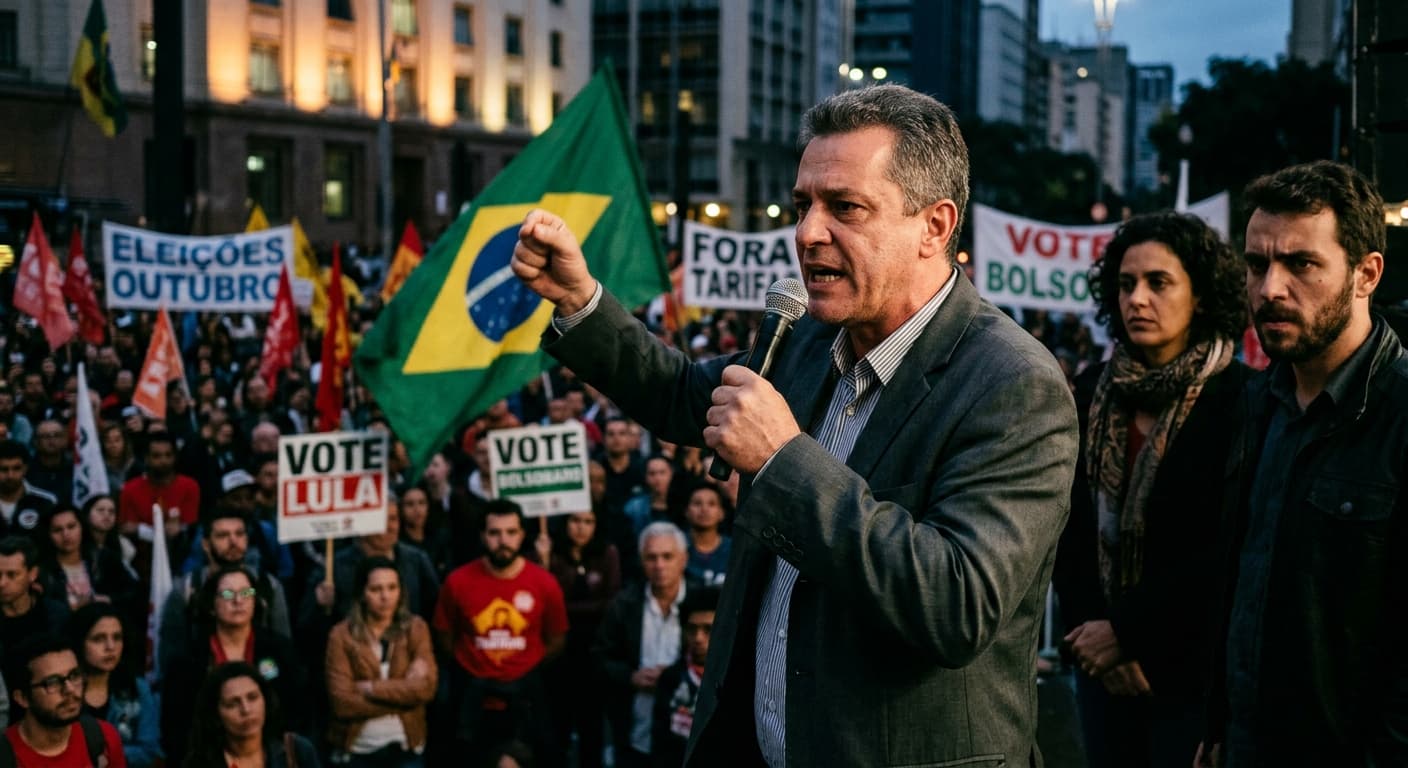
US Tariffs on Brazil: A Political Play
US imposes 25% tariff on Brazil but exempts 66% of exports, targeting manufactured goods ahead of Brazil's October election. Analysis of the political calculus, exemptions, and Brazil's response options.
Elections & Campaigns
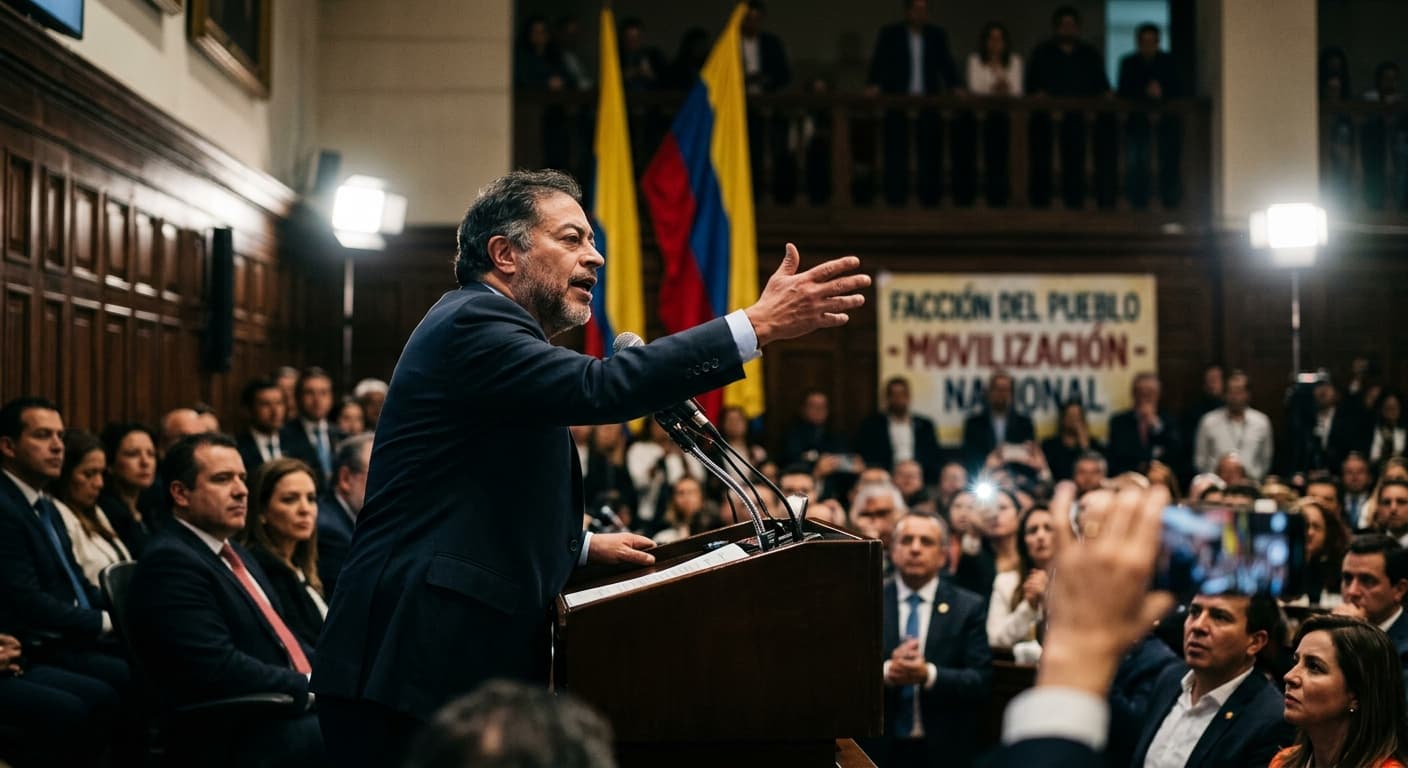
Petro's Farewell: Blueprint for Opposition-in
Colombia's Gustavo Petro refuses to recognize the June 21 election result, calls the incoming government a US-imposed 'viceroyalty', and mobilizes supporters for a general strike, setting the stage for a turbulent transfer of power.
Economics
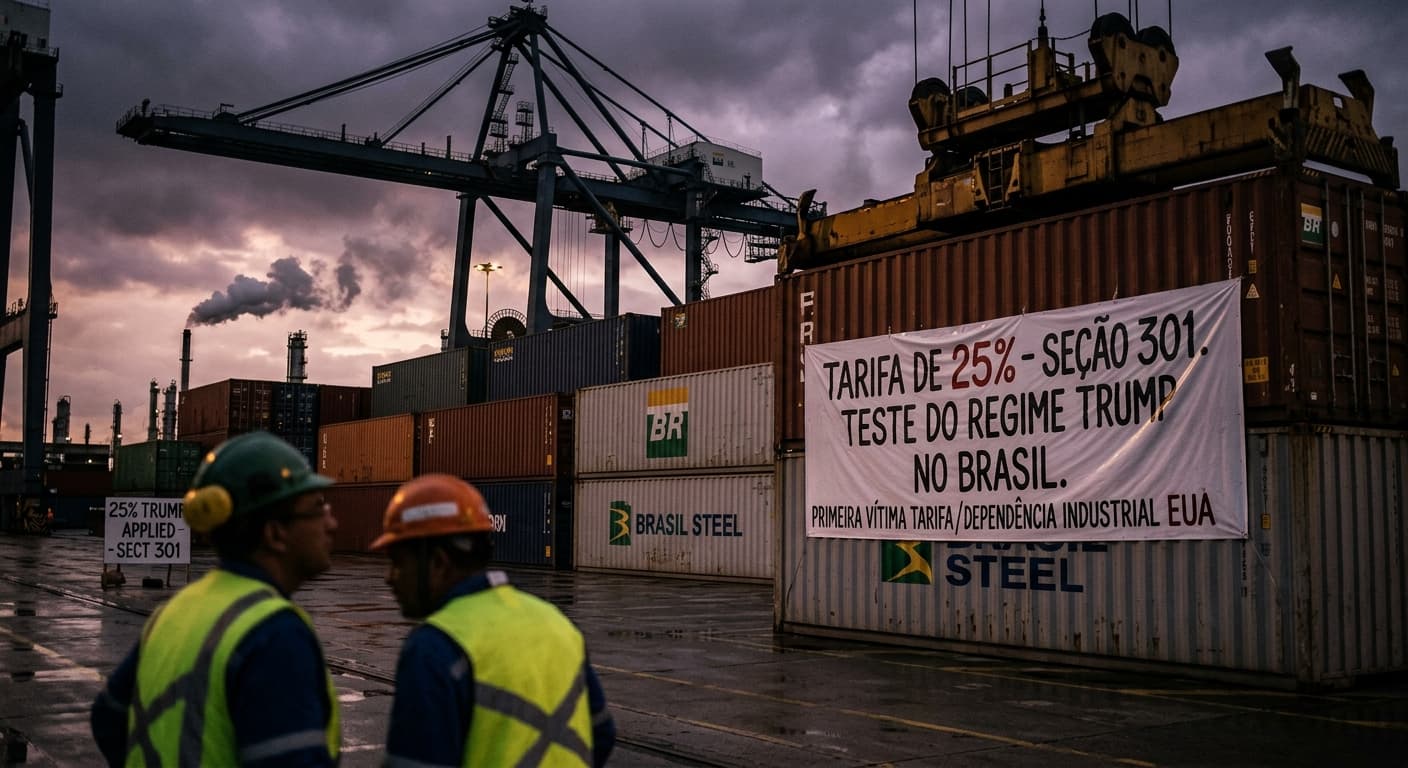
Brazil Becomes Trump's Section 301 Guinea Pig
Brazil faces a 25% US tariff from July 22, 2026, as the first test of Trump's post-IEEPA Section 301 regime. Exemptions covering 65% of exports reveal US industrial dependence.
Global
Fujimori Pre-Inauguration World Bank Deal
Peru's president-elect Keiko Fujimori secures pre-approved World Bank credits for El Niño prevention before taking office, using multilateral financing as political armor against impeachment.