Zambia's $1.36B Debt Swap: Growth or Band-Aid
Zambia's debt-for-development swap raises questions about sustainability.
Model Diplomat7 min readSub-Saharan Africa
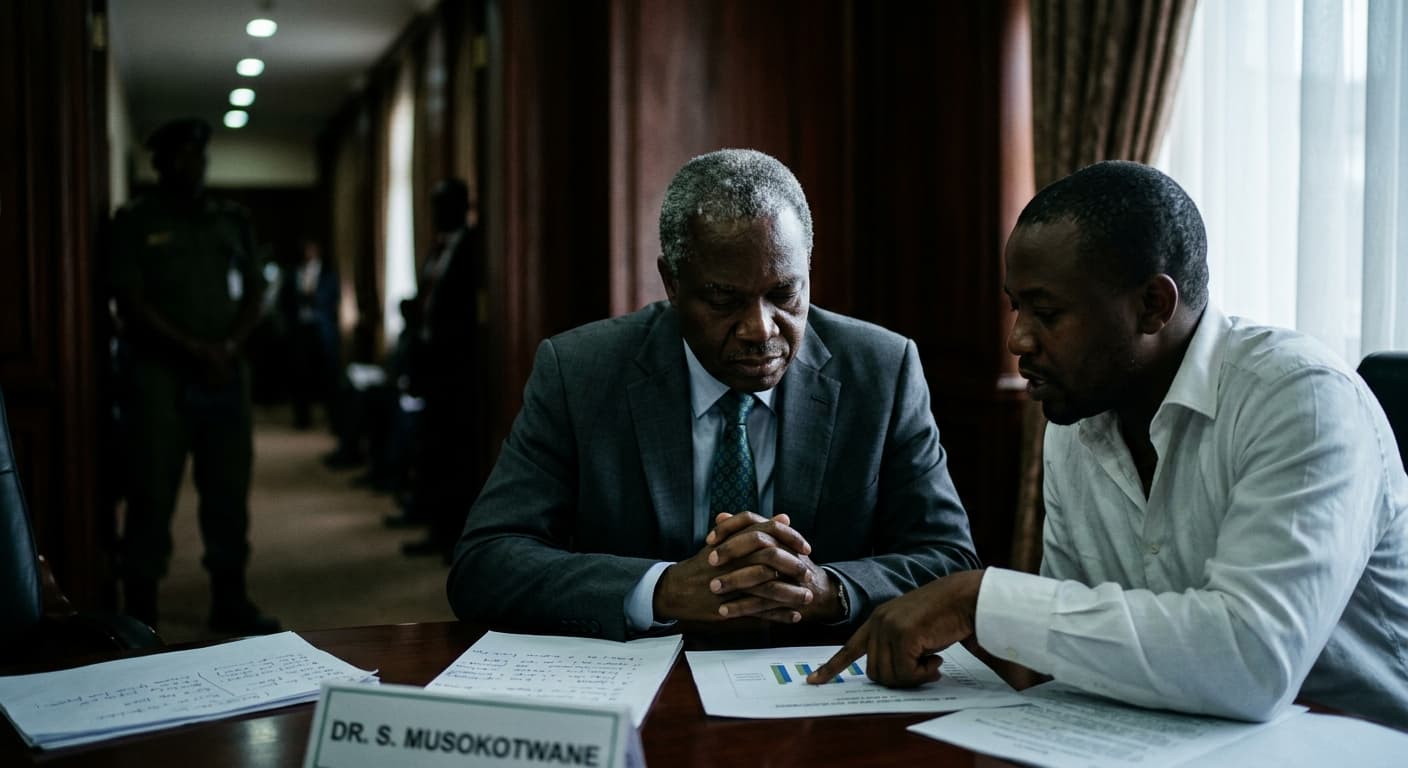
Zambia's $1.36 Billion Debt Swap: Growth Fix or Band-Aid?
Zambia is buying back its 2053 Eurobond with African Development Bank money to fund the power grid. The math suggests political relief now, structural fragility later.
Zambia's July 2026 debt-for-development swap redirects $275 million into the country's collapsing electricity grid — but it barely dents a public debt stock still hovering above 100% of GDP, and its real payoff is political cover for President Hakainde Hichilema before the August 2026 vote, not a structural fix. The African Development Bank is lending $600 million on concessional terms so Lusaka can retire the $1.36 billion "2053" Eurobond it issued only in June 2024 as part of its post-default restructuring. In a world of higher-for-longer rates and copper price whiplash, that is genuine breathing room. It is also, on the evidence of every prior commercial debt-for-development swap on record, a very small structural gain dressed up as a landmark.
The precedents matter: across Belize, Barbados, Ecuador and Gabon — the four commercial buyback swaps most often cited as templates — the Observer Research Foundation calculates that debt levels fell by just 3% on average, and the fiscal burden by 1%. Zambia's deal is bigger in face value than any of them. Its structural ambition is smaller.
The mechanics: a cheaper coupon, a ring-fenced promise
The transaction that closed in late June is straightforward once you strip away the branding. Zambia is using $600 million of concessional AfDB financing, plus its own budget contribution, to repurchase the $1.36 billion amortising Eurobond it issued in the 2024 restructuring. That original bond — the longer of the two new notes into which the pre-default Eurobonds were exchanged on June 11, 2024 — carried a state-contingent coupon and a final maturity in 2053, according to the IMF's Executive Director statement for Zambia.
Retiring it and replacing it with cheaper AfDB money is projected to save Zambia $275 million in interest payments over 15 years, roughly $18.3 million a year. Those savings are ring-fenced for the state utility ZESCO's grid, according to reporting on the deal by Africa-Press and the pan-African trade press. The
Financial Times confirmed that bondholders backed the buyback overwhelmingly in a June 2026 consent solicitation — the last major creditor hurdle before Zambia formally exits its 2020 default.
That framing — the first debt-for-development swap in sub-Saharan Africa outside marine conservation — is why the deal has attracted headlines from Cape Town to Washington. But the number that matters for Zambia's macro outlook is not $275 million. It is the roughly $21.7 billion in external public and publicly guaranteed debt still on the books at end-2025, according to the IMF's Sixth ECF Review published in February 2026. Public debt is projected to fall from just over 100% of GDP in 2025 to 73% by 2028 — but that path depends on copper prices, kwacha stability and drought avoidance, according to the
World Bank's May 2026 Zambia Economic Update. None of those variables are inside Lusaka's control.
The Zambian twist: buying back your own restructured bond
Here is what makes the Zambia deal genuinely novel. The four commercial swaps it is being compared to — Belize 2021, Barbados 2022, Ecuador 2023, Gabon 2023 — were all financed by private special-purpose vehicles, credit-enhanced by the US Development Finance Corporation or the Inter-American Development Bank, and pointed at marine conservation. Zambia's deal is financed by a multilateral development bank directly, targets domestic infrastructure, and — critically — retires a bond that is itself a product of a G20 Common Framework restructuring completed only two years ago.
That closes a circuit the IMF's own July 2024 policy paper on debt-for-development swaps had warned against. The Fund wrote that swaps "are generally not appropriate when a country's debt situation is such that a comprehensive and deep debt restructuring is likely required to restore sustainability," and that "expenditure earmarking associated with a swap increases budgetary rigidity at the time when countries typically undergo a significant fiscal retrenchment." Zambia's public debt is assessed by the IMF as sustainable but at high risk of overall and external debt distress — the borderline category the policy paper flagged as problematic.
Two things reconcile the tension. First, the AfDB is a concessional multilateral, not a private-insurer-guaranteed SPV, which strips out the transaction-cost layer that made the Belize deal — originally disclosed at $10 million in fees but ultimately closer to $85 million per LSE analysis — so expensive to Belize taxpayers. Second, the earmarking targets an asset (ZESCO's grid) that the World Bank has independently identified as the single largest binding constraint on Zambian growth. Reforming the power sector is essential to translate mining recovery into inclusive growth, the Bank wrote in May 2026; without it, "growth potential will remain vulnerable to climate shocks."
What the swap actually buys: political runway before an August vote
The load-bearing claim from Lusaka is that the savings will unlock private investment in a grid where load-shedding hit 20 hours a day at the peak of the 2023–2024 drought, according to a World Bank project appraisal for the Zambia-Tanzania interconnector. ZESCO's generation capacity fell to 1,019 MW against peak demand of 2,500 MW. Zambia needs $8.6 billion in transmission and distribution investment, and $2.9 billion in access programs, to hit universal electrification by 2030, the same document estimates.
Against that gap, $275 million over 15 years is a rounding error. What it can plausibly buy is credibility — a signal to independent power producers that ZESCO's receivables and the sovereign's willingness to prioritise the sector are improving. The World Bank's $700 million NEAT program, approved in 2024, is already conditioning disbursements on ZESCO cutting mining-sector receivables and moving to cost-reflective tariffs by 2027, according to the Bank's restructuring paper filed in March 2026. The swap layers on top of that architecture rather than substituting for it.
The political calendar is the second lens. Hichilema faces re-election in August 2026 in a country where stones were thrown at him at a public speech late in 2025, according to the BBC. Inflation has cooled from a peak near 25% to just below 12%, and the kwacha appreciated 18.2% in 2025, but Zambian economist Trevor Hambayi told the BBC that the "failure to resolve the power crisis" had blunted voter gratitude for the debt fix. The swap gives Hichilema something concrete and grid-shaped to point at. That is not cynical — it is the transaction's operative political function.
What could go wrong: the copper-and-kwacha problem
The forecast that turns the swap from Band-Aid to catalyst rests on one variable above all: copper. Copper still accounts for roughly 75% of Zambia's export revenue, according to a Brookings analysis by Landry Signé, and Hichilema has set a target of tripling output to 3 million tonnes a year by the mid-2030s. Mopani and Konkola copper mines have returned to operation, and the
IMF's Fourth Review projected copper production ramping up in 2026–2028 as expansion projects yield results.
The Fund is explicit about the downside: "Uncertainties around the outlook for copper prices and production are a key risk. Rainfall variability also remains a key risk to Zambia's sustainable growth, affecting critical sectors such as agriculture, electricity, and mining." Both risks would be amplified if the state-contingent clauses in Zambia's restructured Eurobonds trigger. Those clauses — reviewed on June 30, 2026, and reassessed through December 2028 — accelerate principal and raise coupon rates if Zambia's debt-carrying capacity is upgraded to "medium" or if the three-year rolling average of exports and revenues in dollars exceeds IMF projections, per the World Bank's DSA update of February 2026.
Translation: if copper booms and the kwacha holds, Zambia pays more to creditors just as it might otherwise have unlocked fiscal space. If copper busts, the debt-service ratios that the Bank projects declining below the 14% threshold slip back into breach. Either way, the $275 million ZESCO envelope is small relative to the volatility.
For Zambia's peers — Ghana, Ethiopia, Sri Lanka — the transaction is being watched not as a template for debt reduction but as a template for post-restructuring capital recycling: how a country freshly emerged from default converts multilateral concessional lending into commercial-debt retirement without triggering a new IMF debt-limit exception. That is a narrower innovation than the "Africa's answer to Belize" framing implies, and a more useful one.
Diplomat View
The Zambia swap is a Band-Aid in scale and a catalyst in signalling. It will not change the trajectory of Zambia's debt-to-GDP ratio meaningfully — the IMF's own projections had that ratio falling to 73% by 2028 with or without the swap, driven mostly by kwacha appreciation and copper output. What it changes is the political economy of the restructuring's endgame: it demonstrates that the AfDB can act as a solo credit-enhancer without US DFC political-risk wrapping, that a Common Framework country can retire post-default commercial paper without breaching IMF program parameters, and that earmarked infrastructure spending can substitute for the marine-conservation trope. Forecast: the model spreads to at least one other African post-restructuring economy — Ghana is the most probable — within 18 months. What would invalidate that call: a copper price collapse below $7,500/tonne, a triggered state-contingent clause on the 2033 note, or a Hichilema loss in August that puts Zambia's ECF program in doubt.
What to watch next
- August 2026 general election. A Hichilema defeat would put both the ECF program and the swap's ZESCO disbursement schedule at risk. Any incoming government would inherit an earmarking rigidity the IMF has itself warned against.
- June 30, 2026 state-contingent assessment. If Zambia is upgraded to medium debt-carrying capacity, principal payments on the restructured Eurobonds and bilateral debt accelerate — swallowing much of the ZESCO interest saving in a single re-pricing.
- NEAT Phase 1 closing, December 2027 (extended). The World Bank's $100 million grant program conditioning ZESCO's tariff moves to cost-recovery is the acid test of whether the utility can actually absorb the swap proceeds productively.
The bottom line: Zambia's debt-for-development swap is a serviceable political instrument, a modest fiscal one, and a genuinely novel financial one — but it does not answer the question of what happens if copper falls or rain doesn't. The $275 million heading to ZESCO buys Hichilema a talking point and buys Africa's debt-restructuring architecture a proof of concept. It does not buy Zambia out of debt distress. That job still belongs to copper, the kwacha, and the ballot box.
Discover more
US Politics
Congress Targets AI Chatbot Access for Terror
The House passed the Generative AI Terrorism Risk Assessment Act, focusing on AI's role in terrorism and potential surveillance implications.

US Politics
SNAP Food Assistance Faces Legal Challenges
In 2026, SNAP faces stricter eligibility rules and mounting legal challenges, threatening food assistance for the millions of Americans who rely on the program.
Global Politics
Trump's Conflicting Messages on Iran War
Trump's mixed messages on Iran reflect a strategy of audience management, benefiting Tehran amid a complex geopolitical landscape.

Economics
Fed's Amex AML order puts correspondent banking on notice
Federal Reserve's Amex AML order requires board-level controls and a 90-day plan; OCC fined the bank $350 million over enterprise-wide deficiencies.