Zimbabwe's Constitutional Coup: Mnangagwa's 2
Parliament, not voters, will now elect the president.
Model Diplomat7 min readAfrica
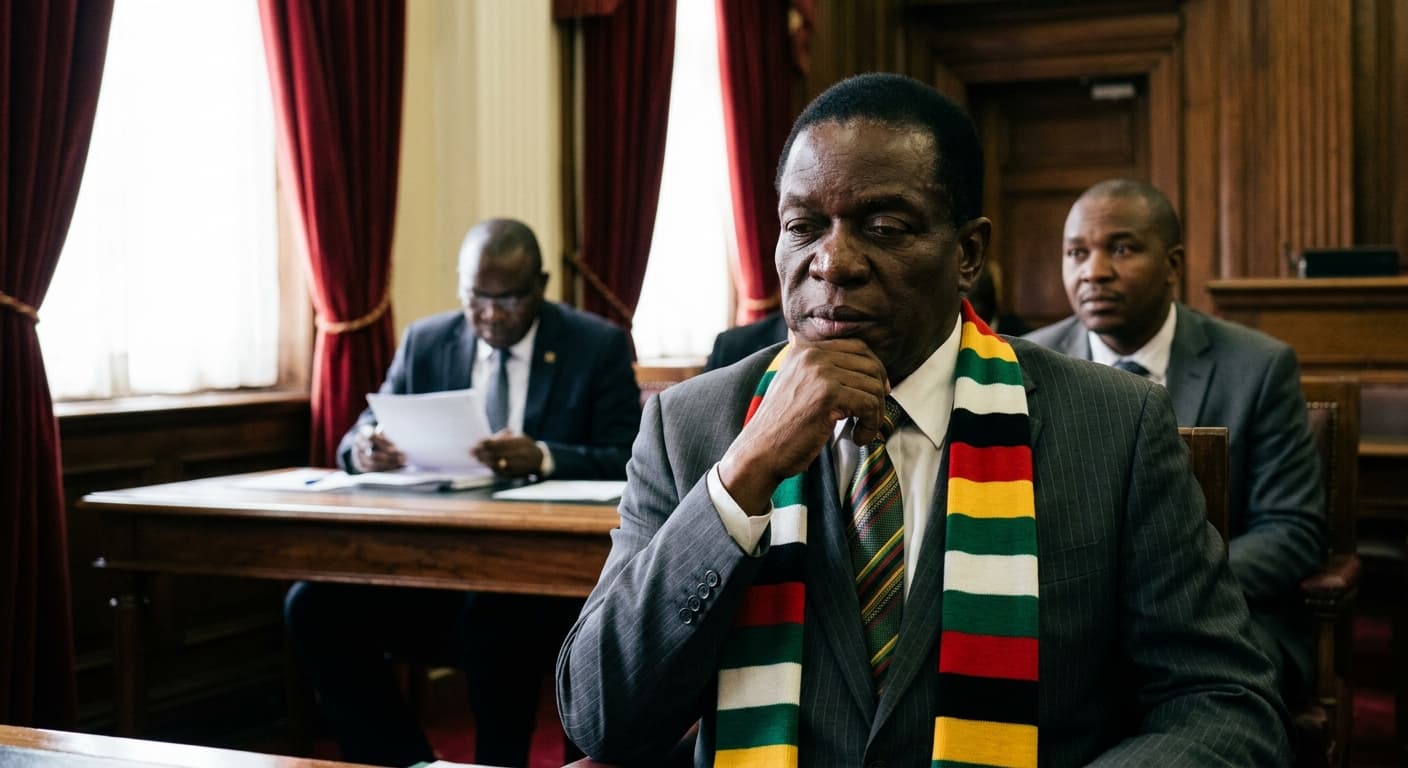
Zimbabwe's Constitutional Coup: Mnangagwa Rules to 2030 Without a Vote
Zimbabwe's parliament, not its voters, will now pick the president. Amendment No. 3 extends Mnangagwa's term to 2030 with no referendum — here's what changed and what breaks next.
On July 7, 2026, President Emmerson Mnangagwa signed the Constitution of Zimbabwe Amendment (No. 3) Act into law, extending his tenure by two years to 2030, lengthening presidential and parliamentary terms from five to seven years, and abolishing the direct election of the president that Zimbabweans have held since 1990. The load-bearing change is not the extra 24 months. It is that Zimbabwe has quietly converted itself from a directly elected presidency into a parliamentary-selection system controlled by a single party — without the referendum the 2013 constitution explicitly requires, and with the Constitutional Court's blessing. That mechanism, more than the extension itself, is what removes electoral integrity as a check on ZANU-PF for the foreseeable future.
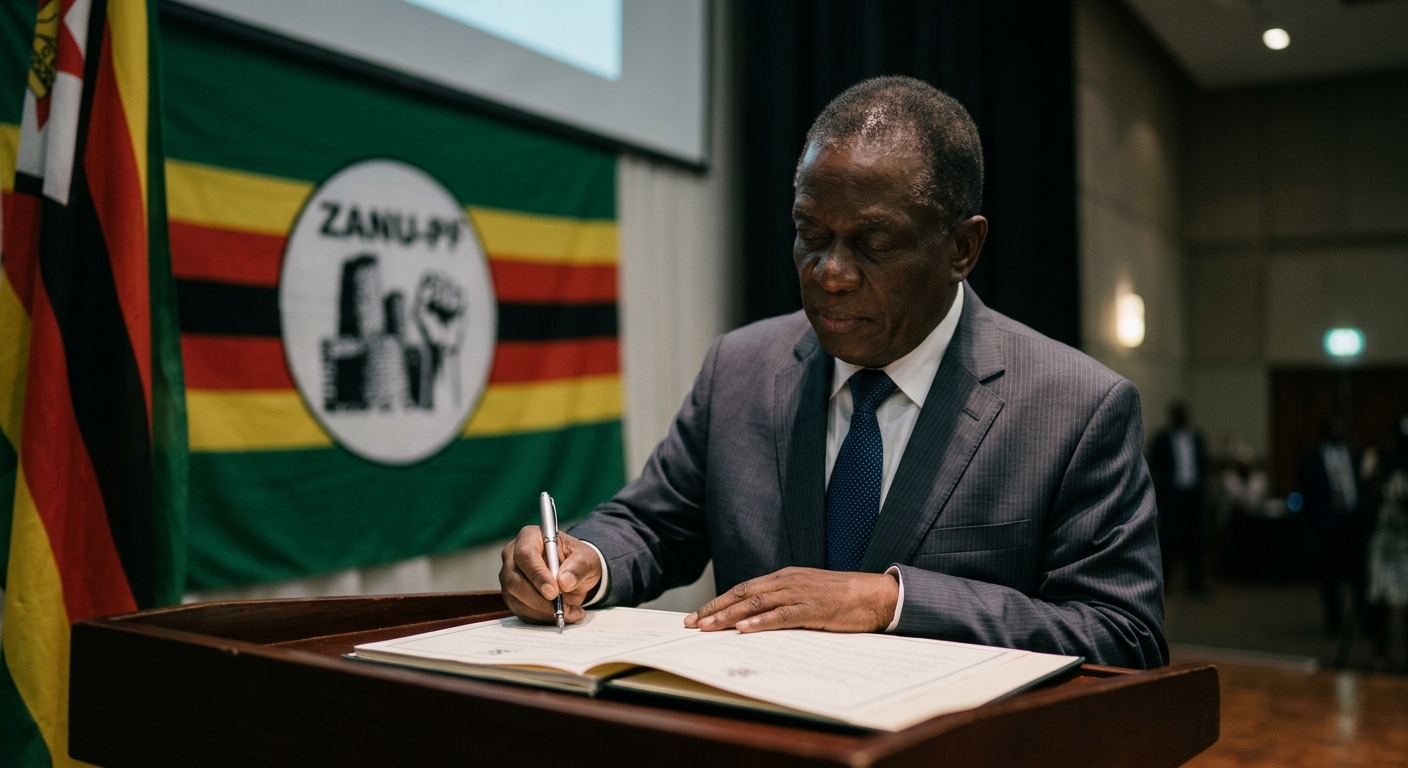
The vote that ended the vote
The National Assembly passed the bill 216–42 on June 18, 2026, comfortably clearing the 187-vote threshold for a two-thirds majority, according to Al Jazeera. The Senate followed on June 24 by 75 votes to four, with Senate President Mabel Chinomona presiding,
Al Jazeera reported. More than 30 opposition lawmakers crossed the aisle in the lower house — the product of a two-year campaign by ZANU-PF to recall Citizens Coalition for Change (CCC) MPs and win their seats back in by-elections, which is how the ruling party rebuilt the two-thirds majority it had lost at the 2023 general election.
Zimbabwe's Parliament, per its own official structure page, consists of a 270-member National Assembly and an 80-member Senate. Both are now dominated by ZANU-PF or by traditional-chief and quota seats that vote with it. That is the machinery Amendment No. 3 hands the presidency to.
Under the new text, the president will be elected at a joint sitting of both houses by more than half of valid votes cast — a threshold ZANU-PF's parliamentary bloc can meet on its own. Direct presidential elections, in place since Zimbabwe's first multi-party post-liberation contest in 1990, are gone.
The Section 328 problem the court walked around
The 2013 constitution, adopted by referendum with 94.5 percent support, was written specifically to prevent this. A UN Peacemaker summary of Zimbabwe's 2013 constitution sets out Section 328 in plain terms:
"An amendment to a term limit to extend the term does not extend the term of any person in office before the amendment… Amendment of section 328 of the Constitution must also be approved at a referendum after the 3 months' public notice and a two-thirds majority passage by Parliament."
Section 328(7), as ISS Africa's Peter Fabricius noted, specifies that any amendment "the effect of which is to extend the length of time that a person may hold or occupy any public office" cannot apply to an incumbent — and any change to Section 328 itself must go to a national referendum.
ZANU-PF's workaround is semantic. Treasurer-General Patrick Chinamasa argued on X, quoted by ISS Africa, that the bill merely "elongates the electoral cycle from five to seven years for everyone, from councillors to the President… we elected to uphold the Presidential term limit in its entirety." David Coltart, the Bulawayo mayor and CCC leader who helped draft the 2013 constitution, replied that Section 328 governs "the length of time that a person may hold or occupy a public office" — and that a two-year add-on is a two-year add-on regardless of how it is labelled.
The Constitutional Court did not resolve that dispute. It dismissed a challenge brought by National Constitutional Assembly leader Lovemore Madhuku on procedural grounds, according to Human Rights Watch, and threw out separate applications by war veterans and human-rights activist Youngerson Matete on technicalities. Brookings scholars Chipo Dendere and Miles Tendi wrote that the court "reserved its judgment on the legality of the proposed amendments" in May 2026 before ultimately
dismissing the challenges.
The referendum required by Section 328(9) was not held. Chinamasa's summary, cited by ISS Africa, was blunt: "There will be no referendum. Full stop."
Who benefits — and who thought they would
The immediate beneficiary is Mnangagwa, 83, who will now leave office at 87 in 2030 rather than 85 in 2028. The concrete loser, inside ZANU-PF, is First Vice-President Constantino Chiwenga.
Chiwenga, the former army chief who ran the November 2017 operation that removed Robert Mugabe, was widely understood to have been promised the presidency in 2028 in exchange for putting Mnangagwa in office. That promise is now void. As Al Jazeera reported in October 2025, one ZANU-PF faction wants Mnangagwa until 2030; another "is preparing the ground for Chiwenga."
Mnangagwa has been pre-positioning against that faction. The ISS Africa analysis noted he has removed Chiwenga loyalists from military leadership. War veteran and former Central Committee member Blessed "Bombshell" Geza, who publicly attacked the extension effort in 2025 and demanded Mnangagwa's resignation, was expelled from ZANU-PF, forced into hiding, and — according to a BBC dispatch on Zimbabwe's succession drama — died in early 2026.
The second, subtler beneficiary is ZANU-PF as an institution. Under the new rules, the party need never again risk a directly contested presidential race. The parliamentary threshold — a simple majority of a joint sitting — is easier to guarantee through incumbency, patronage, and the seat-recall mechanism ZANU-PF has now road-tested twice.
Chipo Dendere and Miles Tendi's Brookings analysis reframes the stakes: with term limits effectively neutralised, the meaningful accountability channels shift from the ballot box to trade and corruption enforcement, particularly in the mining sector where Zimbabwe banned raw lithium exports in 2023 and expanded the ban in 2026.
The regional signal
Constitutional lawyer Justice Alex Mavedzenge, quoted by ISS Africa, warned that "constitutional coups" could become contagious in southern Africa if the region does not intercede. That is not a rhetorical concern. Paul Biya, 93, was returned to Cameroon's presidency in October 2025 for a new term in a disputed poll; Rwanda, Congo-Brazzaville, and Côte d'Ivoire have each seen sitting presidents extend term limits by amendment. Zimbabwe's innovation is different: it does not remove the two-term limit, it just changes how the term is measured and who counts the votes.
The Journal of Democracy's Alexander Noyes argued that the African Union and the Southern African Development Community — particularly "more democratic-leaning nations… like Botswana and Angola" — should treat this the way the ECOWAS bloc handled Senegal's 2024 election postponement. As of July 9, no SADC head of state has publicly condemned the amendment. Human Rights Watch's
July 8 statement grounded its criticism in Article 25 of the International Covenant on Civil and Political Rights, which "does not mandate the length or number of presidential terms, but… does require citizens to be able to vote for their leaders in genuine periodic elections that reflect the will of the voters."
The EU has been notably softer. New EU ambassador Katrin Hagemann, according to ISS Africa, told the government-aligned Herald that constitutional amendments were "a sovereign prerogative and raise no concerns when undertaken in full accordance with both the letter and the spirit of the Constitution reflecting the will of the people." Whether the amendment meets that test was never put to Zimbabweans.
The crackdown around the vote
Human Rights Watch documented "attacks and arbitrary arrests" during the bill's public-consultation phase, including violence at public hearings that "effectively denied people their free expression rights and tainted the constitutional amendment process." A March 10, 2026 HRW release specifically flagged "violence and intimidation against opponents of presidential term extension." An Al Jazeera feature from April 2026 reported that hearings "have been marred by chaos amid accusations of unfair collection of views by the moderators."
That environment matters for the ICCPR test: the amendment was formally passed by a legally constituted parliament, but the consultative process the constitution imposes as a substitute for a referendum was, on the sourced record, coercive. The primary document — the Amendment No. 3 Bill file published by Parliament — shows the public-hearings schedule that HRW and civil-society groups say was ultimately overwhelmed.
What to watch
- Chiwenga's next move. The vice-president has not publicly opposed the amendment, but his succession claim is now formally dead. Watch cabinet reshuffles, provincial-command changes in the Zimbabwe Defence Forces, and any Politburo agenda item touching the party leadership. ISS Africa's Ibbo Mandaza, in remarks quoted in the same
ISS analysis, warned the regime is "already in disarray."
- The next legal challenge. With the Constitutional Court having dismissed the pre-signing cases on procedure, opposition litigants including the National Constitutional Assembly and the Constitutional Defenders Forum are expected to refile on the merits post-assent, arguing the Section 328(7) violation.
- SADC's mid-August summit. The bloc is scheduled to hold its heads-of-state summit in mid-August 2026. Any communiqué language on Zimbabwe — or its pointed absence — will signal whether "constitutional coup" is a phrase southern African leaders are willing to use.
- 2028 electoral machinery. Because the next election is now 2030, the Zimbabwe Electoral Commission's role shrinks. Watch the ZEC budget in the next Treasury allocation for a concrete signal of how far direct-election infrastructure is being wound down.
The Bottom Line
Zimbabwe has not extended a president's term so much as rewired how presidents are made: from a national vote Mnangagwa's party could lose to a parliamentary vote it cannot. Amendment No. 3 does the constitutional work of a coup without the tanks, and the Constitutional Court's procedural dismissal of every challenge means the referendum requirement in Section 328 is now, in practice, dead letter. The next test is not whether Mnangagwa serves until 2030 — that is settled — but whether SADC, the African Union, and Zimbabwe's own security establishment treat a parliamentary presidency as a legitimate election result or as the region's newest template for entrenchment.
Discover more

US Politics
Next Generation Republicans
A leaked survey shows 39% of Republicans under 30 do not identify as MAGA, revealing a split in the GOP's future leadership.

US Politics
SNAP Food Assistance Faces Legal Challenges
In 2026, SNAP faces stricter eligibility rules and mounting legal challenges, threatening food assistance for the millions of Americans who rely on the program.
India
Rajnath Singh's Durga Squad for 2026 Polls
Rajnath Singh's Durga Squad promised women's safety in Bengal but has since disappeared from the agenda, revealing BJP's true priorities.

Economics
Fed's Amex AML order puts correspondent banking on notice
Federal Reserve's Amex AML order requires board-level controls and a 90-day plan; OCC fined the bank $350 million over enterprise-wide deficiencies.