Zelensky Slams New Western Sanctions Amid Str
Ukrainian president warns of consequences from US policy shifts.
Model Diplomat7 min readUkraine

Zelensky Slams Western Sanctions Retreat as Russia Pounds Kyiv
Zelensky arrives at the July 7 NATO Ankara summit warning that four months of US sanctions waivers gifted Moscow the revenue now raining down on Ukrainian cities.
Volodymyr Zelensky flew into Ankara on July 7, 2026, two days after Russian missiles killed more than 50 civilians in Kyiv, and told allies the West had spent the spring dismantling its own leverage. His argument is sharper than "keep the pressure on." It is a specific indictment: the four-month US sanctions waiver on Russian seaborne crude, which finally lapsed on June 17, moved an estimated $10–36 billion into Moscow's treasury at the exact moment Ukraine needed sanctions to bite hardest — and that money is now flying, in ballistic form, into apartment blocks. The Ukrainian president's "slam" is not a tantrum. It is a bill of costs delivered to a Trump administration that is being pushed by Congress, the EU and its own energy hawks to shut the window it opened.
What the waiver actually did
The waiver in question was OFAC General License 134, issued on March 12, 2026, and its India-specific cousin, GL 133, issued a week earlier. Both authorised the sale, delivery and offloading of Russian-origin crude and petroleum products loaded onto tankers before mid-March, including cargoes from sanctioned entities Rosneft and Gazprom. The Council on Foreign Relations noted the licences "effectively suspended the price cap on Russian oil for covered cargoes" and imposed no payment restrictions.
Treasury Secretary Scott Bessent framed it as a "deliberate short-term measure" to blunt the price spike caused by the US-Israel war with Iran and the closure of the Strait of Hormuz. The BBC's contemporary reporting captured the pushback: Zelensky, speaking alongside Emmanuel Macron in Paris on March 13, said the move "certainly does not help peace" and could hand Russia "about $10bn (£7.5m) for the war," per BBC News. Chancellor Friedrich Merz called it "wrong." Prime Minister Mark Carney refused to follow. UK energy minister Michael Shanks warned Putin would treat it as "a chance to invest in the war machine."
Bessent had told the Associated Press in April there would be no renewal. Two renewals followed. The waiver was extended to May 16, then to June 17, on the argument that "the most vulnerable nations" needed access to stranded cargoes, according to Al Jazeera. Senators Jeanne Shaheen and Elizabeth Warren called the second extension an "indefensible gift" to Putin.
The number that quantifies the argument
The most damaging line of attack on the waivers is not Zelensky's — it is a Stanford Freedom Sanctions Innovation Lab paper that put a price on the policy. Published on May 11, 2026, and titled "The $36 Billion Question," the Stanford FSI study concluded that extending GL 134 through December 2026 would generate $36.1 billion in additional Russian export revenues — 2.1% of Russian GDP and 13.3% of total exports.
The paper's second finding is what makes it politically radioactive in Washington. The revenue flows to Rosneft and Gazprom, entities the Yale Humanitarian Research Lab has implicated in the forced transfer and deportation of Ukrainian children — a policy the UN Independent International Commission of Inquiry classified in March 2026 as crimes against humanity. That is the argument Zelensky is carrying into Ankara: the US waiver was not an energy-market measure, it was a subsidy to indicted enablers.
Congress has moved. On the House side, H.R. 8222, the "End Russian Oil Windfalls Act", would nullify both GL 133 and GL 134A and bar future authorisations for Russian oil offloading, with a mandatory State Department report every 60 days for three years on sale prices, volumes and price-cap compliance. The bill is a shot across the bow of any Treasury attempt to reissue the waiver if oil markets tighten again.
The Europeans quietly moved in the opposite direction
While Washington was loosening, Brussels and London were tightening. The European Commission Implementing Regulation (EU) 2026/124, published on January 14, 2026, formally lowered the crude oil price cap to $44.10 per barrel from February 1, activating the automatic-review mechanism agreed in the EU's 18th sanctions package. The instrument now recalibrates the cap to 15% below the six-month average price of Urals crude — a moving target designed to close the arbitrage gap Russian traders had exploited.
On April 23, the Council of the EU adopted its 20th sanctions package, banning port access for another 46 shadow-fleet vessels, imposing mandatory due diligence on tanker sales, blocking transactions with 20 additional Russian banks and adding a ban on providers of the RUBx crypto-currency. The UK Treasury, in a September 2025
GOV.UK release, noted Russian oil revenues had already fallen 35% year-on-year to May 2025 before the further tightening.
The transatlantic gap that opened in March is therefore real and structural, not rhetorical. European law now bites deeper on paper; US enforcement pulled back sharply in practice, then partially returned in June. That divergence is the story Zelensky is exploiting — pushing the Europeans to hold their line and pushing Trump, via Congress and his own hawks, to relock the door.
Why the argument lands harder now
Two things changed the calculus between March and July. First, Ukraine's own deep-strike campaign against Russian oil refineries created what Al Jazeera called "oil rain" in Moscow — a documented petrol shortage across Russian regions, queues at pumps, and confirmed Ukrainian drone hits on refineries as far as Omsk, 2,500 km from the border, per the
BBC. Kyiv can credibly claim it is now imposing the enforcement gap that Western policy failed to close.
Second, Russia's response has been ballistic. The July 3 and July 6 strikes on Kyiv killed more than 50 civilians, and Ukraine's air force did not intercept a single ballistic missile in the July 6 attack, according to BBC reporting from Kyiv. Zelensky's public frustration — "It is simply absurd that, in today's world, production has still not been scaled up to the level actually required to protect people from ballistic terror" — is aimed as much at Berlin and Washington's Patriot stockpiles as at Moscow.
The OSW Centre for Eastern Studies argued in a June 29 commentary that the waiver did more than move revenue: it "weakened the sanctions regime and undermined its overall effectiveness," inviting new buyers to overlook restrictions and signalling to India and China that Washington's signals were negotiable. Indian refiners kept importing Russian crude even during the brief April lapse between waivers — reading US policy as no longer credible.
The Ankara meeting is where Zelensky spends the leverage
The Ukrainian delegation arrived in Ankara on July 7 for a NATO summit that, per the Congressional Research Service, is built around three Rutte priorities: defence investment, industrial production, and Ukraine. NATO Secretary General Mark Rutte told allies on July 6 that "Ukraine's security is so closely linked with our own" and demanded "clear, concrete and credible plans" for hitting the 5%-of-GDP defence-spending target agreed at The Hague.
The E3 leaders — Starmer, Macron and Merz — pre-loaded the summit in a June 7 joint statement with Zelensky that explicitly bracketed "further pressure on Russia's war economy" and "an increased pledge of military and defence support" as the twin Ankara asks. Read together, the choreography is clear: Europe wants Trump to leave the waiver dead, agree new Patriot deliveries, and lock in a multi-year Ukraine financial pledge before US attention drifts back to Iran.
Carnegie's Nate Reynolds noted in a July 1 Carnegie Endowment round-up that "allied stocks are stretched thin after the war in Iran" — a candid admission that even a maximally cooperative summit may not produce enough interceptors before winter. Ukraine's CEO of DTEK, Maxim Timchenko, told the
BBC his grid operator was in "permanent crisis mode" after Russian strikes left more than a million people without heat in January 2026.
Diplomat View
The forecast: the US will not reissue General License 134 in the second half of 2026 absent a fresh Middle East shock. The politics have shifted decisively — a bipartisan bill on the House floor, a Stanford paper naming Rosneft and Gazprom as recipients of a $36 billion transfer to entities implicated in crimes against humanity, and a Trump-Zelensky sit-down in Ankara built around visible deliverables. What is more likely is quieter enforcement retreat: sluggish shadow-fleet listings, selective secondary sanctions on Indian and Chinese refiners, and Treasury silence on price-cap violations. That is where the real damage compounds. RUSI's Tom Keatinge argued in a June commentary that the West's sanctions strategy "has lost its way" and needs to shift from stopping oil flows to controlling the money — an escrow mechanism above the $44.10 cap. That is the sensible policy. It is not the policy on the table. Revise this call if OFAC issues any new Russia-related general licence before winter, or if Congress fails to move H.R. 8222 to floor vote by October.
What to watch
- July 8, 2026 — NATO-Ukraine Council working dinner in Ankara. Watch for a formal announcement of Patriot deliveries and language on the "irreversible path" to membership; the 2024 Washington summit precedent, per
NATO's own transcript, locked in five Patriot batteries in a single line.
- Late July — House Foreign Affairs Committee schedule for H.R. 8222. Committee action before recess signals real appetite to bind Treasury's hands.
- September 2026 — Next EU price cap auto-review under Regulation 2026/124. A further cut below $44.10 would widen the transatlantic gap and force Washington to choose sides on enforcement.
The Bottom Line
Zelensky's Ankara message is not a complaint about sanctions in the abstract — it is a specific claim that the Trump administration's four-month waiver on Russian seaborne crude, now lapsed, moved tens of billions of dollars into the hands of Rosneft and Gazprom at the moment Ukraine needed the pressure to hold. The evidence — a Stanford estimate of $36.1 billion, a bipartisan House bill to nullify the licences, and an EU price cap that moved in the opposite direction — has made the waiver politically radioactive. Whether that translates into hardened enforcement or quiet retreat will be settled in Ankara this week and on the House floor by autumn.
Discover more
Conflict & Security
Moscou transforme le 9-Mai en test de loyauté
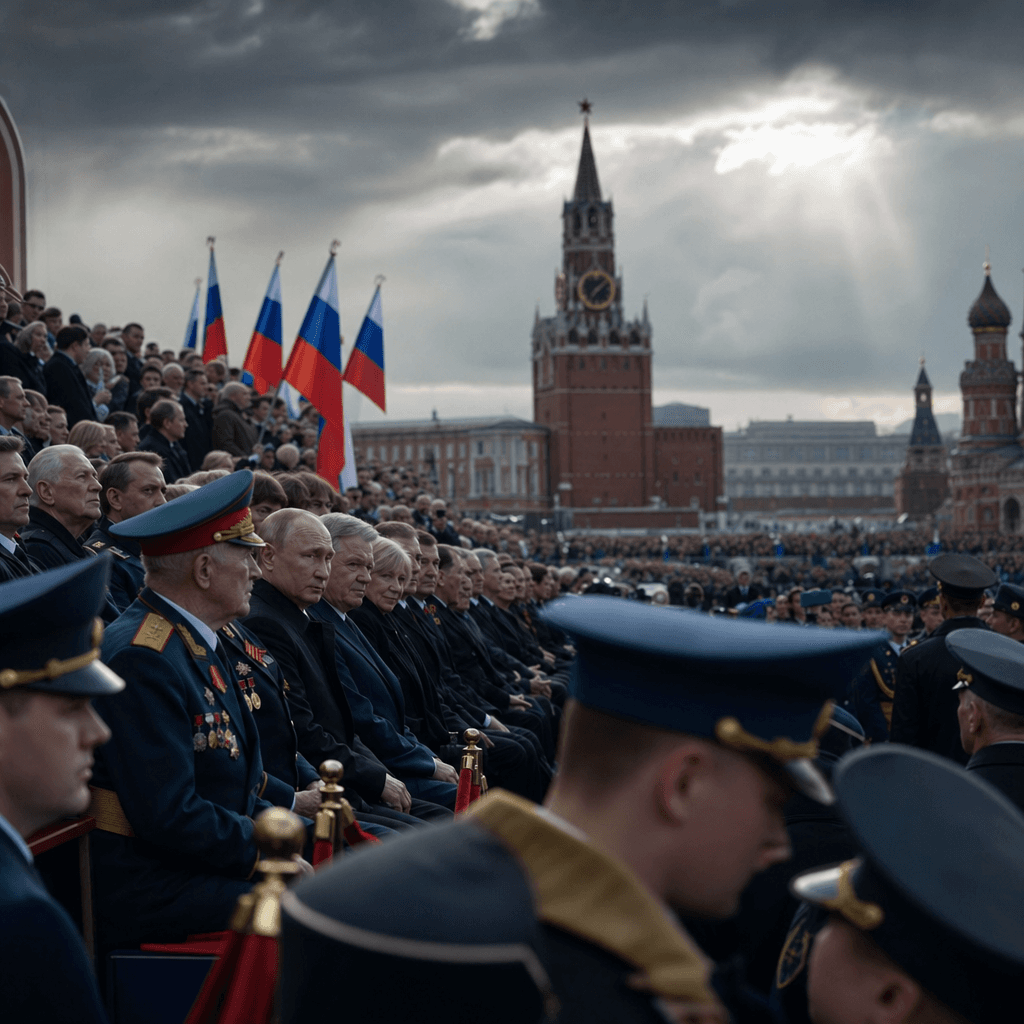
Moscou transforme le défilé du 9-Mai en test de loyauté envers le Kremlin, plaçant la Russie, l'Ukraine et Zelensky au cœur d'un bras de fer symbolique tendu.
Conflict & Security
Zelensky Critiques US Russian Oil Sanctions
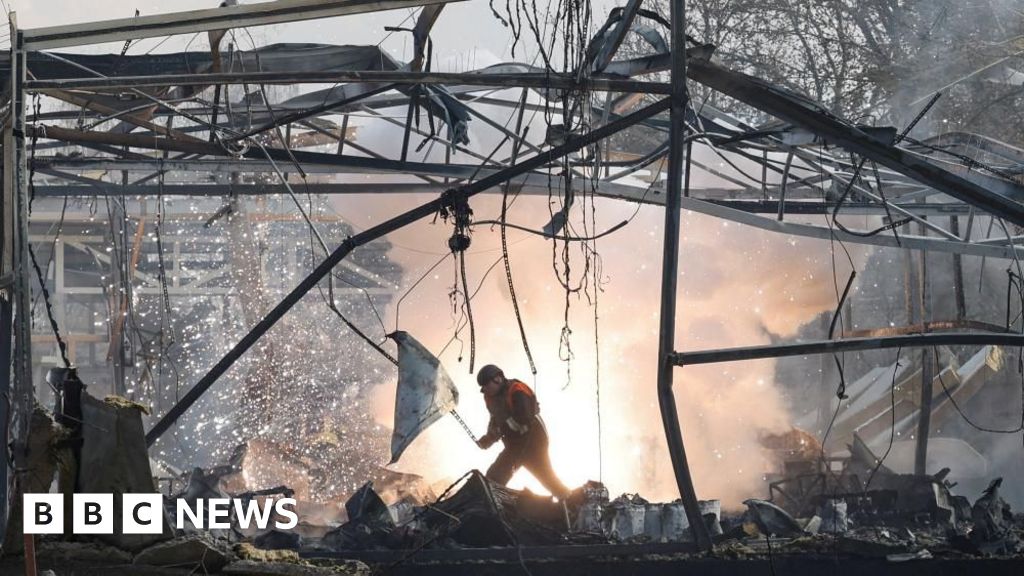
Ukrainian President Zelensky criticizes US sanctions waiver, claiming it funds Russian military actions against Ukraine, while Kyiv escalates drone strikes.

Conflict & Security
Drone Warfare Killing Aid Workers at Unprec
Over 1,000 humanitarian workers killed in three years as cheap armed drones collapse legal protections. Gaza, Sudan, Ukraine, and DRC see deliberate targeting of aid convoys and hospitals with zero prosecutions.
Global
World Normalises Taliban as Afghan Women Eras
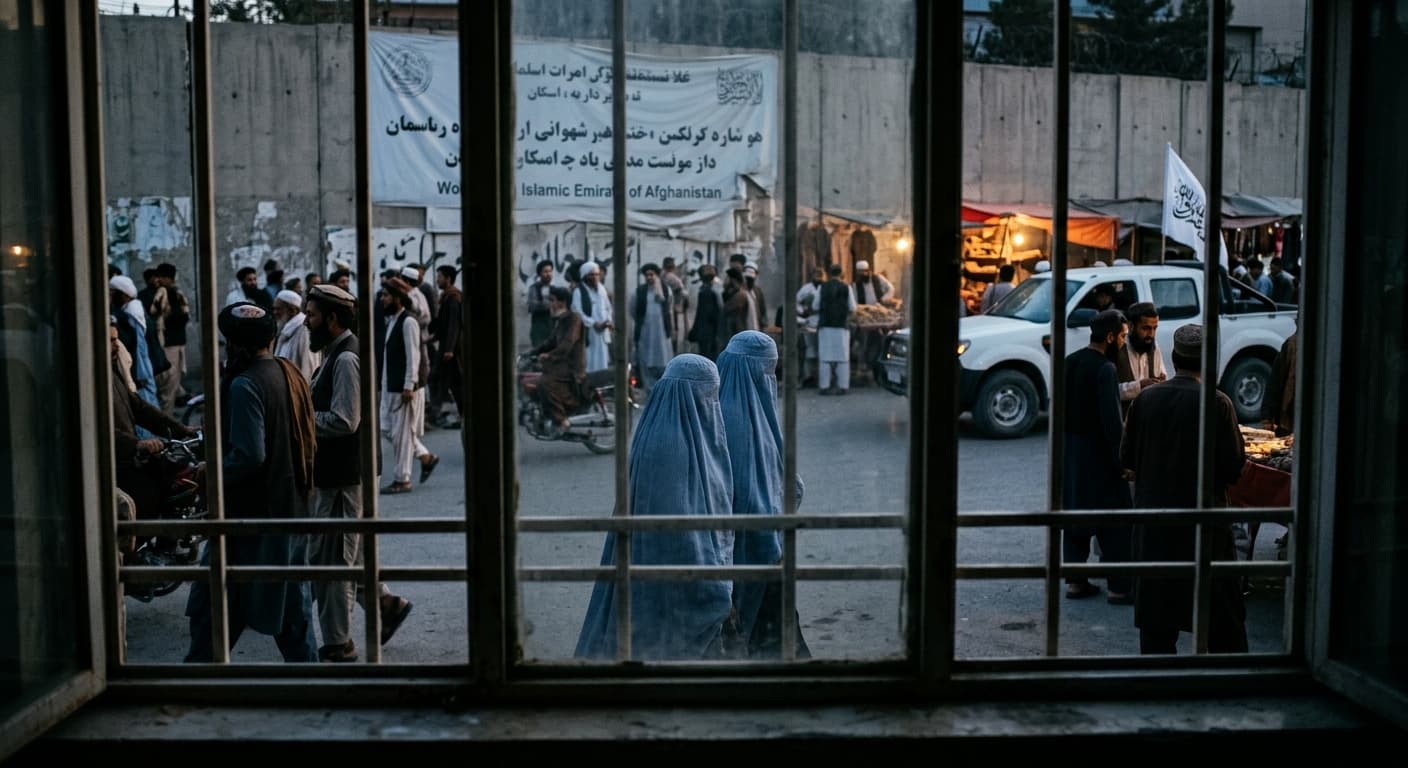
UN data shows Afghan women erased from public life as Russia recognises the Taliban, EU hosts officials in Brussels, and ICC warrants for gender persecution go unenforced.