Ceasefires in Middle East
Exploring the fragile ceasefires in the Middle East under Trump.
Model Diplomat8 min readMiddle East
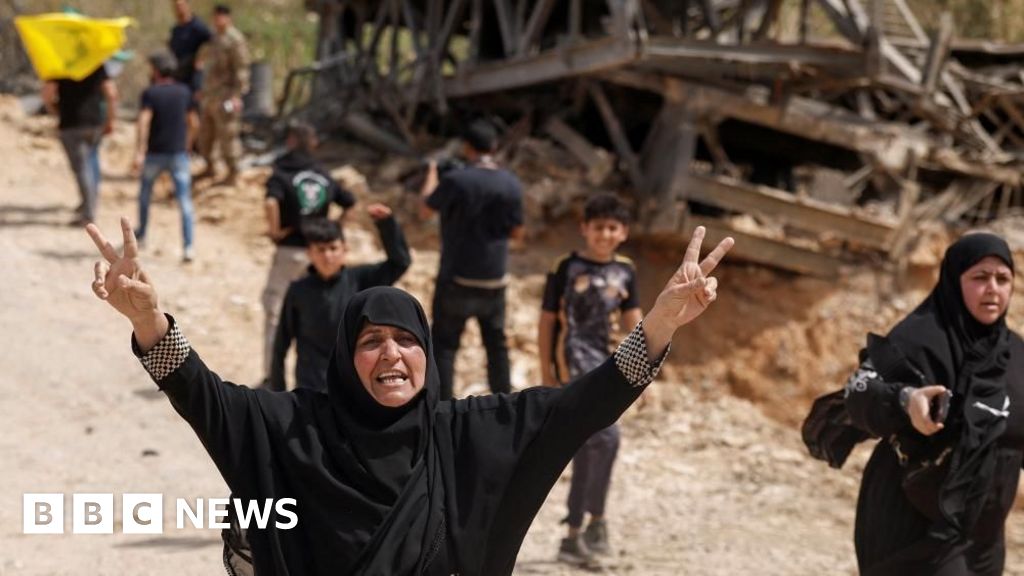
Trump's Three Middle East Ceasefires Are Held Together by a Blockade, Not Peace
Gaza, Lebanon, and Iran are technically at peace under US-brokered deals. On the ground, one bombing campaign continues, one has restarted, and one MoU is fraying — here is what actually holds them in place.
President Donald Trump has three signed ceasefires in the Middle East as of July 7, 2026 — Gaza (October 10, 2025), Iran (June 17, 2026) and Lebanon (June 26, 2026) — and none of them has stopped the killing. The Gaza Ministry of Health counts 1,072 Palestinians killed in the nine months since the Sharm el-Sheikh truce took effect, according to Al Jazeera. Israel struck a car in southern Lebanon on July 6, killing four including a headteacher — the deadliest day since the latest Lebanon ceasefire,
the BBC reported. What is actually holding the region together is not the memoranda: it is a US naval architecture around Iran, a $300 billion reconstruction promise, and a World Bank–administered trust fund that will not release a dollar until Hamas and Hezbollah disarm. The ceasefires are financial instruments dressed as peace agreements — and that changes who has leverage over whom.
Three tracks, one payment gate
The three deals share an architecture the White House has not advertised: each converts a war into a conditional reconstruction transaction, and each parks the enforcement outside the region.
In Gaza, the October 2025 deal implemented the first phase of Trump's 20-point plan. Israel withdrew to the "yellow line" while retaining 53% of the Strip; Hamas released the 20 living hostages within 72 hours in exchange for roughly 1,950 Palestinian prisoners and detainees, per the BBC's account of the exchange. On November 17, 2025, the UN Security Council adopted Resolution 2803 by 13-0 with China and Russia abstaining, endorsing the plan and authorizing a temporary International Stabilization Force through December 31, 2027 — the UN's own record of the vote is in the
Meetings Coverage release. The Board of Peace, chaired by Trump, sits above the Palestinian National Committee for the Administration of Gaza (NCAG) formed on July 6, when Hamas dissolved its 20-year-old civilian government,
Al Jazeera reported.
In Iran, the Islamabad Memorandum of Understanding — signed electronically and then in hard copy at Versailles on June 17 during the G7 — declares "immediate and permanent termination of military operations on all fronts, including in Lebanon," and commits Iran to a "status quo" nuclear posture with on-site down-blending under IAEA supervision. The 14-point text, read verbatim to reporters and reconstructed by the BBC, attaches a $300 billion reconstruction envelope for Iran and a US naval blockade withdrawal within 30 days. Nuclear specifics are punted to a "maximum 60-day" extendable negotiation.
In Lebanon, the June 26 Trilateral Framework — the actual signed text was released by the State Department — commits the parties to a "reciprocal, sequenced process, with clear conditions, whereby the LAF will restore effective sovereign authority over all Lebanese territory, pending the verified disarmament of non-state armed groups." Two initial "pilot zones" in the Nabatieh region have been designated, per the State Department release. Israel's departure is not scheduled; it is triggered — zone by zone, verification by verification.
Who actually holds the leverage
The World Bank is the quiet enforcer. In November 2025, its executive directors approved a Financial Intermediary Fund for Gaza Reconstruction and Development (GRAD), with the Bank as "limited Trustee" channeling donor money to the Board of Peace. The Bank's own board note is explicit about the political prerequisite: directors cited "the opportunity created by the ongoing ceasefire" and the World Bank–UN–EU Rapid Damage and Needs Assessment set Gaza's recovery bill at tens of billions in the April 2026 RDNA. Nickolay Mladenov, the Board of Peace's High Representative, put the condition plainly to
the BBC: Gulf donors will not fund reconstruction "unless there was a lasting peace… that includes decommissioning of weapons in Gaza."
That is the leverage. Hamas cannot rebuild Gaza; the Board of Peace can. Lebanon cannot rebuild the south; the US-led framework can — but only in pilot zones the Lebanese Armed Forces have cleared. Iran cannot access the $300 billion or lift UN and unilateral US sanctions without a final nuclear deal within 60 days. Every ceasefire is a spigot with an American hand on the valve.
The result is that Washington has purchased ceasefires on the cheap by outsourcing enforcement to money it has not yet spent. No US troops are on the ground in Gaza; roughly 200 personnel operate a monitoring cell from Israel, per BBC reporting. Reconstruction is contingent. Sanctions relief is contingent. Israeli withdrawal is contingent. The counterparties — Hamas, Hezbollah and Tehran — get to keep their weapons for now, in exchange for a promise of money later. That is why the shooting has not stopped: none of the belligerents has yet paid the price that would trigger the transfer.
The Lebanon fault line
Lebanon is where the architecture is cracking first. Iran's reading of the Islamabad MoU — clause one bans hostilities "on all fronts, including Lebanon" — is that Israel must stop striking Hezbollah immediately, without conditions. Israel's reading, embedded in the June 26 Trilateral Framework, is the opposite: Israeli redeployment is tied to "verified disarmament of non-state armed groups." Al Jazeera's explainer on the framework captures the gap: Iran's Fars agency argues the framework "is essentially the US permitting Israel to violate the first clause" of the MoU.
Hezbollah Secretary-General Naim Qassem calls the framework a "capitulation." President Joseph Aoun told him "the Lebanese people are not your people," per the IRIS analysis — a rare direct rebuke from a Maronite president to the Shia militant leadership. The Lebanese Armed Forces have moved 9,000 troops south of the Litani River, removed nearly 10,000 rockets and 400 missiles, and — for the first time in 40 years — established operational control of the south,
the Center for a New American Security reports. But the LAF's own commander-in-chief, Rodolphe Haykal, has repeatedly warned that coercive disarmament risks civil war. On May 21, 2026, the US Treasury sanctioned two Lebanese officers for alleged Hezbollah collaboration — a signal that Washington is willing to split the army if it delivers.
Congressional Republicans are aligned with the Israeli reading. H.Res. 1379, submitted June 23, 2026 by Rep. Josh Gottheimer, "strongly condemns Lebanese Hezbollah's flagrant and repeated violations of ceasefire agreements" and endorses the Trilateral Framework's sequencing, per the text on Congress.gov. The Institute for National Security Studies in Tel Aviv reads the framework as a strategic win for Israel — full disarmament, gradual withdrawal, IDF right of self-defense preserved, no timetable — per its
July 2026 briefing. Al Jazeera's own analysts describe the same deal as an "existential threat" to Hezbollah.
Both are correct. That is why it will not hold as written.
The Netanyahu-Trump split
The second-order winner from this year's diplomacy is not Israel, and it is not Netanyahu. It is Trump personally, at Netanyahu's expense. Chatham House's Yossi Mekelberg writes that Trump reportedly called Netanyahu "crazy" and used an expletive during a tense call over Israeli operations in Lebanon that were "jeopardizing" the Iran deal. Trump has publicly cooperated with Saudi Arabia, Qatar, Turkey and Pakistan to secure the Iran ceasefire — sidelining Netanyahu at the signing. The Israeli prime minister's cabinet approved the Gaza deal "just in time for Trump's inauguration"; he has been running to keep up ever since. Israeli elections are due in October 2026, and Netanyahu's coalition is bleeding support over the prolonged hostage crisis and the war's endgame.
The Iranian and Lebanese counterparts read this. Foreign Minister Abbas Araghchi warned that any breach of the MoU "will be attributed to the US," the BBC reported. That is the leverage Iran has kept: the ability to make Trump own Israeli strikes. It is why the ceasefire holds on paper even as Nabatieh burns.
The Gaza phase-two trap
The Gaza track is the model everyone is watching, and it is not working. Under phase one, Israel withdrew to a line still leaving it in control of 53% of the Strip. Netanyahu subsequently directed the IDF to increase control to 70% of Gaza, per BBC reporting — a move the outlet noted "would contradict the terms of the ceasefire." Talks in Cairo have deadlocked over the sequencing between Israel's demand for Hamas disarmament and Hamas's demand for the humanitarian and troop-withdrawal obligations Israel signed for in phase one. The UN's OCHA reported that only 42% of Gaza-bound aid from Egypt and 65% from Ashdod entered through the Karem Abu Salem crossing in the last week of June.
The July 6 dissolution of Hamas's civilian government looks, at first glance, like a breakthrough — Hamas ceding administration to the 15-member NCAG, chaired by former PA planning deputy Ali Shaath. It is not. Hamas spokesman Husam Badran told Al Jazeera in June that the group "will not hand over weapons," offering only that arms will not be visible in the streets. Israeli negotiator Michael Eisenberg told the BBC: "Hamas must disarm, demilitarise, and deradicalise. That's the future of Gaza according to the 20-point plan." The gap is unbridgeable at current terms, and Israeli media report the IDF is preparing to resume major operations.
Diplomat View
These are not peace agreements. They are financial-warfare instruments dressed as diplomacy — Trump has converted three regional wars into three trust-fund escrows, with disarmament as the release condition. That structure has a specific implication: whichever party first tests American resolve on enforcement determines the whole architecture's credibility. The Lebanon track will crack first, most likely between August and October 2026, when the Nabatieh pilot zones must show verifiable Hezbollah disarmament for the framework to advance and when Netanyahu's re-election calendar makes an Israeli withdrawal politically toxic. The forecast revises if two things happen: the World Bank GRAD Fund makes a first meaningful disbursement to Gaza before the end of Q3 2026, signaling donor confidence that disarmament sequencing is real; and Iran allows IAEA inspectors on-site to begin uranium down-blending before the 60-day negotiating window closes. If both occur, the paper ceasefires may harden into something like peace by year-end. If either fails, expect a return to open Israeli-Hezbollah warfare and an Iranian walk-out from the Versailles MoU before the October Israeli vote.
What to watch next:
- Mid-July 2026 (Washington): Resumption of US-mediated Israel-Lebanon direct talks announced by State Department; first credibility test of the Trilateral Framework's Security Annex.
- August 15, 2026 (Versailles+60): End of the initial 60-day window for a final US-Iran nuclear deal under the Islamabad MoU. Extension is possible only "with mutual consent."
- October 2026 (Israel): Israeli general elections. Netanyahu's political survival depends on avoiding a visible IDF withdrawal from Lebanon before polling day — the deadline that is most likely to break the framework.
The Bottom Line
Trump's three Middle East ceasefires are not peace deals; they are conditional payment schedules that have paused the largest set-piece battles while leaving the actors armed, the borders contested, and the enforcement contingent on money not yet transferred. The World Bank–administered GRAD Fund and the $300 billion Iran envelope are the load-bearing walls of the entire architecture — remove the reconstruction promise and every one of the ceasefires collapses within weeks. That is why the story to watch through the second half of 2026 is not the next round of Washington talks, but the first disbursement.
Discover more
Global
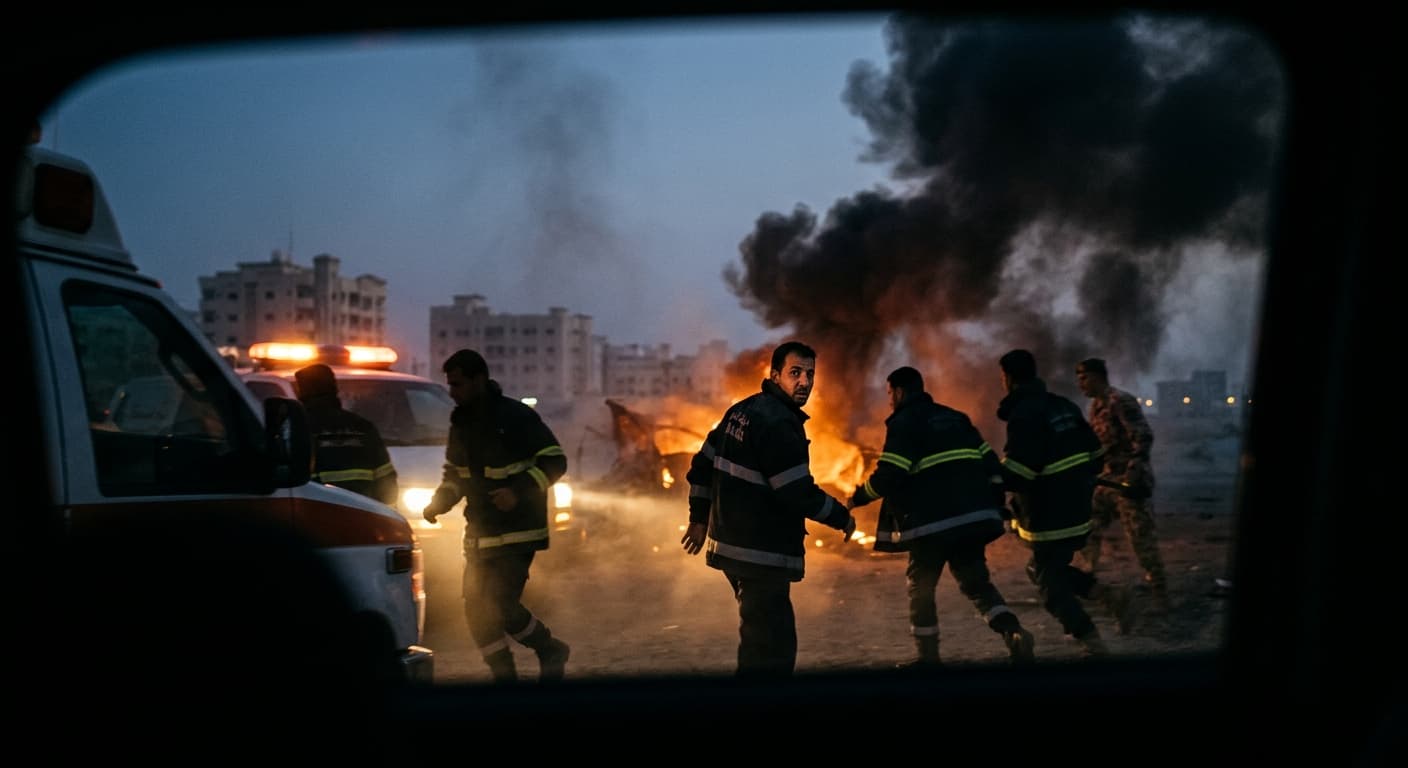
Iran Strikes Bahrain and Kuwait Amid US Ties
Iran's IRGC claims missile strikes on 85 US sites in Bahrain and Kuwait after the US revokes its oil sales license, escalating regional tensions.
International Relations
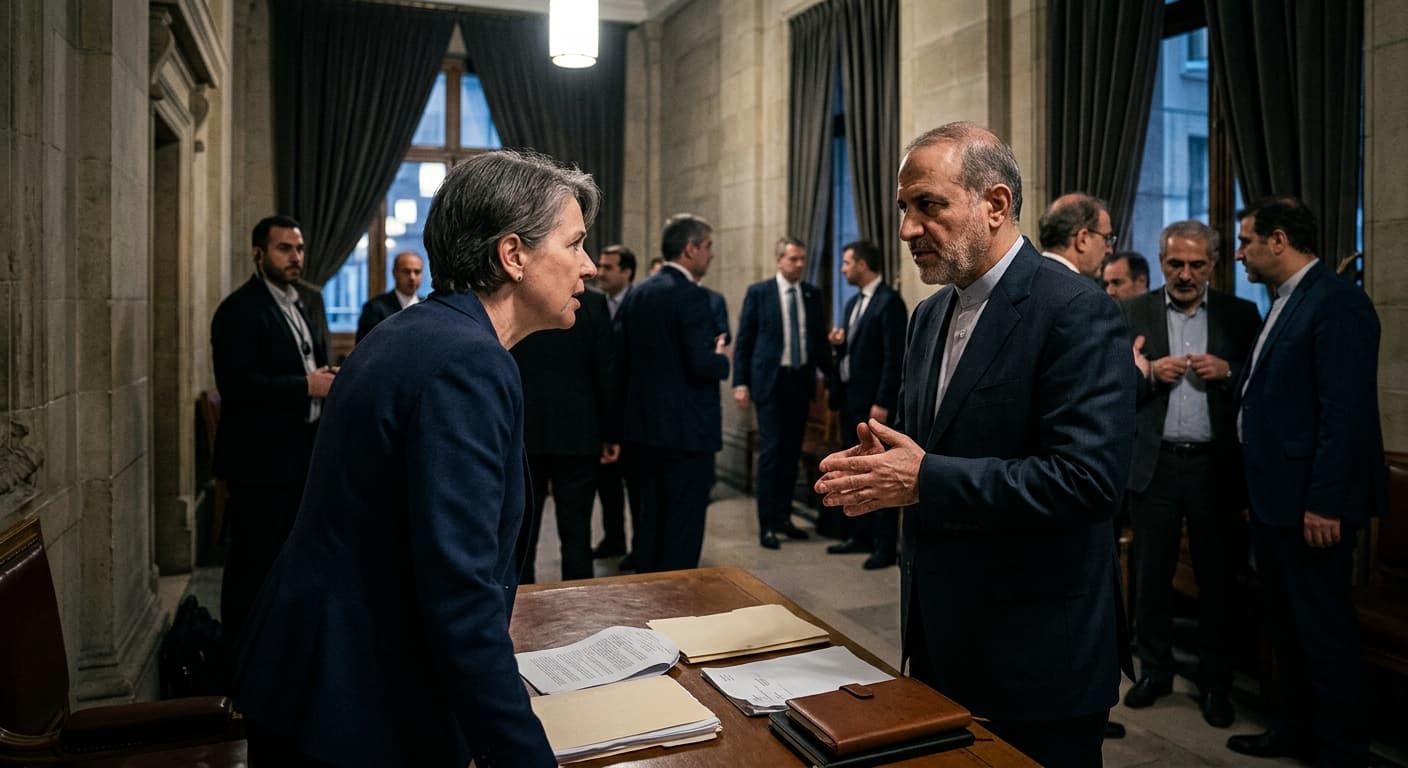
US-Iran Talks: Disputed Agreements Unveiled
US-Iran talks expose deep disagreements over nuclear inspections and sanctions relief, leaving any agreement uncertain as both sides hold firm on core demands.
Global Politics
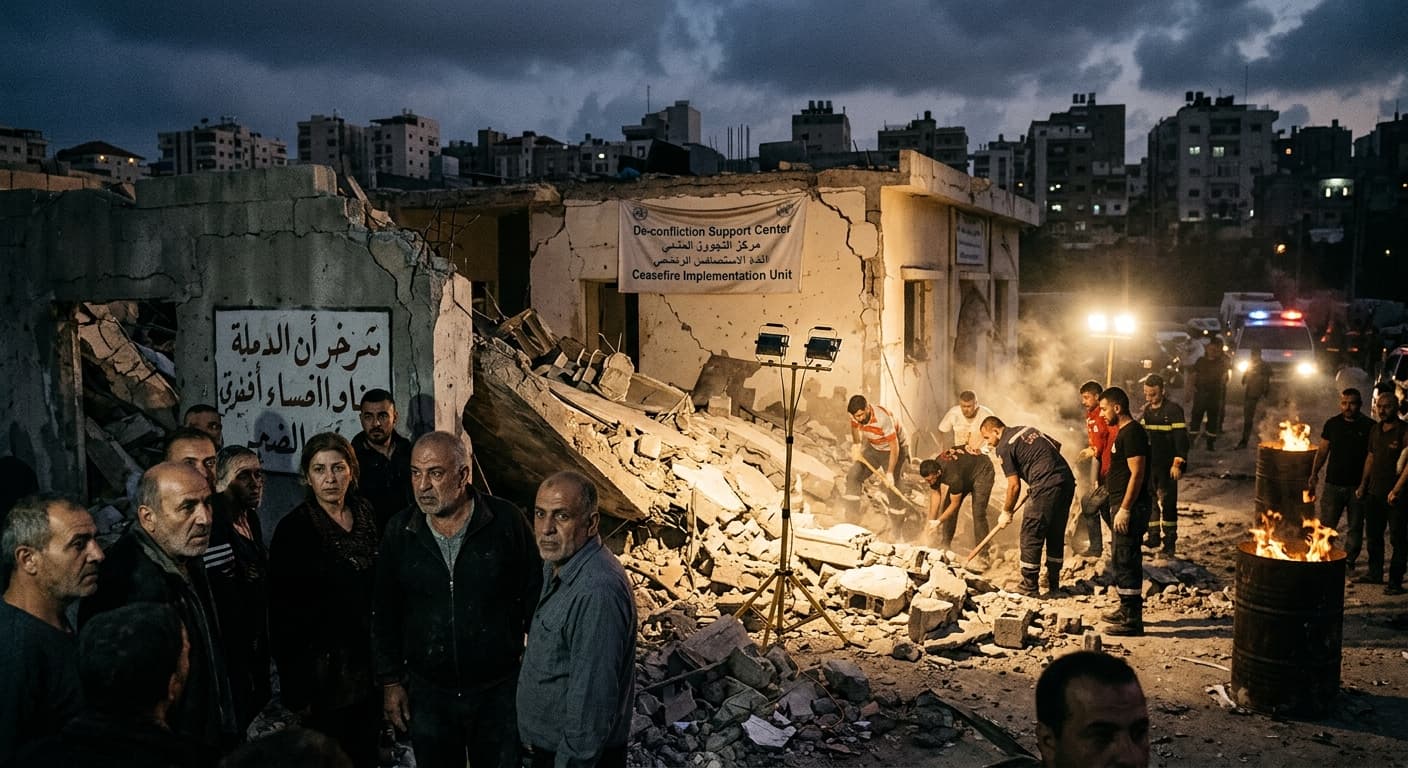
Iran's De-confliction Cells Face Lebanon Test
The US-Iran ceasefire's de-confliction cells face an early test as Israel presses strikes in Lebanon, straining the fragile deal and wider US-Iran relations.
International Relations
Nabatieh Ceasefire Unravels Amid Attacks
Israeli airstrikes resumed in southern Lebanon, killing 16 near Nabatieh as a fragile ceasefire with Hezbollah collapses and regional tensions escalate.