Women’s Reservation Act Defeated
India's Lok Sabha rejects Women's Reservation Act amid federalism concerns
Model Diplomat8 min readIndia
Women's Reservation Act defeated: Modi's first constitutional loss
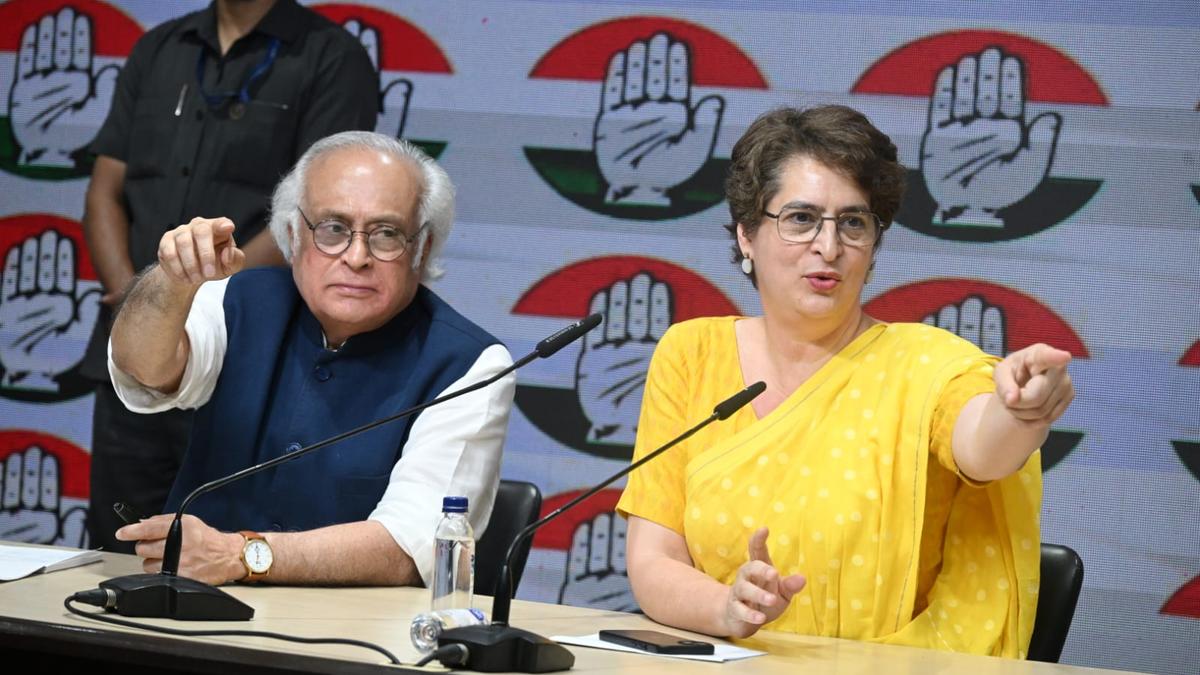
India's Lok Sabha voted 298–230 on April 17, 2026 to reject the Constitution (131st Amendment) Bill — the first constitutional amendment defeated under Narendra Modi and a verdict on federalism, not gender.
The women's quota did not lose because Parliament rejected women. It lost because the Modi government packaged a 33% reservation for women inside a rewrite of India's federal map — expanding the Lok Sabha from 543 seats to roughly 848, based on 2011 census data — and dared the opposition to swallow both. On April 17, 2026, 230 MPs said no, leaving the bill 54 votes short of the two-thirds constitutional bar. The real defeat was not for Nari Shakti; it was for the BJP's attempt to use women's representation as the delivery vehicle for a decade-defining redistribution of political power between north and south.
The vote, in the government's own words
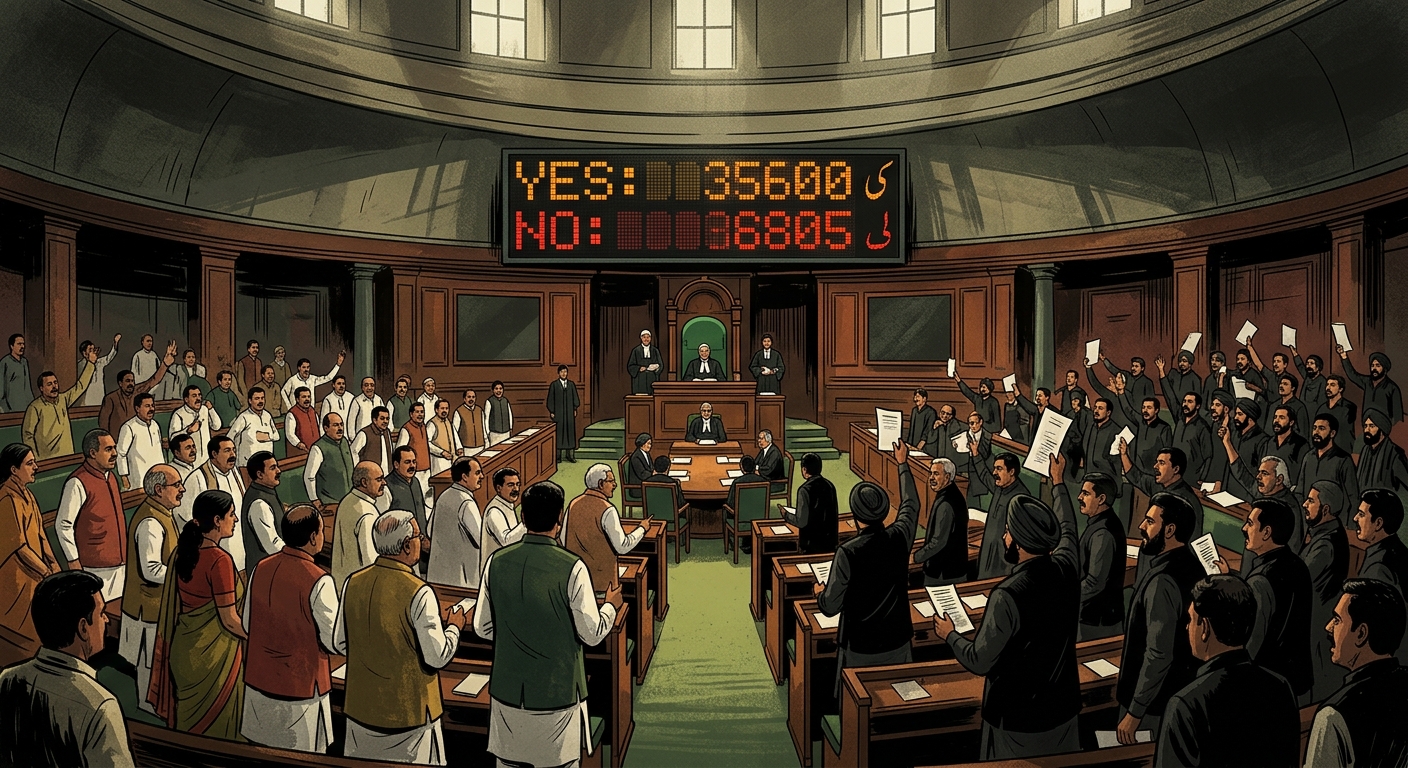
Lok Sabha Speaker Om Birla, closing the seventh session of the 18th Lok Sabha, told the House the three bills had been "discussed for 21 hours and 27 minutes" with 131 members participating, and confirmed in a single sentence buried in a routine session-end statement that "the Constitution Amendment Bill was not passed by the House," according to the Press Information Bureau. The Hindu recorded the count at 298 in favour, 230 against — a margin that would have delivered a simple majority comfortably but fell well short of the 352 required for a constitutional amendment, per
The Hindu.
It is the first time since Modi took office in 2014 that a constitutional amendment bill introduced by his government has failed on the floor. The Indian Express called it his first major legislative loss in 12 years. The two enabling pieces — the Delimitation Bill, 2026 and the Union Territories Laws (Amendment) Bill, 2026 — were withdrawn once the parent amendment fell, according to
Business Standard.
The National Democratic Alliance holds 293 seats in a 543-member House, Al Jazeera noted at the session's opening. A two-thirds vote required 360. The arithmetic never favoured the government; the political calculation was that individual opposition MPs would defect rather than face a "voted against women" attack ad. That bet failed.
What was actually in the bill
Strip the ceremonial framing and the 131st Amendment did four things. It raised the constitutional cap on the Lok Sabha from 550 to 850 seats. It removed the mandatory link between each new census and a subsequent reapportionment, handing Parliament discretion over which census to use. It authorised delimitation based on the 2011 census — not the newly launched 2026 count. And through the companion Delimitation Bill, it made those 305 new seats the delivery mechanism for the 33% women's quota already enacted in the Constitution (106th Amendment) Act of 2023, which the Carnegie Endowment's Milan Vaishnav and colleagues describe as the piece the government was trying to operationalise.
That 2023 law — the Nari Shakti Vandan Adhiniyam, or "Salutation to Women Power Act" — passed unanimously three years ago but never took effect because it was itself tied to a census and delimitation that had not yet happened. Modi told a Nari Shakti Vandan rally on April 15, 2026 that "in 2023, when the Nari Shakti Vandan Adhiniyam was introduced, all parties unanimously passed it… everyone agreed that passing a law without implementing it was unacceptable," according to the Prime Minister's Office. The pitch was simple: to keep the 2029 deadline, the government had to move now, on 15-year-old census data.
The opposition read the same package as a Trojan horse. Congress leader Rahul Gandhi wrote on social media that "the proposal that the government is now bringing has no connection to women's reservation… it is merely an attempt to seize power through delimitation and gerrymandering," in comments reported by Al Jazeera. John Brittas, a CPI(M) MP, told the
BBC his party would back a straight 33% quota on the current 543 seats — but rejected the expansion.
Why the south refused to fold
The load-bearing objection was federal. India has not reapportioned Lok Sabha seats between states since the 1971 census; the freeze was extended in 2001 to prevent penalising states that had succeeded at family planning. The five southern states — Tamil Nadu, Kerala, Karnataka, Andhra Pradesh and Telangana — hold roughly 129 of 543 seats today, about 24%, while accounting for about 20% of India's 1.4 billion population, per the BBC. A fresh population-based delimitation would shift power to Uttar Pradesh, Bihar and other northern states where the BJP dominates.
Home Minister Amit Shah tried to close that gap in his intervention on April 17, telling the House the government would guarantee a uniform 50% pro-rata expansion — every state gains seats, no state loses share. In his own words to Parliament, published by the Press Information Bureau:
"The existing 129 seats of the southern states in the Lok Sabha will increase to 195, and their share in the total seats of the House will remain almost the same at around 24 per cent… The representation of Tamil Nadu will not decline; rather, it will grow."
The problem was that this "prime minister's guarantee," as Carnegie's analysis put it, "was never codified in the proposed law but was orally communicated in Parliament." Shah, in the final hour of debate, offered to "return in an hour with an amendment" to lock it in. The opposition did not believe him. Tamil Nadu Chief Minister M.K. Stalin, on the eve of the vote, called the plan a "massive historic injustice" and burned copies of the bill in Chennai, urging Tamils to hoist black flags, per Al Jazeera.
There was a second, quieter federal problem: the 131st Amendment expanded only the Lok Sabha, not state assemblies. Vidhi Centre for Legal Policy's Arghya Sengupta told the BBC this created a "mismatch: fast-growing states could gain more MPs without a corresponding rise in MLAs." That structural asymmetry, more than the census question, is why the Takshashila Institution concluded the bills were "seen as an affront to federalism and were defeated," in a post-mortem published on
Takshashila.
The timing that made it unwinnable
The government tabled the bill nine days before polling opened in Tamil Nadu and West Bengal — two of the states most exposed to the delimitation fight. The NUS Institute of South Asian Studies, in its post-vote review, called this the fatal choice: the session "could have been convened after the polls or the law introduced in the coming monsoon session," and doing otherwise "hardened opposition resolve" at exactly the wrong moment, per ISAS.
The election results that followed did not vindicate Modi's April 18 warning that the opposition would be "punished" for "committing foeticide" on women's reservation. The BJP did break through in West Bengal, taking 207 of 294 assembly seats against a fatigued Trinamool Congress, per the BBC. But in Tamil Nadu, actor Vijay's Tamilaga Vettri Kazhagam — running explicitly against the BJP's delimitation push — won 108 of 234 seats and swept younger voters and women, according to
ISAS. The DMK collapsed to 59 seats. That is not the pattern of women voters punishing an opposition for blocking a quota.
The deficit the defeat leaves in place
India ranks 143rd of 187 countries for women's representation in national legislatures, per the Observer Research Foundation. Women hold 13.62% of the 18th Lok Sabha — 74 of 543 seats — actually down from 14.7% in 2019, according to a 2025 study in the
Journal of Multidisciplinary Cases by Rajeev Ranjan. The Congressional Research Service put the same figure at 14% in its brief on India's 2024 election, published by the
U.S. Congress. By any measure, India lags Nepal (34%), Bangladesh (21%) and Pakistan (20%), per ORF's compilation of Inter-Parliamentary Union data.
None of that changes because of April 17. The 106th Amendment is still on the books. Its trigger — completed census, then delimitation — is unchanged. The first phase of the 2026 census launched on April 1; results are not expected before 2027. Delimitation cannot begin until publication. Carnegie's read is that women's reservation "cannot take effect until after the 2027 census is completed and a new delimitation is carried out," which almost certainly rules out implementation before the 2029 general election on the government's original timetable.
The unasked question, framed sharply by ISAS, is why the government did not simply table a clean amendment applying the 33% quota to the current 543 seats and dare the opposition to vote it down. Congress, CPI(M), DMK and TMC had all publicly offered to back that version. The answer is the one the vote revealed: gender parity was never the operative objective. Redistricting was.
Diplomat View
The defeat is not a setback for women's representation — it is a setback for the Modi government's ability to use social-reform packaging to force through federal restructuring. The 106th Amendment is unaffected; the 131st was always a delivery vehicle. Expect the BJP to return with a de-coupled bill in the monsoon or winter session, one that either implements the 33% quota on the existing 543 seats or writes Shah's oral "no state loses share" guarantee into the constitutional text itself. That version passes. If, instead, the government re-tables the same package on the same 2011-census basis, expect a second defeat and a hardening of the southern federalist bloc into the 2029 general election. The forecast changes if two things happen: the 2026 census produces early state-level population numbers before mid-2027, giving the government fresh data that neutralises the "why 2011?" objection; and Shah delivers a written constitutional guarantee on state seat shares, not a floor promise. Absent both, the north–south fight moves from parliament to the courts and the state assemblies — and women's reservation waits until at least 2034.
What to watch
- Monsoon session (July–August 2026): Whether the BJP re-tables a slimmer amendment, and on what terms.
- First 2026 census release (expected 2027): The trigger date that unlocks any delimitation exercise, and thus any implementation of the 106th Amendment.
- Bihar assembly election (late 2026): A test of whether the "opposition betrayed women" line moves votes in a large northern state — the audience for whom Modi's April 18 address was written.
The Bottom Line
The Women's Reservation Act was not defeated on April 17 — it remains law. What was defeated was the Modi government's attempt to piggyback a north-friendly redrawing of India's political map onto a gender reform that already had unanimous support. The 298–230 vote is the first hard evidence that the opposition, especially in the south, has recovered enough discipline to say no to constitutional change bundled with federal restructuring — and that "voting against women" is no longer the automatic electoral death the BJP assumed it was.
Discover more
India
India's Women's Reservation Act
West Bengal's elections expose a stark gap in women's political representation despite India's Women's Reservation Act promising reserved legislative seats.

India
India's 2026 Governance
India's 2026 governance agenda centers on GST reform and the Women's Reservation Act, testing federalism and the country's push for fairer representation.
India
Rajnath Singh's Push for Women's Reservation
Rajnath Singh's push for 33% women's reservation is entangled with a contentious delimitation plan, complicating its future.
India
Women’s Reservation Act Sparks Federal Tense
The Lok Sabha's rejection of the 131st Amendment Bill signals a significant shift in India's federal dynamics, impacting women's representation.