Washington's Crypto Chokepoint: Nobitex and T
Why sanctioning Nobitex is really about Tether's stablecoin
Model Diplomat9 min readMiddle East
Washington's Crypto Chokepoint: Why Sanctioning Nobitex Is Really About Tether
The Treasury's June 2, 2026 designation of four Iranian crypto exchanges reframes the US sanctions war: the target is not Tehran's on-ramps but the dollar-pegged stablecoin rail that makes them work — and the issuer Washington has yet to compel.
The US Treasury's Office of Foreign Assets Control designated Nobitex, Iran's largest cryptocurrency exchange, alongside Wallex, Bitpin, and Ramzinex on June 2, 2026, for financing the Islamic Revolutionary Guard Corps and evading sanctions, according to the US Treasury. The move, announced under the "Economic Fury" campaign, freezes the four platforms' US-linked assets and exposes any foreign financial institution that continues dealing with them to secondary sanctions. But the decisive pressure point is not the exchanges themselves — it is the dollar-pegged stablecoin, overwhelmingly Tether's USDT, that those exchanges run on. The real leverage sits with the issuer, and Washington has so far only asked, not compelled, Tether to use it.
The designation and what Treasury actually alleged
Nobitex processed more than half of all Iranian digital-asset inflows in 2025, according to the US Treasury press release; blockchain analytics firm TRM Labs put its dominance even higher, at roughly 87% of all Iranian crypto transactions by volume, as cited in a
JISS analysis. The platform serves more than 11 million users and allows Iranians to swap rials for cryptocurrencies, which can then be transferred to digital wallets — making it easier to move money out of Iran while bypassing the global banking system, per
Al Jazeera.
The press release is unusually specific about the regime link. Treasury alleges Nobitex "facilitated a significant number of digital asset transactions linked to the IRGC, including transactions for wallets associated with IRGC-affiliated ransomware actors," and that it "helped the Central Bank of Iran access hundreds of millions of dollars in stablecoins used to prop up the plummeting value of the Iranian rial," according to the US Treasury. Following the commencement of US combat operations in Iran, Nobitex played a role in protecting and moving assets out of the country to shield regime wealth despite internet blackouts, the same source said.
The designation also names individuals: Amir Hossein Rad, Nobitex's chairman, co-founder, and former CEO, along with "numerous other Nobitex leaders and officials." According to the Gulf International Forum, Nobitex was founded in 2018 by two brothers from Iran's powerful Kharrazi clan, which is linked to Supreme Leader Mojtaba Khamenei, and has processed transactions ranging from tens to hundreds of millions of dollars linked to sanctioned groups. The action is taken under Executive Order 13224, the counterterrorism authority, and Executive Order 13902, which targets Iran's financial sector — a combination that triggers secondary-sanctions exposure for non-US institutions. Treasury Secretary Scott Bessent framed the broader logic plainly: "As promised, Treasury will continue to follow the money in support of Economic Fury, whether it is through the banking system or through digital assets, to prevent the regime from developing a nuclear weapon."
The four exchanges are, in sanctions terms, the easy targets. They operate inside Iran, take rials, and custody wallets for millions of users. Designating them freezes whatever US-nexus assets they hold and puts any correspondent bank or foreign crypto venue on notice. But the exchanges do not mint the dollars they trade.
The rail that makes it all work
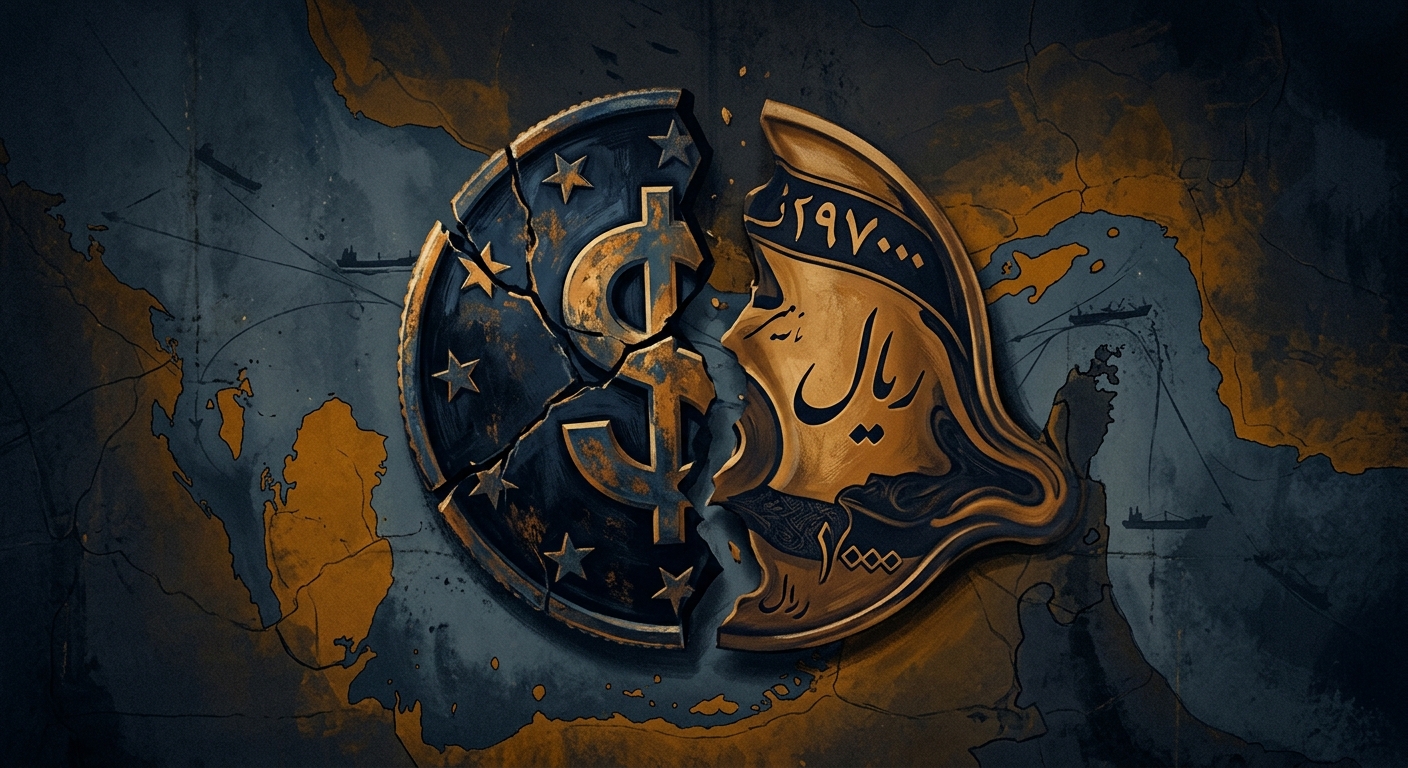
Iran's crypto economy runs on USDT. The Central Bank of Iran bought more than $500 million in USDT in 2024, according to a January 2026 report by blockchain analytics firm Elliptic, which called it "a sophisticated strategy to bypass the global banking system." By the fourth quarter of 2025, the IRGC accounted for roughly 50% of on-chain activity inside Iran, per the
Gulf International Forum; IRGC-associated addresses received over $3 billion on-chain in 2025, up from $2 billion in 2024.
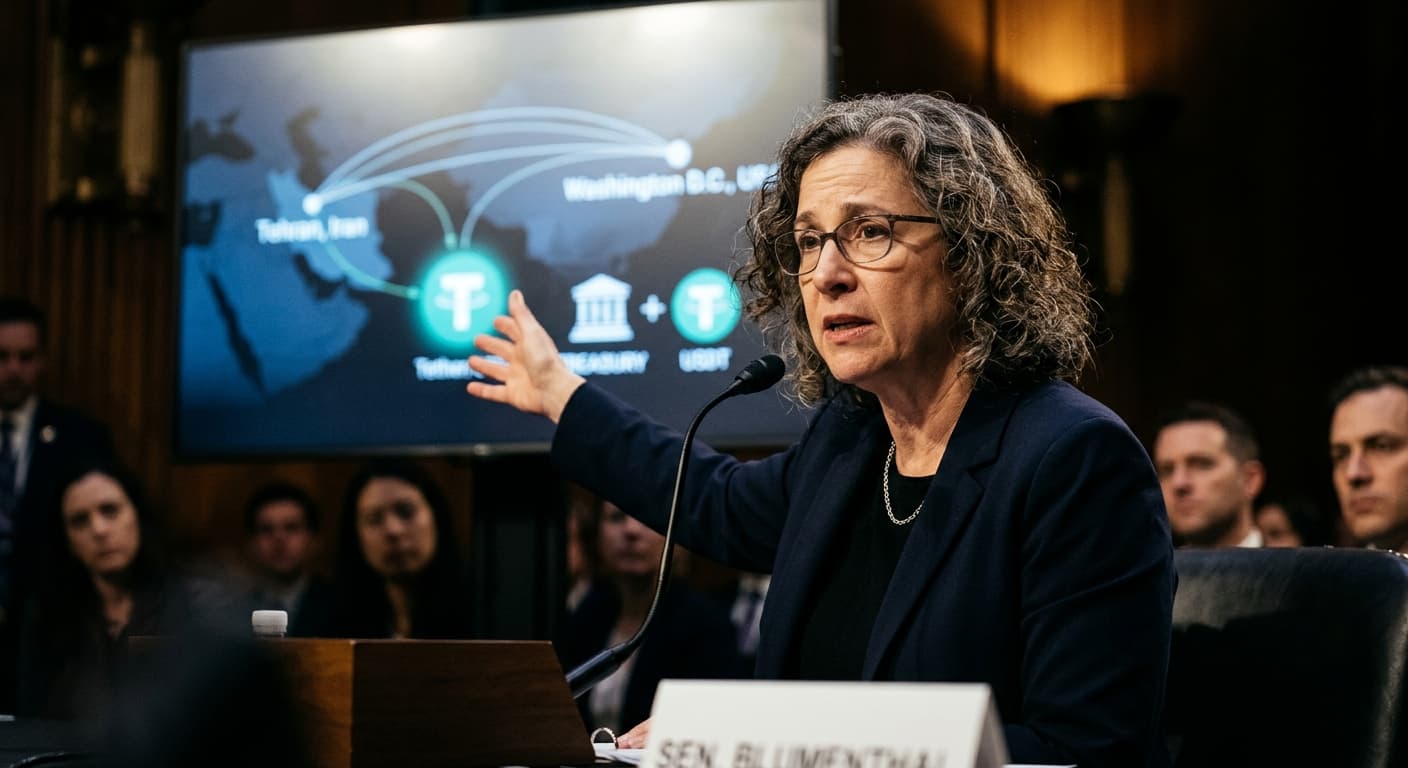
Nobitex, Wallex, Bitpin, and Ramzinex are on-ramps. The off-ramp — the thing that turns rials into globally spendable dollar value — is a stablecoin issued by a single private company. That company is Tether. And Tether, critically, has the technical ability to freeze any USDT wallet it chooses, unilaterally, at the smart-contract level, through a "blacklist" function built into the stablecoin, as Senator Richard Blumenthal noted in a June 4, 2026 letter to Tether's CEO Paolo Ardoino, posted by the Senate Permanent Subcommittee on Investigations.
Tether has used this power selectively. In July 2025, following a June cyberattack on Nobitex by the Israel-linked group Predatory Sparrow that destroyed $90 million in stolen cryptoassets, Tether froze 42 USDT wallets — more than half of which were linked to Nobitex and the IRGC, according to TRM Labs data cited by JISS. In September 2025, Israel's National Bureau for Counter-Terror Financing designated 187 USDT wallets as IRGC-linked; Elliptic subsequently found those wallets had received $1.5 billion in USDT, per the same source. On April 23, 2026, Tether announced it had frozen more than $344 million in USDT in coordination with OFAC and US law enforcement, according to
Tether's own statement.
Two days after the June 2 designation, Blumenthal demanded to know whether Tether had frozen all USDT held in wallets associated with, or custodied by, the four sanctioned exchanges, and if not, why not, as documented in the Blumenthal press release. The implication is clear: as of his letter, Tether had not comprehensively done so. According to their websites, Nobitex, Wallex, Bitpin, and Ramzinex still dealt substantially in Tether's stablecoin, including exchanging USDT for Iranian rial, even after the OFAC designations, Blumenthal wrote.
Tether has stated its compliance with OFAC sanctions is "voluntary" and that it follows "OFAC guidelines," as quoted in the Blumenthal letter. For a company that relies on American financial infrastructure — including its operational and business relationship with Cantor Fitzgerald and the family of Commerce Secretary Howard Lutnick — the word "voluntary" is doing significant work.
Who benefits, who loses
Iran's crypto-using public is the immediate loser. When Tether froze 42 wallets in July 2025, the move reduced the supply of stablecoins accessible to ordinary Iranians, according to JISS. Crypto trading volume in Iran fell by about 70% in July 2025 compared to the previous year, driven by the Nobitex hack and the subsequent freezes. The Central Bank of Iran declared all off-exchange cryptocurrency trading strictly prohibited on August 20, 2025, further squeezing the retail market. Designating the four largest exchanges will compound that squeeze: Iran's 11 million Nobitex users and the customers of the other three platforms now face a frozen on-ramp, with no lawful domestic alternative.
The regime's loss is more nuanced. Treasury says it has disrupted tens of billions of dollars' worth of revenue and frozen nearly half a billion dollars in regime-linked cryptocurrency since early 2026, according to the Treasury press release. Since February 2025, OFAC has sanctioned more than 1,000 Iran-related persons, vessels, and aircraft as part of the Economic Fury campaign, per the
Treasury's shadow banking announcement. But the IRGC's on-chain inflows grew from $2 billion in 2024 to over $3 billion in 2025, according to the
Gulf International Forum — suggesting that sanctions pressure, while costly, has not yet reversed the trend. The designation removes the largest domestic exchange node, but the IRGC's crypto infrastructure is distributed across mining operations, OTC desks, and wallets across multiple jurisdictions.
The winner, if Tether is eventually compelled to freeze comprehensively, is the US sanctions enforcement architecture itself. The historical parallel is the 2012 SWIFT cutoff of Iranian banks, which imposed systemic friction on every Iranian transaction by removing a single chokepoint. Tether is the SWIFT of Iran's crypto economy — a single issuer through which the majority of dollar-pegged value flows. Freezing the exchanges without freezing the stablecoin is like designating banks but leaving the clearinghouse open.
The secondary winner is Chainalysis, TRM Labs, and Elliptic — the blockchain analytics firms whose mapping of IRGC-associated wallets has given Treasury the evidentiary basis for these designations. Their business model is directly served by every expansion of crypto sanctions enforcement.
The Binance problem and the congressional escalation
The Nobitex designation is not an isolated action. In January 2026, before the outbreak of hostilities, the United States sanctioned two cryptocurrency platforms, including Binance, for allegedly facilitating roughly $1 billion in transactions into virtual wallets linked to the IRGC and pro-Iranian proxy groups, per the Gulf International Forum. Senator Adam Schiff has probed Binance's role in facilitating sanctions evasion by the Iranian regime, pointing to reports that Binance executives allowed Iranian "antisanction" operator Babak Zanjani to coordinate the exchange of $850 million over two years, including transactions one month before President Trump initiated military operations against Iran, according to
Schiff's office.
An internal Binance investigation found that more than $1.7 billion had flowed through Binance accounts to Iran-backed proxy groups since 2023, including the Houthi militia in Yemen, the same source reported. Binance paid a $4.3 billion settlement with the US government in 2023 for sanctions and money-laundering violations. The fact that Iran-linked flows continued through Binance after that settlement underscores the enforcement gap that the Nobitex designation is trying to close — but also the limits of designating exchanges one at a time when the stablecoin rail remains open.
The FATF's February 2026 renewal of Iran's blacklisting introduced specific countermeasures targeting virtual asset service providers, recommending member states prohibit financial institutions and VASPs from establishing new correspondent relationships with Iranian entities and limit virtual asset transactions with Iran on a risk basis, according to Al Jazeera. This multilateral layering — FATF guidance, OFAC designations, bilateral UK actions against Huobi — is designed to make it progressively harder for any foreign institution to justify maintaining Iran-linked crypto relationships. The
Belfer Center at Harvard has recommended Congress extend sanctions-compliance requirements to stablecoin intermediaries and leverage USD-pegging as a jurisdictional hook — essentially eliminating the loophole that allows Tether to treat OFAC compliance as voluntary.
What Tether does next is the decision that matters
The designations are final, the exchanges' US-linked assets are blocked, and foreign institutions face secondary sanctions. But the stablecoin wallets custodied by Nobitex, Wallex, Bitpin, and Ramzinex remain, by Blumenthal's account, operable in USDT. The question is whether Tether freezes them.
A comprehensive freeze would functionally sever the largest domestic on-ramps from the dollar-pegged rail that gives them value — a sharper tool than any sanctions designation. A refusal or continued delay would force Congress to legislate what Treasury cannot compel: mandatory sanctions screening at the stablecoin mint, transfer, and redemption chokepoints, as the Belfer Center has proposed. The GENIUS Act, currently in Congress, covers the issuer step — minting — but transfer and redemption remain unregulated.
OFAC has already demonstrated willingness to penalize crypto firms for Iran sanctions violations. In December 2025, Exodus Movement agreed to pay $3,103,360 to settle potential civil liability for 254 apparent violations of Iran sanctions, after Exodus staff recommended Iranian users obscure their location with VPNs to access third-party exchanges, according to the OFAC settlement agreement. The settlement reflects strict-liability enforcement: the violations were not voluntarily self-disclosed, and 12 of the 254 were deemed egregious. Tether, which has called its OFAC compliance "voluntary," faces a materially larger exposure if the PSI investigation concludes that its freezes were incomplete or selective.
The Bottom Line
The bottom line: sanctioning Nobitex closes Iran's largest crypto on-ramp but leaves the dollar-pegged stablecoin rail intact. The decisive actor is not OFAC — it is Tether, whose "voluntary" compliance and selective wallet freezes determine whether the designation has teeth or is a signal. If Blumenthal's PSI investigation compels mandatory freezing or Congress extends sanctions compliance to stablecoin intermediaries, the designations become systemic. If not, the IRGC's $3 billion on-chain economy adapts around another closed node.
Diplomat View
The US sanctions architecture was built for banks, not for programmable money. SWIFT has a governance body; USDT has a private company in the BVI with a blacklist function and a Commerce Secretary's banker on its board. The Nobitex designation exposes this asymmetry: Treasury can designate every exchange in Iran and it will not matter if the stablecoin issuer treats compliance as optional. The forecast turns on one variable — whether Tether freezes comprehensively or continues to freeze selectively, in coordination with but not compelled by US law enforcement. The catalyst is the PSI investigation's document demand, which will either produce evidence of incomplete freezing (triggering enforcement or legislation) or demonstrate that Tether has been more compliant than its public statements suggest. Three dates will determine the trajectory: the PSI response deadline for Tether (expected July 2026), the GENIUS Act markup in the Senate Banking Committee, and any additional OFAC FAQ issuance under the Economic Fury campaign. Each narrows the space between "voluntary" and "mandatory."
Discover more

US Politics
SNAP Food Assistance Faces Legal Challenges
In 2026, SNAP faces stricter eligibility rules and mounting legal challenges, threatening food assistance for the millions of Americans who rely on the program.
US Politics
House Ethics Committee Pushes Sexual Miscond.
The House Ethics Committee has shifted responsibility for sexual harassment settlement records to the Office of Congressional Workplace Rights, complicating disclosure efforts.
India
700 Activists Accuse PM Modi of MCC Breach
Over 700 activists allege PM Modi breached election code with a televised address attacking opposition parties just before state elections.

Economics
Fed's Amex AML order puts correspondent banking on notice
Federal Reserve's Amex AML order requires board-level controls and a 90-day plan; OCC fined the bank $350 million over enterprise-wide deficiencies.