Wartime Rape Cases Surge to 9,788 in 2025
UN reports alarming rise in conflict-related sexual violence
Model Diplomat7 min readGlobal
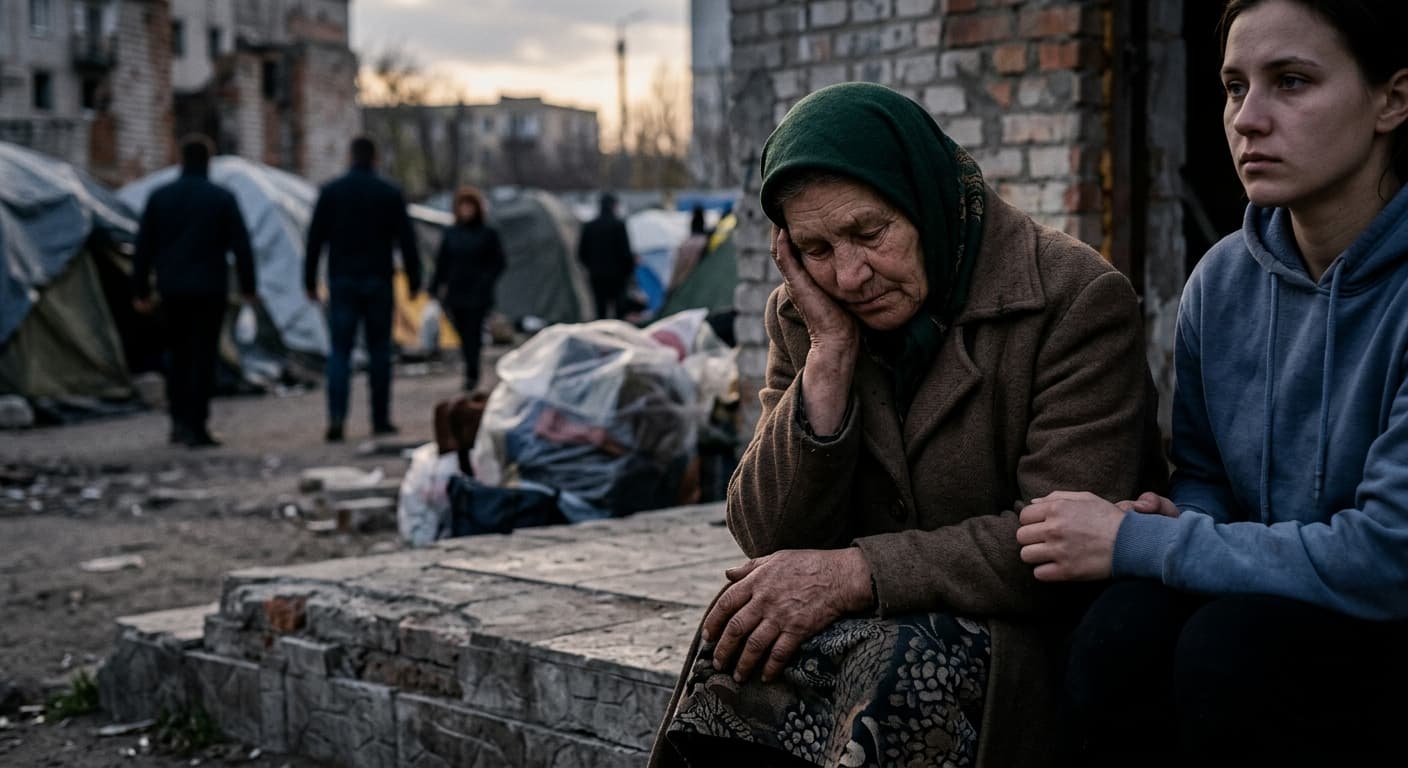
Patten Tells Council: Wartime Rape Cases Doubled to 9,788 in 2025
UN Special Representative Pramila Patten told the Security Council on 8 July 2026 that verified conflict-related sexual violence cases more than doubled in a year, as El Fasher, Gaza and eastern Congo strain international law.
The number of conflict-related sexual violence cases the United Nations was able to verify in 2025 more than doubled in a single year — to 9,788, across 21 situations of concern — a jump Special Representative of the Secretary-General Pramila Patten used on 8 July 2026 to warn the Security Council that international law's promise to survivors is being tested faster than the system can respond, and that the compliance gap is now the story. Her briefing, delivered to a Council chaired for the first time by a Congolese prime minister and a woman, was less a status update than a claim on leverage: the DRC model of engagement is delivering measurable results while Sudan, Gaza and Ukraine expose how quickly the naming-and-shaming machinery hits its ceiling when a permanent member or a well-armed non-state actor is the perpetrator.
What Patten actually put on the record
Patten's remarks, delivered under the presidency of DRC Prime Minister Judith Suminwa Tuluka, framed the annual Secretary-General's report as "a mirror held up to the changing face of war." The 9,788 UN-verified cases represent more than a doubling from the 4,617 recorded in 2024, according to the Council briefing note published by
Security Council Report. The report spans 21 country situations; the highest verified caseloads sit in the Democratic Republic of the Congo, Haiti, Sudan and the Central African Republic.
Patten was explicit that the number is a floor, not a ceiling. Humanitarians in the field, she said, estimate that "for every case that reaches a clinic, 10 to 20 go unreported and unaddressed." That framing matters: it converts the annual report from an indictment of specific parties into a structural argument about verification capacity — and quietly pushes back on any state that would dispute the count.
She then did something the mandate rarely does in public — she named a delisting candidate. The Congolese National Police, she said, will be considered for removal from the annex to the annual report "in light of sustained progress." The last comparable move was the delisting of the Armed Forces of Côte d'Ivoire in 2017 after years of engagement. Patten also flagged the Somali National Army's new Command Order on CRSV as evidence that operational directives — not just resolutions — are what convert paper norms into behaviour.
The DRC is the exhibit, not the exception
Patten's central rhetorical move was to hold up the country presiding over the debate as her lead case study. In the last reporting cycle she cited 35 arms bearers convicted of sexual violence in the DRC, reparations paid in line with court decisions, medical, psychosocial and livelihood support delivered to over 45,000 displaced survivors, and more than 1,000 children born of rape formally recognised and registered.
The scorecard is real, but the context is unsparing. In North Kivu alone, healthcare providers treated more than 17,000 sexual violence victims in just five months of last year as the Rwanda-backed M23 offensive intensified, Al Jazeera reported citing the SG's earlier annual report. A UK parliamentary inquiry submitted to the mandate found that in the Goma area, roughly 500 sexual violence cases were reported within a single week following the M23 offensive in January 2025, and documented the mass rape of at least 165 female prisoners at Munzenze Prison on 27 January, most of whom were then burned alive — an atrocity confirmed on the record by MONUSCO Deputy Head Vivian van de Perre, per the
inquiry document posted by Patten's office.
The DRC's ICJ case against Rwanda, filed on 26 June 2026, per Al Jazeera, sits underneath all of this. Prime Minister Suminwa Tuluka chairing the debate is not a diplomatic courtesy; it is Kinshasa converting its role as July Council president into legal and moral pressure on Kigali at the exact moment its own police force is being rewarded for compliance. That is the leverage play.
The angle the wire missed: naming is now bipolar
The real news out of the 2025 reporting cycle was not the aggregate number — it was who joined the annex. On 29 May 2026, the UN added Israel and Russia to the list of parties credibly suspected of patterns of sexual violence, Al Jazeera reported. The annex now lists 77 parties, 62 of them non-state actors; three new DRC-based armed groups were added alongside the two states. The
BBC noted that the UN verified 31 cases of sexual violence by Israeli forces against Palestinian detainees, and 310 cases of CRSV by Russian armed and security forces against Ukrainian POWs and civilian detainees.
Israel severed contact with the Secretary-General's office over the listing. Russia has not engaged Patten's mandate at all. That is the compliance test in miniature: the DRC engages and gets a delisting pathway; a P5 member walks away and faces no consequence beyond reputational damage.
Patten did not name Israel or Russia in the 8 July remarks — she did not need to. Her single line about "a resurgence of 'might makes right' logic" marring "human progress towards equality, justice, and peace" travels the distance for her. She paired it with a specific figure: global military spending "soaring close to 3 trillion per annum," a nod to Stockholm International Peace Research Institute estimates, while UN funding for prevention and survivor support is collapsing.

Sudan is the counter-example the room could not ignore
The El Fasher fall on 26 October 2025 is the counter-model to the DRC's slow accountability. OHCHR's three-year retrospective on Sudan, published this year, verified 546 incidents of CRSV affecting at least 838 victims — 539 women, 284 girls, eight men and seven boys — across 16 of Sudan's 18 states between April 2023 and April 2026. UN human rights chief Volker Türk called the pattern a war crime and, if part of a widespread attack, a crime against humanity.
The scale is far larger than the OHCHR verification set. Médecins Sans Frontières treated 3,396 survivors of sexual violence in just two Darfur states between January 2024 and November 2025. In South Darfur, one in five survivors was under 18; 41 were under five. A separate UN fact-finding report in February 2026 concluded that the RSF's takeover of El Fasher bore "the hallmarks of a genocide," per the
BBC, and the Security Council has sanctioned four RSF commanders — including "the Butcher of El Fasher," Abu Lulu — over the atrocities.
That sanctions decision is the closest the Council has come this cycle to using the compliance tool the DRC concept note explicitly asked for: consistent consideration by sanctions committees of persistent perpetrators in Patten's annex. As the UK statement to the Council flagged, the appalling rise in CRSV is running well ahead of the Council's enforcement rhythm.
The compliance gap Patten wants closed
Patten's operational ask is narrower — and more actionable — than the debate title suggests. She wants:
- Sanctions committees to systematically weigh the CRSV annex when designating individuals.
- Women's Protection Advisers deployed to every relevant mission. Only nine of 21 situations of concern currently have WPAs, per Security Council Report.
- Sustained funding to backfill survivor services in contexts where UN missions are drawing down — MONUSCO in the DRC, MINUSMA already gone from Mali.
- Command-level orders — like Somalia's — from every listed state security force as the precondition for delisting.
She warned that reprisals against women's rights defenders and journalists "who bring these atrocities to the attention of the world" have risen sharply, alongside a "virulent backlash against gender equality norms" in the second quarter of the 21st century. That is the political weather the Council will have to legislate against — a shrinking civic space that makes verification harder, which in turn makes future annexes easier to contest.
What to watch
- Next reporting cycle (mid-2027): whether the Congolese National Police is formally delisted, as Patten signalled. The first African state security force to be delisted since Côte d'Ivoire in 2017 would validate the DRC model.
- UN Sanctions Committees, remainder of 2026: whether the Sudan committee's designation of RSF commanders is replicated for CAR, Haiti or DRC actors listed in the annex. The DRC concept note asks for it explicitly.
- Council resolution follow-up: whether a follow-on resolution restores language on sexual and reproductive healthcare and on the ICC's role — cut in the last CRSV resolution to avoid a US veto, per the
Council on Foreign Relations.
- Access disputes: whether Israel and Russia respond to Guterres's requests for command orders and monitor access, or remain in non-engagement. Non-engagement is now the differentiator between listed parties.
- ICJ, The Hague: procedural developments in DRC v. Rwanda filed 26 June 2026 — the first time a CRSV-heavy conflict is being litigated between states at the ICJ during an active phase of the war.
The Bottom Line
The bottom line: Patten's 8 July 2026 briefing was not a lament about wartime rape — it was a leverage argument. The DRC has been converted, at a cost, into the mandate's proof-of-concept; Sudan, Gaza and Ukraine are the counter-cases where verification runs into geopolitical impunity. If the Council does not now graduate the annex into sanctions practice, the doubling of verified cases from 4,617 to 9,788 in one year will be remembered as the moment international law's promise to survivors quietly stopped scaling.
Discover more

India
Delhi CM Rekha Gupta Blasts Opposition's Delm
Delhi CM Rekha Gupta's remarks on women's quota defeat reveal BJP's strategy for the 2029 Lok Sabha elections, focusing on delimitation.

US Politics
SNAP Food Assistance Faces Legal Challenges
In 2026, SNAP faces stricter eligibility rules and mounting legal challenges, threatening food assistance for the millions of Americans who rely on the program.
International Relations
Economist Impact Sustainability Week 2026
Economist Impact Sustainability Week 2026 spotlights the energy transition, AI in clean technology, and supply chain resilience as themes for global leaders.

Economics
Fed's Amex AML order puts correspondent banking on notice
Federal Reserve's Amex AML order requires board-level controls and a 90-day plan; OCC fined the bank $350 million over enterprise-wide deficiencies.