Gulf Pollution Crisis Amid Ongoing War
Toxic fallout from strikes threatens Iran and Gulf waters.
Model Diplomat3 min readMiddle East
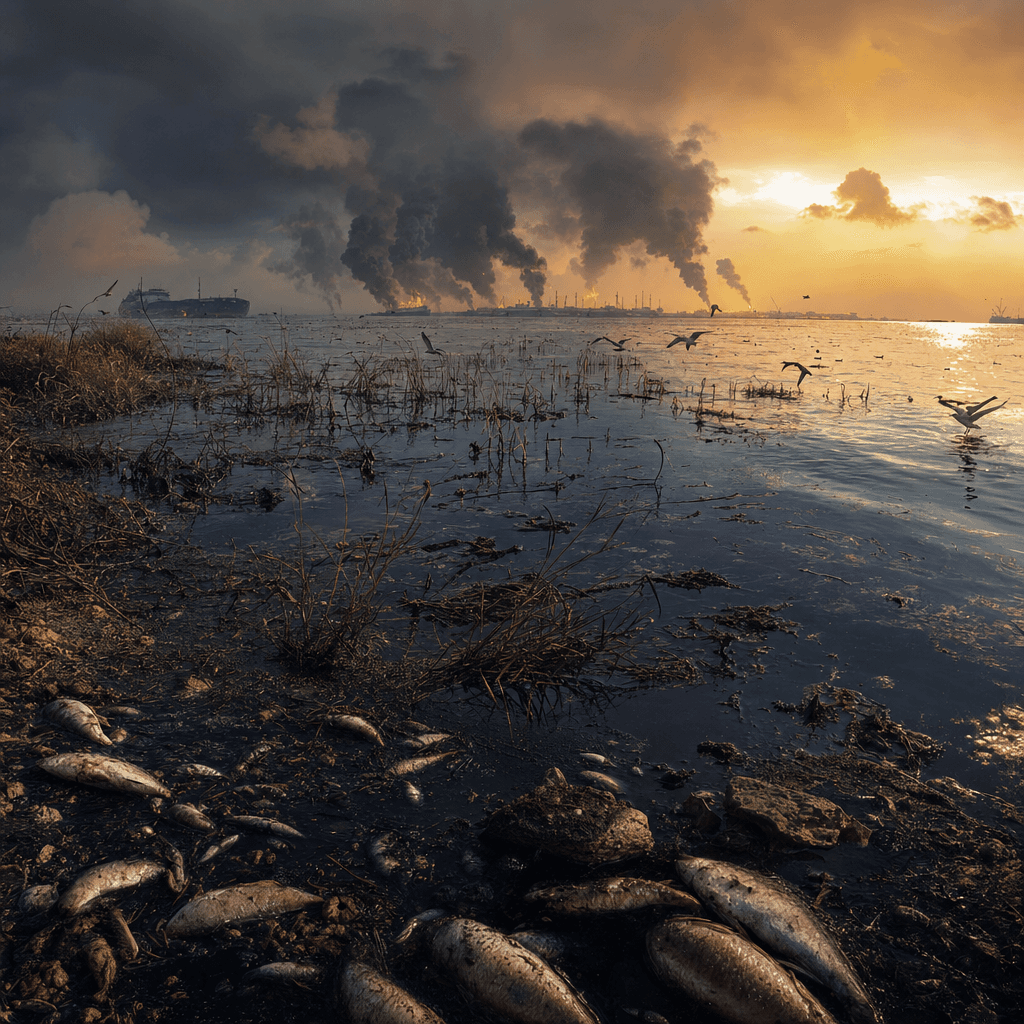
War Turns the Gulf Into a Pollution Battlefield
Strikes on energy sites are spreading toxic fallout across Iran and the Gulf, making cleanup and water security part of the war itself.
The power in this war is not just in missiles and air defenses. It is in the ability to hit oil, gas and maritime infrastructure that the region depends on for electricity, desalination and export revenue. Felix Horne argues in Al Jazeera that the US-Israel campaign against Iran is already creating a pollution problem that will outlast any ceasefire. Burning fuel tanks, debris runoff and oil residues are threatening coastal waters and public health across the Gulf, where contamination can move well beyond the strike zone.
Pollution is now part of the military balance
That matters because the Gulf is not a normal battlefield. It is a closed, fragile energy-and-water system. If oil depots, refineries or tankers are hit, the immediate military effect is visible; the second-order effect is slower and harder to reverse: toxic smoke, contaminated soil, polluted seawater and damaged fisheries. NPR quoted Doug Weir of the Conflict and Environment Observatory warning that attacks on oil facilities drive pollution into air, soil and water, and that Tehran’s poor air-quality profile makes those fires especially dangerous for urban populations.
The strategic lesson is clear: fossil-fuel infrastructure is a coercive target because its destruction multiplies pain far beyond the battlefield. That is why the region’s environmental damage is not just collateral; it is a pressure tool. Iran loses export capacity and incurs cleanup costs. Gulf states face risk to desalination plants and coastal ecosystems. Global markets absorb the shock through higher insurance, freight and energy prices. For readers tracking the wider Conflict picture, this is what modern industrial war looks like: damage that spreads through water systems, food chains and trade routes.
Why this damage lasts after the guns quiet down
Horne’s larger point is historical. The region has seen this before. The 1991 Gulf War left Kuwait’s skies black with smoke and its land and groundwater contaminated for years. The Independent similarly reports that experts expect the Iran war’s environmental toll to persist for decades, especially where bombed fuel depots, refineries and urban areas release soot, heavy metals and toxic chemicals.
The Gulf is especially vulnerable because it is shallow, semi-enclosed and densely wired into desalination. That means even smaller oil spills can linger longer than they would in the open ocean. It also means reconstruction choices will decide whether the next crisis is inevitable. Rebuilding around centralized oil and gas systems preserves the same targets, the same pollution risks and the same shipping choke points, especially the Strait of Hormuz. Rebuilding around distributed renewables does not end war risk, but it lowers the chance that one strike poisons water, air and coastline at once.
What to watch next
The next decision point is whether attacks stay concentrated on energy assets or widen to shipping lanes and port infrastructure. If they do, the environmental and economic effects will deepen fast. Also watch for any post-ceasefire push to assess contamination, fund cleanup and harden desalination and coastal systems. Without that, the pollution will become part of the war’s final settlement.
For Washington and its partners, the implication is blunt: the battlefield is now the Gulf’s ecology. Whoever controls that environment controls more than terrain; they control recovery.
Discover more

Global Politics
US Seizes Iranian Ship, Tensions Surge
The US seizure of the Iranian ship Touska highlights a shift in control over the Strait of Hormuz, favoring Iran's strategic position.
Global Politics
Trump's Conflicting Messages on Iran War
Trump's mixed messages on Iran reflect a strategy of audience management, benefiting Tehran amid a complex geopolitical landscape.
Conflict & Security
Guatemala: El Niño 2026–27 becomes regional security test
UNICEF: 25.8M children face El Niño risks in Latin America; Guatemala maps 188 municipalities for drought and food insecurity amid regional security test.

Economics
Fed's stress-test overhaul is a capital-smoothing exercise
Federal Reserve finalized stress-test overhaul: two-year averaging for bank capital buffers and public input, expected to halve volatility.