Vijay’s 200-Unit Electricity Pledge Is the Real Test
TVK is using a household power subsidy to prove Vijay can govern, not just draw crowds, in Tamil Nadu’s welfare-heavy contest.
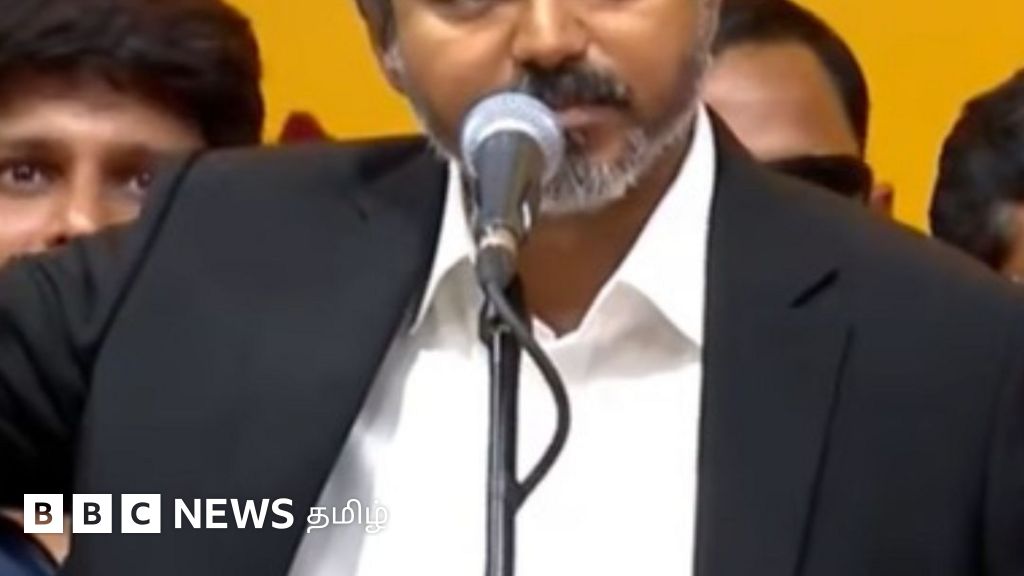
The story is not the number itself; the lever is credibility. BBC News தமிழ் reports that actor-politician C. Joseph Vijay’s Tamilaga Vettri Kazhagam is tying its campaign to a promise of 200 units of free electricity for households, presented as part of a broader set of practical pledges.  BBC News தமிழ் The Hindu says Vijay released the manifesto on April 16 and argued the party was promising only what was “possible, practical, and implementable,” a direct attempt to separate TVK from the state’s usual welfare auction.
  The Hindu
Why this promise matters
Tamil Nadu politics runs on delivery, not rhetoric. Free power is a familiar instrument in the state’s welfare model, which means Vijay is not inventing a new pitch so much as entering an established market for subsidies. That makes the 200-unit promise politically smart: it is concrete, easy to repeat, and immediately legible to households that measure politics in monthly bills. BBC News தமிழ்
But the choice also exposes TVK’s strategy. The party is not trying to out-technocrat the bureaucracy; it is trying to outbid the old Dravidian parties on trust. The Hindu’s reporting shows Vijay mocking DMK and AIADMK promises as similar in substance, while insisting TVK’s version is more honest and workable. The Hindu In other words, he is selling not just a subsidy, but a cleaner claim to competence.
Who benefits — and who gets squeezed
The immediate beneficiaries are the voters TVK is targeting hardest: low- and middle-income households, women managing utility budgets, and younger first-time voters who see Vijay less as a conventional politician than as a brand of disruption. BBC Tamil’s framing of the announcement around “what he said and what he did” underscores that the promise is being used as proof of follow-through, not just campaign theater. BBC News தமிழ்
The pressure falls on the established parties. DMK and AIADMK have spent decades using welfare as their core political currency; Vijay’s pitch says he can speak that language without carrying their baggage. If TVK can make a household subsidy look disciplined rather than reckless, it strengthens the case that the party can govern. If it cannot, the promise becomes ammunition against a newcomer trying to outpromise veterans. For broader context on the national significance of this kind of campaign politics, see  India and Global Politics.
What to watch next
The next test is not the promise, but the implementation menu: how TVK says it will pay for 200 free units, what income or consumption thresholds it applies, and whether it turns that pledge into a full tariff plan. The date that matters is the first post-manifesto accounting — when opponents stop debating the slogan and start asking for the bill. If Vijay can answer that cleanly, he gains governing credibility; if not, he looks like another protest candidate with a better microphone.