Venezuela's Earthquake Orphans Face Traffick
UNICEF warns of trafficking risks for children post-quake
Model Diplomat8 min readLatin America
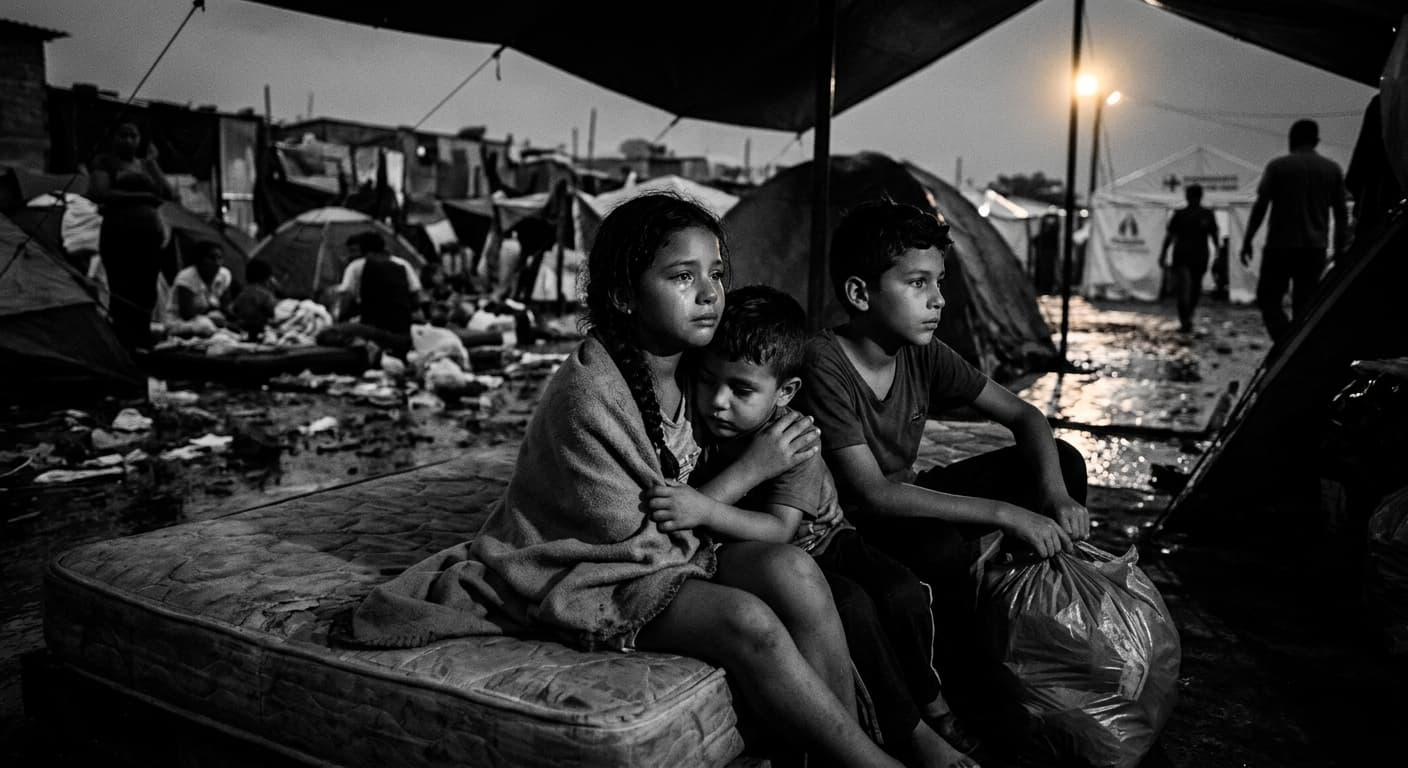
Venezuela's earthquake orphans face a second disaster: the traffickers
After the June 24 quakes killed 3,685 and displaced nearly 18,000, UNICEF warns 680,000 Venezuelan children now face heightened risks of trafficking, sexual exploitation and gang recruitment.
On June 24, 2026, two earthquakes of magnitude 7.2 and 7.5 struck northern Venezuela within less than a minute, killing 3,685 people and leaving 17,907 without homes, according to the latest official figures relayed by the UN humanitarian office (OCHA) on July 8. The confirmed disaster is now converging with a slower, quieter one: 680,000 children in the impact zone are entering a protection vacuum that Latin America's most successful transnational gang, Tren de Aragua, was built to exploit. UNICEF said as much a week after the quakes; the historical record from Nepal, Haiti and Türkiye says the same. The next six months will decide whether Venezuela's earthquake becomes a child-protection catastrophe on the scale of Port-au-Prince in 2010 — or something the international system has, for once, learned to prevent.
The scale, and why children are the pressure point
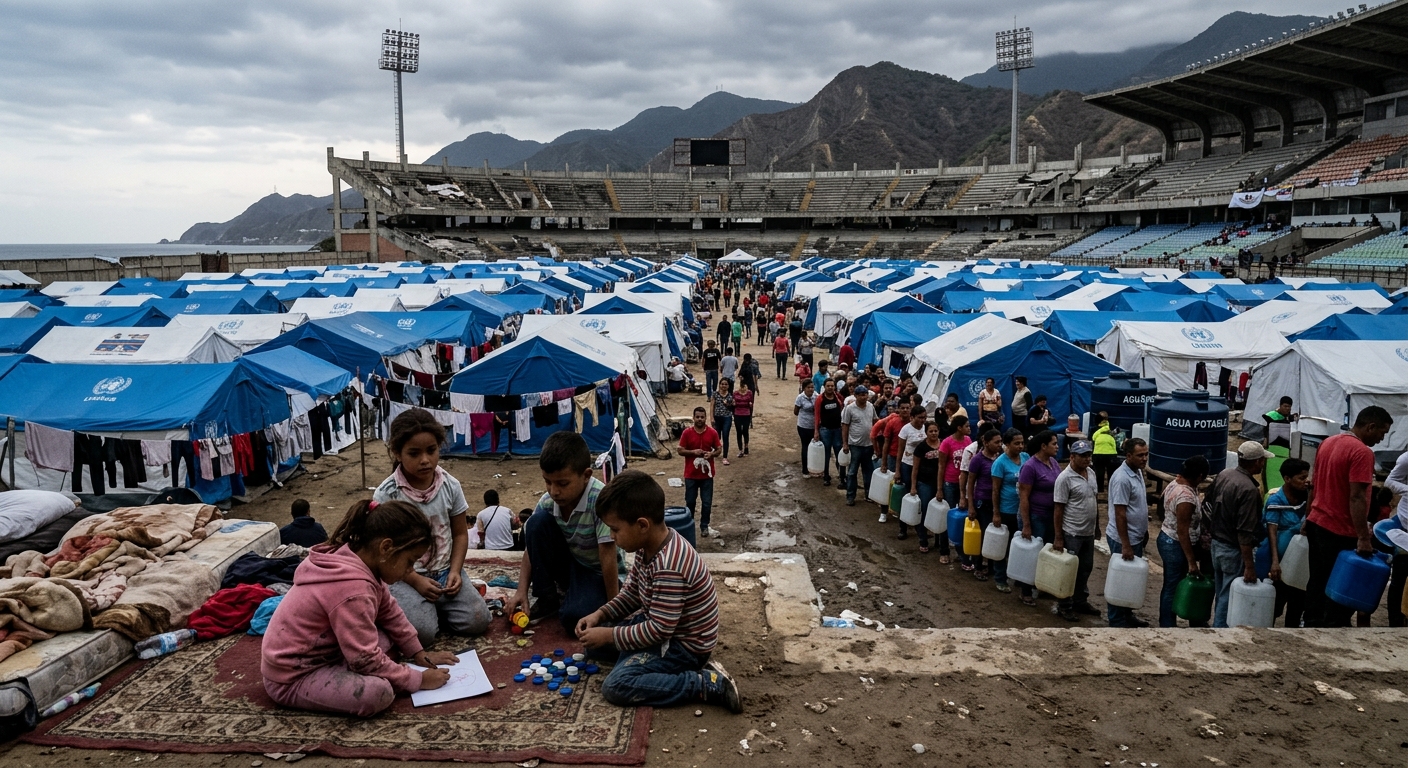
The quakes were the most significant seismic event to hit Venezuela in more than 125 years, according to the US Geological Survey via UN News. The interim government of Delcy Rodríguez has declared seven days of mourning, activated a $200 million reconstruction fund and, per OCHA, designated 87 transition camps with capacity for over 20,000 people. Occupancy already stands at 14,634.
Children are disproportionately represented in every category of harm. UNICEF's June 25 press release estimated that 3.9 million children live in the six affected states — Aragua, Carabobo, Falcón, La Guaira, Miranda and the Capital District. By June 27, the agency had refined its needs assessment: 680,000 of the 1.8 million people requiring assistance are minors. In the Capital District alone,
432 schools — more than a third — have been damaged, and undamaged schools have been converted into shelters, meaning the country has effectively closed its classrooms in the worst-hit region for the foreseeable future.
Al Jazeera reported the death toll had jumped to 3,535 by July 7, with an estimated 60,000 buildings damaged or destroyed and mass burials underway at La Esperanza Cemetery in La Guaira. A crowdsourced tracker cited by Al Jazeera puts the number of missing at over 30,000 — a figure UN OCHA has neither confirmed nor denied. Every unaccounted-for adult is a potential caregiver a child no longer has.
The explicit warning
The UNICEF alert is not couched in the usual diplomatic softness. On June 30, the BBC's Global News podcast reported that the agency had directly warned that children in Venezuela were at increased risk of exploitation and trafficking in the wake of the disaster. UNICEF's own statement on June 25 laid out the mechanism plainly:
"In the hours and days ahead, affected children can face injury, family separation, displacement, distress, and disruptions to services including healthcare, safe water, education and protection." —
UNICEF press release, 25 June 2026
Each of those five conditions is a documented risk factor for exploitation. Family separation produces unaccompanied minors who cannot be registered fast enough. Displacement dumps children into crowded shelters lacking lighting, lockable toilets or vetted staff. Distress makes teenagers receptive to any adult offering money, food or transit. Service disruption removes the schools and clinics through which trafficking is most often detected in Latin America.
The pattern is not speculative. A 2023 study in Disaster Medicine and Public Health Preparedness on Türkiye's February 2023 earthquakes described "earthquake orphans" as "potential victims of violence, organized crime, organ trafficking, drug addiction, sexual exploitation, or human trafficking," and noted the Ministry of Family and Social Services had counted 223 unidentified unaccompanied children within the first five days. In Nepal, a 2017 Cambridge paper documented a spike in trafficking recruitment following the April 2015 quake that killed more than 8,500. And a 2018 cross-country study in International Area Studies Review found a "consistent positive link" between natural-disaster severity and the likelihood of
internal human trafficking across 158 countries.
Venezuela enters this template at a worse baseline than any comparable case.
Why Venezuela is not Türkiye
Türkiye had a functioning family-registry system, a national child-protection agency and, however inadequately, a Ministry of Family and Social Services publishing daily bulletins. Venezuela has none of those in working order.
Al Jazeera's July 2 report, which described La Guaira's hospitals as resembling "a war zone," noted that more than 7.7 million Venezuelans have left the country since 2013, and that roughly one-third of the country's 60,000 registered physicians have emigrated. The Pan American Health Organization found on July 2 that all eight of the health facilities it reviewed in La Guaira, Caracas and Miranda
required immediate outside help, and that one of the missing officials in La Guaira is the coordinator responsible for maternal-care tracking across the state. When the person who knows where the pregnant women are cannot be found, the state's ability to protect newborns collapses on contact.
That is the institutional context in which children are now being separated from parents in the rubble. The country's National Assembly head, Jorge Rodríguez, confirmed on July 6 that 12,800 people are staying in 80 shelters across Caracas and La Guaira. Al Jazeera's on-the-ground reporting from Catia La Mar quoted a volunteer describing federal government aid as arriving
three days late, or not at all. Rescue is being driven by neighbours, volunteer firefighters and international teams — not by the ministries that would normally register a missing child.
The predator waiting in the wings
The specific reason Venezuelan child-protection experts are alarmed — and the reason this story has geopolitical weight the wires have missed — is that the disaster zone overlaps almost perfectly with the historical operating territory of Tren de Aragua, the country's dominant transnational criminal organisation.
Tren de Aragua, founded in 2014 out of the Tocorón prison in Aragua state, expanded into a portfolio of at least 20 crimes, "including extortion, kidnapping, robbery, fraud, illegal gold mining and scrap smuggling, as well as murders and contract killings, drug trafficking and money laundering, human trafficking, migrant smuggling and the sale of weapons," according to a BBC Mundo interview with criminologist Ronna Rísquez. Chilean police files reviewed by BBC Mundo document how the gang built a business model around Venezuelan migrants at the exact chokepoints where displaced people move — border trochas, coastal ports, bus terminals, informal settlements.
The gang's Tocorón headquarters was raided in September 2023 and its leader, Héctor "Niño" Guerrero, escaped abroad. In 2025, President Donald Trump designated Tren de Aragua a foreign terrorist organisation and invoked the Alien Enemies Act to deport alleged members. But InSight Crime's Jeremy McDermott told NPR in March 2025 that while the gang's central command is weaker, "many Venezuelan criminals are freelancers with no links to the gang" — precisely the diffuse recruitment infrastructure that thrives on desperate teenagers in shelters.
Rísquez's own assessment to BBC Mundo is the operative one: recruitment "is constant and through various channels: beauty contests, modelling agencies, through school classmates or family members who convince them to travel and end up being sexually exploited in other countries." The three necessary conditions — a large pool of undocumented minors, disrupted schools, and cross-border transit routes — are being produced in La Guaira at industrial scale.
The financing gap that decides the outcome
The single most consequential number in this story is not a death toll — it is the funding shortfall. UNICEF's 2026 Humanitarian Action for Children appeal for Venezuela stood at $137.6 million and was only 35 percent funded before the earthquakes struck. The agency now says it needs an additional $52 million for the earthquake response alone. On July 8, from Caracas, UN Under-Secretary-General for Humanitarian Affairs Tom Fletcher told a ministerial-level briefing that the wider UN response requires
an additional $296 million to reach 1.3 million people over six months.
That is where the story turns. Child-protection lines — case management, family tracing, child-friendly spaces, psychosocial support, birth-registration teams — are typically the first cut when appeals go underfunded. The R4V regional response plan for Venezuelan refugee and migrant children, published by the UN Migration Network, had already flagged unaccompanied and separated children as facing "significant risks of human trafficking" before the earthquakes. Every dollar that does not arrive is a child who is not registered.
The US has pledged $300 million in aid channelled through NGOs and the UN, and deployed 900 SOUTHCOM personnel to help reopen Simón Bolívar International Airport, according to Al Jazeera. That is meaningful — but material damage from the quakes has been estimated by UNDP satellite analysis at $6.7 billion. The gap between what the response needs and what donors will fund is where trafficking recruiters do their best work.
What to watch
The next 90 days will produce or foreclose the child-protection outcome. Specific catalysts:
- The OCHA addendum to the 2026 Humanitarian Response Plan. Fletcher told the July 8 ministerial briefing the UN is preparing a formal $296 million supplementary appeal covering shelter, health, WASH, food security, protection, education and early recovery. Whether donor pledges close the gap — and how much is ring-fenced for child protection — will be visible in the
OCHA financial tracking service over the coming weeks.
- Venezuela's post-disaster needs assessment (PDNA). Foreign Minister Yván Gil requested UN activation of a full PDNA on July 8, alongside a $200 million initial reconstruction fund. The PDNA will be the primary document determining whether external financing flows to social services or exclusively to infrastructure.
- The reopening — or non-reopening — of the 432 damaged schools in the Capital District. UNICEF's Manuel Rodríguez Pumarol told journalists on June 30 that "sustained funding will be essential to maintain the response in the coming weeks." Schools are the single most effective child-protection asset in any post-disaster environment; the timeline for reopening them will determine the length of the exposure window.
- The first PAHO shelter-condition report. With disease risk already rising in overcrowded camps, PAHO and UNHCR assessments over the next month will indicate whether shelters are being upgraded — lighting, lockable sanitation, registered case workers — or hardening into the kind of long-term informal settlements that Nepal, Haiti and Türkiye all failed to close.
The Bottom Line
Venezuela's earthquakes produced 680,000 children in acute need inside a country whose child-protection system had already been hollowed out by a decade of emigration and whose most powerful criminal export, Tren de Aragua, is a human-trafficking network built for exactly this population. The question is no longer whether children will be exploited in the aftermath — the historical record from Haiti, Nepal and Türkiye makes that near-certain at some scale — but whether the $296 million UN appeal is funded fast enough, and whether child protection is treated as infrastructure rather than an add-on. If the money arrives late, the earthquake's second death toll will be counted in trafficking cases, not corpses, and it will be counted for years.
Discover more
US Politics
House Ethics Committee Pushes Sexual Miscond.
The House Ethics Committee has shifted responsibility for sexual harassment settlement records to the Office of Congressional Workplace Rights, complicating disclosure efforts.
Global Politics
Trump's Conflicting Messages on Iran War
Trump's mixed messages on Iran reflect a strategy of audience management, benefiting Tehran amid a complex geopolitical landscape.

International Relations
Pakistan's Key Role in US-Israel-Iran Meddle
Pakistan is seeking to mediate the US-Israel-Iran conflict, balancing high-stakes diplomacy against severe economic pressures and steep regional challenges.

Economics
Fed's Amex AML order puts correspondent banking on notice
Federal Reserve's Amex AML order requires board-level controls and a 90-day plan; OCC fined the bank $350 million over enterprise-wide deficiencies.