US–Iran War: Hormuz Strikes Reset Oil Risk
Renewed attacks in Hormuz raise oil prices and tensions.
Model Diplomat8 min readMiddle East
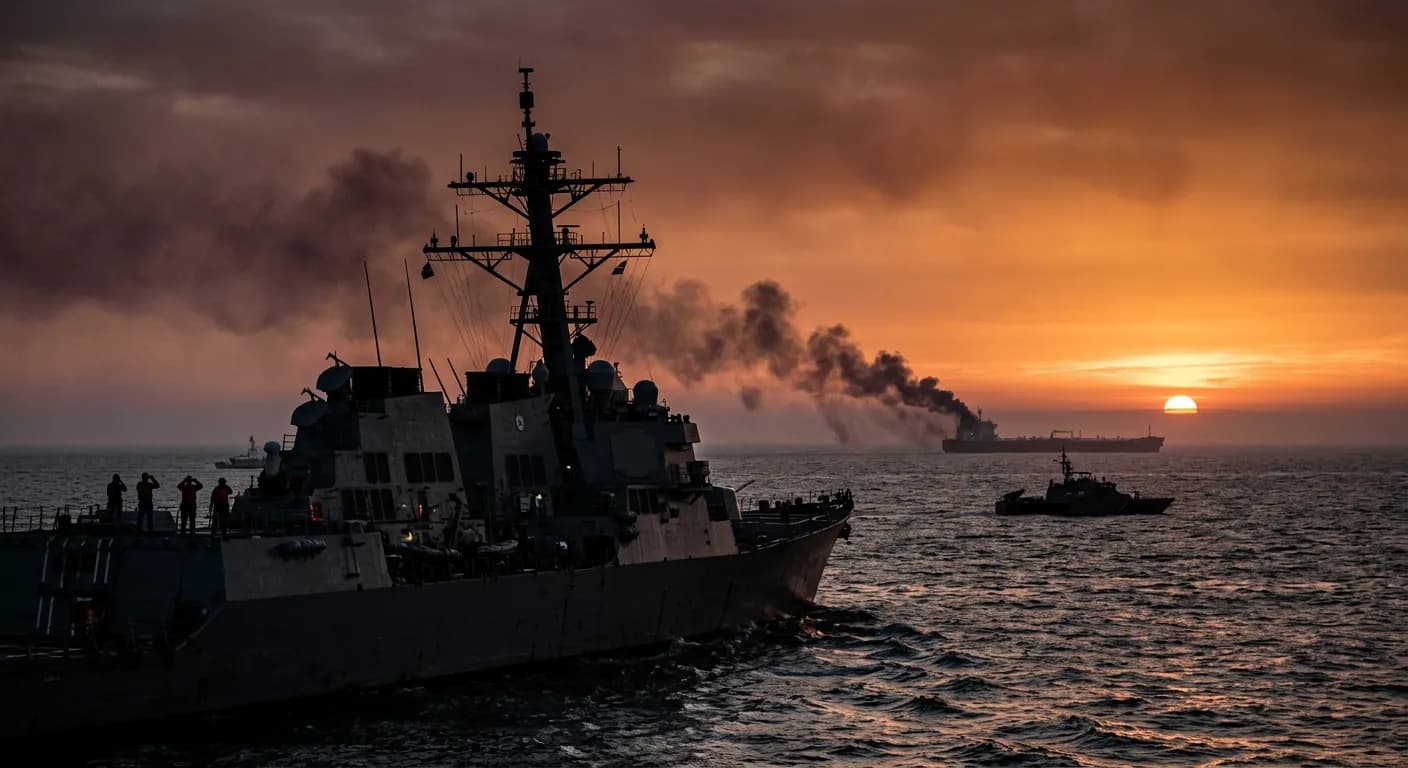
US–Iran War: Hormuz Strikes Shatter Ceasefire, Reset Oil Risk
Renewed US–Iran attacks in the Strait of Hormuz on July 7–8, 2026 pushed Brent to $78 and exposed the ambiguity at the heart of the June ceasefire deal.
Iran's control of the Strait of Hormuz is no longer a wartime aberration — it is the price the world is now paying, in every barrel, for a ceasefire built on a single ambiguous clause. The July 7 attacks on three tankers, followed by US strikes on more than 80 Iranian targets and Iranian retaliation against US bases in Bahrain and Kuwait, drove Brent crude up roughly 6% to $78 a barrel and led President Donald Trump to declare the June 17 memorandum of understanding (MoU) with Tehran "over," according to Al Jazeera and
the BBC. The load-bearing point is smaller than the headlines: Article 5 of the MoU never resolved who governs the strait — and until it does, a structural risk premium now sits on top of every barrel of Gulf crude and every LNG cargo out of Qatar.
What actually happened
The trigger was maritime, not nuclear. On July 7, the Marshall Islands-flagged Qatari LNG carrier Al Rekayyat, the Saudi-flagged crude tanker Wedyan, and the Liberian-flagged Cyprus Prosperity were struck while transiting close to Oman's coast — the US Navy-recommended southern corridor, not the Iran-approved northern route hugging Bandar Abbas. UK Maritime Trade Operations logged the Al Rekayyat hit near Limah, Oman, and the US-led Joint Maritime Information Center raised the threat level to "severe" for the first time since June 15, per Al Jazeera. Qatar called it an "unacceptable assault… on international navigation." Iranian state media said the LNG carrier had "ignored warnings"; Tehran did not directly claim the attacks.
Washington's response ran on two tracks. First, the US Treasury's Office of Foreign Assets Control revoked General License X1, the 60-day waiver on Iranian oil sales issued on June 21, with a wind-down deadline of 12:01 a.m. EDT on July 17. Second, US Central Command struck "over 80 targets" including air defenses, coastal radar, anti-ship missiles, and more than 60 IRGC small boats — the swarm platform Iran uses to close the strait. Iranian state television reported eight army personnel killed in Bandar Abbas and Bushehr. The IRGC then claimed 85 strikes on US bases at Bahrain's Sheikh Isa airbase and Camp Arifjan in Kuwait, and shot down an MQ-9 drone.
By late Wednesday, Trump — at the NATO summit in Ankara — called Iranian leaders "scum" and "cuckoo," said the deal was "over," and told reporters he saw further talks as "a waste of time," while adding that "anything that happens will be over quickly." NATO Secretary-General Mark Rutte called the US strikes "absolutely necessary." Iran's Foreign Minister Abbas Araghchi said the US had "rendered key, fundamental elements of the war-ending agreement ineffective."
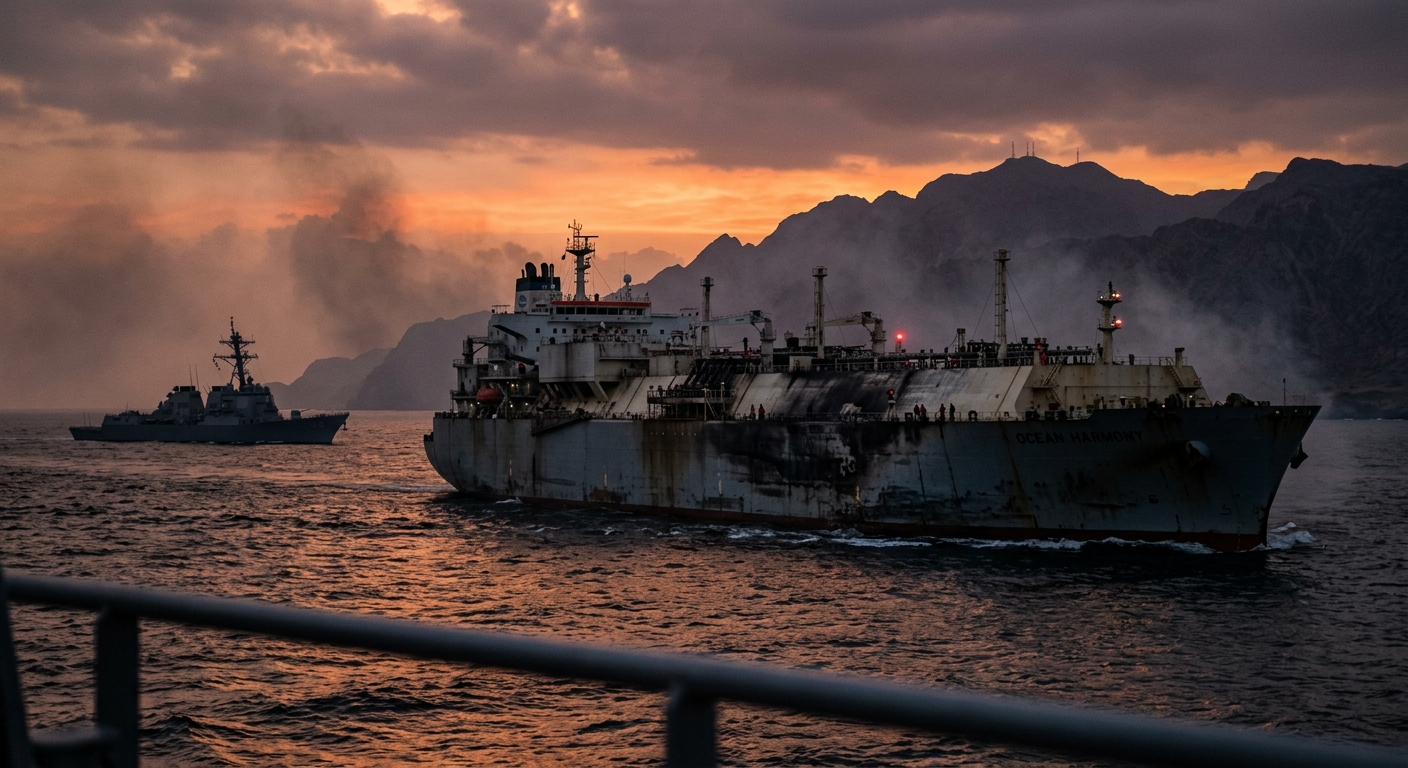
The Article 5 problem — the ceasefire's design flaw
The clause that broke the deal is short and studiedly vague. Article 5 of the MoU commits Iran to use its "best efforts for the safe passage of commercial vessels, with no charge for 60 days only, from the Persian Gulf to the Sea of Oman." The text — quoted by Al Jazeera's Tehran bureau — is doing two incompatible things at once.
Iranian officials read it as recognition of Tehran's authority to manage the strait. "Recognise the new and Iranian order in the Strait of Hormuz," wrote Ebrahim Azizi, spokesman for Iran's parliamentary Commission on National Security. Majid Shakeri, adviser to chief negotiator Mohammad Bagher Ghalibaf, told state TV that "revenue is subordinate to control." Washington reads the same words as an Iranian obligation not to impede transit, with no veto over which route ships take. That interpretive gap is why Iran fired on ships in the US-preferred southern corridor: to police its claim that only the northern route it controls is "safe."
The design is Iranian in origin. Beijing and Tehran spent the war piloting a de facto toll booth, with at least two vessels paying transit fees in yuan by late March, Lloyd's List reported. Iran's Persian Gulf Strait Authority — itself under US sanctions — began issuing "passage permits," per BBC Verify. The MoU papered over the sovereignty question. July 7 stripped the paper off.
The market has priced in a permanent premium
The most useful way to read the price action is not the +6% spike, but the floor it revealed. Brent had fallen back to roughly $73 in the first week of July as Al Jazeera reported traders positioning for a Hormuz-glut narrative. It bounced instantly to $78 on the strikes and held there through Trump's "over" comments. That is the geopolitical risk premium being repriced in real time — and it is unlikely to leave.
The reason is structural, not sentimental. In 2024, roughly 20 million barrels per day of crude and petroleum products transited Hormuz — about 27% of global seaborne oil trade and 22% of global LNG, according to the Congressional Research Service. The Saudi East-West pipeline and the UAE's Abu Dhabi crude line together have only about 2.6 million bpd of spare bypass capacity. There is no alternative for Qatari LNG at all. Traffic through the strait in early July was still running at only one-third to one-fifth of pre-war levels, per Al Jazeera reporting citing Kpler.
Insurance is doing the pricing work. War-risk premiums for Hormuz transits — historically priced below 0.25% of hull value — surged fivefold within days of the February 28 outbreak, Al Jazeera reported in June. Marina Treyz, an insurance analyst, told
NPR after the April reopening that "300% higher insurance rates … will be in place for the foreseeable future." Saul Kavonic of MST Financial told Al Jazeera on July 8 that Hormuz throughput will "remain below 50 percent of pre-war levels for many months, with periodic flare-ups in hostilities."
That is the story. Every serious desk is now modeling Hormuz as a permanently elevated-risk asset, not a temporarily disrupted one.
Who benefits, who loses
China wins strategic depth. Beijing bought roughly 1.38 million barrels per day of Iranian crude in 2025 — about 12% of Chinese imports — according to Columbia's Center on Global Energy Policy, cited by the BBC. During the war, small "teapot" refineries kept the flow moving even under blockade; Iran and China piloted yuan-denominated transit fees, adding what Natixis's Alicia Garcia-Herrero called "incremental pressure" on dollar hegemony. A Hormuz that Iran governs is a Hormuz where China's oil supplier has leverage over America's Gulf allies. Foreign Minister Wang Yi has publicly urged both sides toward de-escalation while calling for the strait to reopen "as soon as possible," giving Beijing the mediator's role Washington used to occupy.
Gulf producers lose twice. Qatar had a 266,000 m³ LNG carrier hit; Saudi Arabia's Bahri lost a supertanker. Both governments issued unusually sharp condemnations of Iran — a break from the studied neutrality Riyadh maintained through the war's early months. The UAE's Anwar Gargash said Iran had shown it was "incapable of committing to the requirements of de-escalation." Yet the Gulf Cooperation Council also opposes US-style toll structures. Riyadh and Abu Dhabi want the strait de-militarised without Iran extracting rents and without the US turning the waterway into a permanent Fifth Fleet corridor. There is no clean version of that outcome on the table.
Iran loses the only tangible upside of the MoU. The Treasury waiver had lifted sanctions on Iranian oil sales through August 21 and unfroze roughly $6 billion in Qatari-held assets. That waiver is now dead. Iran's crude exports had already collapsed from about 2 million bpd to below 300,000 bpd under the US naval blockade, according to Kpler data reported by Al Jazeera. President Masoud Pezeshkian, who staked political capital on the MoU, is now under attack from hardliners such as Tehran MP Mahmoud Nabavian, who called the deal "pure loss."
Trump loses a signature foreign-policy win. The MoU was pitched as an "immediate and permanent termination of military operations on all fronts," per its 14 points. Three ceasefire violations in three weeks is not a durable win — and the president's Ankara comments suggest he knows it. His envoys Steve Witkoff and Jared Kushner remain in play, but he told reporters, "I don't care" whether talks resume.
The primary-document story Congress is quietly telling
The most sober analysis of where this is heading was written before the July 7 attacks. A May 13 Congressional Research Service memo, U.S.-Iran Ceasefire and Negotiations, described the ceasefire as being on "life support" and warned that "Iran's de facto closure of the Strait of Hormuz and a retaliatory U.S. blockade of Iranian shipping continue, with the compounding of global economic disruptions." Trump's own War Powers letter to Speaker Mike Johnson,
transmitted after the February 28 strikes, stated that the mission was to advance "vital United States national interests, including ensuring the free flow of maritime commerce through the Strait of Hormuz." Six months later, that stated interest is precisely where the deal has broken.
CRS also flagged the recurring pattern: the US struck Iran on June 26 and 27 after tanker incidents, both sides "stood down," and then the cycle repeated. July 7–8 is the third iteration. Each one shortens the market's memory of stability and lengthens the risk premium.
What to watch next
- July 17: OFAC wind-down deadline for the revoked oil waiver. Any Iranian cargo loaded before July 7 must be sold by this date, with proceeds placed in "blocked, interest-bearing accounts." Iran will read this as sanctions reimposition; watch for a hardening of the northern-route toll regime.
- August 21: original expiry of the 60-day MoU ceasefire window. If no permanent deal is signed by then, the legal architecture halting Israeli operations in Lebanon lapses simultaneously.
- Khamenei successor consolidation: the funeral of Ayatollah Ali Khamenei — killed February 28 — ends this week. The new supreme leader's first Friday sermon will signal whether Iran is escalating or stalling. IRGC hardliners have released satellite images of the Ankara hotel where Trump stayed, per Al Jazeera.
- Doha channel: Qatari Prime Minister Sheikh Mohammed bin Abdulrahman said talks with Witkoff and Kushner are continuing at technical level. A shift to Oman-mediated talks on strait governance would be the earliest sign of a face-saving off-ramp.
Diplomat View
The July 7–8 strikes are not a return to war — they are the market's confirmation that the June MoU never actually resolved the Hormuz question. Iran will keep testing which route it can enforce; the US will keep escorting through the southern corridor; insurers will keep pricing Brent with a $5–10 geopolitical premium that will not come off until Article 5 is rewritten with either explicit Iranian tolling rights or explicit US–GCC freedom-of-navigation guarantees. Neither side has the domestic room to concede. The forecast: Hormuz throughput stays at 40–60% of pre-war volumes through the third quarter, Brent holds a $72–85 range, and a fourth flare-up arrives before Labor Day. This view revises if two conditions hit together: OFAC pauses the July 17 wind-down and Iran publishes a revised transit protocol accepting the southern corridor. Absent both, the ceasefire is nominal and the premium is permanent.
The Bottom Line
The bottom line: the July 7 attacks did not restart the US–Iran war — they confirmed that the June ceasefire is a fiction written around a clause neither side agrees on. Until sovereignty over the Strait of Hormuz is renegotiated in plain language, the world will keep paying an Iran-Hormuz premium on every barrel and every LNG cargo, no matter what Washington and Tehran sign next.
Discover more
US Politics
House Ethics Committee Pushes Sexual Miscond.
The House Ethics Committee has shifted responsibility for sexual harassment settlement records to the Office of Congressional Workplace Rights, complicating disclosure efforts.
US Politics
SNAP Food Assistance Faces Legal Challenges
In 2026, SNAP faces stricter eligibility rules and mounting legal challenges, threatening food assistance for the millions of Americans who rely on the program.

India
Delhi CM Rekha Gupta Blasts Opposition's Delm
Delhi CM Rekha Gupta's remarks on women's quota defeat reveal BJP's strategy for the 2029 Lok Sabha elections, focusing on delimitation.

Economics
Fed's Amex AML order puts correspondent banking on notice
Federal Reserve's Amex AML order requires board-level controls and a 90-day plan; OCC fined the bank $350 million over enterprise-wide deficiencies.