US Warns of Atrocities in El-Obeid
Concerns rise over RSF forces encircling Sudanese city
Model Diplomat3 min readAfrica
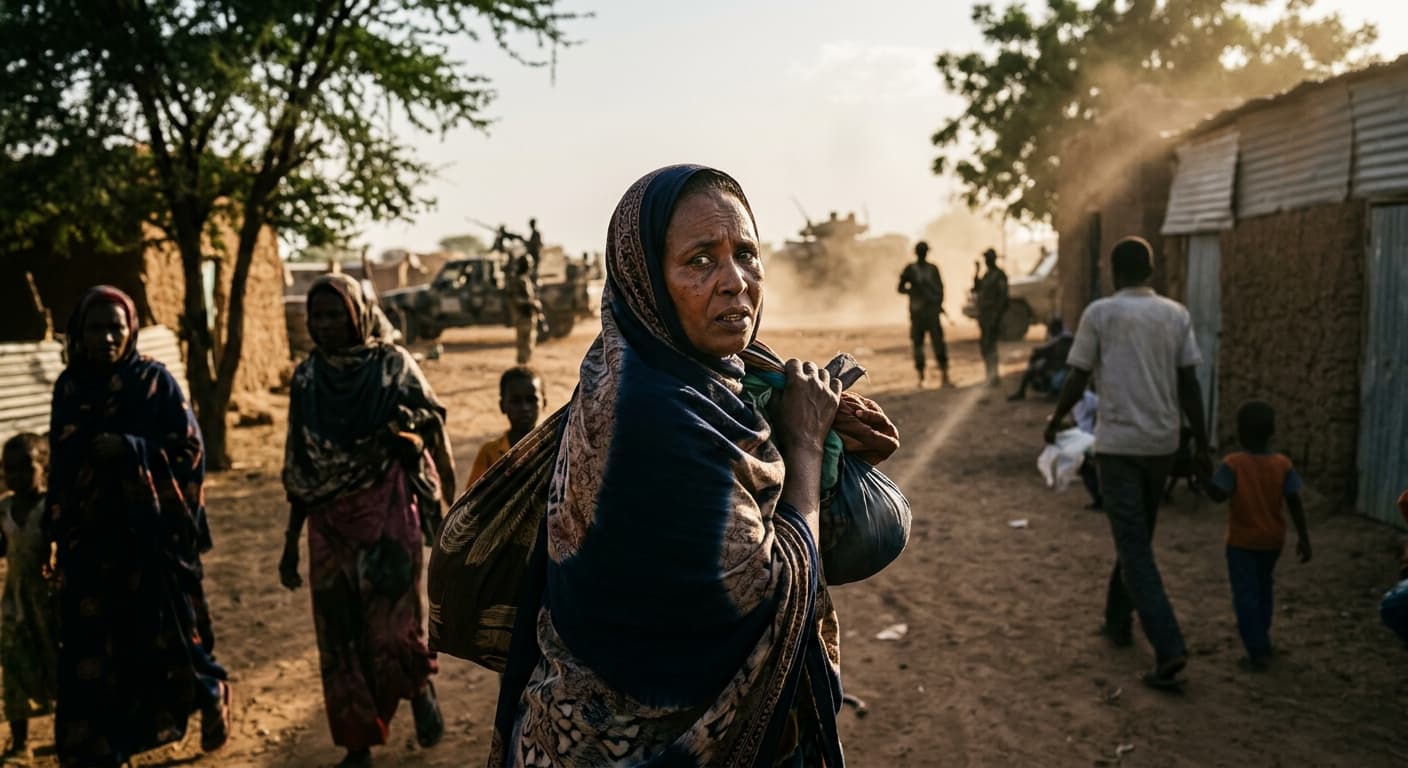
RSF Encircles Sudan's El-Obeid—US Warns of Imminent Atrocities
Washington joins international alarm over Rapid Support Forces buildup around city of 500,000, invoking genocide precedent from 2025
The United States has raised the alarm over
Rapid Support Forces forces massing around el-Obeid, Sudan's North Kordofan capital, warning that mass atrocities are imminent if the paramilitary group launches an assault. The State Department statement, issued Monday, came as the UN Security Council and a coalition of 28 Western nations—including Britain, France, and Germany—echoed identical concerns about the encirclement of a city of roughly 500,000 civilians.
The military picture is stark. UN observers report substantial RSF reinforcements around el-Obeid, positioning the group to choke off the city in what UN officials describe as a "potential ground offensive." More visceral: the UN Human Rights Council
documented 50 civilians killed by RSF drone strikes in 10 consecutive days across el-Obeid and surrounding North Kordofan state. The US State Department called the risk of "mass atrocities" explicit, demanding the RSF and allied forces "cease any actions that could endanger civilians, impede humanitarian assistance, or contribute to further atrocities."
The strategic stakes cut deeper than el-Obeid itself. The city anchors the vast Kordofan region—crucial agricultural land between SAF (Sudanese Armed Forces)-controlled eastern territory and RSF-dominated western Darfur. Control here would consolidate the RSF's territorial footprint after more than three years of war that has killed tens of thousands and displaced nearly 14 million people.
The El-Fasher Precedent Haunts Diplomacy
What gives the warnings teeth is not speculation about capability but documented recent atrocity. The RSF took al-Fasher, Darfur's largest city, last October after an 18-month siege. UN investigators subsequently found the offensive "bore the hallmarks of genocide"—mass killings, systematic rape, looting of civilian infrastructure.
Volker Türk, the UN's human rights chief, invoked that playbook directly: "We have seen this playbook before…and cannot now allow a repeat of the preventable atrocities we documented in al-Fasher." El-Obeid has already endured siege-like conditions for over 18 months, leaving civilians malnourished and vulnerable to collapse of remaining aid networks.
The US and allies framed el-Obeid as a threshold moment—the last window to prevent replication of documented genocide through diplomatic or pressure mechanisms. That framing reflects weakness as much as alarm: despite months of international warnings on al-Fasher, the city fell. The RSF faced no sanctions, no military interdiction, no material cost to its offensive.
What Moves Next
Watch three indicators. First, whether Western capitals move beyond statements to targeted sanctions on RSF leadership and foreign financial backers. Earlier investigations linked UAE logistics and financing networks to RSF supply chains, yet the 28-nation coalition statement avoided naming them—a deliberate restraint. Second, whether the SAF and RSF implement agreed ceasefires or whether the encirclement escalates ground combat. Third, the pace and feasibility of civilian evacuation;
the UN Security Council demanded safe passage for those seeking to flee.
The broader truth: US warnings signal monitoring, not deterrence. Without enforcement—sanctions, military aid to the SAF, or direct pressure on Gulf and African backers—el-Obeid may follow el-Fasher's trajectory.
Discover more

Global Politics
US Seizes Iranian Ship, Tensions Surge
The US seizure of the Iranian ship Touska highlights a shift in control over the Strait of Hormuz, favoring Iran's strategic position.
Global Politics
Trump's Conflicting Messages on Iran War
Trump's mixed messages on Iran reflect a strategy of audience management, benefiting Tehran amid a complex geopolitical landscape.
India
UN Expert Albanese: India Violates Law
UN Rapporteur Francesca Albanese accuses India of breaching international law, spotlighting human rights concerns in Kashmir and prompting diplomatic pushback.

Conflict & Security
Drone Warfare Killing Aid Workers at Unprec
Over 1,000 humanitarian workers killed in three years as cheap armed drones collapse legal protections. Gaza, Sudan, Ukraine, and DRC see deliberate targeting of aid convoys and hospitals with zero prosecutions.