US-Venezuela Strike Kills Tren de Aragua Boss
A joint military operation marks a shift in US-Venezuela relations.
Model Diplomat3 min readAmericas
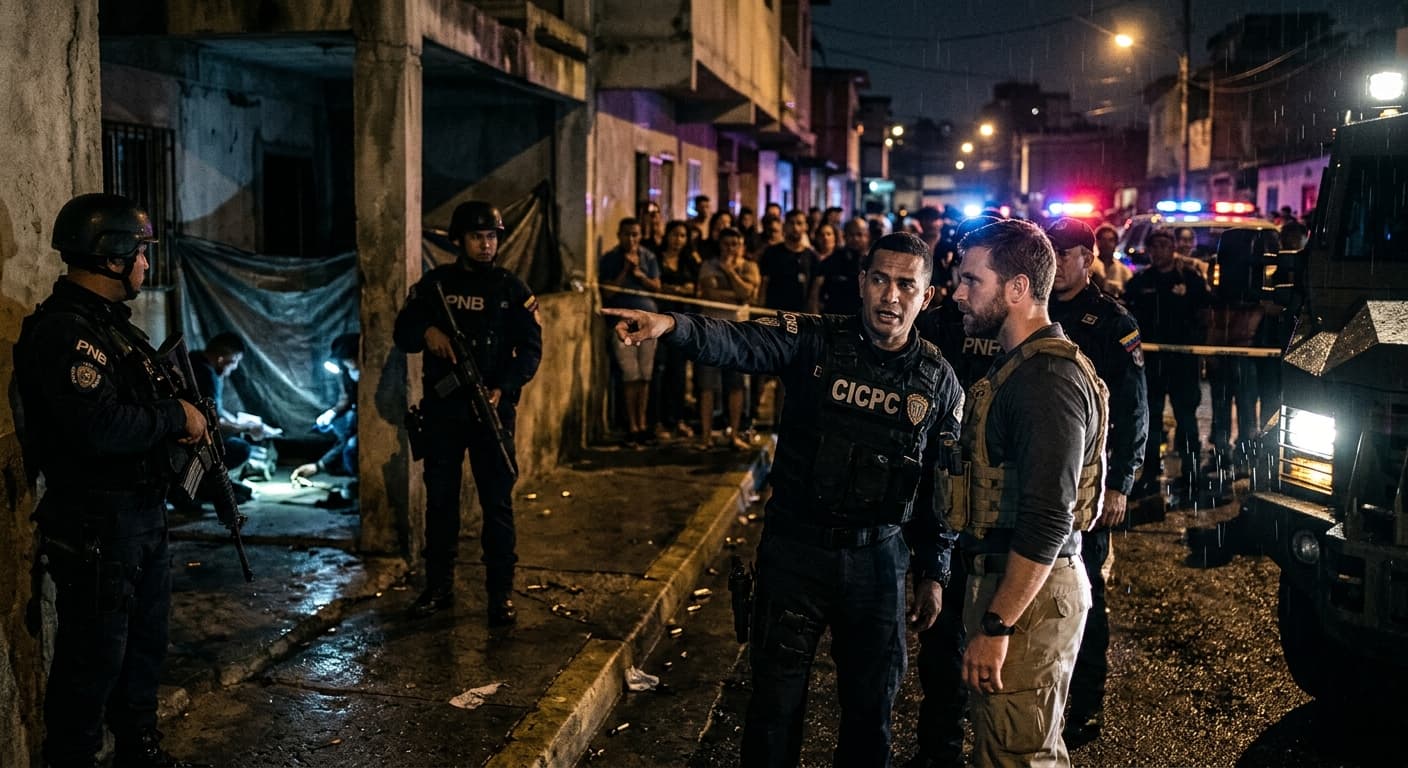
US-Venezuela Strike Decapitates Tren de Aragua Gang
The joint military strike killing gang leader Niño Guerrero signals a highly transactional, unexpected security alignment between Washington and Caracas.
In a dramatic shift in inter-American security relations, military forces from the United States and
Venezuela have partnered in a high-profile operation to eliminate Héctor Rusthenford Guerrero Flores, the fugitive leader of the transnational Tren de Aragua gang. According to
France 24, Guerrero—commonly known as "Niño Guerrero"—was killed in Venezuela’s southeastern state of Bolívar following a coordinated intelligence and military campaign. U.S. President Donald Trump announced that the U.S. Southern Command conducted a "swift and lethal kinetic strike" to target the gang boss, presenting video footage of the blast on social media, as reported by the
BBC. The action marks a stark departure from years of diplomatic hostility between Washington and Caracas, highlighting a pragmatic convergence of political interests for both administrations.
The Convergence of Convenience
For Washington, the strike represents a critical milestone in its highly publicized battle against Latin American organized crime. The Trump administration previously designated Tren de Aragua as a foreign terrorist organization, placing it in the same category as Islamic State, and had offered a $5 million bounty for Guerrero's capture. This direct military action in South American territory underscores the White House’s expanded doctrine of using kinetic military force against non-state criminal actors in the hemisphere. By asserting that the gang was engaging in "irregular warfare," the administration has normalized the use of targeted airstrikes against cartel infrastructure, treating criminal enterprises as active military combatants.
For Venezuela, collaborating with its chief geopolitical adversary represents a calculated bid for pragmatic rehabilitation. The Venezuelan government confirmed its involvement, noting that Guerrero was killed during clashes in the mining-heavy Bolívar state, according to Al Jazeera. By facilitating the elimination of a domestic gang leader who controlled lucrative illegal gold mines and ran a lawless parallel authority from the Tocorón prison until his 2023 escape, Caracas gains two valuable assets. First, it eradicates a rival power center that undermined sovereign control over southern Venezuela's resource wealth. Second, it establishes a transactional security channel with Washington that could serve as a precursor to sanctions relief or diplomatic re-engagement.
Power Shifts and Systemic Fallout
The immediate loser in this development is the command structure of Tren de Aragua, which has lost its central coordinating figure. Under Guerrero's leadership, the syndicate expanded aggressively from a provincial prison gang into a multi-million-dollar transnational empire stretching across Colombia, Chile, and Peru. However, history suggests that decapitating a syndicate rarely dissolves its underlying infrastructure. Instead, it triggers violent fragmentation as regional lieutenants scramble to control local human trafficking, extortion, and smuggling rackets.
Furthermore, this operation signals a profound shift for regional sovereignty in Latin America. Other governments in the region, particularly those that have struggled to contain Tren de Aragua's expansion, will have to fast-track their own security alignments. The spectacular nature of the strike proves that U.S. Southern Command can project lethal force inside sovereign territory when local regimes are willing to bargain.
What to Watch Next
The immediate focus will shift to how Caracas leverages this cooperation. Watch for discussions between Washington and Caracas regarding sanctions adjustments, particularly in the energy and mining sectors, as a quid pro quo for Venezuela's role in the Bolívar state operation.
Additionally, monitoring the internal power struggles within the remnants of Tren de Aragua will be critical as the gang's regional nodes in Bogotá, Lima, and Santiago react to the power vacuum. Security analysts will also closely watch whether other Latin American capitals seek similar joint kinetic assistance from the U.S. military to target transnational cartels within their own borders.
Discover more

Global Politics
US Seizes Iranian Ship, Tensions Surge
The US seizure of the Iranian ship Touska highlights a shift in control over the Strait of Hormuz, favoring Iran's strategic position.

Conflict & Security
Drone Warfare Killing Aid Workers at Unprec
Over 1,000 humanitarian workers killed in three years as cheap armed drones collapse legal protections. Gaza, Sudan, Ukraine, and DRC see deliberate targeting of aid convoys and hospitals with zero prosecutions.

Global
World Normalises Taliban as Afghan Women Eras
UN data shows Afghan women erased from public life as Russia recognises the Taliban, EU hosts officials in Brussels, and ICC warrants for gender persecution go unenforced.
Conflict & Security
West Africa Food Crisis: Three Shocks in 2026
Conflict, climate extremes, and the Strait of Hormuz closure drive a severe food crisis in West and Central Africa, with fertilizer prices surging 80% and millions displaced.