US Troop Drawdown in Germany
Germany responds to US troop cuts with a call for European rearmament.
Model Diplomat3 min readEurope

Germany Says US Drawdown Shifts Leverage to Europe
Washington is cutting 5,000 troops from Germany. Berlin is using the shock to force a European defense debate NATO can no longer defer.
Washington holds the leverage because it controls the troops, the timeline, and the uncertainty. The Pentagon has announced it will withdraw about 5,000 US troops from Germany over the next six to 12 months, while NATO is still seeking details and top Republicans have voiced concern about the plan’s strategic logic. Berlin’s response was notable: rather than publicly fight the move, German Defense Minister Boris Pistorius framed it as another warning that Europe must carry more of its own defense burden. That is less acquiescence than repositioning. Germany is trying to turn a signal of dependence into political cover for faster European rearmament. Reuters
BBC
DW
Why Berlin is not panicking
Germany still hosts about 36,000 US troops, the largest American military presence in Europe, including critical infrastructure at Ramstein Air Base and the Landstuhl military hospital network. That means a 5,000-troop reduction is politically loud, but not a clean US exit. Berlin’s calculation is that the core architecture of US power projection in Europe remains intact even after a cut, which gives German officials room to argue for more European capability without declaring a rupture in the alliance. BBC
DW
The historical parallel matters. In 2020, Donald Trump moved to pull 12,000 troops from Germany; Congress blocked parts of that effort, and Joe Biden later reversed the plan. That precedent explains two things now. First, allies are waiting for implementation details before treating this as a settled strategic shift. Second, congressional Republicans matter: if senior Republicans are already uneasy, this drawdown may prove easier to announce than to fully execute. BBC
Reuters
What this changes for NATO
The immediate loser is allied certainty. NATO can adapt to smaller US footprints; it struggles more with surprise, mixed political signals, and unclear force-posture planning. That is why alliance officials are pressing for details and why German officials have been warning against “surprises” as Washington conducts a broader Europe force review. Reuters
POLITICO
The beneficiary, paradoxically, could be European defense integration. A smaller US presence strengthens the hand of officials in Berlin and elsewhere arguing that Europe needs more deployable forces, munitions, logistics, and command capacity under the NATO umbrella rather than alongside it. That debate is now moving from theory to planning, especially in Germany’s own shift toward “less America, more Europe.” POLITICO For wider context, this sits squarely in
Global Politics and Europe’s broader
International security reset.
What to watch next
The next decision point is not the announcement; it is the force-posture detail. Watch for three things: which units leave, whether key hubs such as Ramstein are untouched, and how much resistance emerges in Congress and NATO once the Pentagon publishes the implementation plan. If the cut stays limited and infrastructure-heavy basing remains, this is pressure on Europe. If it expands beyond Germany, it becomes a larger test of US alliance strategy.
Discover more
Global Politics
Trump's Conflicting Messages on Iran War
Trump's mixed messages on Iran reflect a strategy of audience management, benefiting Tehran amid a complex geopolitical landscape.

Global Politics
US Seizes Iranian Ship, Tensions Surge
The US seizure of the Iranian ship Touska highlights a shift in control over the Strait of Hormuz, favoring Iran's strategic position.
India
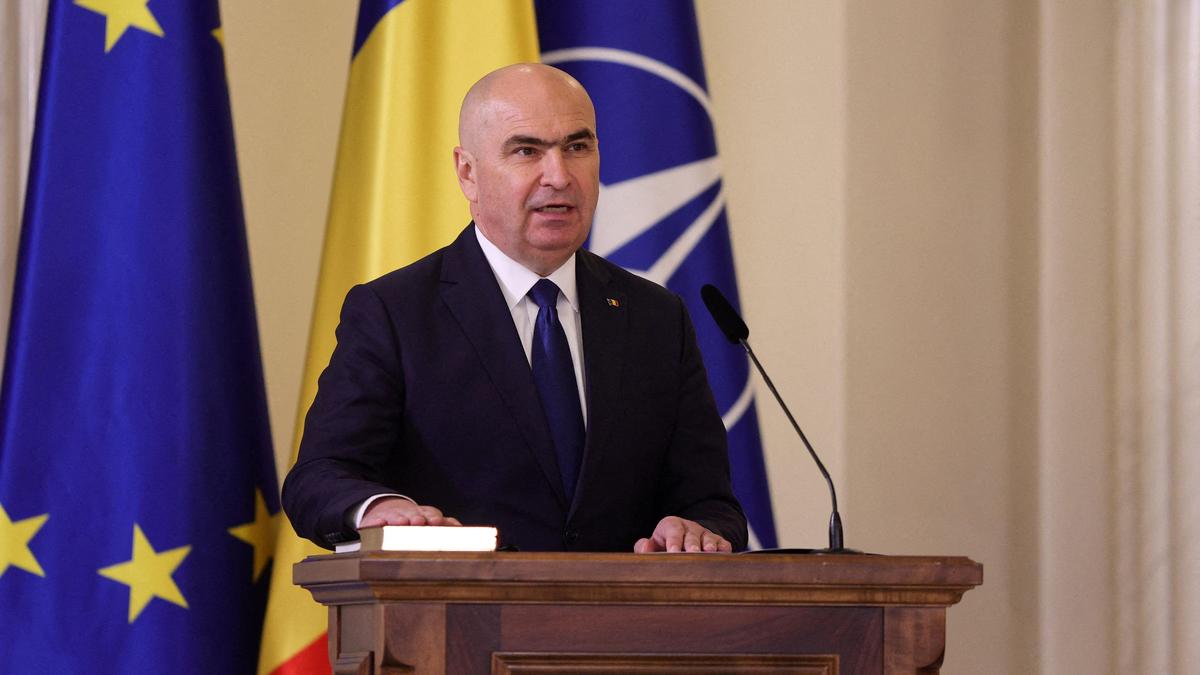
Romanian Coalition Party Demands PM Resign
Romania's Social Democrats withdrew from coalition, joining far-right AUR to topple PM Bolojan, risking €10 billion in EU funds by August 2026.

Conflict & Security
Drone Warfare Killing Aid Workers at Unprec
Over 1,000 humanitarian workers killed in three years as cheap armed drones collapse legal protections. Gaza, Sudan, Ukraine, and DRC see deliberate targeting of aid convoys and hospitals with zero prosecutions.