US Troop Cuts in Germany Impact NATO Strategy
Washington's troop reduction signals a shift in NATO dynamics.
Model Diplomat2 min readEurope
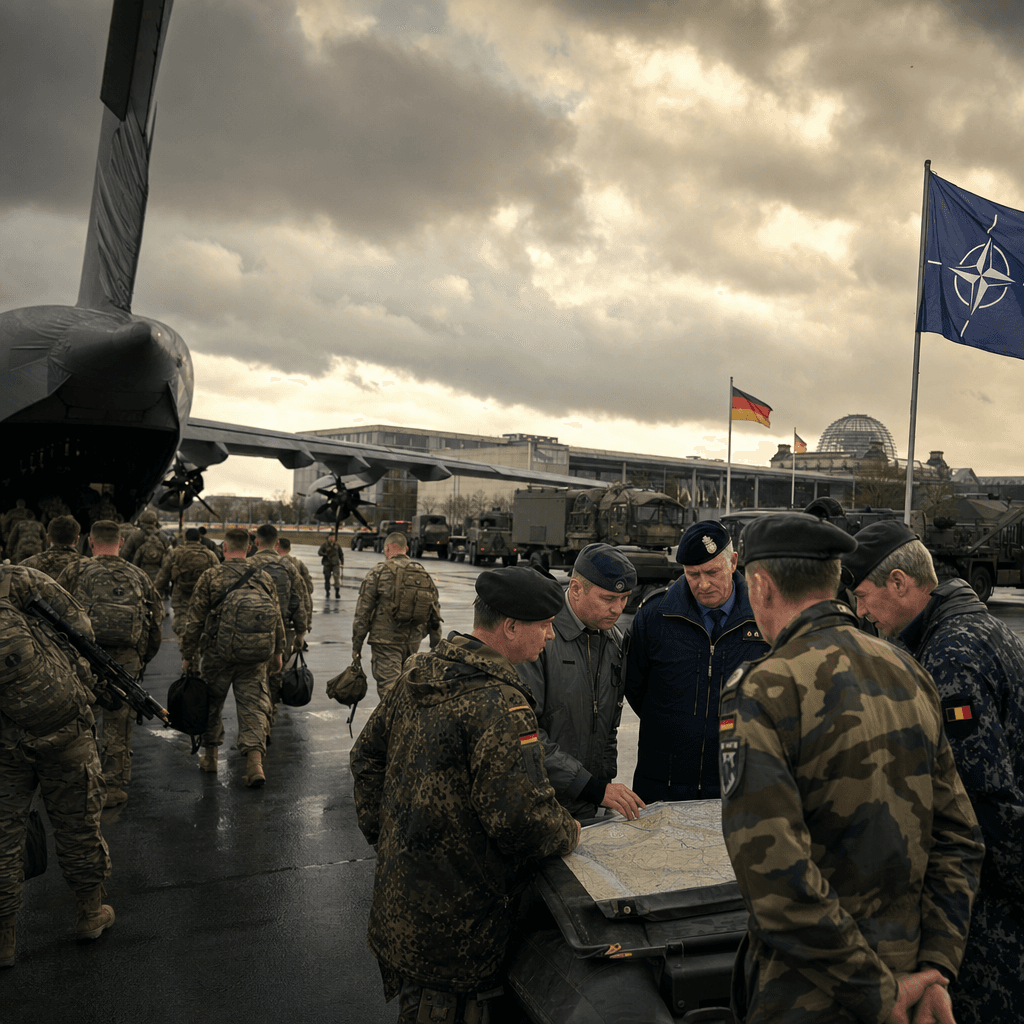
US Troop Cut in Germany Forces Europe’s NATO Test
Washington’s 5,000-troop cut in Germany is less a military revolution than a political ultimatum: Europe must carry more of NATO, faster.
Washington holds the leverage. The Trump administration plans to remove about 5,000 US troops from Germany over the next six to 12 months, cutting into the largest American force presence in Europe, with more than 36,000 US personnel stationed there at the end of 2025. European officials have responded less with open defiance than with a harder conclusion: if US deployments are now negotiable, Europe needs a bigger operational role inside NATO, not just more rhetoric about “strategic autonomy.” AP News
BBC News
The real message is political, not military
The immediate military effect looks manageable; the political signal is the point. Germany’s Defense Minister Boris Pistorius called the reduction “foreseeable,” and NATO said it was seeking clarification from Washington, which suggests allies were not blindsided by the possibility even if they were not consulted on the timing. BBC News
AP News
That matters because Germany is more than a host nation. It is the logistics and command hub for US power in Europe, anchored by sites such as Ramstein, and any reduction there is read in allied capitals as a statement about commitment, not simply force efficiency. BBC News The lesson for readers of
Global Politics is blunt: troop posture has become a bargaining tool in transatlantic politics.
There is also a clear historical parallel. Trump announced a much larger Germany drawdown in 2020 — about 12,000 troops — arguing Berlin was not paying enough for defense. That plan triggered bipartisan criticism in Washington and concern in Europe, and much of it was later reversed. The precedent suggests this latest move is designed as pressure first, force redesign second. BBC News
Who gains, who loses
The near-term beneficiaries are Europe’s defense hawks and eastern-flank governments that have argued for years that the continent must build harder military capacity. Poland’s Donald Tusk has already warned that NATO risks disintegration if member commitments erode, using the moment to press for stronger European responsibility. BBC News
Germany loses most politically. Chancellor Friedrich Merz now has to show Berlin can be both a bigger spender and a more reliable security organizer. That shift is already underway: NATO countries hit the 2% spending benchmark in 2025, while Europe and Canada raised defense spending to $574 billion, narrowing — though not closing — the gap with the United States.
POLITICO
What to watch next
The next decision point is whether this remains a Germany-specific signal or becomes a wider European retrenchment. Trump has already floated possible troop cuts in Italy and Spain, which would turn a bilateral dispute into a full alliance shock. BBC News If the reductions stop at 5,000 and core hubs remain intact, Europe gets a warning and more time. If Washington broadens the drawdown, NATO’s debate will shift from burden-sharing to basic credibility.
Discover more
Global Politics
Trump's Conflicting Messages on Iran War
Trump's mixed messages on Iran reflect a strategy of audience management, benefiting Tehran amid a complex geopolitical landscape.

Global Politics
US Seizes Iranian Ship, Tensions Surge
The US seizure of the Iranian ship Touska highlights a shift in control over the Strait of Hormuz, favoring Iran's strategic position.

Conflict & Security
Drone Warfare Killing Aid Workers at Unprec
Over 1,000 humanitarian workers killed in three years as cheap armed drones collapse legal protections. Gaza, Sudan, Ukraine, and DRC see deliberate targeting of aid convoys and hospitals with zero prosecutions.

Global
World Normalises Taliban as Afghan Women Eras
UN data shows Afghan women erased from public life as Russia recognises the Taliban, EU hosts officials in Brussels, and ICC warrants for gender persecution go unenforced.