US Steps Back from South China Sea Talks
A shift in Indo-Pacific security dynamics unfolds.
Model Diplomat8 min readSoutheast Asia
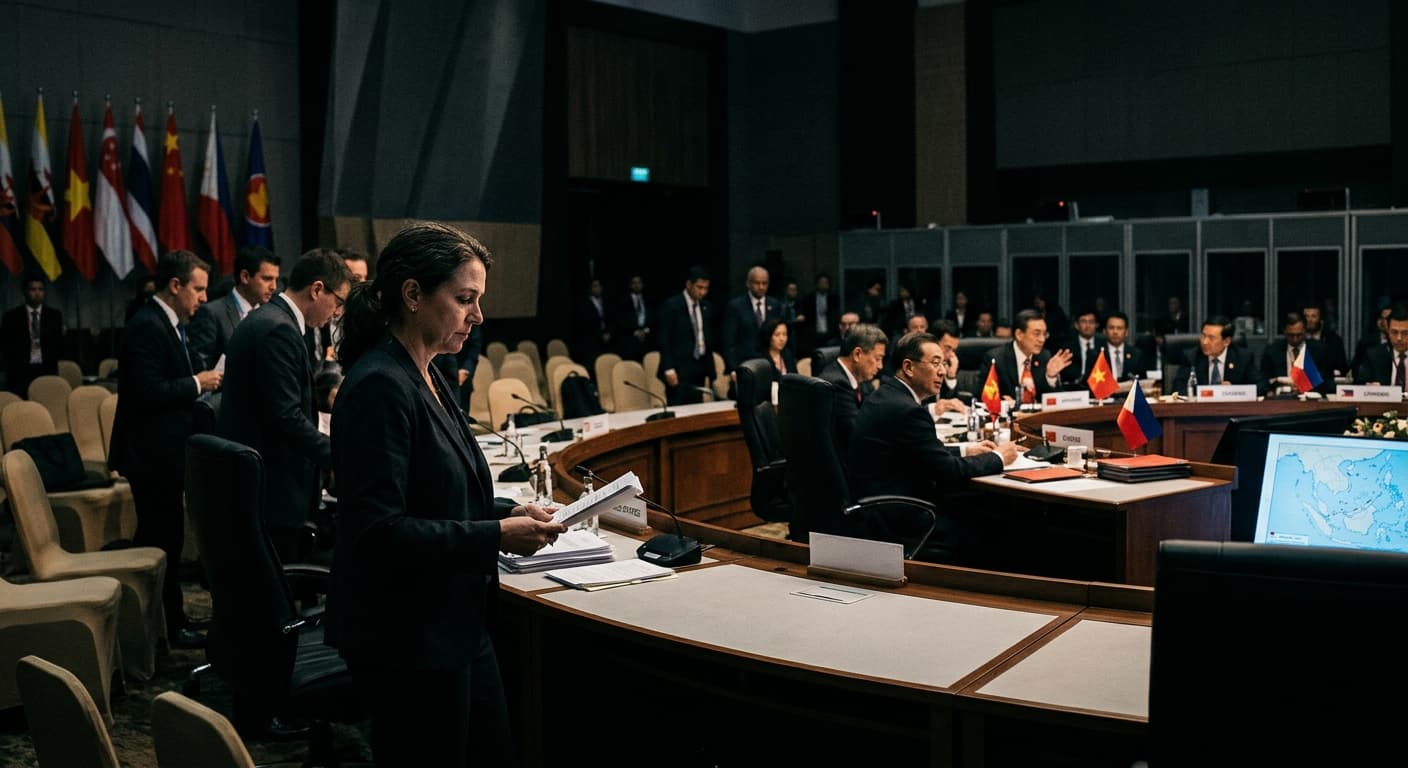
US Steps Back from South China Sea Code Talks, Handing ASEAN and China the Wheel
US Ambassador to ASEAN Kevin Kim says Washington will not steer South China Sea Code of Conduct talks — a shift that reshapes Indo-Pacific security dynamics.
Washington has quietly conceded the diplomatic ground China spent two decades trying to clear. Speaking to reporters in Jakarta on July 8, 2026, US Ambassador to ASEAN Kevin Kim said the long-stalled Code of Conduct (COC) for the South China Sea is "fundamentally a discussion and negotiations between ASEAN and China," and that the United States will not seek to steer the process, The Jakarta Post reported. Framed as respect for "ASEAN centrality," the move lands four days before the tenth anniversary of the Permanent Court of Arbitration ruling that gutted Beijing's nine-dash line — at a moment when the China Coast Guard has already logged nearly as many ship-days at Scarborough Shoal in six months as it did in all of 2025. The delegation of process is a substantive concession: Washington is giving Beijing precisely the bilateral, extra-regional-power-free forum it has demanded since 2002, without extracting anything in return.
What Kim actually said, and why the timing matters
Kim, confirmed by the Senate on May 18, 2026 in an en-bloc nominations vote recorded in the Congressional Record Daily Digest, used his first substantive media engagement to draw a line. Washington would "engage" to protect its interests, he told reporters, but the COC belongs to ASEAN and China. He added that member states must reach consensus among themselves before continuing talks with Beijing — a bar the bloc has not cleared since consultations began in 2013.
That framing is not neutral. Since 2016, Chinese Foreign Minister Wang Yi has argued that South China Sea disputes are "not an issue between China and ASEAN as a whole" and pushed for bilateral tracks, as RSIS analysts documented at the time. Beijing has consistently opposed "external interference" — code for US, Japanese, Australian, or EU voices at the table. Kim's statement, delivered as the Philippines prepares its 2026 ASEAN chairmanship around the tenth anniversary of its Hague victory, effectively concedes that framing.
The anniversary is not decorative. On July 12, 2016, an Annex VII tribunal at the Permanent Court of Arbitration ruled unanimously that China's nine-dash line had no basis in the UN Convention on the Law of the Sea, and that Beijing had violated Philippine sovereign rights within its exclusive economic zone. The PCA Award remains "final and binding" under Article 296 of UNCLOS, though China has refused to recognise it. A decade on, the Trump administration is choosing the anniversary week to signal it will not personally carry the legal argument into the COC negotiating room.
The power dynamic: who gains, who loses
Beijing wins the frame. For 25 years, China has argued that South China Sea management is an ASEAN-China matter, that outsiders should stay out, and that a legally binding, UNCLOS-anchored code is unnecessary. Wang Yi gave the game away at a 2017 Singapore press conference when he said "preparatory work" was still required before "substantive consultations" on a COC could even begin, a position dissected by AMTI's Gregory Poling in This Isn't the COC You're Looking For. Washington's public deference to "ASEAN centrality" is functionally identical to Beijing's preferred script.
Kim's remarks fit a broader Trump-administration arc. At the Shangri-La Dialogue on May 30, 2026, US Defense Secretary Pete Hegseth declared "we respect [China's] ambitions" and did not mention Taiwan — the first US defense secretary in more than a decade to skip the reference at that forum, according to a Council on Foreign Relations analysis. Hegseth also told allies to spend 3.5% of GDP on defense, echoing the demands the White House had pressed on NATO. The November 2025 National Security Strategy compounds the signal: as CFR's David Sacks noted, China does not appear until page 19 of a 29-page document, and language on Taiwan softened from "oppose" to "not support" unilateral changes to the status quo, per
CFR's review.
ASEAN loses the anchor it never wanted to admit it needed. Southeast Asian states publicly cherish non-alignment, but the credible threat of US legal and naval backing was the reason China ever agreed to negotiate a binding text. Without it, the ASEAN claimants — the Philippines, Vietnam, Indonesia, Malaysia, Brunei — must build consensus among themselves against a partner whose economy dwarfs their combined GDP. ISEAS's Joanne Lin and Pou Sothirak wrote in a 2025 ISEAS Perspective that negotiations had already "reached an impasse, hindered by legal ambiguities, strategic divergences, and ASEAN's internal divisions" — and that Indonesia's push for a 2026 conclusion "now appears increasingly unrealistic."
The signal is registering. The State of Southeast Asia 2026 Survey from the ASEAN Studies Centre found that, reversing 2025's trend, a slim majority (52%) of Southeast Asian opinion-makers now prefer China over the United States if forced to choose. For the first time in the survey's eight-year run, levels of trust in China exceeded levels of distrust. The survey's authors identified US leadership under President Trump as the region's biggest geopolitical concern — ahead of anything Beijing is doing.
Manila loses most, quietly. Philippine President Ferdinand Marcos Jr. has staked his ASEAN chairmanship on finalising a meaningful COC in the arbitration-anniversary year. But CSIS's Southeast Asia Program argues Manila's real hedge is minilateral — Task Force Philippines under US Indo-Pacific Command, and the Alliance Readiness Action Plan announced with Hegseth in 2025 — not the COC. Kim's step-back exposes the contradiction: Marcos wants ASEAN centrality on paper, but American firepower in the water.
The facts on the water contradict the diplomatic script
While diplomats debate texts, Chinese pressure at sea has intensified. AMTI's AIS analysis found China Coast Guard patrols at Scarborough Shoal totalled 933 ship-days in the first six months of 2026 — nearly matching the entire annual total for 2025 (1,099 ship-days), which had itself doubled from 2024's 516. AMTI recorded 112 days of direct CCG–Philippine coast guard interaction in the first half of 2026, averaging 19 encounter days a month.
On May 25, 2026, the Philippines filed a diplomatic protest over a 6-by-6-metre floating structure — described by Beijing as a "temporary research facility" — inside the Scarborough lagoon. It was removed on June 17. Two Chinese buoys installed in October 2025 remain. As AMTI notes, China's tactics stay just below the traditional red lines of permanent construction or land reclamation, but the level of concerted presence is "beyond any previously observed CCG activity in the South China Sea since AMTI began regular AIS tracking in 2019."
The gap between diplomatic pace and operational pace is the whole story. On paper, the parties completed a "second reading" of the Single Draft Negotiating Text in July 2023 and pledged to conclude a COC within three years — a deadline that would fall this year. Yet, as India's Vivekananda International Foundation noted in a detailed analysis, key sticking points remain untouched: geographic scope, dispute-settlement mechanism, legally binding status, and China's insistence on carve-outs for "historic rights" and joint development that would effectively invalidate other claimants' UNCLOS entitlements.
The historical parallel: 2002 in slow motion
The precedent that should worry ASEAN is its own. The 2002 Declaration on the Conduct of Parties (DOC) — signed after ASEAN accepted a non-binding text rather than press for a legally binding COC — was followed by a decade of Chinese island-building and militarisation of the Spratlys. AMTI's expert working group has documented that the DOC's vagueness and absence of dispute-settlement machinery let every party violate it while claiming compliance. The COC was meant to fix that.
If Washington now removes itself as external pressure, the incentive structure for Beijing collapses. The likely outcome is not no deal — it is a bad deal. AMTI analyst Huong Le Thu warned in The Dangerous Quest for a Code of Conduct that "a vague or ineffective agreement — which is a far more likely outcome — would serve only the interests of Beijing," providing diplomatic cover for continued unilateral action. A COC signed but not binding, without a compulsory dispute-settlement mechanism, would functionally institutionalise Chinese primacy — exactly the "regional harmony defined on China's terms" that another
2019 ISEAS analysis warned against.
The second-order effects are already visible. As CFR's Joshua Kurlantzick reported, the perception that the White House "intends to accommodate China, and other countries should fall in line" is pushing Japan and South Korea to reconsider defence self-sufficiency; Vietnam has accelerated its "bamboo diplomacy" hedge; and Indonesia — under Prabowo Subianto, who has already signed a BrahMos missile deal with India — is buying its way toward strategic autonomy rather than betting on either superpower. The Trump administration's trade posture has compounded the drift: China–Southeast Asia annual trade has surpassed a trillion dollars, more than the region's trade with the US and EU combined, according to a CFR analysis of the transshipment fight.
Diplomat View
Kim's step-back is not a rhetorical stumble — it is a policy. The Trump administration has decided that Southeast Asian maritime disputes are not worth the diplomatic capital of leading them, and that pressure on Beijing will be applied through tariffs, task forces, and bilateral defence deals rather than through the multilateral legal architecture the Obama and Biden administrations spent a decade constructing. The winner is China, which gets the ASEAN-only negotiating table it has wanted since 2002 without having to make a single substantive concession on the nine-dash line, historic rights, or dispute settlement. The loser is not ASEAN in the abstract — it is the Philippines, whose 2026 chairmanship and tenth-anniversary victory lap have been reduced to symbolism while its own coast guard is rammed at Scarborough with mounting frequency. If a COC is signed under these conditions, it will not resemble the binding UNCLOS-anchored instrument Manila, Hanoi and Jakarta wanted; it will resemble the 2002 DOC with a new cover page. Revise this forecast if — and only if — the Philippines walks out of a diluted COC signing, or if the US Indo-Pacific Command formally elevates Task Force Philippines' rules of engagement at Scarborough before year-end.
What to watch next
- July 12, 2026: Tenth anniversary of the PCA arbitration award; Philippine statements and any Chinese counter-actions at Scarborough or Second Thomas Shoal will signal both sides' appetite for escalation.
- August 2026: ASEAN Post Ministerial Meeting with China in Kuala Lumpur — the next scheduled forum for COC progress reporting under Malaysia's outgoing role in the negotiation calendar.
- October–November 2026: ASEAN Summit under Philippine chair Marcos; whether Manila tables a claimant-only working group (as Poling and others have urged) will indicate whether ASEAN centrality survives as substance or shrinks to slogan.
The Bottom Line
Washington's decision to leave the Code of Conduct to ASEAN and China is not neutrality — it is alignment with Beijing's 20-year preference for a bilateral, extra-regional-power-free negotiation. The likeliest outcome is not deadlock but a diluted COC that hardens Chinese primacy in law while the China Coast Guard hardens it in fact. For a Trump administration that treats China as a peer to be accommodated rather than a challenger to be constrained, the South China Sea is now Southeast Asia's problem — and Beijing's opportunity.
Discover more
US Politics
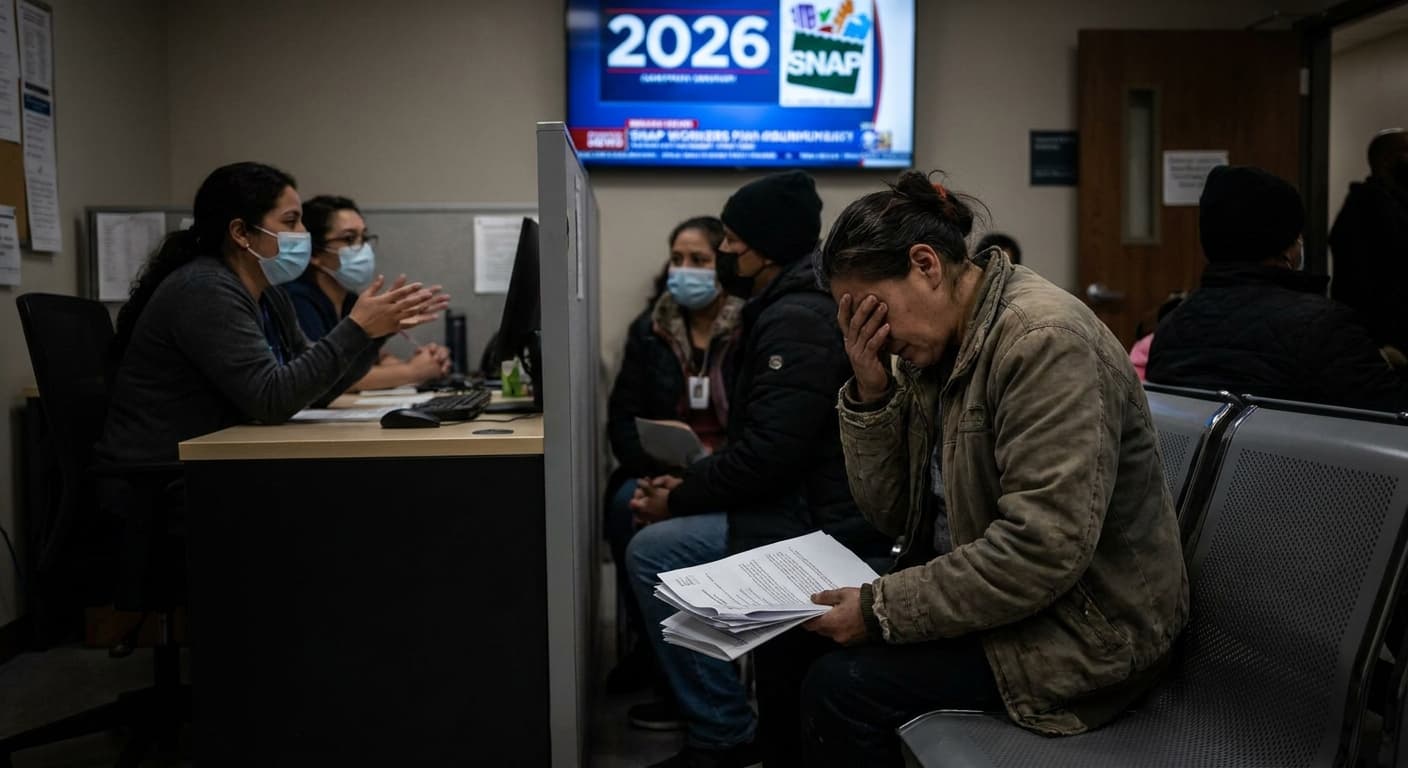
SNAP Food Assistance Faces Legal Challenges
In 2026, SNAP faces stricter eligibility rules and mounting legal challenges, threatening food assistance for the millions of Americans who rely on the program.
India
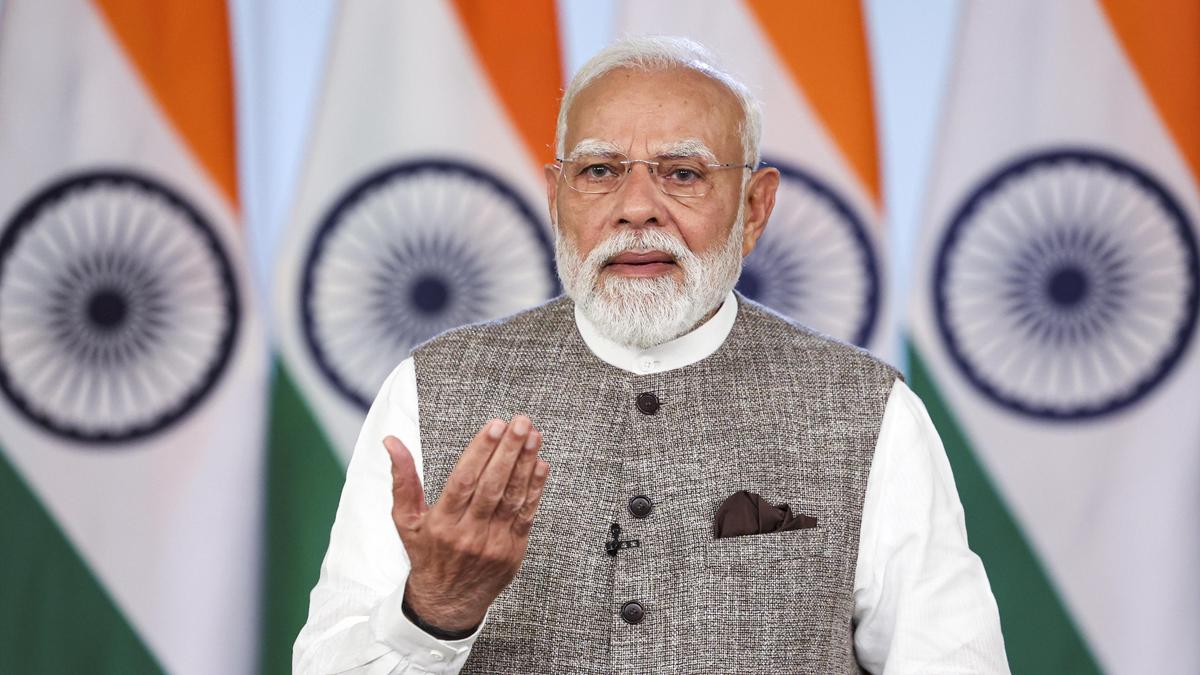
700 Activists Accuse PM Modi of MCC Breach
Over 700 activists allege PM Modi breached election code with a televised address attacking opposition parties just before state elections.

India
Delhi CM Rekha Gupta Blasts Opposition's Delm
Delhi CM Rekha Gupta's remarks on women's quota defeat reveal BJP's strategy for the 2029 Lok Sabha elections, focusing on delimitation.

Economics
Fed's Amex AML order puts correspondent banking on notice
Federal Reserve's Amex AML order requires board-level controls and a 90-day plan; OCC fined the bank $350 million over enterprise-wide deficiencies.