State Department Uses Passports for Child-Su
New policy revokes passports for parents with child support arrears
Model Diplomat3 min readNorth America
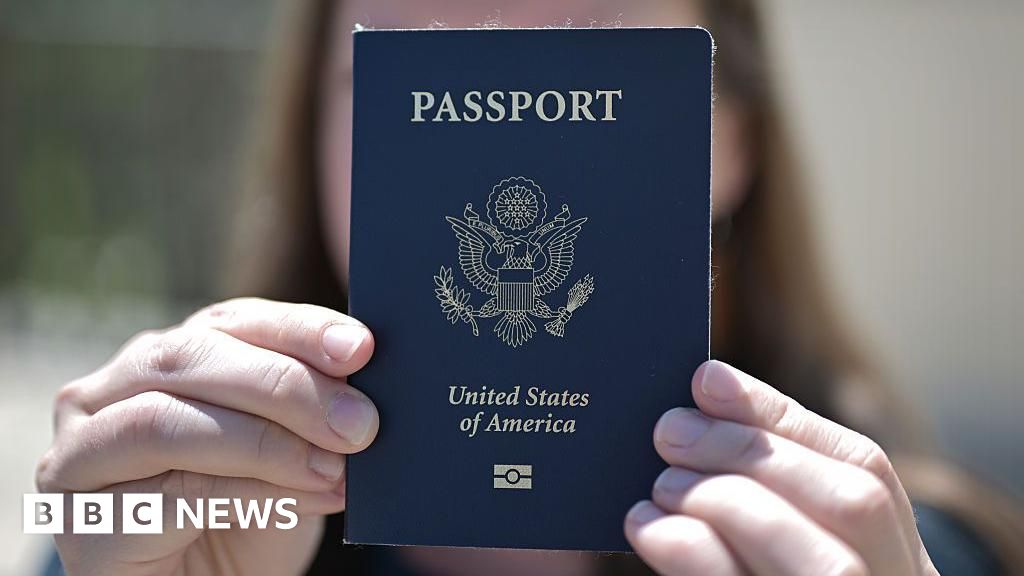
US State Department Turns Passports Into Child Support Leverage
The State Department is widening a 1996 tool, using passports to pressure delinquent parents and accelerate child-support collections.
The U.S. State Department is moving child-support enforcement into the mobility domain: it will begin revoking passports from parents with large arrears, starting with the roughly 2,700 holders who owe at least $100,000, according to the Associated Press and PBS, before broadening the program to anyone more than $2,500 behind under a little-used 1996 law (PBS News / AP,
BBC). The department said the aim is to “support American families” and enforce “legal and moral obligations,” and it will work with Health and Human Services to identify delinquent accounts (
BBC).
Leverage, not punishment
This works because a passport is not just a travel document; it is leverage over people who need to move, work, or come home. The State Department is using a federal administrative tool that reaches beyond the courthouse and into everyday access to travel, which is why it matters for United States policy even though the issue is domestic. Under the new approach, revocation is no longer limited to people who try to renew their passports; HHS will send the State Department all past-due cases above $2,500, making the penalty proactive rather than reactive (
PBS News / AP,
BBC).
That shift explains why the policy is likely to bite. AP reported that once the expansion was announced in February, the department saw “hundreds” of parents resolve arrears, suggesting the threat alone can produce compliance without a court fight (PBS News / AP). The State Department says the program has already helped states collect $657 million in arrears since 1998, including more than $156 million in lump-sum payments over the past five years (
PBS News / AP).
Who gains, who loses
The immediate winners are state child-support agencies and custodial parents, who get a stronger collection tool without having to chase debt through local courts alone (BBC). The losers are delinquent parents who travel for work, family, or immigration-related reasons; if their passports are revoked while they are abroad, they will need a U.S. embassy or consulate to issue an emergency travel document to get back, AP reported (
PBS News / AP). That makes the policy unusually coercive: it does not depend on foreign cooperation, only on U.S. control of entry and exit documents.
The broader Global Politics angle is not diplomatic theater but state capacity. Washington is showing it can turn a mundane administrative system into a cross-border enforcement mechanism. That is efficient, but also blunt: once travel documents become a debt-collection tool, the State Department becomes an enforcement arm for domestic compliance.
What to watch next
The key decision point is implementation. The department has not publicly set out a full start date in the BBC report, while AP says revocations begin Friday, and it remains unclear how fast HHS can complete the data matching with state agencies for the broader $2,500 threshold (BBC,
PBS News / AP). Watch whether the first wave is confined to the top-debt cases or quickly expands to many thousands more. That will tell policymakers whether this is a narrow enforcement push or the start of a much more aggressive federal use of passport control.
Discover more

US Politics
SNAP Food Assistance Faces Legal Challenges
In 2026, SNAP faces stricter rules and legal challenges, impacting 42 million Americans reliant on food assistance amid budget cuts.

US Politics
House Ethics Committee Pushes Sexual Miscond.
The House Ethics Committee's public request for misconduct reports marks a shift towards transparency and accountability in Congress.

Global Politics
Iran Releases $12B Frozen Assets Deal
Iran secures $12 billion in frozen assets as US lifts oil sanctions under new deal.

India
India-UK Trade Pact Removes Tariffs on 99%
India's trade pact with the UK eliminates tariffs on 99% of exports, but execution risks loom.