U.S. Revokes Iran Oil License, Killing Deal
Treasury's move ends Iran's oil sanctions waiver.
Model Diplomat9 min readMiddle East
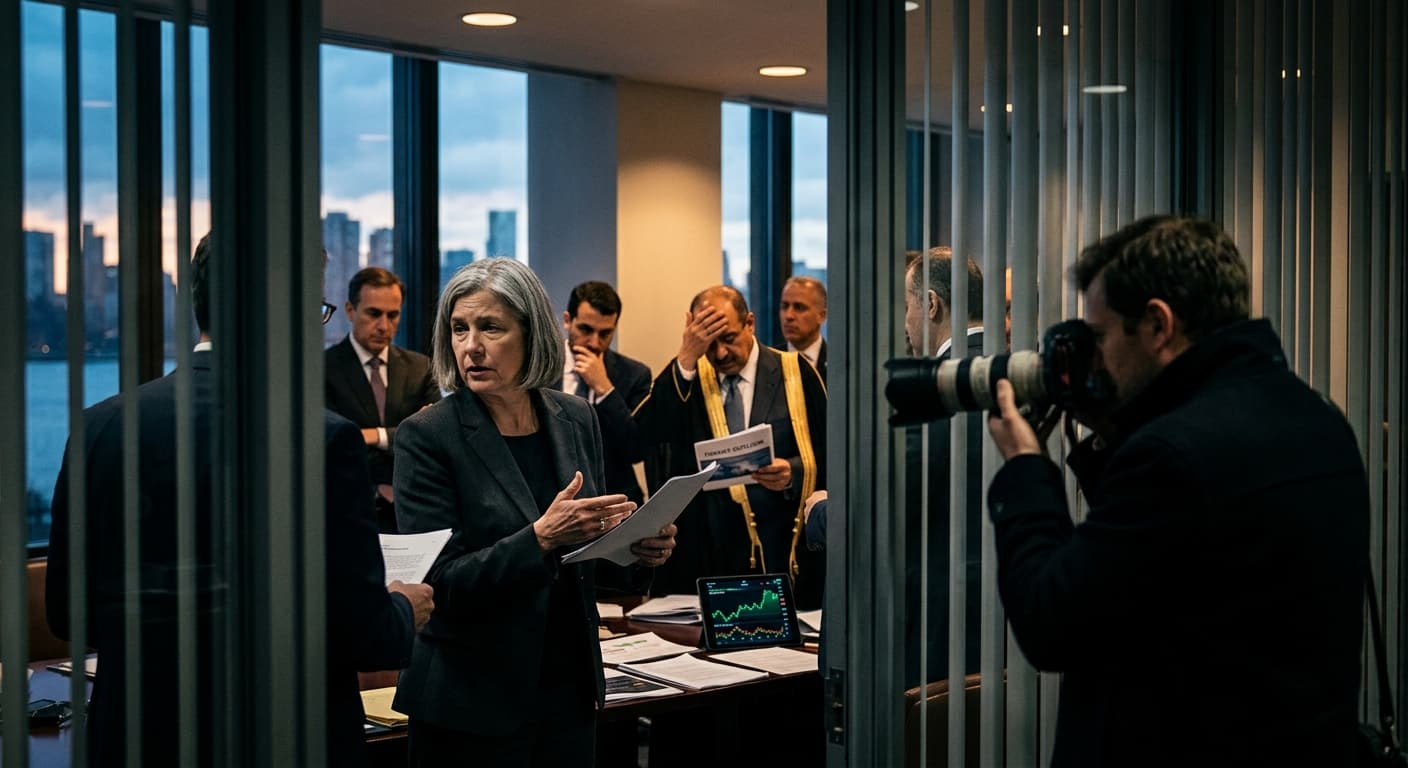
U.S. Revokes Iran Oil License, Killing the Hormuz Deal
The Treasury killed General License X on July 7, 2026, ending Iran's 60-day sanctions waiver. Here's who wins, who loses, and what breaks next.
The Trump administration's June 17 bargain with Iran was never really a nuclear deal — it was a Hormuz-for-oil swap. On July 7, 2026, the Treasury's Office of Foreign Assets Control revoked General License X, the 60-day waiver that had authorized dollar-cleared sales of Iranian crude, and replaced it with a wind-down instrument routing all residual revenue into a "blocked, interest-bearing account." Brent jumped roughly 6% to $78 a barrel on the news and the follow-on U.S. strikes, according to Al Jazeera. The market reaction understates the damage: Washington has pulled the only lever Tehran actually valued, re-created the JCPOA-era escrow trap, and handed China and India a fresh reason to price Iranian barrels in yuan outside the dollar system.
What Treasury actually did
OFAC issued General License X on June 21, 2026, four days after President Donald Trump and Iranian President Masoud Pezeshkian signed the 14-point Memorandum of Understanding at Versailles. GL X was the operational core of the deal: it authorized the production, delivery, sale and import of Iranian crude, petrochemicals and refined products, plus related banking, insurance and shipping services, through August 21, 2026. The successor instrument, listed on Treasury's site as Iran General License X1, revokes that authorization and permits only the winding down of pre-existing contracts.
The mechanics are aggressive. New contracts are prohibited as of July 7. Deals concluded before then must be closed out by July 17 — a ten-day window that, in practice, is unworkable for cargoes still on water heading to Asian refiners. And per the Treasury statement paraphrased by Al Jazeera, proceeds from those wind-down cargoes flow into a blocked, interest-bearing account rather than to Tehran. That structure echoes the payment cage the first Trump administration built after withdrawing from the JCPOA in 2018 — a mechanism the Council on Foreign Relations flagged as conspicuously absent from the June waiver, noting the "absence of any payment restrictions in GL U is notable" in a
CFR analysis published before this week's collapse. What was granted in June without conditions has been reclaimed in July with the harshest ones. That sequence — free, then caged — is how sanctions credibility dies with counterparties who thought they had cover.
The Hormuz-for-oil bargain, unbundled
The MoU's 14 points were structured as a two-track transaction. Iran would ensure "safe passage of commercial vessels with no charge for 60 days" through the strait under Point 5, while Washington would remove its naval blockade within 30 days under Point 4, grant license waivers and unfreeze funds under Points 6, 7, 10 and 11, and coordinate a $300 billion reconstruction plan for Iran with regional partners. The full text, verbatim, was read out by a senior U.S. official on a June 17 briefing call and published by Al Jazeera. Nuclear negotiations were parked for the 60-day window, with Iran's stockpile to be "down-blended" on-site under IAEA supervision — a climb-down from Washington's original demand that all enriched uranium leave the country, according to the
BBC.
The bargain was fragile from day one because Point 5 and Point 7 measure different things. Point 5 is verifiable in real time — a projectile hits a tanker or it doesn't. Point 7's sanctions relief takes weeks to translate into revenue, because banks, insurers and refiners need to price sanctions risk before writing new tickets. The Atlantic Council's Sarah Rothbardt warned in a July 2 analysis that "issuing a sanctions waiver that authorizes oil sales is one thing; persuading banks, shipping companies, and insurers to reengage with Iran within sixty days is another." Kpler data cited in the same piece projected Iranian exports at just over 720,000 barrels per day in June — less than half the 1.5 million bpd pre-war baseline, and a fraction of the notional GL X headroom.
That gap — between what Iran was paid on paper and what actually landed in Tehran's accounts — is why the sanctions waiver could be revoked so cleanly. Iran had not yet monetized it. What it had done was open the strait. Losing the license without having banked the revenue is the worst possible sequence for Tehran, and the best possible one for the administration seeking to reset the terms of the deal at Iran's expense.
Ghalibaf's own comments telegraphed the fragility. On the day of signing, Iran's chief negotiator told IRNA the "Strait of Hormuz will not return to pre-war conditions" and that Tehran would "receive a fee for services" for shipping, per an Al Jazeera breakdown of the deal terms. Washington had promised the strait would be "permanently toll-free." Two contradictory readings of Point 5 were baked into the agreement from the start.
Who benefits: not obviously the U.S.
The obvious loser is Iran. Al Jazeera's calculation from Kpler and Lloyd's List data showed exports collapsing from 1.84 million bpd in March 2026 to below 300,000 bpd during the blockade period in May — an 84% revenue drop worth roughly $6 billion over three months, using a conservative $90-per-barrel benchmark. Tehran was banking on GL X to restore the 2025 baseline of about 1.5 million bpd. It won't. The more interesting question is who benefits — and the answer is not straightforwardly Washington.
China is the structural winner. Bruegel's Alicia García-Herrero, in a March 2026 analysis, showed China had been importing up to 1.4 million bpd from Iran through 2025 — roughly 13% of its crude imports and 80–90% of Tehran's exports, priced in yuan at deep discount under the 2021 Iran-China 25-year cooperation agreement. The Atlantic Council piece notes Iran's share of Chinese imports fell to just under 11% by May 2026 as Beijing diversified toward Russia (15%), Saudi Arabia (16%) and Brazil (18%). But the yuan-settlement infrastructure Beijing built during the closure of Hormuz — the "toll booth" system in which Iranian officials charged transit fees in Chinese currency,
confirmed by China's Ministry of Commerce — does not unwind when GL X does. Every revocation strengthens the marginal case for pricing Iranian crude outside the dollar system. Natixis's Alicia Garcia-Herrero told Al Jazeera the pattern "adds incremental pressure and normalises alternatives in energy flows"; Harvard's Kenneth Rogoff, in the same piece, argued dollar dominance "has already peaked."
India is the tactical winner. The Atlantic Council flagged that a U.S. sanctions waiver for Russian crude expired on June 17 — the same day the MoU was signed — making Iranian barrels "increasingly attractive" for Indian refiners running short on affordable feedstock. India imported over 4 million barrels of Iranian crude in April 2026 during an earlier waiver. With GL X revoked and secondary sanctions back in force, New Delhi now has a choice: rebuild routes through Russia (still constrained by tanker availability, according to Bruegel) or continue quiet purchases via yuan-settled channels the Atlantic Council flagged as increasingly common. Either path erodes the dollar's grip on the Indian Ocean crude trade.
The U.S. Treasury gains coercive leverage but loses credibility. It is the second time in four months Washington has issued and then rescinded an Iran oil license — the previous instance being General License U, a 30-day waiver announced on March 20, 2026 in a Treasury recent-actions notice and allowed to expire without renewal. A waiver that lasts 21 days teaches banks and insurers not to underwrite the next one. The Atlantic Council flagged this trap explicitly: the White House is "caught in a trap of its own making" if it must choose between renewing waivers that benefit U.S. adversaries or reimposing sanctions on a market it helped destabilize. Wednesday's decision is the second option.
The Hormuz recovery breaks
The Council on Foreign Relations warned in a July analysis that even with the MoU intact, Hormuz faced a "tough recovery" — an estimated 80 sea mines remained in the strait's main navigation lanes, and Iran had signalled it would eventually charge transit fees despite Point 5's language. Roughly 20% of the world's oil and significant LNG volumes transit the strait; the closure that began in late February shut in an equivalent of "more than 10 million barrels per day of oil supply and roughly 300 million cubic meters per day of LNG for over 100 days," the CFR authors wrote. The same piece noted Iranian officials had reportedly discussed transit fees of up to $40 billion annually — roughly matching total Iranian oil revenues in recent years, and creating "overwhelming incentives" for Tehran to retain some form of control over the waterway.
Prices had converged back toward pre-war levels by early July as commercial stockpiles refilled. That gave the White House room to escalate: Iran's Hormuz leverage was diminishing anyway. But the recovery required commercial confidence, and the revocation-plus-strikes combination will slow tanker traffic, raise insurance premia, and push Gulf shippers toward alternative routes. UAE's Fujairah bypass and Saudi Arabia's east-west pipeline capacity — both explicitly promoted by the CFR as strait-substitution options — become more attractive precisely when Iran can least afford them. The BBC's reporting on the Iran war noted the Philippines mandated four-day work weeks to save fuel during the peak closure period, and Indonesia hunted reserves that would last only weeks. Those memories will shape Asian buyer behavior long after Brent normalizes.
What Iran will do next
Iran's chief negotiator, parliamentary speaker Mohammad Bagher Ghalibaf, has called the revocation a "major MoU violation," per Al Jazeera reporting, citing "attacks on southern Iran" alongside the sanctions reimposition. Ali Akbar Velayati, senior adviser to the Supreme Leader's office, warned any further U.S. strike would draw an "immediate response," according to the
BBC. Iran said Wednesday it targeted U.S. military sites in Bahrain and Kuwait in retaliation.
The escalation ladder now looks like this. Iran can (a) attempt another partial Hormuz closure, which cost the regime an estimated $6 billion in three months last time; (b) accelerate covert oil sales through the shadow fleet, betting Chinese teapot refineries will buy at wider discounts; or (c) walk back to negotiations from a weakened position. Ghalibaf's rhetoric suggests option (a) is on the table, but the export data — and Iran's demonstrated willingness to keep selling to China even during the blockade, with 46 million barrels sitting in South China Sea tankers per Kpler — suggests option (b) is already the working plan. Treasury's April 28 alert on teapot refineries telegraphed that Washington sees this vector clearly. Expect designations.
What to watch
- July 17, 2026: Wind-down deadline under GL X1. Any transaction after this date is a fresh sanctions violation exposing counterparties to secondary designations, including banks and insurers still processing residual cargoes.
- August 21, 2026: The original GL X expiry. If negotiations resume before this date, expect a narrower, escrow-based replacement — not a return to GL X terms.
- OFAC SDN List updates: Watch for designations of Chinese teapot refineries, Hong Kong-based traders, and small-tonnage shipowners. The pace and geographic spread of those designations is the truest read on how far the administration is willing to push secondary sanctions against Beijing.
- G20 finance ministers, October 2026: The first multilateral venue where Gulf states — Saudi Arabia, UAE, Qatar — can pressure Washington to stabilize a Hormuz insurance regime and force clarity on the fate of the $300 billion Iran reconstruction fund promised at Versailles.
Diplomat View
Washington won the tactical round and lost the strategic one. Revoking GL X restored deterrence in the strait — Iranian small-boat harassment now carries a proportional cost, and CENTCOM's 80-target strike demonstrated the capacity to inflict it — but it also validated the position of every finance minister in the Global South who has argued the dollar sanctions system is arbitrary. The MoU was a Hormuz-for-dollars deal, and Tehran will conclude that only yuan-denominated arrangements survive Washington's mood. Our forecast: Iranian exports rebuild to 800,000–1,000,000 bpd within 90 days, almost entirely through Chinese buyers using non-dollar settlement channels, at discounts of $8–12 to Brent. Brent averages $72–80 through Q3 2026 barring a full Hormuz reclosure, with a $95+ tail risk if Iran attempts another blockade. What would falsify this call: a new escrow-based license by August 21 that permits dollar-cleared Iranian sales to third-country refiners, which would signal Treasury has decided credibility matters more than punishment. Watch the SDN list, not the White House podium.
Related: Global Politics coverage.
Discover more

US Politics
House Ethics Committee Pushes Sexual Miscond.
The House Ethics Committee has shifted responsibility for sexual harassment settlement records to the Office of Congressional Workplace Rights, complicating disclosure efforts.
US Politics
SNAP Food Assistance Faces Legal Challenges
In 2026, SNAP faces stricter eligibility rules and mounting legal challenges, threatening food assistance for the millions of Americans who rely on the program.
Global Politics
Xi Jinping Calls China-Russia Ties 'Precious'
Xi Jinping's description of China-Russia ties as 'precious' reflects a strategic imbalance, with Beijing dictating terms in the partnership.
Global
US Reinstates Iran Blockade, Splits Hormuz
US reinstates naval blockade of Iran on July 14, ending 26-day ceasefire. Strait of Hormuz splits into competing toll lanes as traffic collapses to 23 ships daily. 60-day war-powers clock ticks toward Congress.