US Initiative Divides Libya's Political Fates
Power-sharing vs. elections in Libya's future
Model Diplomat3 min readMiddle East
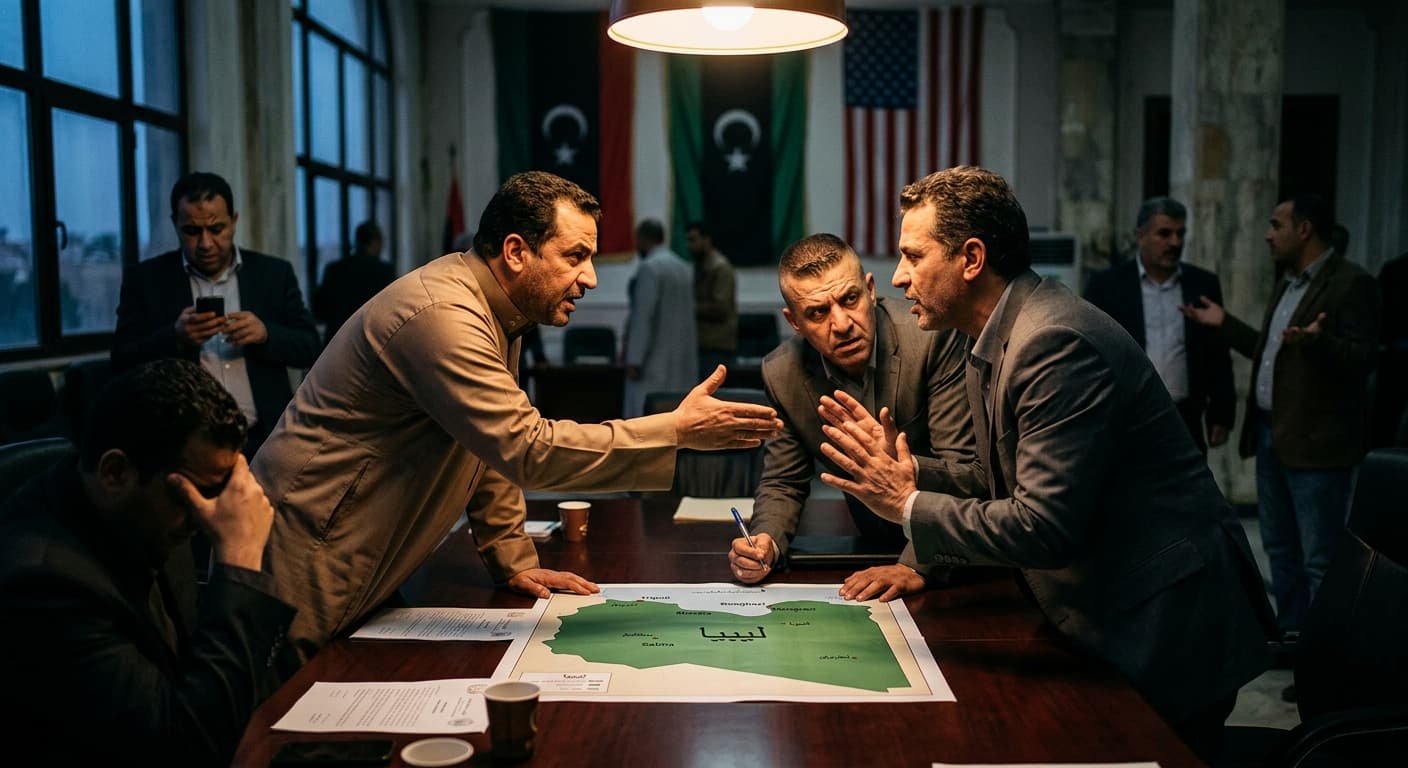
Boulos Plan Divides Libya's West as East Backs Power-Sharing
US initiative clears eastern military hurdles but runs into western caution over family-based rule and deferred elections.
Al Jazeera reported June 25 that a US-backed unification plan has split Libya's western factions while gaining traction in the east. Massad Boulos, the US president's adviser for Middle Eastern and African affairs, announced the initiative on June 17, proposing to merge rival governments through power-sharing between the eastern Haftar family and the western Dbeibah family—a formula that sidesteps elections in favor of institutional consolidation first.
The prize is clear: unified control over Libya's oil revenue, fragmented state institutions, and a Mediterranean foothold against Russian encroachment. The cost is equally clear for Libya's western elites and external partners: cementing rule by two families rather than opening the door to democratic competition. That tension now dominates Libya's political landscape.
The Eastern Endorsement and the Western Stall
Khalifa Haftar's military command and over 100 eastern House of Representatives members backed Boulos's plan within days of its announcement. The eastern forces see leverage in the formula: Saddam Haftar, the field marshal's son, would head a new Presidential Council while Dbeibah remains prime minister—granting the military strongman a formal role in a transitional government and deferring the reckoning of elections indefinitely. AA reported the command described it as a "possible gateway to a peaceful resolution."
The west has moved slowly. Abdul Hakim Belhaj, a former Tripoli Military Council commander, endorsed the plan on June 21, but the Government of National Unity (GNU) itself has issued no formal statement. Al Jazeera quoted analyst Elias al-Barouni: the GNU's silence is calculated—preserving maneuvering room while waiting to see if Washington's commitment is final.
Belhaj's language hints at western reluctance. He called the plan an "opportunity" based on the "possible and acceptable rather than the perfect but impossible"—diplomatic code for ambivalence. And within days of Boulos's announcement, three rival power brokers—House Speaker Aguila Saleh, High State Council head Mohammed Takala, and Presidential Council chief Mohammed al-Menfi—unveiled a competing roadmap on June 18 calling for simultaneous presidential and parliamentary elections by February 2027. The contrast is stark: elections-first versus power-sharing-first.
The Structural Problem: Entrenching, Not Transcending
Critics argue the Boulos plan does not solve Libya's crisis—it embeds it. Progress Center for Policies noted that the initiative "entrenches the logic of power-sharing between two families—the Dbeibah and the Haftar—rather than transcending it, leaving the roots of the Libyan crisis intact."
More pointedly, Al Jazeera reported that analyst Abdulsalam al-Rajhi flagged a corruption risk: the plan reportedly aims to install Ibrahim Dbeibah (the current PM's nephew) as prime minister and Saddam Haftar as council chief. Both men, al-Rajhi noted, were implicated in UN Panel of Experts reports on oil smuggling and financial misappropriation. The risk is not just that elections are deferred indefinitely—it is that they are deferred in favor of officials already tagged for graft.
Washington frames the plan as complementary to UN efforts. Libya Review quoted Boulos saying institutional unification is the "starting point" for elections. But the sequencing matters.
Progress Center for Policies argued the US track prioritizes "power-sharing among existing centres of influence" while the tripartite roadmap prioritizes "electoral legitimacy"—a difference that determines who holds power after the transitional period closes.
What to Watch
The contest now hinges on which roadmap gains momentum in the next 30 days. If the tripartite roadmap anchors—backed by Egypt and Saudi Arabia—it pushes the electoral track earlier, shrinking Haftar's transitional window. If Boulos locks Tripoli support and the unified budget agreement (finalized in April) holds as a proof-of-concept, the power-sharing track advances. The GNU's formal statement will be the tell. Watch also for any isolation of Takala and Saleh by western factions tempted by Boulos's oil-investment sweetener. Delayed silence is not neutrality—it is leverage you are saving for a higher price.
Discover more

International Relations
Pakistan's Key Role in US-Israel-Iran Meddle
Pakistan is seeking to mediate the US-Israel-Iran conflict, balancing high-stakes diplomacy against severe economic pressures and steep regional challenges.
Global Politics
Trump's Conflicting Messages on Iran War
Trump's mixed messages on Iran reflect a strategy of audience management, benefiting Tehran amid a complex geopolitical landscape.

Global Politics
US Seizes Iranian Ship, Tensions Surge
The US seizure of the Iranian ship Touska highlights a shift in control over the Strait of Hormuz, favoring Iran's strategic position.
Economics
Fed's Amex AML order puts correspondent banking on notice
Federal Reserve's Amex AML order requires board-level controls and a 90-day plan; OCC fined the bank $350 million over enterprise-wide deficiencies.