US-India Trade Talks Race Against July Tariff
India signals progress but holds back final concessions.
Model Diplomat3 min readAsia
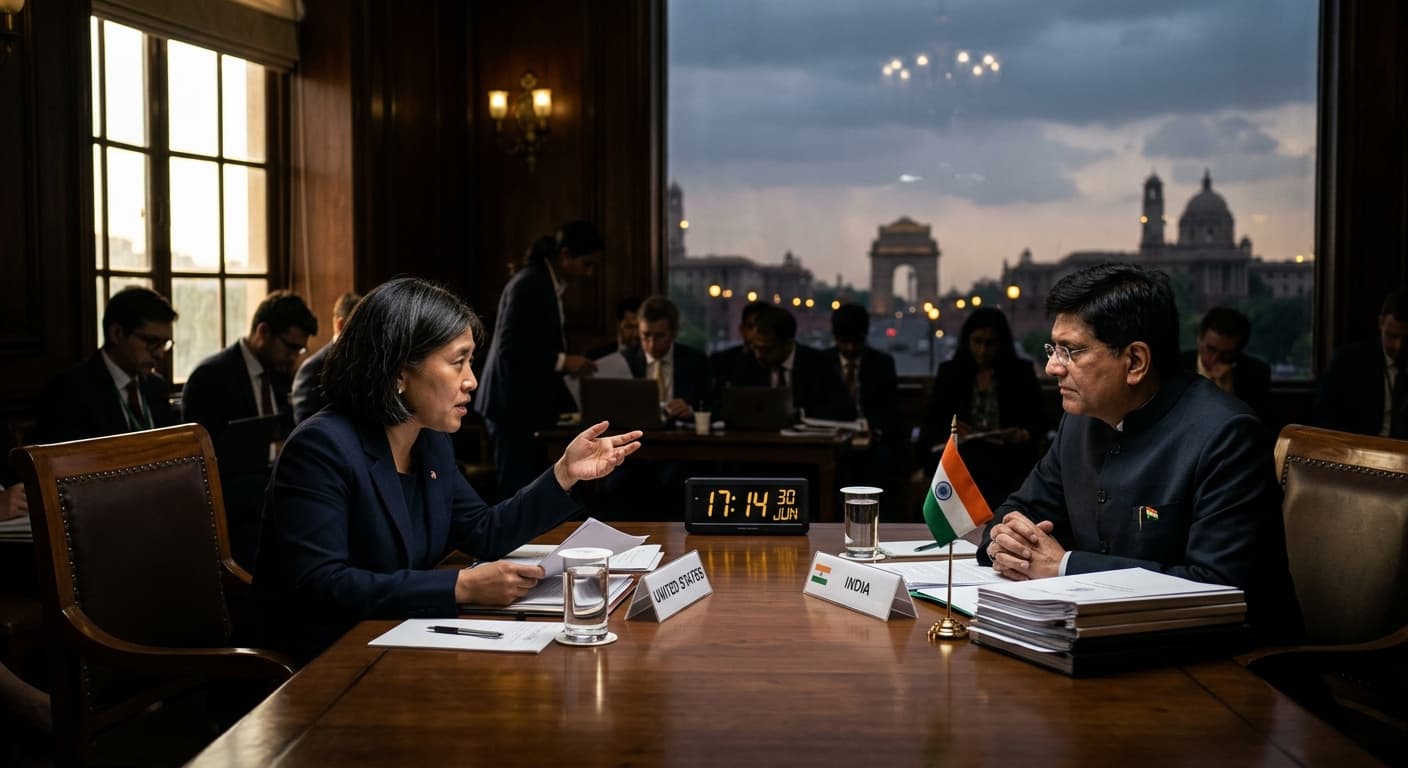
US-India Trade Talks Race Against July Tariff Deadline
India signals progress but holds back final concessions before new tariff regime kicks in.
India and the United States wrapped two days of high-level trade negotiations this week with public optimism but no breakthrough, as the clock ticks toward the July 24 expiration of a temporary tariff framework that has reordered both sides' leverage. US Trade Representative Jamieson Greer met with
Indian Commerce Minister Piyush Goyal on June 24 to discuss tariff cuts, market access, and non-tariff barriers as both countries race toward concluding an interim bilateral trade agreement.
The catch: the Supreme Court's February ruling gutted Washington's initial hand. When negotiations began in February 2025, the US had proposed dropping tariffs on Indian goods from 25–50 percent down to 18 percent—trading that discount for deeper access to India's market. But after the Supreme Court struck down Trump's reciprocal tariff regime, Washington imposed a blanket 10 percent temporary tariff on all trading partners for 150 days. That expires July 24, when a new, steeper architecture under Section 301 of the US Trade Act takes effect. India now faces a compressed window to lock in a preferential rate before facing punitive duties designed to pressure countries into deals. The US has already proposed 12.5 percent tariffs on Indian goods under the emerging framework—a material difference from the 18 percent offer.
India, seeing the ground shift, is recalibrating its negotiating stance. Goyal claims the two sides are "99 percent" done with the interim deal; US Ambassador Sergio Gor says only "1 percent" remains. But India has signaled that it wants a clause to revisit terms after a fixed period, a tacit admission that the deal's calculus no longer holds. Ajay Srivastava, founder of the Global Trade Research Initiative, captured the inversion of leverage:
New Delhi was "negotiating because the US said that they will bring down the tariffs… and that's how we were to concede many, many concessions to them. Now, the US is not in position to offer anything extra to us," he said. India's export surplus with the US fell over 40 percent in a year as reciprocal tariffs suppressed shipments. Opening the domestic market remains costly; holding firm on tariff discipline has become rational.
For Washington, the pressure is just as acute. US Deputy Assistant Secretary Bethany Poulos Morrison said the two sides are "very, very close" to a deal that would serve the Trump administration's stated goal of achieving $500 billion in bilateral trade by 2030—the "Mission 500" target. Trump and Modi
reaffirmed commitment to concluding an agreement at their G7 meeting on June 18. But without a binding framework well before July 24, US companies will face escalating tariffs, and India will lose the narrow window to negotiate a preferential position against competitors like Vietnam and ASEAN exporters.
What to Watch
The next 30 days are decisive. Both sides must agree on how India's market-access concessions map onto final tariff rates. India will likely demand written assurances against future Section 301 investigations—a hard sell, given that Washington has opened investigations against trading partners even after signing deals, including Germany in June. Watch whether India accepts a lower tariff rate (below 18 percent) in exchange for faster market opening, or whether it walks toward the less favorable post-July 24 regime as a bargaining position. The other signal: whether New Delhi demands language allowing renegotiation—a codification of its new caution.
Discover more

India
India-South Korea $50B Trade Expansion Plan
India and South Korea set a $50 billion trade target, deepening economic cooperation and strengthening Asia-Pacific ties amid shifting global trade dynamics.

Global Politics
US Seizes Iranian Ship, Tensions Surge
The U.S. seized the Iranian ship Touska near the Strait of Hormuz, sharply escalating tensions and raising the risk of wider conflict in a vital oil corridor.

International Relations
Pakistan's Key Role in US-Israel-Iran Meddle
Pakistan is seeking to mediate the US-Israel-Iran conflict, balancing high-stakes diplomacy against severe economic pressures and steep regional challenges.
Global
Will Kurti's 4th victory reshape Kosovo's foreign relations?
- Episode focus: A Balkans Debrief conversation with Yll Sadiku about Albin Kurti’s fourth consecutive electoral victory in Kosovo and what it could mean for Kosovo’s foreign relations. - Key questions addressed: - How Vetëvendosje’s victory ended months of political