US Forced-Labor Tariffs: Legal Gamble Ahead
USTR's new tariffs target 60 economies over forced labor.
Model Diplomat7 min readNorth America
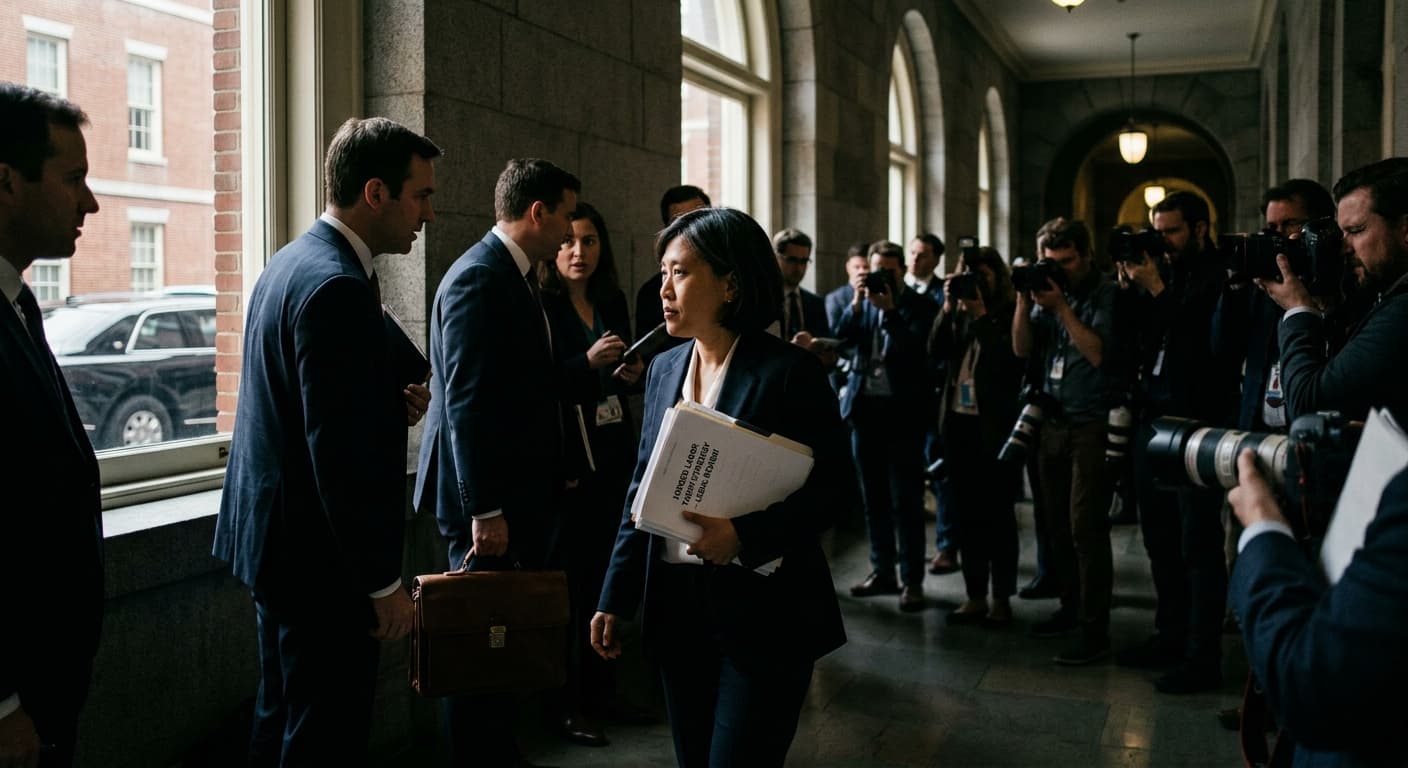
US forced-labor tariffs: 60 economies, 12.5% cap, one legal gamble
The USTR's June 2 proposal to hit 99% of US imports with 10–12.5% duties reframes forced-labor enforcement as a Section 301 workaround after February's Supreme Court defeat.
The Trump administration's proposal to slap 10% and 12.5% tariffs on 60 economies over their handling of forced-labor imports is not really about forced labor — it is the legal vehicle Washington needs to reconstruct a global tariff wall after the Supreme Court dismantled the first one in February. The USTR press release of June 2, 2026 covers economies that together ship 99.40% of US imports, according to the accompanying
USTR investigation report. That single number is the tell: the target is not exploitative supply chains, it is the tariff line itself, and the coalition rising against it — European lawmakers, Democratic attorneys general, Canadian retailers, American brand-name importers — is broader than any that opposed the 2018 China tariffs.
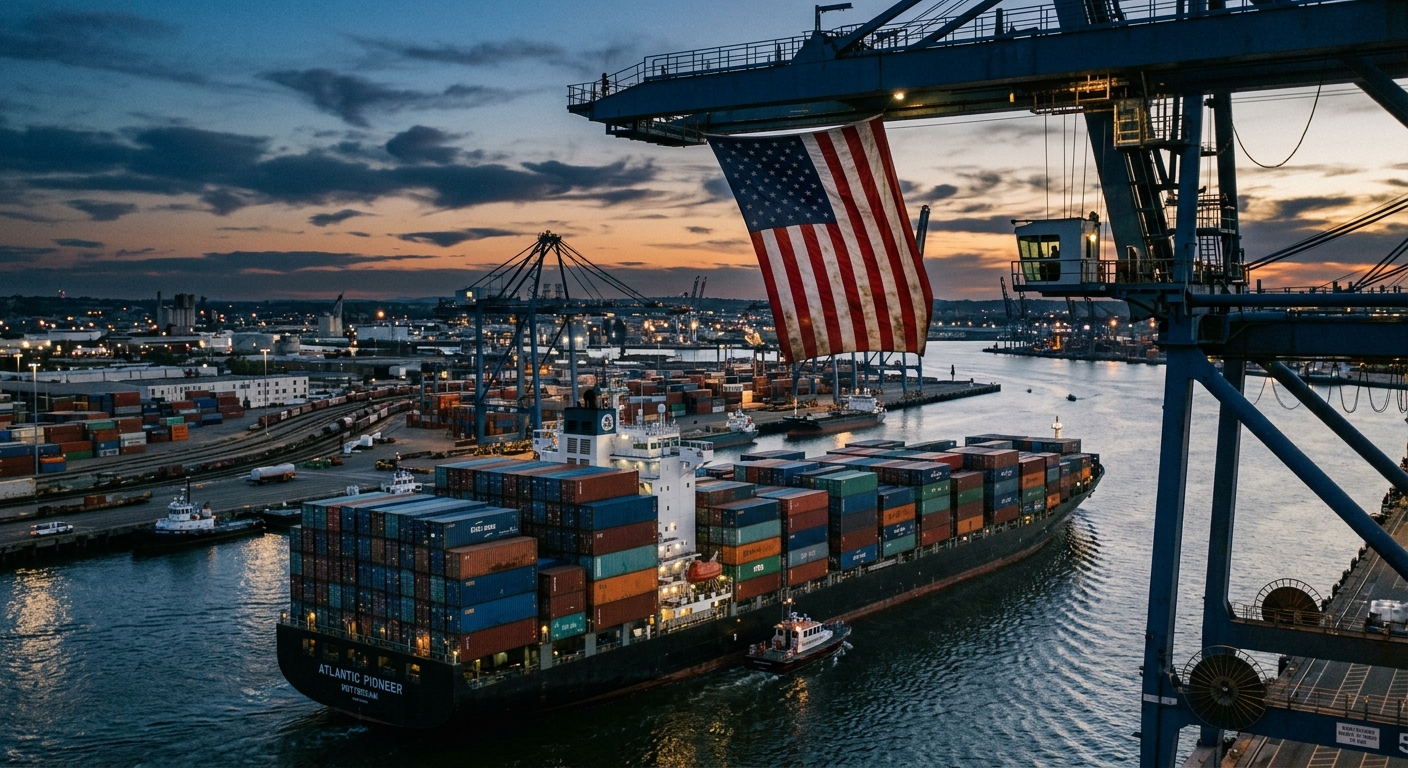
The Section 301 workaround
On February 20, 2026, the Supreme Court ruled 6-3 that President Trump could not use the International Emergency Economic Powers Act to impose global tariffs. Chief Justice John Roberts wrote that the president "must point to clear congressional authorization" for a taxing power the framers vested in Congress, per NPR's coverage of the decision. Two Trump appointees, Amy Coney Barrett and Neil Gorsuch, joined the majority. The ruling put roughly $175 billion in already-collected duties into legal limbo, according to Penn Wharton estimates cited by
Al Jazeera.
Trade Representative Jamieson Greer's response arrived within weeks: on March 12, USTR opened 60 Section 301 investigations into forced-labor enforcement, and a parallel probe of 16 economies for structural overcapacity. Section 301 of the Trade Act of 1974 — the statute Trump used in his first term to hit China — is procedurally slower but legally sturdier. As Brookings analysts Maricarmen Barron Esper and Christopher Sands wrote, the law "requires a formal investigative process — including written submissions and public hearings — before tariffs can be imposed." That process, they noted, is what IEEPA lacked. It is also what will make these tariffs harder to unwind.
The timing is the giveaway. Trump's fallback Section 122 tariff of 15%, signed the day of the Court decision, is a 150-day emergency measure that expires on July 24, 2026. The forced-labor duties are engineered to plug that hole. Treasury Secretary Scott Bessent told reporters that combining Section 122 with enhanced Section 232 and Section 301 tariffs "will result in virtually unchanged tariff revenue in 2026." Translation: same wall, different bricks.
Everyone was guilty
USTR ran the 60 investigations in roughly 12 weeks and, as the Center for Strategic and International Studies' William Reinsch predicted, "everybody was found guilty." Fifty-four economies were judged to have failed to impose and enforce a comparable ban. Six — Canada, Ecuador, the European Union, Indonesia, Mexico, and Pakistan — were credited with laws but faulted on enforcement, per the
USTR Federal Register notice.
Reinsch's read of the underlying evidence is scathing: the 98-page USTR report devotes "most of it" to why forced labor is bad, while country findings are "two or three paragraphs each, simply asserting" a failure to enforce. He warns that the perfunctory record "will open the door to lawsuits arguing that the investigations were perfunctory, that there is no evidence provided for the USTR's conclusions, and that there is therefore no justification for the remedy."
That is not a small vulnerability. Section 301 was upheld against WTO-based challenges in Trump's first term precisely because USTR built thick administrative records on Chinese IP theft and technology transfer. This time, USTR indicted 60 jurisdictions — including allies with stronger forced-labor regimes than the US in specific respects — in the same three months. Bernd Lange, chair of the European Parliament's trade committee, told Al Jazeera the findings were "utterly absurd" given the EU's 2024 forced-labor regulation. "The impression is increasingly emerging that a tariff measure is sought first, and only then is a suitable legal justification found," he said.
The pretext problem
The genuine paradox is that forced labor is a real and measured problem. The International Labour Organization estimates 27.6 million people were in forced labor globally in 2021, generating $236 billion in annual illicit profits. US Customs and Border Protection had detained roughly 42,000 shipments worth $3.9 billion under the Uyghur Forced Labor Prevention Act as of March 2026, per a
Congressional Research Service brief. A 2024 RAND study for the Department of Homeland Security concluded that the United States accounted for over one-fifth of the world's imports of goods "at risk of being made with forced labor," and that
trade enforcement was making measurable but incomplete progress.
None of that translates cleanly into a 12.5% tariff on Norway. The RAND analysis found that where forced labor is a "state-sponsored, coercive policy tool" — its finding on China's Xinjiang region — sanctions can help but "cannot change China's policy" on their own. It said nothing about penalizing New Zealand at the same rate as Beijing. The USTR's uniform tariff schedule ignores that finding entirely.
Peter Frankental, Amnesty International's business and human rights director, told the BBC that "trade measures can play a role in addressing forced labour risks, but they are not a substitute for effective enforcement, corporate accountability and mandatory human rights due diligence." Even the UK's Independent Anti-Slavery Commissioner said domestic law "does not go far enough" — an acknowledgment that undercuts USTR's rationale for hitting Britain with 10% tariffs.
Who benefits, who eats it
The 74-page exemptions list is where the real politics sit. USTR carved out energy, rare earths, pharmaceuticals, beef, coffee, tomatoes, aircraft parts, USMCA-compliant goods from Canada and Mexico, and "products that could cause economy-wide disruptions," per the Federal Register notice. That list is a map of political pain thresholds — grocery-store inflation, drug pricing, defense-industrial supply, red-state agriculture. What is left in scope is largely finished consumer goods and industrial inputs where a domestic alternative exists on paper but not in practice.
The 1,512 comments filed by the July 6 deadline lean overwhelmingly against, according to the Global Times review of the docket. Lotus Brands warned the duties would fall on end consumers. Schneider Mills argued penalties would hit US manufacturers dependent on inputs "when no domestic-made alternatives exist." A coalition of 22 Democratic state attorneys general, led by California's Rob Bonta and New York's Letitia James, has already sued once over the Section 122 tariff and is positioning for a second front. Bonta called the earlier justification "unreasonable to ridiculous," per the
BBC.
The genuine winner in this arrangement is narrower than the White House framing suggests. It is the US Treasury (roughly $130 billion collected before the IEEPA duties were struck down), and integrated North American manufacturers whose USMCA-compliant supply chains sit outside the new duties. The clearer losers are US-based textile importers, mid-market retail, and any downstream firm sourcing from Bangladesh, Cambodia, Vietnam or India — the countries where forced-labor risk is genuinely highest but where alternative sourcing does not exist at scale. The proposed textile mechanism, allowing a "certain volume" of apparel to enter at reduced rates, hints at a quota-and-license regime that will re-empower the same K Street offices that ran textile allocations in the 1990s.
The EU escalation risk
The single most consequential foreign response has been the European Commission's. Deputy trade spokesperson Olof Gill said the EU "considers tariffs imposed on these grounds to be unjustified" but reaffirmed the July 2025 Turnberry framework agreement, under which Brussels accepted a 15% ceiling on most EU exports. The 10% forced-labor duty layered atop existing 15% Section 122 tariffs — if stacked — would breach that ceiling. CSIS's Reinsch warned in a follow-up
analysis that the overcapacity investigation, still pending against 16 economies, will almost certainly push the EU total above 15%: "new tariffs that exceed that will be regarded as a breach of the agreement."
Brussels has a €90 billion ($109 billion) retaliation package pre-approved. It was withdrawn as a condition of the Turnberry deal. It can be resurrected. The forced-labor tariff on its own is unlikely to trigger it; the forced-labor tariff plus an overcapacity tariff plus the Section 232 stack almost certainly will. That is the sequencing question that will determine whether the transatlantic trade truce holds through the northern-hemisphere autumn.
What to watch
- July 7–9, 2026: USTR public hearings on the forced-labor tariffs, per the
USTR docket. The record built here is what future litigants will attack.
- July 24, 2026: Section 122 tariffs expire by statute. The administration must have Section 301 duties ready to fill the gap or accept a revenue cliff.
- Late summer 2026: USTR determinations on the 16-country overcapacity probe (China, EU, Japan, Korea, Vietnam, India and 10 others). If duties stack above 15% for EU exports, the Turnberry framework breaks.
- Autumn 2026: Expected fresh state-AG and importer litigation in the Court of International Trade challenging the sufficiency of USTR's country-specific evidence.
Diplomat View
The forced-labor tariff is a legal instrument dressed as a moral one, and the administration's strongest legal exposure is exactly the point Reinsch flagged: an evidentiary record thin enough that a single well-chosen plaintiff — a Norwegian salmon importer, a Japanese machine-tool distributor, a US retailer sourcing from a country with a demonstrably functional enforcement regime — can force a court to ask whether USTR really investigated 60 economies in 12 weeks or simply pre-decided the outcome. The base case is that the tariffs take effect on schedule, that most Global South economies absorb them, and that the EU protests without retaliating so long as the total stays under the Turnberry 15% cap. That case falls apart in two conditions: if USTR stacks overcapacity duties on top of forced-labor duties for European exports, or if the Court of International Trade signals in October-November 2026 that the country-by-country record is inadequate. Watch the EU's decision on whether to reactivate its €90 billion retaliation list; that is the falsifiable signal that the second tariff wall is cracking before it is finished. Absent that, forced labor will remain the pretext and Section 301 the vehicle for a US trade policy whose real objective is revenue and leverage, not remediation.
Related: US Politics.
Discover more

US Politics
House Ethics Committee Pushes Sexual Miscond.
The House Ethics Committee has shifted responsibility for sexual harassment settlement records to the Office of Congressional Workplace Rights, complicating disclosure efforts.
US Politics
SNAP Food Assistance Faces Legal Challenges
In 2026, SNAP faces stricter eligibility rules and mounting legal challenges, threatening food assistance for the millions of Americans who rely on the program.
India
Congress Accuses Modi of Stalling Women's Law
Congress accuses Modi of stalling women's reservation law by linking it to delimitation, revealing a deeper electoral strategy.

Conflict & Security
Drone Warfare Killing Aid Workers at Unprec
Over 1,000 humanitarian workers killed in three years as cheap armed drones collapse legal protections. Gaza, Sudan, Ukraine, and DRC see deliberate targeting of aid convoys and hospitals with zero prosecutions.